How Some Processed Meals Affect Inflammation and Energy
The Omega-3 Supplementation Guide
A blueprint for choosing the right fish oil supplement — filled with specific recommendations, guidelines for interpreting testing data, and dosage protocols.
You'll also receive updates from Rhonda & FoundMyFitness
Meal composition can shape the body's short-term metabolic response. In this clip from Dr. Rhonda Patrick's appearance on Huberman Lab, she and Dr. Andrew Huberman discuss how large, highly processed, or saturated-fat-rich meals may affect gut-derived signals, energy, and mood. In a randomized crossover study of 20 healthy adults, a saturated-fat meal raised measured circulating endotoxin, while an omega-3-rich meal lowered it. The measured systemic inflammatory biomarkers did not differ between the meal conditions, showing that the response depends on the meal, marker, and study setting. [1]
Experimental inflammation also illustrates how immune signaling can influence the brain. In a randomized trial of 115 healthy adults, intravenous endotoxin increased inflammatory cytokines and temporarily worsened mood and social connection. This controlled immune challenge supports a connection between inflammation and sickness behavior, while ordinary post-meal fatigue can also reflect meal size, circadian timing, sleep debt, and glucose or insulin responses. [2]
Gut-derived signals may contribute to vascular inflammation, and lipoproteins help bind and transport bacterial components in the bloodstream. The central process in atherosclerosis is the entry and retention of apoB-containing particles in susceptible arterial tissue, followed by particle modification, inflammation, and macrophage uptake. A practical dietary foundation includes vegetables, fruit, legumes, whole grains, nuts, fish, and unsaturated plant oils while limiting added sugar, refined grains, processed meats, and energy-dense ultra-processed foods. [3] [4]
This clip is excerpted, with permission, from Dr. Rhonda Patrick's appearance on Huberman Lab. Thank you to Huberman Lab for allowing us to share it.
- ^ Lyte, Joshua M; Gabler, Nicholas K.; Hollis, James H. (2016). Postprandial Serum Endotoxin In Healthy Humans Is Modulated By Dietary Fat In A Randomized, Controlled, Cross-Over Study Lipids In Health And Disease 15, 1.
- ^ Moieni, Mona; Jevtic, Ivana; Olmstead, Richard; Breen, Elizabeth C; Irwin, Michael; Eisenberger, Naomi I (2015). Sex Differences In Depressive And Socioemotional Responses To An Inflammatory Challenge: Implications For Sex Differences In Depression Neuropsychopharmacology 40, 7.
- ^ Ference BA; Ginsberg HN; Graham I; Ray KK; Packard CJ; Bruckert E, et al. (2017). Low-density lipoproteins cause atherosclerotic cardiovascular disease. 1. Evidence from genetic, epidemiologic, and clinical studies. A consensus statement from the European Atherosclerosis Society Consensus Panel. Eur Heart J 38, 32.
- ^ Borén J; Chapman MJ; Krauss RM; Packard CJ; Bentzon JF; Binder CJ, et al. (2020). Low-density lipoproteins cause atherosclerotic cardiovascular disease: pathophysiological, genetic, and therapeutic insights: a consensus statement from the European Atherosclerosis Society Consensus Panel. Eur Heart J 41, 24.
Dr. Rhonda Patrick: My meals usually combine a protein source with greens or another vegetable. My portions are smaller now, and I sometimes use intermittent fasting. I also occasionally eat high-protein oats.
Dr. Andrew Huberman: I like protein foods, vegetables, and fruit. My starches are usually oatmeal, rice, homemade pasta, or sourdough bread. Many highly processed starches make me feel sleepy or unwell afterward.
Dr. Rhonda Patrick: Some large, high-fat, or highly processed meals can produce a short-term postprandial response. Small human studies have reported changes in markers labeled circulating endotoxin, or lipopolysaccharide (LPS), after certain saturated-fat challenge meals. However, these results are inconsistent, the assays are technically difficult, and the studies do not establish that LPS is the main cause of ordinary post-meal fatigue.
LPS is a component of the outer membrane of gram-negative bacteria. The intestinal barrier and its tight junctions are dynamic, but normal nutrient absorption should not be described as routinely opening the gut to clinically meaningful bacterial leakage.
Meal composition, size, food matrix, and metabolic health matter. Some acute studies have found a larger measured endotoxin response after high-saturated-fat meals. One randomized crossover study found no corresponding increase in systemic inflammatory markers. Refined carbohydrates, saturated fat, additives, and ultra-processing are separate exposures and should not be treated as one proven pathway.
Post-meal sleepiness can have several causes, including meal size and composition, sleep debt, circadian timing, glucose and insulin responses, and autonomic changes. Immune activation and sleep-promoting cytokines are plausible contributors, but direct LPS mediation has not been demonstrated for an ordinary meal.
Dr. Andrew Huberman: Does a protein-centered meal cause less opening of the gut barrier?
Dr. Rhonda Patrick: The available evidence does not establish a simple protein-versus-carbohydrate rule. Large or highly processed meals and certain high-dose saturated-fat challenges may affect measured barrier or endotoxin markers. Whole-food dietary patterns remain the stronger practical recommendation.
Celiac disease is different. It is a gluten-triggered autoimmune disease in genetically susceptible people and can injure the intestinal lining. People who may have celiac disease should be tested before starting a gluten-free diet because restriction can make the tests falsely negative.
Some people without celiac disease report symptoms after wheat or gluten. Blinded studies show that expectations can influence symptoms, but fructans, other wheat components, and reproducible gluten responses can also contribute. A nocebo effect does not mean every symptom is imagined.
Experimental intravenous endotoxin provides separate evidence about systemic inflammation. Randomized studies in healthy adults found that an endotoxin challenge increased inflammatory cytokines and temporarily worsened fatigue, depressed mood, and social disconnection. This does not show that a meal produces the same exposure or causes major depressive disorder.
Inflammation may contribute to depression in a subset of people. C-reactive protein is a nonspecific marker, and studies of antidepressant response are mixed. High CRP does not diagnose an inflammatory subtype of depression or prove that an SSRI will fail.
Lipoproteins can bind and transport LPS as part of host defense. However, the specific sequence described in this conversation—LPS masking apoB, blocking LDL-receptor recycling, depositing the particle in an artery, and directly creating a foam cell—is not established human atherosclerosis biology.
The best-supported causal model is cumulative exposure to apoB-containing particles. These particles enter and become retained in susceptible arterial tissue, undergo modification, and trigger inflammation and macrophage uptake. LPS signaling may modify vascular inflammation, but it is not required for LDL retention or foam-cell formation.
The practical message does not require a speculative LPS chain: favor vegetables, fruit, legumes, whole grains, nuts, fish, and minimally processed foods; replace butter and tropical fats with unsaturated plant oils; and limit added sugar, refined grains, and energy-dense ultra-processed foods.
Persistent severe fatigue after meals can have many causes and deserves clinical evaluation. Depression symptoms also require standard care, especially when they are severe or persistent.
Get email updates with the latest curated healthspan research
Support our work
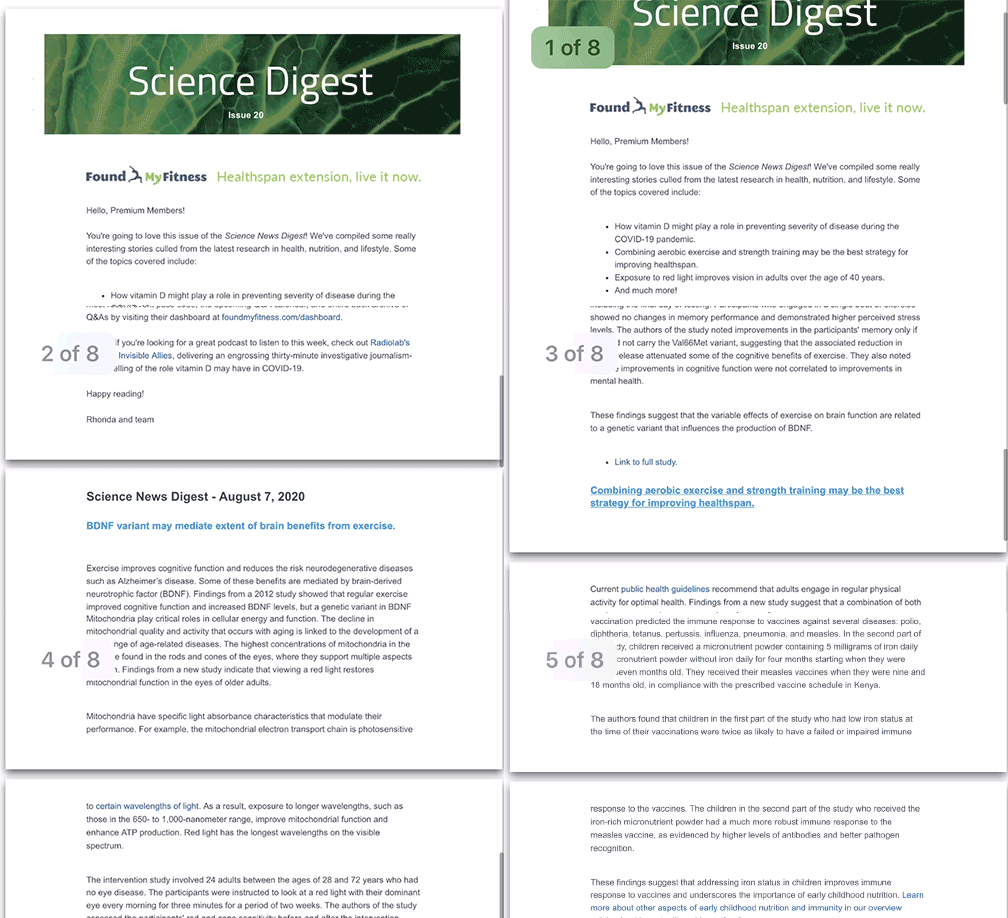
Every other week premium members receive a special edition newsletter that summarizes all of the latest healthspan research.