How Vigorous Exercise Reverses Cardiac Aging
The BDNF Protocol Guide
An essential checklist for cognitive longevity — filled with specific exercise, heat stress, and omega-3 protocols for boosting BDNF. Enter your email, and we'll deliver it straight to your inbox.
You'll also receive updates from Rhonda & FoundMyFitness
VO2 max expresses how much oxygen the body can use during maximal exercise and is a direct measure of cardiorespiratory fitness. In a cohort of 122,007 adults referred for treadmill testing, higher fitness was associated with lower long-term mortality without an observed upper threshold of benefit. A separate 46-year study of 5,107 middle-aged men linked each 1 milliliter per kilogram per minute increase in estimated VO2 max with about 45 additional days of life expectancy. [1] [2]
High-intensity intervals are one practical way to improve VO2 max. In a randomized trial of 40 moderately trained men, a 4x4 protocol performed three times weekly for eight weeks increased VO2 max by 7.2 percent and outperformed work-matched moderate training. A meta-analysis of 53 randomized trials found that longer work intervals of at least two minutes and higher session volumes generally produced larger VO2 max gains than shorter, lower-volume approaches. [3] [4]
Cardiac structure can also respond to progressive training begun in middle age. In a randomized trial of healthy but sedentary adults with a mean age of 53, two years of exercise training increased VO2 max by 18 percent, reduced left ventricular stiffness, and increased end-diastolic volume. The program built gradually toward four to five weekly sessions, including one 4x4 interval session, which shows why the cardiac-aging result reflects sustained progressive training rather than one isolated workout. [5]
This clip is excerpted, with permission, from Dr. Rhonda Patrick's presentation at The Vibrant Wellness Longevity Summit. Thank you to Vibrant Wellness for allowing us to share it.
- ^ Mandsager, Kyle; Harb, Serge; Cremer, Paul; Phelan, Dermot; Nissen, Steven E.; Jaber, Wael (2018). Association Of Cardiorespiratory Fitness With Long-term Mortality Among Adults Undergoing Exercise Treadmill Testing JAMA Network Open 1, 6.
- ^ Clausen JSR; Marott JL; Holtermann A; Gyntelberg F; Jensen MT (2018). Midlife Cardiorespiratory Fitness and the Long-Term Risk of Mortality: 46 Years of Follow-Up. J Am Coll Cardiol 72, 9.
- ^ Helgerud J; Høydal K; Wang E; Karlsen T; Berg P; Bjerkaas M, et al. (2007). Aerobic high-intensity intervals improve VO2max more than moderate training. Med Sci Sports Exerc 39, 4.
- ^ Wen D; Utesch T; Wu J; Robertson S; Liu J; Hu G, et al. (2019). Effects of different protocols of high intensity interval training for VO(2)max improvements in adults: A meta-analysis of randomised controlled trials. J Sci Med Sport 22, 8.
- ^ Howden, Erin J.; Sarma, Satyam; Lawley, Justin S; Opondo, Mildred; Cornwell, William; Stoller, Douglas, et al. (2018). Reversing The Cardiac Effects Of Sedentary Aging In Middle Age—A Randomized Controlled Trial Circulation 137, 15.
I want to get to my favorite part of the talk, and this is the effortful part. This is exercise. There is absolutely nothing that I have found in my reading of the literature that is more powerful and potent at delaying every aspect related to aging and age-related disease than exercise, particularly vigorous-intensity exercise.
When I say vigorous intensity, I mean the kind of exercise where you really cannot have a conversation. You cannot talk to someone while you are doing it because you are so out of breath. For people who wear heart rate monitors, we are talking about 80 to 85 percent of maximal heart rate or more. That is vigorous-intensity exercise.
I want to start by talking about cardiorespiratory fitness, which is a marker of life expectancy and mortality risk, dare I say longevity. We know that as we age, our cardiorespiratory fitness goes down. You want to get as high as you can because that decline will come, and the higher you start, the longer it is going to take to get to the bottom. VO2 max, the maximum amount of oxygen that you can take in during maximal exercise, is how cardiorespiratory fitness is measured.
We know that if people with low cardiorespiratory fitness move into the low-normal range, that is associated with about a two-year increase in life expectancy. If they go from below low to a high level, that is about a five-year increase in life expectancy. Researchers have calculated that each unit increase in VO2 max, one milliliter per kilogram per minute, correlates with about 45 additional days of life expectancy.
There have been a few studies. One is this JAMA study, which showed that people at the elite level of cardiorespiratory fitness have about a five-year increase in life expectancy and an 80 percent lower mortality risk than people in the low-fitness group. Even when people with high cardiorespiratory fitness were compared with the elite group, the elite group still had about a 20 percent lower mortality risk. It just keeps going up.
What was so interesting to me about that study was that people in the low cardiorespiratory fitness group had a mortality risk that was comparable to, or worse than, smoking, type 2 diabetes, and cardiovascular disease. These are all things that we know are terrible. Being sedentary and physically inactive is a disease, and we need to start treating it as a disease. Cardiorespiratory fitness predicted mortality risk similarly to these other diseases that people recognize as terrible, yet people do not talk about low cardiorespiratory fitness the same way.
This brings it back to vigorous exercise. How do you improve cardiorespiratory fitness? Any exercise, especially aerobic training, can improve it. However, even among people who follow the physical activity guidelines and do two and a half hours per week of moderate-intensity physical activity, about 40 percent cannot improve their cardiorespiratory fitness unless they engage in high-intensity interval training and add vigorous-intensity exercise. Moderate intensity means the kind of exercise where you are breathy but can still have a conversation. It is not really known why some people need the higher intensity, but the challenge that vigorous exercise puts on your cardiovascular system, lungs, muscles, brain, and everything else produces greater adaptations. You can transport oxygen throughout your system and deliver it to your muscles faster. The current thinking is that when the stress is stronger, the adaptation is also stronger.
Many high-intensity interval training protocols can improve cardiorespiratory fitness. The longer the interval, the more robust the effect tends to be. High-intensity interval training refers to short bursts of vigorous exercise followed by lighter exercise for recovery. Many protocols improve cardiorespiratory fitness. If you want an outsized effect, you start getting into intervals that last several minutes.
The Norwegian 4x4 is one protocol I like to discuss because many publications show that it can improve cardiorespiratory fitness. It came from Norwegian skiers. On a stationary bike, they do a four-minute interval as hard as they can sustain for the full four minutes. They are not going all out because they could not sustain that. They then have a three-minute recovery at a very light intensity, letting their heart rate come down, and repeat this four times. That is the 4x4. It is a good way to improve cardiorespiratory fitness, but it is not the only way. You can do one minute on and one minute off, 30 seconds on and 20 seconds off, or 20 seconds on and 10 seconds off, as in Tabata intervals. All of these can improve cardiorespiratory fitness. The longer the interval, the more robust the effect tends to be.
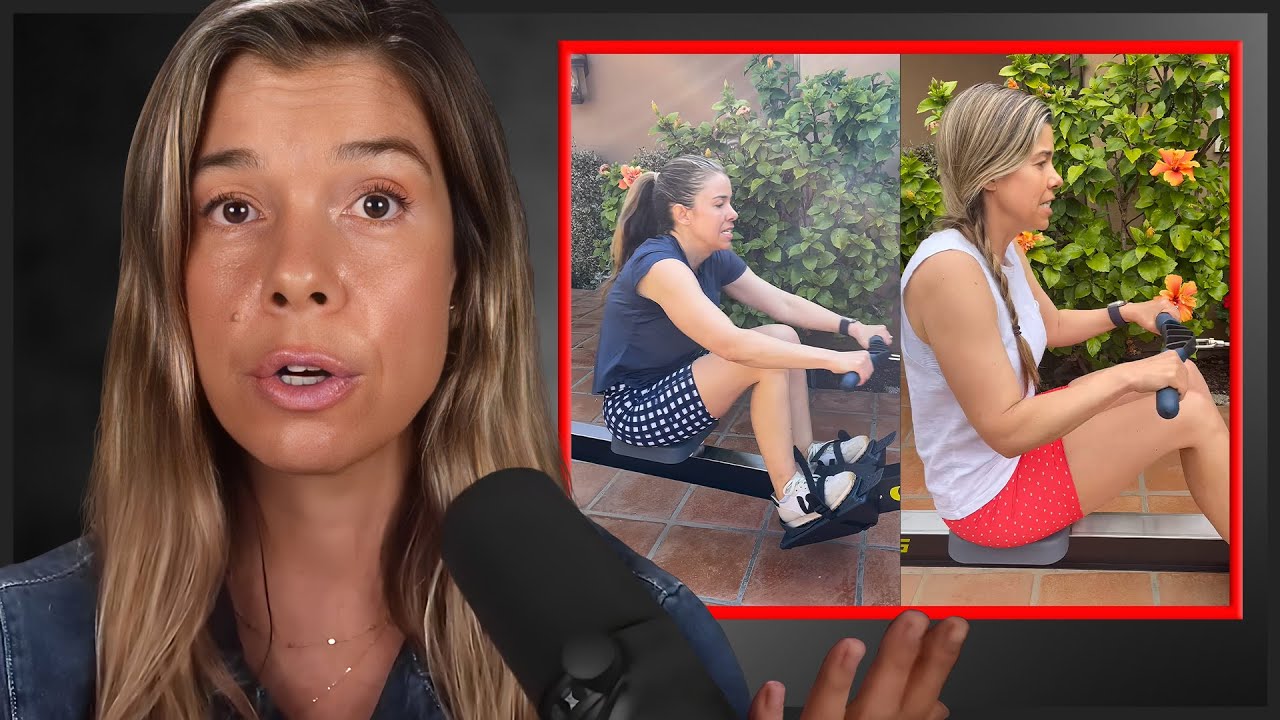
I also want to talk about Dr. Benjamin Levine's study on reversing cardiac aging. I like this study because the program included the Norwegian 4x4 and a lot of vigorous-intensity exercise. Dr. Levine took sedentary people around 50 years old who did not have other diseases and put them on an intensive training protocol for two years. It was progressive. They did not start the Norwegian 4x4 right out of the gate. When someone is inactive and you put them on an intense training protocol, you have to work up to it.
By the end of the first six months, participants started doing the Norwegian 4x4 once a week. They were also doing about 30 minutes near 75 percent of maximal heart rate roughly three times a week. In total, they were working out about five hours a week, and a large portion of that was vigorous-intensity exercise. They also did moderate-intensity exercise and a little resistance training. The control group did only a yoga-like exercise program.
After two years, their hearts were imaged and compared with baseline. As we age, our hearts shrink and become stiffer, which affects cardiovascular disease risk and the ability to improve cardiorespiratory fitness. You do not want a stiff heart, and you do not want it to keep shrinking. After two years of the intensive exercise protocol, these 50-year-olds had essentially reversed 20 years of cardiac aging. Their hearts grew and became more flexible. By the imaging and testing, they looked more like the hearts of 30-year-olds. I am glossing over a lot of the data, but the important point is that it is not too late to start working out. If you put in the time and effort, it can have a profound effect on the way you age.
Hear new content from Rhonda on The Aliquot, our member's only podcast

Listen in on our regularly curated interview segments called "Aliquots" released every week on our premium podcast The Aliquot. Aliquots come in two flavors: features and mashups.
- Hours of deep dive on topics like fasting, sauna, child development surfaced from our enormous collection of members-only Q&A episodes.
- Important conversational highlights from our interviews with extra commentary and value. Short but salient.