#112 How To Slow Biological Aging With a Multivitamin, Vegetables, & Omega-3 | Dr. Steve Horvath
This episode is available in a convenient podcast format.
These episodes make great companion listening for a long drive.
The BDNF Protocol Guide
An essential checklist for cognitive longevity — filled with specific exercise, heat stress, and omega-3 protocols for boosting BDNF. Enter your email, and we'll deliver it straight to your inbox.
You'll also receive updates from Rhonda & FoundMyFitness
In this episode, Dr. Rhonda Patrick sits down with Dr. Steve Horvath to talk about one of the biggest questions in longevity science: can we actually measure how fast we are aging, and if so, can we slow it down?
Steve helped launch the modern biological aging field with the original Horvath epigenetic clock, a tool that showed DNA methylation patterns could estimate age across many human tissues. But in this conversation, he explains why biological age is not one simple number. Different clocks are built for different purposes: some estimate calendar age, some predict disease and mortality risk, and others try to measure the current pace of aging.
The conversation covers how aging clocks work, what happens when clocks disagree, and which interventions currently have the best evidence for moving them. Rhonda and Steve discuss calorie restriction, GLP-1 therapy, multivitamins, omega-3s, vitamin D, vegetables, red meat, exercise, heat exposure, sleep, social connection, consumer testing, AI-built clocks, partial reprogramming, and why no single intervention is likely to stop aging on its own.
Other topics include:
-
Can someone reverse biological age by 5 years in 7 months?
-
How weight loss changes biological age
-
Does a daily multivitamin slow aging?
-
Omega-3, vitamin D, and exercise—what moves the needle?
-
Vegetables vs. exercise—which matters more for epigenetic age?
-
Does red meat accelerate biological aging?
-
Why 10,000 steps won't slow aging
-
The surprising role of social connection
-
Are biological age tests worth it?
Why do we age?
"Biological age is not one thing. It can mean functional age, molecular age, organ age, mortality-risk age, or pace of aging." Click To Tweet
Chronological age is simply the number of years since birth.
Biological age reflects how well the body is functioning relative to that number—capturing differences in disease risk, physical function, immune health, metabolism, organ function, and mortality risk among people of the same age.
Aging can be understood as the gradual accumulation of damage and dysfunction across many biological systems, including proteins, metabolites, mitochondria, stem cells, immune signaling, tissue structure, and the regulatory machinery surrounding DNA. One of those regulatory systems is DNA methylation, a chemical tagging system that helps determine which genes are turned on or off without changing the DNA sequence itself.
With aging, methylation marks can be gained or lost in the wrong places. Dr. Steve Horvath describes this as a "flattening of the methylation landscape," where regions that should remain sharply marked become less distinct.
Because methylation patterns can reflect long-term exposure to stressors such as smoking, inflammation, obesity, infection, metabolic dysfunction, and air pollution, methylation clocks may act as a molecular readout of cumulative aging-related damage and biological stress.
-
What exactly is biological aging?
-
Do all aging clocks measure the same thing?
-
PhenoAge vs. GrimAge—how methylation reveals mortality risk
-
Why GrimAge is a powerful mortality predictor
-
How your epigenome remembers long-term stress
-
Can parents pass stress to offspring through the epigenome?
-
Why standard aging clocks fail in sperm
-
Can lifestyle changes reverse GrimAge?
-
How DunedinPACE tracks your aging speed
-
Which clock is best for testing longevity interventions?
-
Can methylation clocks replace long-term mortality studies?
-
Which interventions most reliably reverse epigenetic age?
-
Can someone reverse biological age by 5 years in 7 months?
-
Can GrimAge predict when you'll die?
-
Why a younger GrimAge doesn't mean more years of life
-
What epigenetic clocks fail to capture
-
Why aging clocks measure more than just inflammation
-
Does younger blood rejuvenate the whole body?
-
Can calorie restriction really slow biological aging?
-
Do GLP-1 drugs reverse epigenetic age?
-
Can a daily multivitamin slow epigenetic aging?
-
Omega-3, vitamin D, and exercise—which slows aging best?
-
Does correcting vitamin D deficiency reverse age acceleration?
-
Vegetables vs. exercise—which matters more for epigenetic age?
-
Does red meat accelerate epigenetic aging?
-
How much exercise is needed to slow epigenetic aging?
-
Can heat exposure mimic exercise?
-
Does a lower core body temperature slow aging?
-
How sleep disruption shows up on aging clocks
-
The role of social connection in biological aging
-
Are consumer biological age tests worth it?
-
How to choose a reliable biological age test
-
Why two epigenetic age tests might give different results
-
Can AI build better aging clocks?
-
Partial reprogramming—can cells become younger without losing identity?
-
What partial reprogramming can (and can't) reverse
-
Do DNA mutations actually drive aging?
-
Why no single intervention can stop aging
-
Why genetics aren't your destiny
-
Steve Horvath's longevity routine
-
Does short-term stress accelerate epigenetic aging?
Introduction
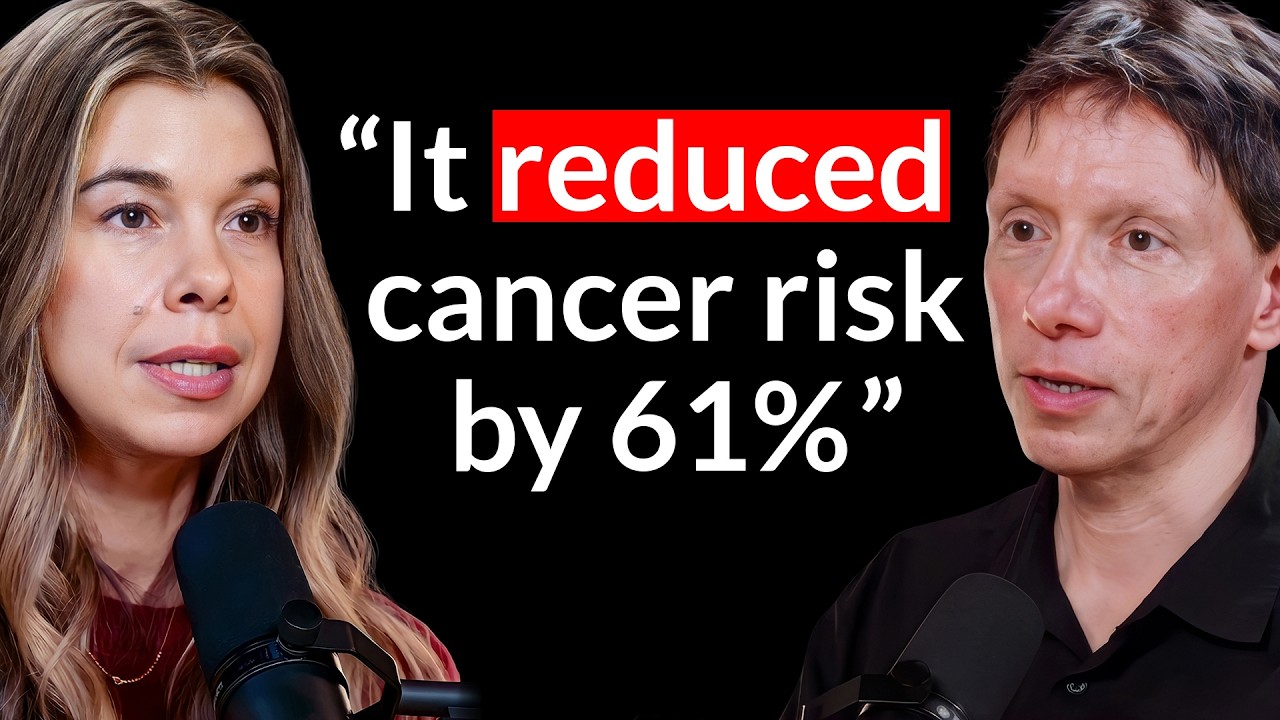
Rhonda Patrick: Welcome back to the podcast. I am sitting here with Dr. Steve Horvath. Steve, good to see you again. This is the second time you've been on this podcast. You have been incredibly influential in the longevity field. You are the developer of the original Horvath epigenetic aging clock, which has really revolutionized the way the aging field has been able to measure biological aging. So thanks for coming back on the show.
Steve Horvath: Yeah, thank you. I'm very excited to be here. The science has evolved quite a bit from the last time we spoke, so it's a wonderful opportunity for me to talk to you and your audience.
Rhonda Patrick: I'm so excited. I mean, the last time we spoke was in 2019. So I would hope that there's been a lot of new, exciting data to discuss.
What exactly is biological aging?
Rhonda Patrick: But maybe the way we could start this is for people who might be new to the field, this idea of biological aging and explaining what biological aging means.
Steve Horvath: It's a good question. Everyone talks about biologic age, but it has so many different definitions. So for many people, biologic age refers to fertility issues as an example. Broadly, it relates to this phenomenon that people of the same age have different mortality risks, morbidity risks, or people who you know from your high school, they look older or younger than you. All of that is in that concept of biologic age. However, longevity researchers or geroscientists who study aging really conceptualize biological age in using measurement technologies. How do you get a number for measuring biologic age? And the field has really exploded over the last 13, 14 years. People have developed biologic age measures based on wearables, step counts, gait speed, which is very exciting.
Many imaging data, you can measure your brain age based on imaging. For example, my field is in the realm of molecular markers of aging, so I work on epigenetic marks, and we can talk about it later. But I just want to give an overview of the field. There are so many so called genomic technologies for measuring anything from gene expression to proteome, metabolome, glycome, really any -ome. And for any readout, people have developed clocks, aging measures. I started with DNA methylation back in 2011. We published our very first epigenetic clocks. And why methylation? Because the signal for aging and even mortality is very strong in methylation. But when you want to measure biologic age, you really need to look at many levels of readouts. Molecular, then biochemical readouts, blood biochemistry, various measures of organ function, fibrosis as an example. Then of course, above all functioning measures. VO2 max gait, speed and daily living activities. Frailty, frailty, all of that.
Rhonda Patrick: It's so important, you know, for people to understand that like, you know, as we have this chronological age, everyone knows their age, right. This is how long you've been alive since the time you were the day you were born. And the interesting thing you talked about, biological aging, you know, you have these processes that are happening that affect your daily function, they affect your disease risk. And not everyone has the same disease risk at the same age. And so there could be this disconnect where some people, perhaps, you know, genetic and also lifestyle factors contribute to them not aging quite as good. And so they may get cardiovascular disease earlier or cancer earlier. Right. And the opposite is true. And that's what people are really interested in. Well, let's say I'm 50 years old, but I want, you know, the organs in my body and the cells in my body to seem like they're 30 years old. Right?
Steve Horvath: Yes.
Rhonda Patrick: To be younger. And so that's why it's exciting to have these tools that do measure function. Like you mentioned, I think cardiorespiratory fitness and VO2 max frailty. There's a lot of different ways that people are measuring function. But then on the molecular level, that's very exciting because it's quantifying this process of aging.
Steve Horvath: Yes. I mean, one key word that has to be mentioned in that context, it's all about prevention. So what motivated my work was to understand aging in people who do everything right. For example, in you. Why do you age? Given that you and me, we really take care of ourselves and we try to optimize lifestyle prevention, all of that, but something still changes deep inside of us, in our cells. And what is it? What drives aging? And these methylation clocks that I've developed, they really track damage accumulation one way or another, you know, because that is something that just happens, you know, and that drives then organ dysfunction many years and decades later, you know, but it's almost unavoidable to age. And what I wanted to accomplish with these methylation clocks is to have a precise tool to allow researchers to actually identify novel interventions. How do we truly reverse the ages of individual cells, of organs and the whole organism?
Do all aging clocks measure the same thing?
Rhonda Patrick: You know, you mentioned something that caught my attention. You said these methylation clocks or patterns are able to track the damage that occurs. And that's to me always been a question in is it tracking the damage that occurs and. Or if you're changing these patterns, does that change the damage? So because you're globally affecting the way genes are activated or not activated gene expression as we call it, then you would imagine, is it like a two way street, possibly where you're able to increase genes that we have that help take care of damage, repair alll these, you know. stress response genes better as well. But I guess we'll get into that. Let's.
So I think, I think one of the points of confusion I've heard repeatedly, you know, from, from my audience and just from, you know, in general, like out there, is that people think these biological aging clocks are just sort of like one thing. You hear biological age, it's like this one thing, you reverse biological age. It's just this one thing that's happening. But we actually have very different clocks that seem to be perhaps tracking or have different strengths and weaknesses and what they are tracking and what they are sensitive to in the context of the aging process. So maybe we can kind of just. Can you walk us through some of these clocks and what their core strength is, what they are tracking, and perhaps even what a common misconception is in terms of what it's tracking?
Steve Horvath: Yes. So maybe we start with the big picture. Aging is of course associated with the accumulation of damage on all levels. The proteomic level, metabolomic, intracellular communication, but also damage accumulation surrounding the DNA molecule. These chemical changes to the DNA, there is an accumulation of damage, damage, and that impairs then the cell function. For example, certain cell identity genes need to be active in a liver cell, and different genes need to be acting in a brain cell and so on. And so the damage impairs the function of cells and then tissues and then organs. And interestingly, methylation changes can be observed at really millions of locations on the DNA molecule. And many of these changes have actually no consequence.
And by the way, when I talk about changes on the DNA, I talk about gain of methylation at the wrong places, but also loss of methylation at the wrong places. So what is happening with aging is that the methylation landscape really flattens out. And conversely, in a young cell you want to have really peaks of methylation at regions that need to be shut down and conversely low methylation at regions that need to be accessible on the DNA. Anyways, these methylation clocks look typically at hundreds of locations on the DNA that are carefully chosen. However, one can really look at tens of millions of locations. And people have developed different clocks based on tracking changes at different locations.
And one of the great misconceptions is to expect that all clocks agree with each other, that all clocks give you this one readout that wouldn't be reasonable. Right. Because you have millions of locations. So methylation clocks really capture again different properties of aging. Some clocks are very good at tracking inflammation, other clocks are very good at metabolic syndrome. Then the so called, these are now second generation clocks, they really relate to inflammation and various stressors, smoking. But then the earlier generation of clocks, so called first generation clocks, had a totally different goal. They just want to measure calendar age, you know. And yeah, so the misconception is that people get disappointed that two different clocks lead to slightly different readouts.
But the metaphor I want to use is think of the world of proteomics. If I told you protein, protein one measures the same as protein two, you would just not believe it. And the same happens in the case of methylation. If you target certain parts of the DNA, they give you a different readout from other parts.
Rhonda Patrick: Okay, yeah, that's really good to kind of clear up. And I guess if you understand that concept, you wouldn't want all these clocks to be giving you the same readout because then that would be kind of a problem.
Steve Horvath: I think it would be overly simplistic.
Rhonda Patrick: Right.
Steve Horvath: And most clocks were tailor made for blood for the sake of convenience. But arguably you would want to develop special clocks for the brain, for the liver, for the kidney, you know, and the field is moving in that direction. So people develop actually single cell clocks and organ specific clocks.
Rhonda Patrick: Oh, that's cool.
Steve Horvath: Yeah.
PhenoAge vs. GrimAge—how methylation reveals mortality risk
Rhonda Patrick: So let's talk about some of the main ones that are used. And so we have the one that was, you know, the original Horvath epigenetic aging clock, first generation for chronological age. And then we kind of get into these other clocks which were first generation and then they have second generation versions as well. But so the DNA PhenoAge, does that clock lean more towards inflammatory and metabolic function than pure chronological age?
Steve Horvath: Yeah, for sure. So the so called PhenoAge clock was a giant step forward when it came to mortality risk prediction. This clock was very much constructed to track really biochemical markers and also changes in blood cell composition. These markers measure all organ dysfunction one way or another. And the idea was to actually develop a methylation surrogate of these clinical parameters. And we should discuss the pros and cons of that idea, you know. But yes, so this clock was then impressive mortality risk predictor for humans, you know, however it, it was then superseded by the GrimAge clock which was named after the Grim Reaper. It was published also many years ago, 2019, but it continues to be very impressive for mortality risk.
And from a mathematical perspective, these clocks were constructed in very different ways, but overall they very often agree, you know, when, when you have an intervention that appears to slow GrimAge progression, it also slows PhenoAge progression. So often there is actually agreement to some extent, which is impressive given that these clocks were constructed in very different ways.
Why GrimAge is a powerful mortality predictor
Rhonda Patrick: Can you talk a little bit about the different ways they were constructed? So with the GrimAge, I think it was my understanding that smoking is somehow embedded in that calculation or, you know, whatever you want to call it. Stress related proteins, inflammation. But the PhenoAge also has some inflammation as well in there.
Steve Horvath: Yes, yes, yeah, maybe I'll start with a much simpler example. C-reactive protein is a marker of chronic inflammation. It's a very important biochemical readout and the doctor will measure it when you have certain conditions. But interestingly, you can actually estimate C-reactive protein levels based on methylation. I should say the estimate is not very tight for the experts. I will say correlation may be 0.3 or lower. So it's not a tight correlation. But I want to mention it as an example for this idea of using methylation to estimate a famous marker. But now imagine you actually get these two readouts from the lab. Let's say you go to a longevity clinic, they can easily measure both. But which one is more informative for you?
Now a medical doctor will always focus on the plasma based readout. They are trained to look at thresholds and then they diagnose maybe an acute infection. Um, but, but the surprising finding is that the methylation estimate is actually a better predictor of your mortality risk, far better predictor of your mortality risk than the plasma measure. And that's one famous example that has been validated. I give you now another example, smoking. So you can ask someone, how many cigarettes do you smoke per week? For how many years have you smoked? And this is known as the smoking pack year estimate of smoking exposure. Interestingly, you can use methylation to estimate smoking exposure as well.
And you can ask the same question, well, which measure is more predictive of how long you end up living? Is it the self reported measure or, or the blood measure? And again, we know the answer from many studies by now. Again, the methylation estimator is actually superior to self reported. So I mention it because that then gives rise to an idea. Well, why don't I build a clock that uses these methylation estimators of C-reactive protein of many other famous proteins or, and also the methylation estimate of smoking history. Why don't I use these methylation biomarkers in linear combination? I combine it in an optimal way to build a mortality risk predictor. And this idea is underlying the GrimAge clock, the Grim Reaper clock. And it just worked beautifully in many validation studies. We now know this idea worked, but that's really the idea of the GrimAge clock.
Rhonda Patrick: And this was from. This was developed with. In your lab.
Steve Horvath: The GrimAge clock by Ake Lu. In my lab. You know, PhenoAge was developed by Morgan Levine when she was a postdoc in my lab.
Rhonda Patrick: Morgan was on our podcast a few years back as well.
Steve Horvath: Yes.
How your epigenome remembers long-term stress
Rhonda Patrick: So why should methylation patterns be able to predict your mortality? I mean that's. And, and I mean, how accurate is that? I mean like what's, what are we talking about, you know?
Steve Horvath: Yeah, the first question, why does methylation relate to mortality? It is a good question because when I published the very first clocks, I remember I was extremely nervous about what I had published. I thought maybe these clocks have no use. Maybe they just measure your calendar age, you know. And now I was so relieved that basically six weeks after I had published it, somebody came to me at UCLA and said, we just applied your clock and it predicts mortality anyways. But then by now we know that these methylation clocks very much predict mortality risk. To the point that certain startups pursue the idea of using methylation clocks for pricing life insurance policies or financial products. And of course methylation clocks are used in serious randomized controlled trials.
So the evidence is very strong and without any debate. But why is that? It could be that these clocks really track long term exposures of a stressor. So for example, smoking again, you know, so maybe if you just smoke a bit, it doesn't really show up in other biomarkers, but if you have really this prolonged stressor, it really alters the epigenome. Why? Because the epigenome creates a memory really think of the epigenome as a memory of stressors and it primes the cell to respond. And you can imagine if the cell senses this onslaught of various stressors, it tries to remodel its regulatory system so that it prepares for future stress. That's maybe one way to conceptualize it.
Rhonda Patrick: Yeah. And I mean we even, I think this concept of the stressor affecting the epigenome, you know, we even know it can affect the epigenome in gonads. Right. In sperm and eggs. And that's why certain, we have those studies out of Sweden where they went through these periods of starvation like famine and then there was feasting, depending on what food was available at the time. And I know that some researchers had looked at how the epigenome had changed and that also seemed to affect life expectancy of the offspring as well. So.
Steve Horvath: And then, yes, I think this is a study from the Netherlands, the so called Dutch Hunger. I'm not sure whether that's what you meant. Yes, that's right. Yeah, very exciting work. You know, that maybe a couple of years of starvation could already change the gonad methylome and that could then lead to changes in the offspring. So I think it's very exciting. But I need to tell you, I haven't worked in that space.
Rhonda Patrick: Yeah, well, it's been years since I've looked at those studies. But I think there were like prepubescent boys too where it's like if they have gone through these periods of like hunger where they were calorically restricted, it obviously changed their, you know, their gonads epigenome and their sperm in a way that was, you know, more permanent. And so they had offspring that were like more resilient against type 2 diabetes and you know, other age related diseases as well. So I think, I think they also lived longer like their grandkids or something like it affected their life expectancy as well. But,
Can parents pass stress to offspring through the epigenome?
Rhonda Patrick: but smoking is another one that would also go, it gets, I mean that's something that goes, you know, deeper. Right. And affects the gonads, if I'm correct. I mean.
Steve Horvath: Yeah, I need to tell you regarding these findings. I'm usually interested and excited about them, but I want to emphasize to your audience they are controversial fundamentally. Okay. Very smart people disagree with these findings. Personally, I'm, I'm completely neutral. I. But I just want you to know
Rhonda Patrick: they disagree that the epigenome changes.
Steve Horvath: Yeah. So that, no, just to be very precise, that an exposure from your parents, for example, has an effect on you. Again, brilliant people publish on it. And these studies go through rigorous peer review. But I just want you to be aware that they're strong counterarguments. So it remains to be seen, I want to say, because I want to think that if your parents or grandparents went through severe stresses, I want to think that you still are born with a clean slate, so that you are in certain ways not predisposed or doomed in one way or another. So.
Rhonda Patrick: Well, sure, that would be a nice thing to think.
Steve Horvath: Yes.
Rhonda Patrick: But I mean, on the bright side of things, even if there, there is, and I've seen, you know, the. I've seen evidence that convinced me that there's an epigenetic change that does happen.
Steve Horvath: Yes.
Rhonda Patrick: And in, you know, sperm DNA, for example, like if you have an obese male and then they lose weight, like you can look at their sperm DNA and it changes from being obese to lean. And epigenetic changes, gene expression changes are happening. So. But even if, even if it's on the bad side, you know, the good news is once you're born, you can do things in your life to change things in a positive way too. Right. So it's not like, you know, even, even if you don't have the cleanest slate.
Why standard aging clocks fail in sperm
Steve Horvath: Yes. Yeah. What I want to tell you briefly about sperm, that is, yes, there are methylation changes and also changes with aging. So the sperm methylome of a 50 year old is different from that of a 20 year old. However, the changes that occur are at completely different location from the changes that we use in any of our other clocks. Another way to say it is, if I take GrimAge or PhenoAge or any of my clocks and apply it to sperm, it completely fails. So, for example, what is known as the Horvath pan-tissue clock, you apply it to sperm, you get one number, 37 or so, but everybody has the same number. In essence, uninformative. It's just very different locations. The same statement also holds, by the way, for the placenta. People have developed clocks applied to placenta to estimate the age of the newborn, meaning gestational age, or also various stressors from the mother. But again, these changes are very different from what we observe in blood or adult tissues.
Rhonda Patrick: Have there been clocks for sperm?
Steve Horvath: Yes.
Rhonda Patrick: Have been developed that are more precise?
Steve Horvath: Yes.
Rhonda Patrick: Okay,
Can lifestyle changes reverse GrimAge?
Rhonda Patrick: I have a question about GrimAge, but it, it sort of leads us into the next clock that I want to have you discuss, which is the. The DunedinPACE, as I say it.
Steve Horvath: Right. I think it's called DunedinPACE.
Rhonda Patrick: DunedinPACE, that's right. DunedinPACE. So the question I have is, you know, with the DNA GrimAge, we're talking about this methylation pattern being able to predict mortality and very, you know, pretty, pretty accurately mortality risk. And it's able to measure, you know, this accumulation of damage that's changed the epigenome in a way that's obviously, you know, quantifiable. What if you're 45 years old, you get your DNA GrimAge test done. It gives you your mortality because you've had all this, you know, lifetime exposures up until the age of 45 of, you know, let's say air pollution, maybe you smoked a little bit, whatever, alcohol, poor diet, stress, chronic stress, all those sorts of things. But you know, you change your lifestyle and it gets better. Does that, does that GrimAge change?
Steve Horvath: Yeah, if you had asked me that question two years ago, I would have hummed and hawed. I was always very cautious about that in certain ways. How reversible are these changes? But the science has really advanced and now I'm confident in saying that you can reverse GrimAge to some extent. The key word is to some extent because these changes appear to be very minor. We can talk about it later. But there have been very rigorous randomized controlled trials with supplements and medications. So there's a hopeful message you can reverse it.
Rhonda Patrick: So that's what we're going to get into, folks. That's going to be the exciting stuff.
How DunedinPACE tracks your aging speed
Rhonda Patrick: So this other clock that's able to measure the pace of aging, can you talk a little bit about the.
Steve Horvath: Yeah.
Rhonda Patrick: DunedinPACE. Can you say?
Steve Horvath: Yeah, yeah. So there's another widely used clock which is known as a DunedinPACE clock. It was developed by Dr. Moffitt and Dan Belsky and it was constructed in a very, very different logic from other clocks. And the metaphor is it's supposed to be an odometer. It's supposed to measure the speed of aging or what they call the pace of aging, whereas previous clocks really measured in certain ways the accumulation of damage. So the idea is very compelling. Maybe I just review how it was constructed.
So the team really looked at rate of change in established physiologic markers and biochemical markers, including also importantly, and we should discuss that, change in body mass index, but also measures of waist to hip ratio, also measures of glucose impairment, markers of inflammation, many readouts. The study leveraged a unique epidemiologic cohort study in New Zealand in the city of Dunedin. And so it's a study where they tracked middle aged people and younger people for many years and assessed these readouts repeatedly. For the experts, it's a longitudinal studies. And by having these longitudinal data, multiple measurements per person, they could really estimate the pace, each person's individual trajectory. So far, so good. So you have these pace measures.
But then they went to the next step, which is similar to GrimAge. They said, why don't we use methylation to estimate the pace of aging based on these physiological measures? And I think that's a very good idea. Why? Because people care about what's my current pace of aging? Actually, it's a good question. I'm not quite sure what people care about. Some people want to know. Let me know where I stand right now.
Rhonda Patrick: Or how an intervention is affecting how they're ageing, perhaps.
Steve Horvath: Yes, thank you. That's a good point. So if you have an intervention you want to see, does it really change the pace? Does it affect the odometer? Therefore, people use DunedinPACE along with all the other clocks that I mentioned when they study interventions. That's by now part of the standard repertoire of clocks. When people publish a paper on longevity interventions, they hopefully report about five clocks. I want to say, just in order to give the reader a chance to judge the evidence, because the very best intervention will touch on many clocks, you know, that would be a robust rejuvenation of the methylome.
Rhonda Patrick: In my experience, from reading the literature, that's pretty much what I've seen. I see the main clocks that are being used are the PhenoAge, GrimAge, perhaps GrimAge2. And I see the DunedinPACE that those are. Those are at least three of the ones that are. They seem to be. And then there's a few others that sometimes are in the mix. But those, those three stand out to me when I'm reading the literature, maybe because I know them the best. But those are the ones that stand out
Which aging clock is best for testing longevity interventions?
Rhonda Patrick: with this disagreement. And we kind of. You kind of touched on this already. You know, if you're. If you're looking at an intervention and we're going to get into those in a minute, and you see your DNA, GrimAge doesn't change. So your mortality risk is the same or determining when you're going to die is the same, and yet your rate of aging perhaps slows a little bit. Maybe it's not much, maybe it's 2%. Some people will look at that and go, oh, these are all like, if you're changing your pace of aging, why are you not changing the GrimAge? And then the question in my mind is, well, how long was the trial? You know, so if you're changing the pace at which you age by 2% and the trial was 6 months. Is that going to be reflected in the GrimAge or, you know, what's the standard deviation here that we're even talking about with GrimAge? Right.
Steve Horvath: Yes. I think you make a very important point. If you have an intervention that has a very strong effect, I would expect that most of these clocks will show it. Why? Because these clocks are correlated with each other. And just to throw out a number correlation, 0.5 after you regress out age, sex and various variables, but there's still a fairly good agreement. This is the typical glass half full, half empty is a correlation of 0.5 high on low. You know, to me it's reasonably high if you have a very strong rejuvenating intervention. Now, when it comes to. I need to tell you, I'm obsessed about the question which clock is best? And so I.
Rhonda Patrick: Best for what?
Steve Horvath: For judging longevity interventions. Yeah. Because when it comes to mortality risk prediction, we know the answer right now after several large studies. There was a study in Scotland, Scotland, Generation Scotland, 18,000 people were evaluated and GrimAge was best. And then there was a study from Harvard, I want to say 30,000 people were evaluated, GrimAge was best. So we know which clock is best for mortality risk.
Can aging clocks replace long-term mortality studies?
Rhonda Patrick: Can I pause you right there? And I just want to make this point because usually when we have these studies, at least observational studies looking at diet, because you'll never have a randomized controlled trial that's going to last 30 years. Yes, 40 years. So if you have, if you have, if you're looking at observational data and how different lifestyle like effect or diet and lifestyle affect mortality, you're typically looking at, okay, how much seafood did they eat, how many people died from cardiovascular disease, how many people died from cancer. Right. So you get this all-cause mortality. Right number. And what you're saying is that you can actually now, instead of having to just have observational data looking at that all-cause mortality.
You know, you can now have an intervention. We're going to give people fish or whatever, we're going to do this intervention for a period of time and you can have the GrimAge, which is kind of like this surrogate, all-cause mortality. But it's very, actually a very good estimate of it. Am I thinking of it a little bit correctly?
Steve Horvath: Yeah, you think of it correctly. And that's certainly the ambition. But I want to be very precise, using the language of the FDA, because I think we should do that. So the dream of the longevity field is to develop what is known as a surrogate endpoint for a clinical trial. In other words, you have a study where you apply, let's say a multivitamin for two years and then you see a change in any clock. It could be a proteomic clock, it could be a GrimAge, any other clock. And let's say you see a reversal. Now you would like to, I want to call it, jump to the conclusion that this actually translates into a lower mortality risk. We would like to think that is the case, but from a regulatory perspective, that hasn't been proven. And in general, the FDA evaluates biomarkers.
Why they want to give guidance to companies, to biotech, where they say, if you show us that your treatment reverses that biomarker, therefore we believe that it actually helps patients. I just need to tell you and the audience the biomarker field has not yet developed any biomarker that is credible to the FDA when it comes to this ambition of being an official surrogate endpoint of a clinical trial. Having said this, we just can't wait for this regulatory approval yet. Why? They are urgent questions. People have exciting interventions, so we need to make assumptions, you know, and for the longest time I've been very cautious when it comes to this claim, do methylation clock meet this high standard?
You know, and I'm, I'm coming around, you know, just because I see increasing evidence, you know, that these changes track what I call validated interventions, you know, where we know the intervention has a benefit for human mortality risk. And then I see that it also touches a methylation clock in the expected direction. It gives me confidence that the clock does what it's supposed to do. So that's where I'm at.
Which interventions most reliably reverse epigenetic age?
Rhonda Patrick: What's the most robust intervention? Or it doesn't have to. You don't have to tell me what the intervention is, or you could. But what's the most robust data that you've seen in terms of, you know, reversing biologic age by some of these clocks? GrimAge, PhenoAge, what's like.
Steve Horvath: Yeah, I will start with interventions that are in certain ways boring to you and me. Why boring to you? You and I, we are hopefully healthy people and we want to optimize our health. But I want to start with people who have a condition. To answer your question, HIV positive people exhibit epigenetic age acceleration. It's actually a pronounced pro aging effect, maybe five to seven years in blood. And sure enough, if they stick to their antiretroviral therapy, that will reverse their epigenetic age. And that. And, and I mention it because for how much? Several years, you know, Several years. To give you four or five years.
Rhonda Patrick: Four or five years. Does it happen pretty immediately after taking the drug?
Steve Horvath: Yes, probably several weeks, a month, you know, but there have been many studies all over the world that have shown it, you know, so it's very well established. And yeah, so that's one application. I mentioned it. It's. I trusted 100%, but many people are not HIV positive, you know, so therefore I say do not take antiretroviral therapy. You know, it's just not so. The other intervention that has very strong evidence is anti-TNF-alpha therapy. Really anti-inflammatory drugs for people who have an autoimmune disease. Again, that just makes sense. But yes, and metformin is an interesting intervention to many of us. The problem is, and I'm coming around to believing that metformin affects epigenetic age.
There have been a couple of studies that suggested, but I need to emphasize the effect is way weaker than, than the above. So these are really medical interventions. And in general, as you can expect, a medical intervention has a much stronger effect than a supplement. When it comes to supplements, we do have some answer. Omega-3 has a beneficial effect. Apparently vitamin multivitamins have an effect. The problem is that these supplements have much weaker effects. Suddenly we talk about a couple of months of rejuvenation, you know, so yeah,
Rhonda Patrick: and we're going to talk about those more in depth and what that means.
Can someone reverse biological age by 5 years in 7 months?
Rhonda Patrick: But yes, I want to, I want to kind of. This gets me into the controversies and hype because you're talking about like these really robust effects. If someone has HIV, which is obviously devastating for your, for your body, and then they take the antivirals and that's really kind of. It does have a pretty robust effect on obviously their life expectancy, you know, many different features of health as well as epigenetic aging. So that makes sense. But I've heard people out there talk about reversing their biologic age, biological age by seven years in. Sorry, they reverse their biological age by five years in seven months by doing lifestyle interventions. Is that something that you think could be a real biologic effect? Do you think that could be noise? Do you think it could be cherry picking the best clock to get whatever outcome that they're wanting or. I mean, how do you feel about that statement?
Steve Horvath: Yes. So it's a very good question. I think the first thing I would ask, what was their BMI before they started? And many other clinical readouts if you start with a person who was obese, had inflammation, diabetes, many of these stressors in their lives, and they really changed everything. And they take their GLP-1 receptor agonist, they suddenly go to the gym and they do everything right, then it would perhaps be possible. But there are many pitfalls and I can discuss them later, but I don't think it's not possible when you start with this baseline.
Rhonda Patrick: So you're very unhealthy, you're very unhealthy.
Steve Horvath: And above all, you actually start with an epigenetic age measure, let's say GrimAge, that shows you are eight years older than you should be. Do you see you're in this highest percentile of risk. So then maybe you can go back to the average, you know. However, now let's talk about the opposite case. A biohacker obsessed about healthy lifestyle. And now they say I changed my diet and now I reversed my age by five years. I would have the hardest time believing it, you know. And by the way, this is something we see over and over again with various rejuvenating interventions. They seem to work in people whose epigenetic age is already accelerated, you know, but not in the people who are very healthy, you know, so. But yeah, so anyways, I would be very skeptical, but I'm open minded, I'm strictly data driven, you know, so I would have a long conversation with that person, you know.
Rhonda Patrick: Yeah, well, you make a really good point. And that is, you know, people that are already accelerating their aging at a faster rate, so they have this age acceleration, right? Their GrimAge is already, you know, they're gonna, it's higher than it's supposed to. Is that correct? Is it?
Steve Horvath: Yes, higher. Higher.
Rhonda Patrick: Higher than it's supposed to be. You know, their, their biological age, their PhenoAge is higher, their pace of aging is higher. So they're already age acceleration. For whatever reason, they're sedentary, they're obese. They're sedentary and obese. And they smoke. Or perhaps they have vitamin deficiencies. That's another one I've seen. Like vitamin D deficiency has been shown to be associated with age acceleration. And if you correct those problems by losing weight, by getting physically active, by quitting smoking, you know, by eating healthy, by getting your micronutrients and filling the gaps, you're not deficient, then you see a more robust effect.
And that is also a recurring theme that I've seen from reading the scientific literature where it's like, okay, if you already have enough vitamin D and we'll talk about this like, you know, if you're, if you're, if you're already sufficient. Taking a vitamin D supplement's not gonna slow your aging. The thing, the thing you're doing, you're already doing it. You're avoiding deficiency. And that's the key. Right. You're trying to stop that accelerator. Things that cause the acceleration of aging seem to be easy, more responsive.
Steve Horvath: Exactly. Yeah.
Can GrimAge predict when you'll die?
Rhonda Patrick: The other question I wanted to ask you goes back to something that you mentioned earlier when you were talking about, you know, these insurance companies being able to predict your mortality risk pretty accurately using the DNA GrimAge. I've also heard people say that you can take this DNA GrimAge test and predict the day you're going to die, like within a month.
Steve Horvath: No, no, that's not true.
Rhonda Patrick: Okay, now why is that not true?
Steve Horvath: Yeah. So I want to start out by commenting on insurance companies. They are in the business of predicting how long you live. If they make an error, it will cost them a fortune and they are superb at that. And just to emphasize, they look at so much so they will above all look at very traditional readouts such as what's your blood pressure, what's your medical history, prior history of cancer, you know, substance abuse. So they will look at all of the above because all of these variables I mentioned, I've very strong predictors of mortality risk. And the question is, does GrimAge add something or GrimAge or another methylation? That's really the question for these companies. And scientifically speaking, I can say, yes, it adds something, but not that much.
Clearly the life insurance companies have done very well without having a methylation readout. But the exciting thing is methylation adds something. But then these companies have to weigh the costs, you know, because these tests are not cheap, they cost several hundred dollars. Or is it worth it to measure? And by the way, that's the same question for any consumer. Is it really worth it? Worth it to you to measure it? You know.
Why a younger GrimAge doesn't mean more years of life
Steve Horvath: Sorry, the other part of the. You had a second part of the question.
Rhonda Patrick: Yeah. The question is, I guess I can word it a different way. If, if I were to go out and get a DNA GrimAge test.
Steve Horvath: Yes.
Rhonda Patrick: And it said that I was going to die when I was age.
Steve Horvath: Yes.
Rhonda Patrick: Am I actually going to die at age 80? How reliable is that number? How accurate is that number? Or am I going to die at perhaps age 85?
Steve Horvath: Yes. I want to tell you that GrimAge could lead to a prediction of when you die, let's say age 85. It could. And we Know though that this estimate is accompanied by a large error bar plus minus six years. I'm just making it up. So let's say you are a 50 year old. You measure your GrimAge. And we apply the math, the mathematical algorithm, which by the way is very complicated, you know, for estimating your age at death. But the error rate is substantial. And this makes sense because human beings are so complex. You know, think how many things can happen even in the next year. You can go through a divorce, you get hit by a car, you get depressed, you start smoking, you stop smoking, you know, so these. It would be unethical to report literally the age at death to a person.
Therefore, we have decided to only ever give people an age estimate, right? We will say your GrimAge is 50. And what I want to really explain to anyone who listens is that please do not translate that age estimate in your mind into an estimate when you will die. In other words, if your GrimAge is 10 years younger than your calendar age, it does not mean you will now live 10 years longer than the average person. Do you see? You cannot compare this differential into a lifespan differential.
Rhonda Patrick: Then what does it mean?
Steve Horvath: Yes, so what does GrimAge really measure in a mathematical sense? What does it measure? It really measures the instantaneous hazard that you drop dead. I always say to people it's your risk that you will die in the next year. That's how you need to think of it compared to a person of the same age and the same sex. So let's start with a 50 year old and let's say their GrimAge is 58, eight years older than expected. Then their risk of dropping dead in the next year is more than twice that of the average 50 year old of the same sex. Does that make sense? So it's really, mathematically speaking, it's a hazard ratio. And the hazard ratio measures instantaneous mortality risk. Now you can translate that then into an estimate of your lifespan. It's easy to do, but it's a very complicated formula, certainly highly nonlinear and as I mentioned, associated with a strong error bar.
Rhonda Patrick: Are there companies that have consumer available tests doing that where they're measuring the GrimAge and then doing that translation to when you will die. Is that something you've seen? Seen?
Steve Horvath: No, I have not seen that. And I'm glad because I would have a problem with that on two grounds. I find it on some level perhaps unethical, but I believe in freedom. So if people want to do something, I'm okay with it. My concern is it's scientifically unsound. It really is for the reasons I mentioned. There's a strong error bar, know. So.
Rhonda Patrick: Right. If you're talking five or six years either way, that's, that's a pretty big error bar for when you're going to die. But it seems like people are using it more to, to, to estimate their biological age. Right. In a way. Right. And that's, that's typically what people are.
Steve Horvath: Yes. We use GrimAge, of course, to understand the effect of various stressors. And I'm a longevity researcher. I'm very excited about finding interventions that reverse it and it in humans and of course, in animal models. So that's how I use it, you
Rhonda Patrick: know,
What epigenetic aging clocks fail to capture
Rhonda Patrick: for these clocks. When, when we're looking at the like, aging process as a whole, you know, we're talking, we were talking about damage, you know, there's the insult, that is the initial insult. And then you have perhaps the, the damage response, maybe the amplification of that damage with inflammation. Then you start to have tissue breakdown. Right. Stem cell exhaustion, like things that are more downstream of the damage and amplification of that damage. Do these aging clocks, where do they sit on that?
Steve Horvath: Yes, we have gained a lot of insights into aging in general, by the way, and also which aging hallmarks really affect epigenetic clocks. You know, so 10 years ago, we barely knew anything about mechanism. Epigenetic clocks were rightly criticized as black box readouts. But after really 10, 12 years of research by the very best labs in the world, you know, we really have characterized these changes. Maybe for the biologists, there are these hallmarks of aging. And we know that clocks relate to mitochondrial dysfunction, the energetics, they relate also to stem cell changes, very much so stem cell biology, they relate to metabolic changes, nutrient sensing to some extent as well, and also aspects of DNA repair that is part of the biology.
They clearly relate also to changes in what is known as cell composition. In blood, we have many different blood cells and some cells are aged, so called stressed memory T cells, cytotoxic T cells that are exhausted, this is actually a technical term, exhausted T cells from aging and conversely, they're these naive T cells. So we understand that epigenetic clocks also relate to inflammation and that biology. So epigenetic clocks should be conceptualized really as integrators of many different stressors, but not all. They don't capture everything. And the most striking blind spot I want to highlight, which is frustrating to me, but I want to emphasize it. People in the aging field have heard of senescent cells, senolytics very exciting intervention. I'm very much following that literature.
However, epigenetic clocks really don't capture that well, you know. So let me give you the prime example. You have cells growing in a dish, you radiate them, any radiation, you induce senescence, the cells can no longer proliferate. And by the way, radiation leads to double-strand breaks. It really very much stresses the cell. And wouldn't it be nice if methylation clocks pick that up? But they don't, you know, so, so radiation damage, at least for.
Rhonda Patrick: They don't pick up double-strand breaks even.
Steve Horvath: Yes, at least when you induce it by radiation, you know. So we know radiation is very bad for you, but methylation changes do not result directly, you know. And so, and I give you the converse of that when it comes to senescence, many people have heard of telomeres. In theory, you want reasonably long telomeres at the ends of your DNA. And for many years people have thought aging is about telomere attrition. Now we know better, it's not. But anyways, it's a famous hallmark of aging, telomere shortening. However, many of the clocks have only a weak correlation with telomere biology. It's a frustrating aspect. And 20 years ago, people had an exciting idea. Overexpress a part of telomerase, the TERT overexpressed TERT.
And there were companies that pursued that as a rejuvenating intervention. And, and in, at least in our hands, we did not see a beneficial effect, at least in vitro, you know. So although I like epigenetic clocks for many studies, but they don't capture the totality of aging, you know. So you really want to complement epigenetic clocks with other readouts.
Rhonda Patrick: That's interesting that they're not, because you mentioned that they do track with the DNA repair process, but not to some extent.
Steve Horvath: I know I'm giving conflicting messages, but that's the biology. So there's certain experiments that show that some aspects of DNA repair relate to epigenetic aging, but others don't. It's just not a tight story, know. So I think the field really needs to nail that down.
Rhonda Patrick: Yeah, I mean, well, there's a lot of things that lead to aging. You know, it's, it's a very complicated, you know, multifactorial process when,
Why aging clocks measure more than just inflammation
Rhonda Patrick: when you actually are able to for perhaps reverse, you know, biological aging or I guess there's two ways of thinking about it. You're slowing age acceleration. Right. If you're taking away something that's negatively accelerating aging or negatively affecting your health. But then also, let's say you're, if you can actually somehow slow the aging process, at least on the readout, the clock is showing that you're younger after doing something. Where do you think, do you think that's like inflammation, like these processes that are, that are, that you described, that are sort of tracking with these clocks are being affected. So the, you know, mitochondrial function, inflammation, those processes are improving and the clocks are sort of picking that up.
Steve Horvath: Yes and no. I mean, so epigenetic clocks such as GrimAge and DunedinPACE and PhenoAge, they do track inflammation to some extent, no question. So yes, if you reverse that, these clocks will pick it up. But it would be a grave error to assume that the clocks only measure that biology. It's really not true. You know, the clocks very much relate also to stem cell functioning, you know, and other aspects, you know, so again, they're integrators. And so there will be interventions that actually don't even touch the inflammasome in one way or another. But they could have a very strong effect on reversing your epigenetic age. And the prime example would be therapies that for example, completely rejuvenate your hematopoietic stem cells.
Just assume you have an intervention where you really replace your bone marrow or hematopoietic stem cells that produce all of these blood cells and you just get hematopoietic stem cells. And with an epigenetic age of 0, that would very much rejuvenate your blood drastically. You know, we know that from mouse studies, but also human studies. You know, the, the epigenetic age in a bone marrow transplant recipient often reflects the age of the donor. You know, so, so do you see? There are various interventions that could have a very strong effect, but they just don't touch on that biology. You mentioned.
Does younger blood rejuvenate the whole body?
Rhonda Patrick: If it's rejuvenating the blood, is it also perhaps rejuvenating other organs?
Steve Horvath: That's a great hope. So my response is assume not, because wouldn't it be nice?
Rhonda Patrick: What have animal studies shown? Have they looked at that?
Steve Horvath: Yes, there have been animal studies, I want to say in the lab from Vadim Gladyshev at Harvard and the studies, my reading of the studies is that they have been disappointing. They didn't rejuvenate other organs. If anything, there was a disappointing result that after X number of months actually the stem cells had aged. So the body has the memory of the old mouse and that then aged the, the blood really does it makes sense.
Rhonda Patrick: So did these mice get a hematopoietic stem cell graft or.
Steve Horvath: Yes, they did. Vadim carried out really an elegant set of experiments, various transplantation experiments. And the scientific question is the following, okay, if I replace, let's say the blood by that of a very young mouse, or take other organs, by the way, should we replace the kidney? Should, you know, so anyway, the, or, or the heart or any other organ, would the rejuvenation of one organ translate to a body wide rejuvenation? And my current reading of the literature is that we haven't found any such organ as a target.
Rhonda Patrick: You know, I thought there was some evidence that if you did some of these transplants where you take young blood and put it into older mice that rejuvenated the brain, for example, or am I, I mean that, that's, I don't know if they were measuring, doing, using clocks, but they were doing cognitive function and a battery of tests and the cognitive function improved and things like that.
Steve Horvath: But no, for sure, you know, so maybe to remind the audience this, this idea of heterochronic parabiosis, for example, where you really connect the circulation of an old mouse with a young mouse, and this is really a phenomenal paradigm of rejuvenation, arguably one of the best ones we have, along with caloric restriction. And so yes, we know that when an old mouse is exposed to the circulation of a young mouse, it has multiple benefits, cognitive benefits, also muscle benefits. So, and also importantly, epigenetic clocks get rejuvenated many organs. So we know that again from several studies, including from Vadim Gladyshev's lab, but others have found that too. So yes, young circulation rejuvenates the liver, the kidney, all of that on the methylation level.
But there's a problem. You disconnect these mice so they are no longer connected, they're no longer exposed to the young circulation. Then the things bounce back, the epigenetic age bounces back to that of the recipient mouse. It's very frustrating to all of us who work in the longevity field because that is a very common story. You have a powerful intervention, it actually rejuvenates the organ. The problem is it's transient know, but
Rhonda Patrick: yes, it's, it's kind of like the probiotics flow through. You have to keep taking them to have a benefit in the gut as soon as you stop taking them, because they don't stick there. Right. They're not taking residence there.
Steve Horvath: Yes.
Can calorie restriction really slow biological aging?
Rhonda Patrick: Well, let's talk about caloric restriction, since you just mentioned that as a rejuvenating therapy. I mean, at least many animal studies have shown that. And I don't know that anyone wants to be calorically restricted for the rest of their life. But although GLP-1 receptor agonists are kind of doing that in a way, there was a very recent trial, the CALERIE trial, and I'd love for you to talk about this, was a two year randomized controlled trial where individuals were basically eating 25% fewer calories than they otherwise would or they were eating their normal, you know, daily food intake as usual. And I wanted to ask you, was this, were the participants overweight in this trial or were they normal weight? Do you know?
Steve Horvath: I don't remember. I know it's a US population, so assume that they are on the chubby side for sure, you know.
Rhonda Patrick: Okay, yeah, yeah. So in this, in this trial, it was a two years, two year randomized controlled trial and it seemed there was many clocks that were measured and it seemed like they had different readouts. Do you want to talk a little bit about the findings?
Steve Horvath: I mean, I think, yes, Yeah, I have a lot to say about weight loss. We should discuss it, you know, so. But the CALERIE study is a very famous study, US population, very rigorous study, many, many readouts. But I want to acknowledge something and the experts know it, the adherence was not good, you know, so there was an ambition that these people would lose more weight than they did. But as everyone knows, it's so hard to adhere to a diet. So the, the age reduction was on some level very weak, I would say. I apologize, I don't know the number, but I remember it was weak. I mention it because later we should talk about GLP-1 receptor agonist, where the weight loss can be pronounced and they discrepant findings actually.
Rhonda Patrick: Right.
Steve Horvath: But anyways, back to the CALERIE study again. There were multiple blood draws from these people and so one could evaluate which methylation clocks pick up a beneficial effect. And I was disappointed that GrimAge and PhenoAge did not pick up an effect. But this new clock, new clock at the time, DunedinPACE really picked up my effect, which was reassuring, you know that reassuring, because everything I know about the biology of methylation clocks tells me that they should pick up a reduction in weight if it's strong enough, you
Rhonda Patrick: know, how much weight did they lose? Do you remember? It was pretty like not very much.
Steve Horvath: Yeah, it was not impressive to me at least.
Rhonda Patrick: So, so the clock that did pick
Steve Horvath: up the, it was DunedinPACE. And in, in hindsight, let's discuss why it picked up the effect.
Rhonda Patrick: Well, it was like a 2 to 3% slowing of the rate of aging over the two years.
Steve Horvath: That's true, yeah. So it picked it up. And it makes mathematical sense to me because DunedinPACE, again, was trained. That's the lingo of machine learning. But it was developed to track changes in BMI. So, yes, it picked it up. By contrast, GrimAge was never trained to look at weight loss. It was trained on mortality. So, yes, DunedinPACE worked. And my reading of DunedinPACE is that it is good at that biology. People losing weight, it will pick it up. And now the question is, why didn't the other clocks pick it up? And there could be several explanations, but my view is if there had been a larger sample size, if the people had adhered to the protocol, I. I'm as sure as you can be that the other clocks would have picked it up. It's a sample size issue or conversely, small effect size.
Do GLP-1 drugs reverse epigenetic age?
Steve Horvath: What I can tell you is there was a very exciting study that involved actually obese people, BMI 30 and higher, who had been put on a GLP-1 receptor agonist treatment, semaglutide. And these people really lost a lot of weight over 33 weeks. And by the way, this study was published in medRxiv. It's a preprint, so take it with caution. It was Michael Corley's group in San Diego. But very beautiful study, very rigorous again, and large sample size, so credible. And they looked at all methylation clocks, and suddenly all methylation clocks picked it up, really all. And so that's my thinking. If you have a strong weight loss intervention, you have really a strong reduction in fat, lipolysis, this inflammatory signal is reduced. I think all methylation clocks will pick it up.
Rhonda Patrick: Right. And I think it goes back to this concept that we were discussing earlier, where if your baseline is unhealthy, if you are obese, you are accelerating your aging.
Steve Horvath: Yes.
Rhonda Patrick: Right. You are. You're in age acceleration mode. Right. So you need to slow it down.
Steve Horvath: Yes.
Rhonda Patrick: And with any clinical trial, it's always. You always get a better signal.
Steve Horvath: Yes.
Rhonda Patrick: When you're starting with something that's on at a population that's either deficient or unhealthy, and then you're giving something to improve that deficiency or negate it or to, you know, improve their health, and you get a more dramatic effect. So we know obesity accelerates aging. We know, you know, that it's associated with, you know, decrease in life expectancy, you know, increase in cardiovascular disease, type 2 diabetes, cancer. Right. All these, all these diseases of aging. So it's not surprising that you would give someone a drug that does cause rapid weight loss in a short amount of time. So you're going to get a much more robust signal.
Steve Horvath: Right.
Rhonda Patrick: And you're obviously picking that up with the aging clocks with a CALERIE trial. Again, I didn't know what the adherence was. But also, as you mentioned, these clocks are trained with different. There's different specialties of them, so to speak.
Steve Horvath: Right.
Rhonda Patrick: And BMI, being trained on BMI. Wow, that's going to make you sensitive to weight loss for sure. And so the DunedinPACE clock, which is measuring the pace of aging, you would imagine would be more sensitive than something that would.
Steve Horvath: But, you know, my, my question as a longevity researcher is which clock should a clinician use? You know, if we could briefly talk about multivitamins, this study, interestingly, here, GrimAge found an effect. PhenoAge found an effect based on multivitamin use. But DunedinPACE failed. It was not significant. You know, and you can ask this question now for many interventions, what should be the go to clock? And, you know, I want to stay clear of this debate because we will never agree, you know, therefore, I just love it that the field by now simply reports at least five clocks, you know, so the reader can just look at it and be the judge.
Can a daily multivitamin slow epigenetic aging?
Rhonda Patrick: Let's talk about the multivitamins. So this was the COSMOS trial. I've talked a lot about the COSMOS trial in the context of brain aging. So the larger. There's the larger trials, and there was three randomized controlled trials where these older adults were given a standard Centrum Silver multivitamin a day, every day. And it was, what is it, about 3.6 years for this trial? And they were looking at, I mean, there's a lot of endpoints of this trial, but one of them was cognitive function and brain aging. And at the end of the trial, the people that were given the multivitamin had slowed their brain aging by 2.1 years. And there was a battery of tests that were done there.
And I'm not sure if in fact, some clocks were used as well, but I know that the global brain aging was slowed by 2.1 years and their episodic brain aging. So episodic memory is a kind of memory where you're remembering experiences, people. Right. Like those sorts of things. That was slowed by almost five years compared to the placebo group, which is quite significant. And they did better on a battery of cognition tests. And so that was very that's very encouraging. You know, and it's something that I do talk about a lot because I feel like it's a very easy, safe intervention that people can take a standard multivitamin. These have a variety of vitamins and minerals, trace elements that people are not getting from their diet. And so they're kind of filling that nutritional gap.
And so, you know, who doesn't want their parents and grandparents to have better brain aging? So my parents are on a multivitamin. Right. When it comes to looking at these epigenetic aging clocks, the PhenoAge, GrimAge clocks were the ones that stood out to me. As you mentioned, there was a battery of clocks that were, that were looked at, but it seemed as though they were slowing or at least I'm not exactly sure all the calculations that go into this, but 2.7 months to 5 months. Right. Like they were basically, they're, they're slowing the aging by roughly that amount.
Steve Horvath: Yes.
Rhonda Patrick: Which to me is, if you think about now, this, this trial that was done with the aging clocks, I think it was like a subset of it, of the larger trial. Was it two years or did they do the 3.6 years for that? Do you?
Steve Horvath: It was, Yeah, I think it was two years.
Rhonda Patrick: Two years, yeah. And so to me, the question is now this wasn't that you said the DunedinPACE didn't change.
Steve Horvath: No, it changed in the right direction. It just wasn't statistically significant.
Rhonda Patrick: Oh, I see.
Steve Horvath: It's. No. In the right direction. You know, maybe a larger sample size would have led to a significant finding. It was definitely in the right direction. Direction.
Rhonda Patrick: Well, the question I have for you is if you're changing it by, you know, three to five months within that two year range according to the, the GrimAge and PhenoAge clocks, and you're to keep doing that, you know, you know, for years. So now we're talking not just two years, we're talking 20. We're talking 30, 40 years.
Steve Horvath: Yes.
Rhonda Patrick: How do you think that, do you think that you get this accumulative effect?
Steve Horvath: Yes, I think so. I, I think so. Maybe to step back, if you tell an 80 year old that a multivitamin will reduce his or her age by three months, they will roll their eyes, they will say, okay, give me something that reverses my age by 30 years. So fair enough. We just need to acknowledge the effect is very minor. You know, however, I like the way you conceptualize it. If you really use it for 30 years. Right. You're 50 year old and you use it until you age 80. My expectation is that suddenly these three months benefit, they accumulate and suddenly you have a benefit of maybe two and a half years. You know, it's still not great, you know, but there is a benefit, you know, so.
Rhonda Patrick: But think of the effort you have to put into just taking a multivitamin, right? I think it's pretty great for that amount of effort, you know, if you're, if you're just having to take one vitamin supplement and it's going to delay your, your brain aging, you know, by 2.1 years just after, you know, in that trial, it was 3.6 year trial, but you know, that's pretty robust. Five years delaying brain episodic brain aging.
Steve Horvath: Yes.
Rhonda Patrick: And now we're talking about like globally, like biological aging. If it's slowing it by let's say on the high end, five months after two years, I don't know, that seems like a pretty great effect. If you're just taking a vitamin supplement for two years, it's doing that. Well, let's continue on and then combine other things and we'll get into some of the other trials that do show synergy. But I think it's interesting, the other question is that, and this is where, you know, the COSMOS trials people, they're looking at everything, right? Cancer, mortality, cardiovascular mortality, all-cause mortality. And those didn't really seem to change.
Steve Horvath: Yes.
Rhonda Patrick: At least within the time frame. Yes, that was looked at. And so, you know, we see these epigenetic clocks giving us a signal. We see the brain aging effects and the question is why? Why are those showing up before?
Steve Horvath: Yeah, I, I tell you my reading of it. And to me this whole study was one triumph for epigenetic clocks. And I explained to you why assume you knew nothing about multivitamins, you would think that there is a benefit. You know, clearly vitamins are important. It's a trivial tautology. Avoiding deficiencies are important especially, you know, so you would say, okay, I administer that to the U.S. population. I would hope to see an effect. And that of course is the reason why these large scale studies were even initiated. Think about how difficult it is to raise the funding for such a large scale study. Clearly there must be very compelling reasons. Okay, but there's a problem now and these hard endpoints, mortality, cardiovascular disease, they didn't detect an effect. Deeply frustrating.
Rhonda Patrick: Is there a trend? It wasn't statistically significant.
Steve Horvath: Yeah, I let you summarize it. But to me, you know, I just looked at it from the point of view as a consumer five years ago, you know, I wouldn't take a multivitamin. I looked at the literature. No benefit. I won't take it, you know, now. So a person can now make their own judgment, you know. So what does it mean to me? I take it as a wonderful triumph of epigenetic clocks that they did pick up their signal. And I call this testing. The test you have an intervention where you really think it's gotta move the needle, you know, and then if a readout doesn't show it, one interpretation is, well, maybe the readout is too crude. Maybe all-cause mortality is a real. I mean, I like it as a readout. I used it for GrimAge. Don't get me wrong. I like that it's hard and definitive.
You can't argue with it. However, people die for a hundred different reasons, you know, that may really not relate to the biology of aging. And so now that we have actually biomarkers that did pick up that signal, even though it's very weak, is to me, really reassuring, you know?
Rhonda Patrick: Yeah. And I think it's reassuring in combination with the brain aging signal that it picked up. And just knowing that, you know, so many, so many people globally, people are not getting enough of these important vitamins and minerals and trace elements and essential fatty acids from their diet, then it's kind of like an insurance, like, okay, I'm going to fill some of these nutritional gaps. They won't all get filled because you can't stuff everything into one pill. I mean, you know, you can only get a little bit of some things in there, right?
Steve Horvath: Yes.
Rhonda Patrick: But I do think that it's. It's, again, I agree with you. I think it is a triumph. And it's something that I do think that is safe. I mean, it's really been shown to be safe. And so maybe you pee a little bit more but out, so what? It seems to be doing something beneficial for the brain and at least for looking at these aging clocks, it seems like for the way you're aging as well.
Steve Horvath: Yes. So what have you got to lose?
Rhonda Patrick: Yeah,
Omega-3, vitamin D, and exercise—which slows aging best?
Rhonda Patrick: let's go back to maybe some of these other vitamins. There's other, I guess, lifestyle interventions as well that I wanted to cover. But since we're on the vitamin train, the big one is omega three, Right. I mean, that I've seen at least in the literature. And this is something that isn't surprising to me because going back to this theme that we've been talking about, if you're starting out with a deficiency, if you're starting out at an unhealthy point and you improve there, improve that, you fill that deficiency gap, or you, you know, improve your health, lose weight, whatever, then you're going to have a stronger signal, right?
Steve Horvath: Yes.
Rhonda Patrick: 90% of Americans don't get enough omega-3 fatty acids. Nobody's eating seafood in the U.S. it's just, you know, so you're, you're starting with a population that's already, you know, I don't want to say deficient, but they're not getting a sufficient amount of omega-3 fatty acids. And so I think it's, that's probably why it's easy to keep getting this stronger signal. Because if you start out with someone who's already getting enough Omega-3, maybe you go to Japan and do the study. I don't know. It would be interesting to see.
Steve Horvath: Yes.
Rhonda Patrick: Perhaps it just keeps improving inflammation and then you'll keep seeing an effect. But it seems like many, many studies have shown that omega-3 fatty acid, whether it's from food supplementation, a combination of both, seem to slow epigenetic aging by different clocks.
Steve Horvath: Yes, There has been quite some literature. It started with observational studies that you cannot trust. But last year we published a study which was very rigorous. This was a study conducted by a Swiss professor, Heike Bischoff-Ferrari, who, who looked at 780 people and followed again the most rigorous design, randomized controlled trial, placebo controlled trial in a population that I was very interested in. People 71 years or older. Really older people, reasonably healthy, average age, I want to say 75, I think, or 73. So older people. And she evaluated famous interventions. Number one, omega-3, 1 gram vitamin D. And we should talk about the intervention, about vitamin D was tricky. It was high vitamin D versus low vitamin D. It wasn't vitamin D versus no vitamin D. That's a key distinction.
Rhonda Patrick: What was the low? I know the high vitamin D was 2000 IUs. Yes.
Steve Horvath: And the low was 800 IUs. Yes.
Rhonda Patrick: So it's only double.
Steve Horvath: Yeah, exactly. And that's a limitation because the results for vitamin D were disappointing. No effect on epigenetic clocks. But that's why I hasten to add.
Rhonda Patrick: Yeah, but we have other randomized controlled trials showing the opposite, if you start with a deficiency and add it, and we can talk about that. Okay, so vitamin D. But there was also another disappointing. If you look at the exercise.
Steve Horvath: Yeah, we need to talk about exercise. So this was called a home exercise intervention. Now, to remind you these are people in their 70s and think in terms of ethics approval, you cannot stress these people too much. So this home exercise intervention was very modest. Okay.
Rhonda Patrick: It was resistance training. Right. Three times a week.
Steve Horvath: Yes, but it was, I'm telling you, it was a mild, mild, mild resistance training, you know. But because, because no effect.
Rhonda Patrick: Right.
Steve Horvath: I was very disappointed.
Rhonda Patrick: Did you read that the, the starting population, 88, like around 88% of them already identified as being physically active.
Steve Horvath: Exactly.
Rhonda Patrick: I mean, which is if you were to get a US population, not a chance like that, there's no way you would have had that many people physically active.
Steve Horvath: But anyway, so that's people in Switzerland. Hopefully they hike in the marketing everywhere.
Rhonda Patrick: Exactly.
Steve Horvath: That was interesting because I'm very interested in that population. People who already do a lot of good things, what can they do to improve their outcomes?
Rhonda Patrick: Great framing of it.
Steve Horvath: I think we already discussed the results. The most credible result was Omega-3 on epigenetic clocks. A couple of epigenetic clocks picked it up. GrimAge2, PhenoAge, DunedinPACE also worked very well in that context. So nice result for Omega-3. The other interventions disappointed.
Rhonda Patrick: By themselves. By themselves.
Steve Horvath: By themselves. But yes, there was this one treatment arm where people actually used all three beneficial interventions. High dosage, vitamin D, omega-3 plus exercise. And according to PhenoAge, that treatment arm did the best. That's the finding that we would have liked to see for all clocks. But it's just the PhenoAge picked it up.
Rhonda Patrick: Well, I think there was even a dose dependent where there was the group that just got the omega-3 and vitamin D and that also improved more than the Omega-3 alone. And then all three improved the most. So you see this nice dose dependent effect with adding in these healthy lifestyle interventions, even in already presumably healthy population.
Steve Horvath: Yes.
Rhonda Patrick: Which is exciting.
Steve Horvath: Yes.
Rhonda Patrick: And I have the numbers here. I think it was 3.8 months. The PhenoAge delayed, the biological aging was delayed by 3.8 months.
Steve Horvath: Yeah, over three years. Over three years of that.
Rhonda Patrick: And that doesn't sound like a lot again, but they also correlated with some other outcomes. Right, So I think there was in all three interventions. Yes, it was 3.8 months. It delayed the biological aging. But also that was associated with outcomes that were important. 61% reduced chance of getting metastatic cancer. It was like a 20% reduction in pre frailty. Which is also nice to see. These outcomes correlated with this as well.
Steve Horvath: Right, I agree with that. And I can tell you the same study looked at a new concept in the field called intrinsic capacity, which looks at various domains of functioning, frailty, cognition, psychology. Anyways, also intrinsic capacity was improved in that population. So it's not just the molecular readout. Yes.
Rhonda Patrick: I think for me, the take home again is something that you mentioned. When you have this already healthy, they have to be a healthy population of 88% with them physically active. Right. So. And you take that healthy population, you can still improve, Right? You still can improve things. Do you. Again, this comes down to the compounding factor. Right. So this is three years and then let's say, okay, well, they're going to start doing this for the rest of their lives, you know, decades, we're talking. Well, in this case they're a little bit older, but people listening to this podcast, maybe in their 30s, maybe in their 20s and their 40s, it's like, okay, well I'm going to start training, getting, making sure I'm not vitamin D deficient, getting my omega-3. And then you have like, how is that going to compound over, over time? And I know it's speculation, but it makes sense. That's the way I think about it.
Steve Horvath: I think of it the same way I wish I could go back in time and tell myself to stop eating chocolates, which really messed me up. So, yeah, good health behaviors and supplements included, I think will have benefit, major
Rhonda Patrick: benefit
*Does correcting vitamin D deficiency reverse age acceleration? *
Rhonda Patrick: when it comes to vitamin D. That's the one that I, I mean, this one study was a bit disappointing, but as you mentioned, I mean, comparing 800 IUs to 2,000 IUs, I wouldn't imagine to see a big difference there. Because you're already filling the gap.
Steve Horvath: Exactly. And most of the participants had no insufficiency in vitamin D. They really started at normal levels.
Rhonda Patrick: And that. And we know. Yes, there have been, there have been, in my, in my opinion, so many studies that I've come across and read over the years showing that vitamin D deficiency causes age acceleration, in some cases severe like three years. And if you correct that deficiency, it'll slow age acceleration. Where then you say, you know, reversed aging by, you know, not four years or whatever. I mean, so I think my take home, and I know the one that I like, the most recent one was the BASE-II, the Berlin study where they took, which was the thing that was nice about that was they had a deficient population and then a sufficient population and gave them vitamin D. Yes.
Steve Horvath: And this was a study in Berlin and they followed people for seven years, which was also impressive was a large population. And you can imagine Berlin is of course not blessed by sunshine. So they started start out deficient, you know, so it all made sense, you know.
Rhonda Patrick: Yeah. Reverse aging.
Steve Horvath: Yes.
Rhonda Patrick: If you're if you're deficient and fill that sufficiency. But the people that were not deficient, actually there was no effect, which is again what you expect. It's not about. This is a magic supplement that's slowing aging. It's not doing that. It's helping people that are deficient correct their deficiency. And that's why there's so much in the, even in the scientific literature with vitamin D, for example, if you're looking at outcomes, it's the same thing.
Steve Horvath: Yes.
Rhonda Patrick: You know, and it drives me nuts when studies don't measure their baseline levels or if they only measure 10% of the population and then use that to extrapolate like everyone else, like you can't do that. There's so many, you know, there's gene SNPs that are affecting vitamin D, there's other micronutrients. Magnesium really affects vitamin D. You need magnesium to convert vitamin D3 into, you know, the steroid hormone. So there's so many different things that are affecting your vitamin D. If you don't measure it before and after, it's hard to really make a statement that it did what it did or didn't do what it was supposed to.
Steve Horvath: Yes.
Rhonda Patrick: Okay. So I want to.
Vegetables vs. exercise—which matters more for epigenetic age?
Steve Horvath: We should talk about exercise.
Rhonda Patrick: Yeah, we can go into exercise.
Steve Horvath: Let's know. But I follow your script. Sorry.
Rhonda Patrick: Oh, no, no. We were talking about calorie restriction and I just wanted to mention dietary patterns in general, you know, because you mentioned weight loss and we've talked a little bit about it with the GLP-1. Obviously if you lose weight.
Steve Horvath: Yes.
Rhonda Patrick: It's probably a big confounder with all some of these dietary pattern trials. Right. Like if you're getting someone who's overweight and these participants are overweight and you're putting them on a healthy diet or a Mediterranean diet or something like this, and they lose weight on all the diets, then how much of what you're seeing is due to that weight loss?
Steve Horvath: Right, exactly.
Rhonda Patrick: So do you want to talk about that?
Steve Horvath: Yeah.
Rhonda Patrick: The direct trial, Is that what it was called?
Steve Horvath: Yeah. I need to tell you, I don't know too much about it, but I want to explain some properties of GrimAge that I'm aware of. So GrimAge very much correlates with what is known as carotenoid levels in the blood. So what are those? So, you know, let's maybe back off and think of nutritional studies. Many people have so called food questionnaires where they evaluate the diet of participants. And from all I know from analyzing data is that These food questionnaires often don't reflect reality.
Rhonda Patrick: I don't remember what I ate for breakfast. Well, I didn't eat breakfast today, but
Steve Horvath: yeah, I mean, and people always know what they should answer, you know, but so that may bias their memory. They will say, oh yeah, I ate X servings of broccoli. But it just doesn't reflect reality. But fortunately, they're blood tests. You can measure the so called carotenoid levels in the blood and have an objective readout of fruit vegetable consumption. And the striking finding in postmenopausal women from the Women's Health Initiative was that this measure of vegetable intake has a strong correlation with GrimAge and other epigenetic clocks. Strong meaning maybe minus 0.3. So it's to me a very strong effect which really changed my behavior. By now I really eat a lot of vegetables.
Rhonda Patrick: Can you translate that to like months? Like what would. Minus 0.3.
Steve Horvath: Yeah, sorry, I'm, I could translate it.
Rhonda Patrick: But an estimate.
Steve Horvath: Yeah, no, let me put it this way. Smoking has a correlation of 0.4. So if you smoke a lot, it increases your age. Vegetable consumption minus 0.3. So it's actually. Wow. Yeah, I was very surprised. So in this, and I. Sorry, I add one more statistic, exercise, the correlation would be 0.1. So do you see? So vegetable intake has a much stronger effect, I mean, orders of magnitude stronger effect on GrimAge and these methylation clocks than for example, exercise.
Rhonda Patrick: And you think it might come down to even the carotenoids perhaps, or just the vitamins and minerals and everything in the vegetables kind of compounding?
Steve Horvath: Yeah, you know, I never looked into that, but I feel that would be such a worthwhile research study. What I can tell you is this vegetable association is 100% accurate. But now, teasing it apart, what is it? You know. Yeah, to be seen.
Rhonda Patrick: Probably so many things. I mean you've got the fiber matrix, you're getting micro like vegetables, especially greens. And if you're talking about carotenoids, you know, lutein, zeaxanthin, these are, these are carotenoids that are in greens and interesting. There's been a lot of studies coming out looking at blood levels of lutein and zeaxanthin. People usually associate them with eye health. They accumulate in the eye. There have been randomized controlled trials showing they can help prevent age related macular degeneration. They also accumulate in the brain and they're associated with improved cognitive function, crystallized intelligence, improved brain aging in general.
All right, and there's other carotenoids Beta carotene is probably what most people are familiar with, lycopene in tomatoes. So there's a variety of these carotenoids which are very powerful at basically, I would say buffering oxidative stress and singlet oxygen, for example, if you're talking about in the eye. But it's interesting that vegetable intake can have such a profound effect. There was a vegan trial too, I think also there was a trial looking at people that are eating a lot of vegetables versus like a healthy omnivore trial. And the, I think the vegan trial, they also had slowed their epigenetic aging more. But there's always weight loss as a confounding factor because they were eating fewer calories. But that's really interesting that there's a minus 0.3 that is pretty strong. You gave me that reference point of smoking being. You said it was. Wait, smoking was 0.4.
Steve Horvath: Okay, smoking 0.4, maybe 0.45. So it's increased correlation. Exercise 0.1.
Rhonda Patrick: Okay.
Steve Horvath: So. And we, we can talk later about exercise, but very weak effect. In order to see an effect of exercise, you really need to study many thousands of people with vegetable intake. The effect is so strong, you probably see an effect when you analyze a couple of hundred people. You know, so.
Does red meat accelerate epigenetic aging?
Steve Horvath: But regarding the question vegan versus carnivores, you know, I honestly have not seen convincing data.
Rhonda Patrick: Omnivore.
Steve Horvath: Omnivore or omnivore. Yeah, or. Yeah, carnivore would be the extreme opposite. That's true. Yeah. Let me rephrase it. So I have not seen any evidence that people who, let's say, eat a lot of red meat age much faster than people who are vegans. And we looked again in the Women's Health Initiative. I mean, there was a hint, I want to say when we analyzed 3,000 women and then women who ate red meat, it was barely noticeable that red meat was ever so slightly increasing epigenetic age, but it was truly negligible. So what I can tell you is I eat so much meat. Hopefully it's not bad for me.
Rhonda Patrick: You eat and vegetables.
Steve Horvath: I eat meat and vegetables. I try to be easy on the carbs. I eat carbs, but I try to reduce them.
Rhonda Patrick: Well, I mean, vegetables are carbohydrates. They're just complex carbohydrates, not simple. So you're not eating the simple carbohydrates.
Steve Horvath: Yeah, exactly.
Rhonda Patrick: Yeah, that vegetable stuff is interesting. But there's so much in vegetables with the micronutrients and the phytochemicals. Right. That's another thing in them, the fiber. I mean there's a lot of things going on here.
Steve Horvath: Yeah, somebody should really tease that apart. What kind of vegetables should be eaten and dosages. Yeah, lots of exciting PhD dissertations could be written on that topic.
How much exercise is needed to slow epigenetic aging?
Rhonda Patrick: Exercise. Yes, that. So let's talk about that. So you're. You know what, there's a trial that you sent me that was pretty convincing and it was kind of. It was a new one in 2025 showing that six months of cycling it seemed to slow epigenetic aging or GrimAge. Right. GrimAge by 7.4 months.
Steve Horvath: Yes, maybe I'll frame it like that. So there have been very nice studies on the effect of exercise on GrimAge and PhenoAge and other clocks. And so what do I mean by nice studies where they use one way or another a wearable to really measure your step count and activity. So it's a very rigorous readout of your physical activity. And the studies were also convincing because they were large scale studies, many thousands of people and in different countries, Japan, Germany, US and the finding is the following. Yes, if you move more, yes, your epigenetic clocks pick up a small effect. And I mentioned earlier correlation -0.1. What it means you need to study 3,000 people. Then you will see a statistically significant effect of step count as an example.
But I've been deeply dissatisfied with that finding because we all know exercise is what they call the poly pill. It touches so many systems and it's very beneficial. So I would have loved to see a strong effect on blood methylation. But it the literature shows weak effect.
Rhonda Patrick: And what about muscle methylation?
Steve Horvath: Yeah, so people have built clocks for muscle. So literally human muscle biopsies. I don't know what to tell you. Some people claim they see an effect, but I just am not yet convinced it is disappointing. I would say it's disappointing. So then there's this study that was published by first author, I can remember Van Damme, I think differently spelled from the actor. But anyways. And this intervention was very different because it didn't look at step count or what we discussed earlier than home exercise intervention. That was the next level intervention. It was putting people on a bicycle and they now bicycled four and a half hours a week. Now for the health nuts out there, that's not much.
But to me this is daunting, you know, so I. If you forced me to bicycle four and a half hour a week, I would struggle with that. Why? We are all busy people, you know. But anyways, the people who adhere to that trial, they had strong effects on VO2 max, 20%, 20% and many other readouts. So they didn't fake it. So they really saw physiologic benefits. And then sure enough, suddenly the clocks worked. So PCGrimAge, as an example we keep talking about PC, PC means principal component based GrimAge. That's a version of GrimAge that's even more robust than the original. Robust in the sense of test retest variability. It's a very reproducible measure. So anyways, it picked up a seven month reduction in GrimAge, which again dwarfs everything we just discussed. And that was a six month intervention. These people were younger though. I want to say they were between 30 and 65. Basically a population that you can put under such a stringent regimen, you know.
Rhonda Patrick: Well, they're young and middle aged. But yes, I would, I mean, so I would argue, Steve, that this is 10,000 steps. Like that stuff is like, it's okay, it's better than nothing. But if you really want to move the aging, I mean, like, you got to go more than that. And this is the kind of stuff, I mean, that, that we talk about on the podcast. I mean, I've had Ben Levine on. He is a rock star in the cardiovascular exercise physiology world and he's done multiple randomized controlled trials, but he did one that was a two year study in 50 year olds. They were about 50 year old and they had never been physically active, but they didn't have any other diseases.
Put them on a two year trial where they were working out, exercising about five, on average, five hours a week, doing a lot of cycling. They were doing, you know, high, some, some high intensity interval training in there, a little bit of resistance training, but a lot of it was aerobic. And they improved their VO2 max and their, their heart structure. So he looks at like the structural aging of the heart. So as we age, our heart gets smaller with age, it gets stiffer and they improve the structure of their hearts by. It was like if you. Basically it looked like they reversed aging by about 20 years. Yes, their hearts, you know, got bigger and they were more flexible and it looked more like a 30 year old, even though they were 52 at the end of the trial. And so I would argue that, you know, doing, really taking time to exercise every day, something and, and more than just walking. Yes, you know, is very powerful for, for longevity and for, you know, slowing age, acceleration.
Steve Horvath: Yes.
Rhonda Patrick: And so it's, it is really nice to see this New trial because I have also been very disappointed in, you know, some of the data. But no one's really doing these kinds of studies where they're saying, hey, again, it's like getting a stronger signal. Let's, let's not just walk, let's not just do 10,000 steps, let's push them to improve their VO2 max by 20% like and see what that does to their aging clocks.
Steve Horvath: Right now we know, you know, I mean the study didn't have a control arm. We should mention that, you know, so, but it, I certainly was impressed by that. And it's hard to argue against exercise,
Rhonda Patrick: you know, so yeah, I mean there's so many studies showing it improves outcomes. Right. Cancer mortality, cardiovascular mortality, all-cause mortality. It improves brain aging, Alzheimer's disease risk is lowered. Everything like all these age related diseases, frailty, you know, you're, you're stronger, you're more capable, you're healthier, your heart's working better, your lungs are working better, it's improving organ function. So we know it's good for aging for sure. And so it's nice to see that, I mean there might be a real threshold to pick it up with this epigenetic clocks where you have to kind of put in the effort.
Steve Horvath: Exactly.
Rhonda Patrick: You know. And so are you going to put in more effort now?
Steve Horvath: I mean, yeah, I will try. Yeah, definitely.
Rhonda Patrick: You know, it's, I, hopefully there'll be more studies now as these epigenetic clocks become more available for researchers as tools, it's something they can add to other things that they're, they're looking at, you know, because I want to see a 10 minute HIIT, HIIT you know, every day. Like how is, how is intensity affecting it? How is volume duration? I mean there's so many things to
Steve Horvath: look at,
Can heat exposure mimic exercise?
Steve Horvath: you know, we need to develop exercise in a pill for people who have lost mobility.
Rhonda Patrick: It's never going to happen.
Steve Horvath: What do you tell someone who is in a wheelchair? What do you tell to an 85 year old? You know, so we, we need to develop interventions that still rejuvenate them and slow aging.
Rhonda Patrick: I would say for people that are disabled in a wheelchair, we do have deliberate heat exposure that mimics moderate intensity cardiovascular exercise. I've never seen anyone looked at epigenetic aging clock, but so you can get in like a hot tub or a hot sauna, your heart rate starts to elevate, you know, a lot of the same physiological mechanisms that are happening during moderate intensity exercise. There's been head to head comparisons with like getting on a stationary bike and, you know, doing about 100 watts. So you're for 20 minutes and then comparing that to like a 20 minute sauna, and you get a lot of the similar benefits. You get improvements in blood pressure, improvements in your resting heart rate.
You get, you know, again, you're sweating, your core body temperature is going up. So that we do have some interventions that may mimic it, the pill. There's so many things that change, you know, Steve, Like, I don't, I mean, maybe we'll get that. But I, it's. It seems like.
Steve Horvath: Yeah, I'm, I'm joking.
Rhonda Patrick: Yeah.
Steve Horvath: I know something.
Rhonda Patrick: It seems like a moonshot.
Steve Horvath: Yeah.
Does a lower core body temperature slow aging?
Steve Horvath: I want to briefly comment on body temperature. There has been a very elegant study in mice. So it turns out if you stimulate certain neurons in the brain, the preoptic nerve, I think. You can actually lower the body temperature of a mouse. And there was a team in Harvard, Siniša Hrvatin, who did just that in the mice. And he lowered the body temperature of the mice, I want to say, by 3 degrees Celsius or some order of magnitude. And then he just looked at their methylation clocks, multiple organs, and guess what? Very strong effect. So the mice whose body temperature was lowered, they really aged substantially more slowly than a control mouse. You know, to me, that was very interesting.
Rhonda Patrick: Well, their metabolisms probably slowed inflammation because you'd be going colder. Vasoconstriction also happens, I would assume.
Steve Horvath: Yes, maybe.
Rhonda Patrick: I mean, so inflammation, maybe.
Steve Horvath: It's, it's interesting, you know, so I just want to mention. So the benefits of sauna and all of that are undisputed, you know, But I just want to mention that maybe lowering your core body temperature by a degree or so could be beneficial.
Rhonda Patrick: Who knows, you know, during hibernation, animals that hibernate.
Steve Horvath: Yeah, same thing. There have been a couple of studies that suggest that there's a slowing of aging. We did such a study at UCLA. We looked at marmots in Colorado, I think. And sure enough, during hibernation, the methylation clocks didn't advance, you know, so, yeah, so interesting.
Rhonda Patrick: It is, it's interesting. I think, I think that things kind of just, you know, just. I think people need to realize that just normal metabolism, normal neuro, you know, fear firing of, you know, your cognitive function and, you know, neurotransmitter firing away, all this stuff is producing damage, you know. So if you're just in, if you're just in this, slow everything down. I say cold. I associate the cold with slowing it down. But at Least in the hibernation state, for sure. Everything slowed down. And so that would kind of make sense that you're kind of just slowing the whole process.
Steve Horvath: Yeah, makes sense.
How sleep disruption shows up on aging clocks
Rhonda Patrick: So sleep is something that you and I were discussing off camera where there's just not a lot of evidence. We all know sleep is good for us. We'd like to see more evidence. I mean, there may be some observational studies, but there are lots of confounders there.
Steve Horvath: Yes. So I worked with a team at UCLA, Judith Carroll, and she looked at sleep disturbances in the Women's Health Initiative and other cohorts, and sure enough, people who report severe sleep disruptions, these people exhibited increased epigenetic age. No surprise here. I mean, it was observational study. I know that people are looking at that, especially now. We have these wonderful tools for tracking sleeping. So I hope somebody will do the obvious study, correlate the hours of deep sleep, the hours of REM sleep, with epigenetic aging measures. I think it will be exciting, but I'm just not aware of any study at the moment.
Rhonda Patrick: Yeah, I think. I think we know that sleep deprivation, chronic sleep deprivation, increases inflammation, changes your appetite. People gain weight, too. I mean, so there's all the reasons why it would accelerate aging, and that would make sense. But, yeah, I don't know that there's enough evidence looking at the specific stages of sleep. And there's a lot to tease apart there and a lot more research to be done in that area. Yes,
The role of social connection in biological aging
Rhonda Patrick: but another area that's very exciting has to do with our mental health and our social relationships. Yes, right. I mean, that's.
Steve Horvath: This was the biggest surprise to me in the last six months, perhaps. So I need to tell you, I'm not a social scientist. I don't study behavior. I really am not. You know, so anyways, there was a researcher at Harvard, Laura Kubzansky. I butcher her last name. But she is a very rigorous scientist. And she wanted to evaluate whether what she calls, I think, social cumulative advantage, which is a measure of how connected you are in the community, your social behavior, your friends, your community. Anyways, how does that affect biologic aging? And this is similar to the vitamins study. We just said it's gotta have an effect. Right? I mean, so we all know loneliness is the big killer in the elderly at the level of smoking. Right.
You don't want to be lonely and socially deprived. So anyways, she did a very rigorous study, large sample size, and she evaluated everything a researcher would evaluate. So what am I talking about? You want to evaluate cortisol levels, various hormones that measure stress. You want to measure inflammatory markers, you know, IL-6 and various other readouts of inflammation. But fortunately, she had enough research funding, apparently, to measure methylation. Because I say that. Because. Because if I had been a researcher, I would have focused on urine and blood for measuring hormones and inflammation. And for methylation, I would have advised that don't even measure it, because I just don't think you pick that up. And why do I say that?
Why would your connectivity, your friends, your relationship with your spouse and your family, why would that translate to changes on the DNA molecule in blood? Think about the mechanism. It's so far removed. But anyways, fortunately she did do this study. And the great surprise to me was the methylation readout dwarfed the other readouts. If anything, the other readouts didn't work. So GrimAge again picked it up. People who have this. Who are blessed really, by having wonderful family relations, community, just this social advantage, you know, sure enough, their GrimAge was reduced. So it really taught me something.
Rhonda Patrick: Do you. Do you know how much it was reduced? You remember?
Steve Horvath: No. You know, my problem is I only ever look at P values. I'm a statistician. I know everyone always wants to know how many months, but I just go by P value.
Rhonda Patrick: You know, there's a lot of. There's a lot of things here. I had Arthur Brooks on, and he talks about the science of happiness. He's amazing, by the way. If you don't follow him on X, you should. He's got really great, you know, science out there. But. And Richard Davidson's coming on the podcast. He's at Harvard, and he's been involved with the Harvard Health Study, looking at how social relationships and happiness really do correlate with longevity and why.
Steve Horvath: Yes.
Rhonda Patrick: But, you know, if you think about the flip side of that, the loneliness and not having those social relationships, there's also the possibility that the relationships were unhealthy, and so people separated from that. So there's stress, probably that's involved in that equation too. Loneliness itself has been shown to increase stress, as was picked up on this study and others. But there's a lot of, I think, nuance there with. With respect to, you know, if you're someone that has a lot of social relationships versus someone that doesn't. And like, a lot of times you look at the people that don't, there's usually some trauma too. Right. And that definitely would cause a stress or that's a stressful.
Steve Horvath: I couldn't agree more. If you're in a toxic relationship. Get out. Of course, you know.
Rhonda Patrick: Right.
Steve Horvath: Don't tolerate abuse. I mean, just for sure, you know,
Rhonda Patrick: But those things probably make leave their mark on the epigenome, that stress.
Steve Horvath: Yeah. I need to tell you, I always like studies that actually show the opposite from what I report. I want studies that show that people who are terribly stressed and depressed and don't sleep well, that they don't age too fast, you know, have you seen that study? So I'm always happy when a sleep study shows only a weak effect, you know, and so. Because I'm rooting for these people, you know. But yeah, I'm not sure. Let me say something about the elderly again. Loneliness is the big killer in old age. And unfortunately, geriatric patients are often isolated. You know, many of their friends have died and what to do about it. And there have been very nice studies in Japan, of course, where they deploy various robots, you know, to entertain people.
Rhonda Patrick: And the robots are coming.
Steve Horvath: The robots are coming, the companions, you know. And maybe to a Western audience, this is culturally a little bit alienating, but I look at it as an opportunity because maybe this AI revolution, you know, and then upcoming robotics will give us companions at least to fill this urgent need to engage a geriatric patient. I just think it's better if they interact with something as opposed to just sitting in a chair, you know?
Rhonda Patrick: Yeah. Ideally their kids would come visit them, but I guess, you know, that's not always the case.
Steve Horvath: That's not realistic. You know, we. Many of these jobs that deal with geriatric patients are underpaid. There's a shortage. And also we need to think of creative ways of addressing really this need, you know.
Are consumer biological age tests worth it?
Rhonda Patrick: Well, let's talk about. I want to talk about. Give. You know, we're talking a lot about these diet, lifestyle, healthy, unhealthy patterns of living that affect the way we age. And now we have a tool that we can use to kind of give us a concrete number, to give us more data and more of an understanding of how we're living and how that is affecting the way we age. Right. And this is obviously used at the level of research quite nicely, but it's also. That's something that's available to the consumer. And I think a lot of people that are listening to this, we do have researchers listening, but we also have just people interested in their health and interested in living healthy. And everyone's coming from a different starting point.
Some people are overweight and obese, and the thing they have to focus on is weight Loss, that's, that's like focus on that and then everything else can come after. Right. Some people are smokers and they need to focus on quitting smoking. Some people are not sleeping and they need to sleep. Some people are not exercising and they didn't exercise. Right. Vitamins, minerals, all these things come into the equation. Some people want to do all of it. They want to do everything they can. They really want to feel as good as they can, age as good as they can, and give themselves the potential that they have to age the best way they can. And I'm definitely one of those people. I know a lot of listeners are in that category.
And so I think the excitement for them is they want to go out and perhaps try to experiment with some of these tools that are available to them and get a baseline test of their DNA GrimAge or something and see where, what their biological age is and do they have room for improvement and can they start to improve things and then see that improvement? What, what would you say to those people, like, in terms of, like, first of all, finding a reliable test. Do they have to go out and do a couple of tests to make sure you're getting the same age at baseline, to make sure it's a reliable test at first? And is it something that you think people can use?
Let's say they find a reliable test, they establish that they got close to the same age a couple of times, then can they perhaps start doing the cycling for six months and improving their VO2 max? And then also in addition to measuring their, either they measure their VO2 max or they measure an estimation of that, which is probably a lot more accessible to people. They can go out and do a 12 minute run test on a flat track and do the equation, get an estimation. It's kind of what your Apple watch does in a lot of wearable devices. But also add this DNA GrimAge and other perhaps tests of these epigenetic aging clocks in there?
Steve Horvath: Yeah, well, I would say several things. First of all, unfortunately, these tests are expensive. They cost several hundred dollars. And I always say you don't need to measure anything on yourself to know that you should stop smoking and exercise and eat vegetables. But interestingly, longevity doctors always tell me that an epigenetic clock measure leads to better adherence because I, you know, I go to conferences and then longevity doctors approach me and they thank me for developing epigenetic clocks. And I ask them, well, what are they good for in your practice? And that's what they say is number one use case that people who measure it. They are better motivated to stick to various regimens.
And it's important to again highlight the costs because companies are trying to develop cheaper readouts, which I very much applaud. I just want a $50 test. And what I can tell you is technologically this is fully possible. It's just nobody has really put their mind to it to really offer that I think. But I mention it because companies will work on that. And what it then leads to is a different clock. So when you go out there and you look at different providers, they may offer clocks that have been less characterized in the literature. I'm not saying these clocks are worse in any way. It's just there's not that the, the same level of literature we discussed earlier. Today there are these five clocks that everyone uses.
Why they all use a particular, particular technology, the so called Illumina array. And also DunedinPACE. Everyone uses that technology and therefore we can leverage legacy data that have been collected over the last 10 years, you know, to see, well, what is the effect of eating vegetables or exercise. Whereas if you lower the cost, you don't have these legacy data. So less characterized.
How to choose a reliable biological age test
Rhonda Patrick: You know, where should someone, if someone wants to get one of these tests done, perhaps they have the money and they can afford it and they want the motivation because I absolutely agree that data does motivate you. What should they look for in terms of the. They want to make sure it's one of those tests that use the Illumina array. They want to make sure it's the reliable. Does it have to say like DNA GrimAge? Does it have to say PhenoAge the DunedinPACE? How does someone navigate that world and try to find the most reliable test to use?
Steve Horvath: Yeah. I want to tell you that overall my reading of the community is that there are several good providers of tests. Really? Because the beauty of this Illumina array is that it follows a very standardized protocol and many years of research went into how to preprocess the data, how to optimize the signal versus technical noise. So that has been standardized. So I think as long as you go to a lab that has experience with generating this data, you're in really good shape.
Rhonda Patrick: And why would people not want to go out and use the Horvath epigenetic aging clock for their biological age?
Steve Horvath: No. You know, when you use an Illumina array they give you the Horvath clock. They give you, or they give you, they will give you 100 readouts. If anything, you may get traumatized by what they give you. Remember I started discussing various protein markers, CRP or famous markers like plasminogen activator inhibitor-1 or. Anyways, various famous proteins also get estimated with methylation. You know, and maybe if I want to mention a very important innovation in the last year, really, people use methylation to estimate the ages of different organs. You know, so it's a blood measure, but they will say your kidney is, is older or your lung. So that's where the field is at developing organ specific methylation markers.
Rhonda Patrick: And those are consumer available as well.
Steve Horvath: That's already available to the consumer. So you may end up with a report, 50 pages, 100 pages. You may be overwhelmed by it, but you don't need to obsess too much about who does the analysis because as long as you have access to the data, you could then apply these latest tools that are being developed to analyze it.
Rhonda Patrick: You know, how would you do that?
Steve Horvath: You know, there are web pages, you upload the data to a web page and it outputs the results.
Rhonda Patrick: Like what web page?
Steve Horvath: Yeah, I started a nonprofit foundation, it's called Epigenetic Clock Foundation. I know they have a calculator where people upload data and they get an output. But I just want to emphasize there are many other outlets, you know, so you can do some Google searches on who offers that.
Rhonda Patrick: Well, I've, I've kind of not, I think based on our last conversation and my skepticism on, you know, using these clocks at the, on the individual level and then trusting the consumer. What's consumer available? I haven't really experimented with them since it's been years. And so now we were talking a couple of weeks ago and I'm going to do some experiments, but we didn't have enough time, two weeks, to do all this and come on the podcast and talk about it. But I'm now interested because of all the progress that's been done in the field and including the consumer available tests that are out there in seeing what I get from my data and see what room for improvement I have and whether or not it does get picked up because again, I'm already healthy and I do take a lot of supplements already.
Steve Horvath: So yes, I want to briefly mention the most obvious medical use case. Perhaps it's really finding people who age faster and then thinking about what to do about it. And we talked about various interventions. The problem with you and me is we probably are already optimized. You know, I would be surprised if you learn anything new, you know, but maybe you start a completely different regimen and then it would be interesting. How does it affect your methylation readouts.
Rhonda Patrick: Right. And then probably presumably don't want to measure that when you're sick or.
Why two epigenetic age tests might give different results
Steve Horvath: Yeah, maybe let's talk a little bit about variability because they have, have also been major insights that surprised me. I'll start maybe with a background. So we talked about these principal component based versions of clocks such as PCGrimAge that was used in the COSMOS multivitamin study. And anyway, these are very reproducible and to give you a number, let's say you measured that marker two days apart. You measure PCGrimAge on Monday and then another measure on Wednesday and nothing has happened. I would expect a technical variation of maybe four or five months, perhaps or two months. It's a few months. So this is just technical variance. But other clicks, DunedinPACE is slightly less robust but also very high technical reproducibility.
However, if you use different types of clocks, you will get different measures. If you take GrimAge and then compare it to what people call Horvath pan-tissue clock, you may get very discrepant results because they measure different aspects of biology. The Horvath pan-tissue clock is very good for stem cell biology, hematopoietic stem cells, precursors of leukemia, that type of biology, just not good for mortality risk, you know.
Rhonda Patrick: Yeah, I think that raises another question in my mind, especially for people and consumers that are interested in maybe measuring some, some of these clocks and seeing where they're, where they're at and if they're going to do any interventions where they're at after the intervention. But you know, which clock is best. So are we talking about like if you're wanting to look at the DunedinPACE and the pace of your aging versus your DNA, GrimAge. Right. I mean, what is, maybe you kind of need both almost or which claim?
Steve Horvath: I would look at both, you know, I really would. It's a bit like the example of a biochemical test. When you go to a doctor, you know, do you focus on hemoglobin A1C, do you focus on cystatin C? Or give me all, you know, let me look at it. Because they do give you different lenses at the changes in the methylome.
Rhonda Patrick: But you would, you would predict. And this isn't some, this is something that again with some of these trials we're seeing the DunedinPACE is picked up, but then the GrimAge is not, or vice versa. And it's like the question then becomes how these clocks are, I don't know, trained and developed and what they're more sensitive to. And that's another thing. So if you are someone that loses a lot of weight, then you would, you know, both would pick it up, pick it up. But presumably the one that's trained more on BMI would be more sensitive.
Steve Horvath: Remember the exercise study that we discussed? Four and a half hours of bicycling, GrimAge was better than DunedinPACE, you know, and so inflammation.
Rhonda Patrick: Right. Does GrimAge pick up inflammation?
Steve Horvath: Yes, yes. But you know, we are really learning about these clocks, you know, because all of them were built with AI machine learning models and we are trying to understand what perturbs them, what kind of interventions touch them. And ultimately what the field needs to develop is what we discussed earlier, surrogate endpoints for a clinical trial. Because when you do a clinical trial you need to tell the regulator what is the primary readout. You can tell them, I look at 10 clocks. So. And the very fortunate situation is that there is a biomarker consortium, Biomarkers of Aging Consortium that really rigorously evaluates all of these clocks and also substantial research funding goes into that field. There was an announcement by ARPA-H to study interventions, but also to develop then biomarkers for tracking longevity interventions. So I'm very hopeful actually that the science will advance that. Next time you and I talk, I can tell you this clock is the primary readout.
Can AI build better aging clocks?
Rhonda Patrick: How do you think AI might change these clocks and development and the progress in them as well? Are, are you hopeful that using AI technology will help you make them better?
Steve Horvath: Yes, absolutely. And maybe to give you some perspective, so Ake Lu in the lab published GrimAge 2019 way before ChatGPT, before anything, and now it's 2026 and GrimAge still seems to be the best mortality predictor. To me that's deeply frustrating because I want to see step changes in these biomarkers and I'm sure it can be achieved. Now the good news is people have already published new clocks based on AI. They do use large language models. One person, Lucas, published what he called GrimAge version 3, but they are new clock SystemsAge. Then there's OMICmAge. So these clocks have all come out in the last few months. And the reason why I don't talk much about them is because they haven't gone through this extensive review by the community. But fingers crossed that any of these newer clocks are way better than GrimAge. Why? Because we need even better clocks for clinical trials.
Partial reprogramming—can cells become younger without losing identity?
Rhonda Patrick: Yeah, I think since we're talking about new technology and you know, it's something that I'm super interested in as you know, that is. And it's just this, this concept that, in, in that, that goes back to the Yamanaka factors and basically the, the birth of these induced pluripotent stem cells. Right. I mean, Shinya Yamanaka won the Nobel Prize in, what was it, 2006 for discovering you could add four transcription factor proteins. These for people listening, are a type of protein that can change the way several different genes are expressed, activated, deactivated. And he could add them to any cell, old cell, a skin cell from an 80 year old and revert that cell to a pluripotent stem cell state, which is so cool and fascinating.
And you could just sit there and think about that for hours and all the things that it means and how it happens. And you know, I'm just on and on. So you know, the, the, and we, I think we talked a little bit about this in our last conversation, which is, you know, what happens to the epigenome when you reset it from like an older, more differentiated type of cell, like the skin, to a stem cell. And it seems like the epigenome changes.
Steve Horvath: Right, for sure. You know, so back in 2013 I published the pan-tissue clock. Figure 5 In that paper showed Yamanaka factors reversed the age to a prenatal state. So you take a skin cell from a 50 year old and the epigenetic age of induced pluripotent stem cells is a negative number, meaning prenatal. And of course so many people have worked on the idea then to apply these Yamanaka factors briefly. And briefly interrupted reprogramming. There are many names in that field, Juan Carlos Belmonte, Manuel Serrano. But so many more have worked on David Sinclair famously, who now has a clinical trial for optic nerve regeneration based on that idea. Yeah. But the idea being so apply these factors or a subset of these factors to rejuvenate organs.
Rhonda Patrick: And why rejuvenate but keep their identity? Right. They're not going to become a stem cell.
Steve Horvath: Exactly. Because you don't ever want to. That a skin cell forgets that it's a skin cell or a liver cell, that it's a liver cell. And why is that dangerous to cancer? That's a great danger. And there have been substantial developments. So on the one hand I mentioned the study from David Sinclair where he now administers adeno-associated virus and AAV to the eye of people who really need to regrow optic nerve. And the study apparently will start this year, 2026. So the longevity field is waiting with a bated breath. Will that succeed? It would be a triumph for the whole field. There have been extensive characterizations in mice. So which kind of organs benefit if you target them. And also in vitro. So we understand quite a lot. But what companies struggle with is where exactly do you deploy it for what kind of condition. Always keeping in mind to ensure safety.
What partial reprogramming can (and can't) reverse
Rhonda Patrick: Yeah. And there's questions in my mind that are even more mechanistic, you know, just because that interests me.
Steve Horvath: Yes.
Rhonda Patrick: Which is, you know, if you are, if you're taking an old cell that has these hallmarks of aging, there's like 12 of them now. Right. You're talking about mitochondrial dysfunction. You know, your inflammation is now even a hallmark. It used to be just this amplifier. That still is an amplifier. But you know, you have your proteo. Proteostasis isn't working Right. So it's. Your proteins are not folding properly and they're also not degraded properly. You've got DNA damage, nuclear damage, genome instability, all these things that are. That happen with age in older cells. And if you're going to change, if you're basically just going to change the way the gene expression pattern is in the epigenome, so to speak.
Steve Horvath: Yes.
Rhonda Patrick: Like how does that get rid of all this damage and what doesn't it get rid of?
Steve Horvath: Yeah, apparently it doesn't get rid of all types of damage. And the obvious damage is of course, various somatic mutations in the DNA. You just don't touch it. The impressive part is how many hallmarks do get reset. Know, I seem to remember one aspect that wasn't restored was telomere length. So that wasn't. And also, even when it comes to the epigenome, there are vestiges that don't seem to be touched by that, you know, so certain cytosines that do not get completely reversed, you know, so it's so interesting.
Rhonda Patrick: Do mitochondria get healthier?
Steve Horvath: Yes. So mitochondria oxidative phosphorylation.
Rhonda Patrick: What about mitochondrial DNA?
Steve Horvath: Yeah, sorry, I forgot.
Rhonda Patrick: So mitochondria get healthier, stem cells get rejuvenated, or do they just start working better?
Steve Horvath: I mean, what I want to draw an attention because most of our conversation was about epigenetic clocks and now we talk about other readers. Yes, it's important to distinguish because methylation clocks do detect a benefit of interrupted reprogramming in certain organs, but not all. I just want to.
Rhonda Patrick: Which organs do they not?
Steve Horvath: I know, I remember. I'm trying to think of old publications, but I remember in skin, there was a strong effect, I want to say also muscle, you know, it's just not all organs. And now I'm talking about interrupted reprogramming because as we said, if you go all the way, you will find an effect. You know, but I, I mention it because when it comes to that intervention, you really want to measure many readouts that we discussed. So above all, organ function test. So depending on the target organ, you need to really establish that it works. Well, as an example, if you study the liver, really measure the liver functioning or kidney that just show functional restoration on a molecular level.
There have been very detailed functions of gene transcription that indicate that the gene expression reverts back to a more youthful profile. But there's a problem with that statement that many people may not appreciate, which is it's actually very difficult to build clocks based on gene expression. So what does it mean? That gene expression is rejuvenated. And the field has struggled with that for many, many years. You know, but, but I can mention. So people look at so called mesenchymal markers. So some of you may have heard epithelial mesenchymal transition. So cells change their phenotype as we age, in part due to inflammatory signals. So they. An epithelial cell forgotten, forgets that it's an epithelial cell. It thinks it's a mesenchymal cell. But anyway, so that's a readout. Inflammatory markers, we mentioned oxidative phosphorylation. So various readouts that convince a researcher. Okay, the cell seems to be younger.
Do DNA mutations actually drive aging?
Rhonda Patrick: If we talk about the extreme case of making an induced pluripotent stem cell, do the somatic mutations persist in that as well?
Steve Horvath: Yes, that's disappointing because you cannot touch it. Right? It's a DNA is.
Rhonda Patrick: Yeah, I mean, it's just. We gotta solve that problem.
Steve Horvath: No, but you need to ask a different question. Perhaps that is as a hopeful answer, perhaps which is do somatic mutations actually matter? That's. And now to be clear, cancer is often due to somatic mutations. So if you say does cancer matter? Of course it does. But what happens as we age? All cells in your body accumulate somatic mutations. They really do. And the question is, does that actually translate to biologic aging?
Rhonda Patrick: Doesn't it depend where the mutations are?
Steve Horvath: Of course. And you already asked the right question because most of these somatic mutations have zero consequence. And I love that actually, by the way, the same statement holds for methylation, as I mentioned, millions of changes, but fortunately many of them don't matter. But same with somatic mutations, you know, and when you ask aging researchers, how important are somatic mutations for true blue aging, you will get different answers. Some people will say it's hugely important, and then there are other people who will say it's negligible. The field is really split on that question.
Rhonda Patrick: Yeah. I mean, if you're getting somatic mutations in regulatory parts of the genes, or even, you know, parts that are promoter, whatever, I mean, you'd think that you start to have dysfunction, level the proteins. Right. Things aren't going to work properly. But again, if is the key word if you get them in those regions. So you would think the more. I mean, obviously, if you get more and more of these mutations, then the chance of you having it in a part that matters goes up. Right.
Steve Horvath: For sure. I mean, just to be clear, we don't want it. The question is, how bad are they?
Why no single intervention can stop aging
Steve Horvath: Let me turn it around and ask a question to you and the audience. Imagine you had a way to completely stop somatic mutation. You have the perfect therapy. Would you stop aging?
Rhonda Patrick: I mean, can't we use CRISPR to sort of. I mean, if you. If there was a way you could, every time you got a mutation, just use CRISPR to change it.
Steve Horvath: Yeah. And also, coming back to DNA repair. Right. So let's say you have ways to improve DNA repair. I'm asking the question because my answer is the following. I think if you stopped all sorts of. If you completely stopped somatic mutations, I think you would still age. I don't have definitive proof, but that's where I'm at. You know, for me, a lot of
Rhonda Patrick: aging, would you age slower?
Steve Horvath: Yeah, no question. It has a benefit. You would still age, but you would
Rhonda Patrick: still age for sure.
Steve Horvath: It's not because aging happens at all levels. We mentioned the epigenome today a lot, but also the transcriptome and the proteome proteins aggregate. And that protein aggregation may have nothing to do with somatic mutations or even methylation. You know, and so, I mean, damage accumulation happens at so many levels. And the debate is in certain ways, which, how much do we gain if we clean up damage at a certain level?
Rhonda Patrick: You know, all the damage.
Steve Horvath: All the damage.
Rhonda Patrick: So there's 12 hallmarks. Right. That's why, I mean, obviously genome instability is just one.
Steve Horvath: Right.
Rhonda Patrick: So if you take care of that, you've still got 11 more to take care of. You're still going to be aging. But so if you were to clean up all 12, I mean, there's no
Steve Horvath: doubt you have a benefit.
Rhonda Patrick: Then what happens?
Steve Horvath: I mean, but you know, I liked our earlier discussion about, let's say organ transplantation because I'm looking for a miracle intervention. I'm making something up. Imagine somebody has a pill that really prevents sarcopenia. You keep your muscles straight strength. Could it be that this benefits so many organs and suddenly we increase health span by five years? Or we have another pill that really preserves your kidney function. How much do you gain? So I like these silver bullet dreams. You have one intervention, you really improve one organ and it has massive.
Rhonda Patrick: Well, we know that. We know resistance training absolutely helps you not only maintain but increase your muscle mass. And that's hugely important for life expectancy and quality of life. So I mean, I would imagine if you just improved muscle function with age that you would have an effect.
Steve Horvath: I'm with you on that, you know.
Rhonda Patrick: Yeah.
Steve Horvath: But let's now again talk about the 85 year old. So you. Let's say we have such a pill, we give them this intervention and you really even restore muscle functioning. Will they suddenly live five years longer? I hope they will. But I'm just saying these are the interventions.
Rhonda Patrick: But what about their cardiovascular disease risk? I mean, if it's true that people's organs age at different rates and there is individual variation there. So you know, maybe my heart is aging faster than yours. Maybe you are more susceptible to your brain aging more. I don't know. Like if that is true.
Steve Horvath: I mean, it is true.
Rhonda Patrick: It is. Right. I mean that's.
Steve Horvath: We know that even from methylation clocks. Yeah.
Rhonda Patrick: That there are that even. Even within a person. And you know, obviously their diet and their lifestyle, everything's like it should be the same, affecting the same organs, the same. But it doesn't, right?
Steve Horvath: Yes.
Rhonda Patrick: Either it doesn't or there's other things that are. That are happening that we don't quite understand. But where was I going with this? Yeah, that basically if our organs are aging at different rates, then obviously the muscle would only affect the people that are going to die from their falls or whatever. I don't know. I think it's an interesting question in terms of what organs are aging faster in you. And you know, there's biomarkers that can help you understand that risk.
Why genetics aren't your destiny
Rhonda Patrick: But the aging clocks. That is something that people can now go and test, right?
Steve Horvath: Yes. That's where the field is at. So. And now I'm talking about the biomarker field in general. So people have developed protein markers of various organs, which is the obvious thing. You know, organs secrete various proteins, so measure them. You know, the exciting aspect is that the same has happened at the level of methylation. So people have methylation readouts of different organs. I'm not saying they are optimized. There's room for improvement, perhaps to be seen. But that's how I envision really. Medicine 2.0, preventative medicine. You measure many readouts of organ function. You diagnose that something is going the wrong way and then you target it, you restore it. You know, precision medicine, really.
Rhonda Patrick: I even, I even, you know, I've done my gene array before and looked at. There's like all these different companies that are able to go and look at your SNPs or even your whole genome. And even those tests, when you get the raw data back and sort of look at them, you'll have genes that say, oh, you're predisposed to coronary heart disease or you know, so they're already sort of targeting organs or neurodegenerative disease like Alzheimer's disease. So we know there are even genes that are involved in predisposing you to certain diseases that are based on your organs. And so it makes sense that the methylation patterns would also play a role in that because they play a role in.
Steve Horvath: Yeah, you know, I want to briefly comment on that because I use to being a human geneticist, actually at some point I studied genetics and you're entirely correct. Of course there's these SNPs and also polygenic risk scores for various disorders. But I would like that people know these associations are absolutely minute more often than not. I mean, they are famous association APOE4 for Alzheimer's. They're strong as well. Association. But I just want you to know that if you have a genetic risk for a certain cardiovascular disease, these effects are absolutely minute and they are dwarfed by you just walking your 10,000 steps. Yes, okay. I mean, it's like. I agree it's a way. However, interestingly, methylation is a far stronger signal than SNPs. So epigenetics order of magnitude more informative than genetics, you know, so looking at
Rhonda Patrick: the epigenetic organ specific epigenetic clocks even.
Steve Horvath: Yes, it's, it's just, you can't compare it. You know, I'm a health nut. I spent many hundreds of dollars on various tests. Many tests have no use just. But I, I haven't spent money on a GWAS test. I mean, I did for Ancestry. I just want you to know that it doesn't inform me personally, you know, so I, I just think we have better readouts and we mentioned proteomics clocks, you know, so. And. And above all, just your regular biochemist, biochemical markers, you know, just go with what the doctor orders. There's a reason why your medical doctor doesn't order a genetic test for you. You know, it's less informative.
Rhonda Patrick: Right. Yes.
Steve Horvath: You're. You're not doomed if you have a bad prognosis based on genetics, you know?
Rhonda Patrick: Exactly. Absolutely not. I mean, there's a lot of people that have APOE4 that do not have Alzheimer's disease, and there's a lot of people with Alzheimer's disease that do not have an APOE4 allele. So it's not. It's not. It's not a 4.
Steve Horvath: It's a hopeful message.
Rhonda Patrick: Yeah. Diet and lifestyle matter. And that's kind of the point of the conversation that we had. We were talking about these epigenetic clocks as a, you know, biomarker readout that is a little bit, you know, more comprehensive than just getting a C-reactive protein or HbA1c or even, you know, looking at your. Your lipid levels, because it can actually look at your biological age. Right. And that's so cool.
Steve Horvath's longevity routine
Rhonda Patrick: So thank you so much for. For coming on. Is there anything else that we need to discuss that we didn't get to so much?
Steve Horvath: No, I think we covered everything. That was a real pleasure. Yeah.
Rhonda Patrick: Have you done your, your. Have you done any of these biological tests on yourself?
Steve Horvath: Yes, for sure.
Rhonda Patrick: Do you like the results?
Steve Horvath: Yeah, I do. You know, so I remember PhenoAge result a couple of. Maybe half a year ago was 13 years younger, if I remember that. I like that. So I'm actually doing well on various biologic tests.
Rhonda Patrick: How old are you?
Steve Horvath: I'm 58 right now.
Rhonda Patrick: Oh, you're 58.
Steve Horvath: Wow.
Rhonda Patrick: You look great.
Steve Horvath: Yeah, I don't. I look horrible. Thank you. But I look horrible.
Rhonda Patrick: Have you done the organ specifically quick one?
Steve Horvath: Not yet. You know, so.
Rhonda Patrick: Yeah, okay.
Steve Horvath: I am again, I'm trying all sorts of health behaviors. I actually don't need any readouts, you know, for motivation. I'm a bit of a health nut, so I don't.
Rhonda Patrick: So what's your. What's your. What's your routine? What do you eat? What, like what. What's your health nut routine? Your supplements?
Steve Horvath: I. I go with validated interventions. We. We talk about omega-3 multivitamins creatine. I take a lot. By the way, I love your podcast. I learn a lot from you. I started multivitamin after you started talking about it. That motivated me. From you, I learned the importance of having a cooling mattress for sleeping. So I implemented that advice from you.
Rhonda Patrick: Are you sleeping better? Do you sleep better?
Steve Horvath: I think so. Yeah. But by the way, I love placebo effects. They always work.
Rhonda Patrick: I love.
Steve Horvath: Nothing wrong with that.
Rhonda Patrick: You know, I don't like nocebo effects, but I love placebo effects.
Steve Horvath: That's right. Yeah. So I. The reason why I mentioned it, I. I do. I think it worked, you know, but I don't have hard data on that, you know.
Rhonda Patrick: Do you take vitamin D?
Steve Horvath: Yes.
Rhonda Patrick: Vitamin D. And you eat a lot of vegetables. Exercise, how does that come in?
Steve Horvath: Yeah, I do. Every day, 30 minutes, you know, not too much, you know, that's great. I follow routines.
Rhonda Patrick: Yeah. I mean exercise needs to be a routine. It needs to be part of your personal hygiene.
Steve Horvath: Yes. I also take medications, again against high glucose. I'm actually a prediabetic because of my decades of eating hundreds of grams of chocolate each day. So I. But yeah, so I take something called acarbose, you know, to. But also I did.
Rhonda Patrick: Does that have any effect on aging? Acarbose?
Steve Horvath: I have no idea, you know, so yeah, I, I just. Yeah. So anyways, I take statins, I take ezetimibe, you know, so various interventions where there's very credible evidence, you know, that they move the needle. I'm always impressed by people who swallow 120 pills, but it's not me. No, I take it.
Rhonda Patrick: I take a lot, but not 120.
Steve Horvath: Yes.
Rhonda Patrick: Do you take ubiquinol? If you're taking a statin, you might want to think about that because it. Statins target the mevalonate pathway, which is HMG-CoA, important for cholesterol synthesis. That's why it's most widely prescribed drug for lowering LDL cholesterol. But also that pathway is important for making CoQ10 in your mitochondria. And so that's something to consider as well. So taking CoQ10, I say ubiquinol. It's the reduced form. Ubiquinone also does the. Does the trick. But you might want to look into that as well.
Steve Horvath: Thanks. I knew I would learn something from visiting. You will do.
Rhonda Patrick: Well, Steve, thank you so much for all your contributions to the aging field.
Steve Horvath: And thank you.
Rhonda Patrick: The ones that you continue to make. People can look up your publications and many, many, many publications. Where else you're on X What's your. What's your.
Steve Horvath: I have a handle, @prof_horvath. My Twitter account is all about epigenetic clocks. And longevity interventions. But yeah, I want to thank you. I think you really do a great service to the public to educate them. All I can say is I follow you, I listen to you. I think it's all awesome.
Rhonda Patrick: Thank you. Thank you so much. I really appreciate that. Is there anywhere else you want to direct people to besides your Twitter and your publications?
Does short-term stress accelerate epigenetic aging?
Steve Horvath: No. Stay young. Try not to be stressed too much, you know, and. Yeah. Enjoy life.
Rhonda Patrick: Enjoy life. I think that's good. Try not to stress too much because at the end of the day, your deadline doesn't really matter. Right.
Steve Horvath: I need to tell you though, the hopeful message about stress is, is that short term stress does not seem to affect epigenetic clocks. Psychological stress. So I always love that.
Rhonda Patrick: Repeat it short term. Is that repeatedly or just like.
Steve Horvath: So there is some literature that really severe psychological stress. We're talking now childhood sexual abuse, perhaps even PTSD that affects your epigenetic age. But I always like it that these short term stresses don't seem to touch you. So. Which is a hopeful message. Everyone who is stressed.
Rhonda Patrick: Like being worried about a podcast.
Steve Horvath: That's right.
Rhonda Patrick: Grant deadlines.
Steve Horvath: Exactly. So I've never seen evidence that this has a strong effect.
Rhonda Patrick: Well, don't stress too hard. That's the bottom line.
Rhonda Patrick: Thank you so much.
Steve Horvath: Thank you.
Member only extras:
Learn more about the advantages of a premium membership by clicking below.
Attend Monthly Q&As with Rhonda
Support our work

The FoundMyFitness Q&A happens monthly for premium members. Attend live or listen in our exclusive member-only podcast The Aliquot.
Epigenetics News
- Supplementing with 4,000 IU of vitamin D per day for 16 weeks reversed epigenetic aging by 1.85 years in overweight and obese African Americans
- Gene that normally kills cancer cells gets epigenetically silenced with age & this causes cancer.
- Lifestyle and environmental exposures—termed the 'exposome'—may substantially outpace genetic factors in driving premature death and age-related disease.
- Early life exercise increased probiotic gut bacteria & lean mass into adulthood even after exercise had stopped.