How Vinegar and Berberine Affect Blood Sugar
Get the full length version of this episode as a podcast.
This episode will make a great companion for a long drive.
The BDNF Protocol Guide
An essential checklist for cognitive longevity — filled with specific exercise, heat stress, and omega-3 protocols for boosting BDNF. Enter your email, and we'll deliver it straight to your inbox.
You'll also receive updates from Rhonda & FoundMyFitness
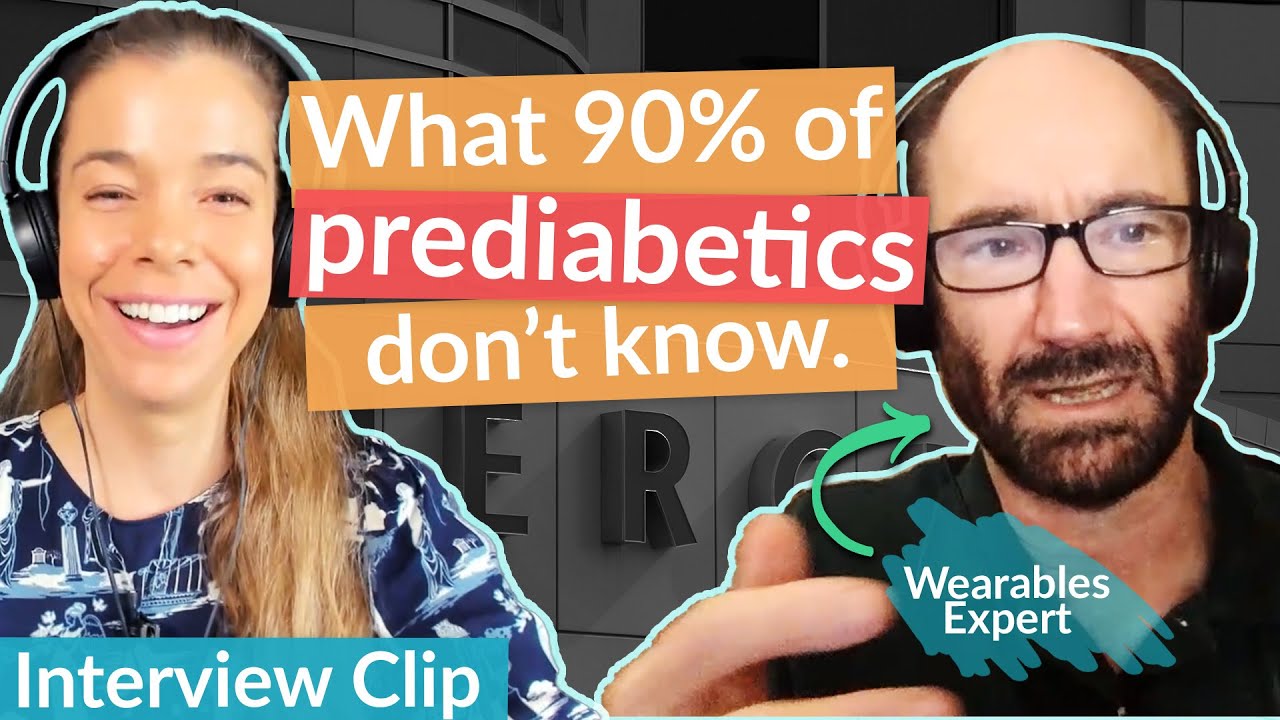
In this clip from the FoundMyFitness interview with Dr. Ben Bikman, he discusses berberine and vinegar as supplements that can influence glucose regulation. A meta-analysis of controlled trials found that vinegar reduced post-meal glucose and insulin exposure. In a randomized meal study, vinegar served with white bread also reduced the early glucose and insulin response and increased subjective satiety. [1] [2]
Berberine has improved fasting glucose, post-meal glucose, and glycated hemoglobin in controlled trials involving people with type 2 diabetes. Reviews describe clinically useful metabolic effects while also noting differences in dose, product, treatment duration, and study quality. Medicine interactions and additive glucose lowering are important considerations when berberine is combined with diabetes treatment. [3] [4]
Dr. Ben Bikman and Dr. Rhonda Patrick then recenter the discussion on lactate, acetate, and beta-hydroxybutyrate as both fuels and signaling molecules. In a randomized crossover experiment in only 20 women with polycystic ovary syndrome, one acute beta-hydroxybutyrate drink lowered glucose and changed selected metabolic and hormonal measures. The small, short study does not establish a treatment for PCOS or a durable clinical benefit. [5]
Ketone signaling also depends on metabolic context. Dr. Bikman describes low glucose together with elevated endogenous ketones as a coordinated fasting-like signal; low glucose without a meaningful ketone rise is not the same physiological state. Vinegar and berberine may modestly change glycemic measures, but the larger practical point is that substrate levels and signaling molecules must be interpreted together, with medication interactions and hypoglycemia risk considered.
- ^ Shishehbor F; Mansoori A; Shirani F (2017). Vinegar consumption can attenuate postprandial glucose and insulin responses; a systematic review and meta-analysis of clinical trials. Diabetes Res Clin Pract 127, .
- ^ Ostman E; Granfeldt Y; Persson L; Björck I (2005). Vinegar supplementation lowers glucose and insulin responses and increases satiety after a bread meal in healthy subjects. Eur J Clin Nutr 59, 9.
- ^ Dong, Hui; Wang, Nan; Zhao, Li; Lu, Fuer (2012). Berberine In The Treatment Of Type 2 Diabetes Mellitus: A Systemic Review And Meta-Analysis Evidence-Based Complementary And Alternative Medicine 2012, .
- ^ Liu, Dangzhen; Zhao, Haiyan; Zhang, Yiwen; Hu, Jingqing; Xu, Hong (2025). Efficacy And Safety Of Berberine On The Components Of Metabolic Syndrome: A Systematic Review And Meta-Analysis Of Randomized Placebo-Controlled Trials Frontiers In Pharmacology 16, .
- ^ Rittig N; Christiansen Arlien-Søborg M; Svart MV; Thomsen HH; Kirkegaard K; Greve VH, et al. (2025). Ketone supplementation acutely lowers androgen and glucose levels in women with polycystic ovary syndrome: a randomized clinical trial. Eur J Endocrinol 192, 6.
Dr. Rhonda Patrick: Many people ask about these supplements and you know are there these supplements that can improve insulin sensitivity. So they you know you hear everything from magnesium to alpha lipoic acid to berberine apple cider vinegar and if if there's any merit to that or taking it before a meal or or is this just like dropping like a drop of water on the in the pool to like fill the pool up?
Dr. Ben Bikman: Yeah. Well, in fact, every one you just mentioned works. Um, frankly, the one I like to talk about the most because the evidence is so compelling and it's so easy to get. So, berberine is undoubtedly effective. No doubt it works. Berberine absolutely works. I love apple cider vinegar as a personal favorite. Maybe it's because of my old man palate where I like really tart things the older I'm getting. So, I just love the taste when I dilute it in water or sparkling water. But apple cider vinegar that really that that's the shortest of all short chain fats that acetic acid and the short chain in the human diet. As much as we eat a lot of fat, most of it is from seed oils and soybean oil, but we lose out on the full spectrum of fats because we don't really eat a lot of fermented foods anymore. So we don't get the medium-chain fats and because we don't eat any much fermentation fermented foods, we don't get any short-chain fats for the most part. So short-chain fatty acids, which is what apple cider vinegar is, is a really it it that's a small little molecule that punches well above its its weight, where the acetic acid will reduce hepatic um gluconeogenesis to help control glucose. Um which is very relevant in a person with diabetes with especially type two. There's so much glucagon always in their bloodstream, it's constantly pushing the liver to make more glucose. Apple cider vinegar will inhibit that and so it it helps the blood glucose by just having the liver dump less glucose into the blood but it also stimulates AMPK and you'd mentioned GLUT4 at the muscle. The reason exercise is able to open GLUT4 or translocate it and get the glucose in without insulin is because of AMPK. Uh so it's that interesting paradox of exercise where insulin comes down and yet glucose is taking in more the muscle is taking in more glucose than it ever was. It's because of this kind of backdoor of the muscle exercising. AMPK gets turned on through a series of events that moves GLUT4. Well, apple cider vinegar will do the same thing. In the absence of exercise, albeit to a more modest degree. So that's a couple mechanisms among others including mitochondrial biogenesis and a little bit of uncoupling where apple cider vinegar is one of my favorites where if you take a couple tablespoons before your most starchy meal, you absolutely could compare the glucose curve from one day to the next and you'll see that it's significantly lower with just that tart little bit of drinking.
Dr. Rhonda Patrick: That's fascinating because when you're talking about the short-chain fatty acid, you know, and I'm thinking, you know, acetate.
Dr. Ben Bikman: Yep.
Dr. Rhonda Patrick: So acetate, acetic acid, that we're going from acid base. Um, I'm thinking of lactate, lactic acid, lactate, lact. And that's when you're generating with exercise and lactate signaling
Dr. Ben Bikman: is through AMP kinase. It's it's it's it's very much
Dr. Rhonda Patrick: Yeah. You know, and then I'm thinking, well, is this like a short chain fatty acid sort of like because they're signaling molecules, right? They are. And is there is there something that would be so interesting to look at to see if there's something going on with lactate, acetate, malate, right? Like that's in like a Granny Smith apple or something like the more sour apple, right?
Dr. Ben Bikman: Yep.
Dr. Rhonda Patrick: I mean, all these different short chain fatty acid.
Dr. Ben Bikman: Well, the short-chain fatty acids that you're getting from foods and then there's another malate's also in like blueberries,
Dr. Rhonda Patrick: uh, malic acid, malic acids in them. And then so so I just my my sort of wheels are turning here when you're mentioning that because it would be so fascinating to see if there's a common mechanism like why is the acetic acid work working? We know lactate works too. Yeah. Um and so
Dr. Ben Bikman: I think acetic acid I know beta-hydroxybutyrate one of the one of the ways that main ketone not that we've talked about ketones but some of my work is on ketones. I've been wonder I've wondered in the past the ketone is unique because on one hand it's a nutrient. It's a calorie to be burned but at the other hand it's a signaling molecule and it is known to elicit some of its signaling like anti-inflammatory effects and antioxidant effects. Part of it is through changes elicited because of a G protein-coupled receptor where it does have a cell surface receptor that it will activate. I don't know the degree to which acetic acid may do the same thing but with regards to beta-hydroxybutyrate even exogenous ketones um that wasn't one you mentioned but there are increasingly increasing studies showing that you can have there was just a a study in women with PCOS the only intervention was to give them exogenous ketones and every outcome related to metabolic markers and PCOS got better and the only change was the supplementation with exogenous ketones. I don't know that that was an effect of the bioenergetics of the ketone. It was probably more of the signaling effect. And so that would be another thing if a person's becoming increasingly curious about ketones. And that's not without justification. The evidence supporting the the value of ketones is growing uh and and growing quickly and it ought to. I have never in the past wanted to be seen as a drum beating advocate of a ketogenic diet. simply knowing that that's not everyone's cup of tea. But increasingly, I will vigorously defend ketones as very beneficial, viable signaling molecules in the body. So even when it comes to uh controlling the metabolic response, you're probably going to eat less because ketones have a very satiating effect um more so than say glucose does. Um but then they also will impact uh mitochondrial uncoupling and help the body burn through that glucose faster.
Dr. Rhonda Patrick: No, it's it's it's it's interesting. Ketone ketones are definitely signaling molecules and I also think there's a lot of overlap between lactate and beta-hydroxybutyrate as well. I mean they're activating a lot of the same like brain-derived neurotrophic factor being one that you know um and and the you know I've had Dom D'Agostino on the podcast twice. We talked a lot about ketogenic diets and uh you know Dr. Eric Verdin talked about them as well. Um, I do think they're not the easiest diet for people to follow for for several reasons. Um, including, you know, social, too. Being social.
Dr. Ben Bikman: No, no, they're it's restrictive.
Dr. Rhonda Patrick: It's definitely restrictive. Um, but, you know, perhaps cycling them. I'm I've been interested in in cycling it. I've I've only done it like a couple of times. Um, for me, it's also very hard to do as well, but I'm interested in the brain benefits of ketones.
Dr. Ben Bikman: Yep.
Dr. Rhonda Patrick: Um, and
Dr. Ben Bikman: this is where exogenous ketones, I think, become so helpful. Where if you have someone who just says, "I just don't want to do the ketogenic diet, but I still would like some of the benefits." Um, there are so many good options nowadays that I think I think it becomes a viable approach for someone to say, I want the ketones, but I want I don't want ketogenic, so I'm just going to drink them.
Dr. Rhonda Patrick: Do you think the dose matters? So like not only in respect to wanting the right dose of ketones to activate, you know, these beneficial signaling pathways, but also to make sure that you're not like dipping too low, like your glucose doesn't go too low where you're kind of like, what's going on here? A little bit anxious, a little bit Yeah. Like you can get I can get, you know, when I haven't eaten for like many hours, I like forget to eat because I'm so busy. All of a sudden, I'll start to get a little anxious and I'm like, what's going on? Oh, I haven't eaten, you know? So
Dr. Ben Bikman: yeah. Yeah. So you what's interesting actually even the earlier in our discussion I mentioned on one of my many tangents Dr. George Cahill's work and he was really one of the more more famous prominent what they called at the time starvation scientists we would call fasting scientists but that same study I mentioned, where it made you wonder: why was it that these patients who got down to 20 milligrams per deciliter of glucose many people will say that's lethal like it'll kill you and yet they not only didn't die they had no cognitive deficit whatsoever the speculation I don't know whether it him or maybe Richard Veech in a sort of follow-up commentary, a ketone scientist who's also passed away now, where uh if if the brain has adapted to ketones, it may be more resilient to tolerate a low glucose, but most people one haven't adapted to ketones and two don't even have any ketones. That's the problem is because the same intervention for the most part that's going to drop the glucose in someone like someone who eats a really sugary meal or drinks it their glucose is going to come up and the higher it goes usually the lower it's going to go at the end where you have a rebound hypoglycemia. You would say well I should be able to weather that drop because I have ketones. No, because the same thing that's that's helping you reverse your glucose, the high insulin is going to inhibit ketogenesis. And so you've deprived your brain in that acute moment of its primary fuels, glucose and ketones, although the brain does use lactate um as a fuel as well, albeit to lower levels. But if glucose and ketones have started to go low, that's going to be a panic at the brain because that is its two primary fuels. And as I mentioned earlier, the brain doesn't have a reservoir of stored energy, a very very modest amount, but its metabolic rate is so high that it it needs constant
[Source clip ends mid-sentence.]
Attend Monthly Q&As with Rhonda
Support our work

The FoundMyFitness Q&A happens monthly for premium members. Attend live or listen in our exclusive member-only podcast The Aliquot.
Blood sugar News
- Probiotic diabetes solution? Probiotic reduces blood glucose by 30% by producing GLP-1, a hormone increases insulin.
- Milk chocolate exerts differential health effects, depending on the timing of consumption.
- Boosting glycogen breakdown in neurons with tau-related damage improves symptoms of neurodegeneration, a potential strategy for Alzheimer's and related diseases.
- Weight loss and health improvements with Mediterranean, intermittent fasting, and Paleo diets