The Evidence Behind Four Supplements Rhonda Patrick Takes
The Omega-3 Supplementation Guide
A blueprint for choosing the right fish oil supplement — filled with specific recommendations, guidelines for interpreting testing data, and dosage protocols.
You'll also receive updates from Rhonda & FoundMyFitness
In this clip from Dr. Rhonda Patrick's appearance on Huberman Lab, she explains the evidence behind several supplements in her routine. In the COSMOS trial program, a standard daily multivitamin produced a small average benefit in global cognition and episodic memory among older adults over two to three years. CoQ10 participates in mitochondrial energy production, while its ubiquinone and ubiquinol forms interconvert after absorption and can differ in bioavailability by formulation. These supplements are best matched to diet, medicines, and a defined goal. [1]
Urolithin A is produced when certain gut microbes transform compounds found in pomegranate, berries, and walnuts, but production varies substantially between people. Human trials of purified urolithin A have found changes in biomarkers related to mitochondrial quality control and improvements in selected strength or endurance measures. A short study also found changes in selected immune-cell phenotypes and metabolism, extending research into how mitochondrial support may influence cellular function. [2] [3] [4] [5]
Sulforaphane is produced from glucoraphanin through the action of myrosinase and activates NRF2-regulated cytoprotective pathways. In randomized trials involving adults exposed to substantial air pollution, standardized broccoli-sprout beverages increased urinary excretion of selected benzene and acrolein metabolites. Product formulation matters because glucoraphanin dose, active myrosinase, storage, and individual conversion can all affect sulforaphane exposure. [6] [7]
This clip is excerpted, with permission, from Dr. Rhonda Patrick's appearance on Huberman Lab. Thank you to Huberman Lab for allowing us to share it.
- ^ Vyas, Chirag M; Manson, JoAnn E; Sesso, Howard D; Cook, Nancy R; Rist, Pamela M; Weinberg, Alison, et al. (2024). Effect Of Multivitamin-Mineral Supplementation Versus Placebo On Cognitive Function: Results From The Clinic Subcohort Of The COcoa Supplement And Multivitamin Outcomes Study (COSMOS) Randomized Clinical Trial And Meta-Analysis Of 3 Cognitive Studies Within COSMOS The American Journal Of Clinical Nutrition , .
- ^ Kuerec AH; Lim XK; Khoo AL; Sandalova E; Guan L; Feng L, et al. (2024). Targeting aging with urolithin A in humans: A systematic review. Ageing Res Rev 100, .
- ^ Liu, Sophia; D’Amico, Davide; Shankland, Eric; Bhayana, Saakshi; Garcia, Jose M.; Aebischer, Patrick, et al. (2022). Effect Of Urolithin A Supplementation On Muscle Endurance And Mitochondrial Health In Older Adults JAMA Network Open 5, 1.
- ^ Singh, Anurag; D’Amico, Davide; Andreux, Pénélope A.; Fouassier, Andréane M.; Blanco-Bose, William; Evans, Mal, et al. (2022). Urolithin A Improves Muscle Strength, Exercise Performance, And Biomarkers Of Mitochondrial Health In A Randomized Trial In Middle-Aged Adults Cell Reports Medicine 3, 5.
- ^ Denk D; Singh A; Kasler HG; D'Amico D; Rey J; Alcober-Boquet L, et al. (2025). Effect of the mitophagy inducer urolithin A on age-related immune decline: a randomized, placebo-controlled trial. Nat Aging 5, 11.
- ^ Egner PA; Chen JG; Zarth AT; Ng DK; Wang JB; Kensler KH, et al. (2014). Rapid and sustainable detoxication of airborne pollutants by broccoli sprout beverage: results of a randomized clinical trial in China. Cancer Prev Res (Phila) 7, 8.
- ^ Johnson, Jamie; Egner, Patricia; Ng, Derek; Zhu, Jian; Wang, Jin-Bing; Xue, Xue-Feng, et al. (2019). Dose-dependent Detoxication Of The Airborne Pollutant Benzene In A Randomized Trial Of Broccoli Sprout Beverage In Qidong, China The American Journal Of Clinical Nutrition 110, 3.
Dr. Andrew Huberman: Are there other supplements you take to avoid deficiencies or for specific reasons?
Dr. Rhonda Patrick: I take a multivitamin to cover possible micronutrient gaps. Three cognitive substudies within the COSMOS trial program found a small average benefit from a standard daily multivitamin in older adults over two to three years. The investigators translated the global-cognition difference into roughly two years of age-related cognitive change. That is a statistical analogy. It does not mean that the multivitamin literally made the brain two years younger or prevented dementia.
A standard-dose multivitamin can be reasonable for some older adults or people with dietary gaps. It is not harmless or necessary for everyone. The formulation, diet, medicines, and other supplements matter. Vitamin K can interact with warfarin. Iron, preformed vitamin A, vitamin B6, and iodine can be excessive for some people.
I also use vitamin D, omega-3, creatine, and magnesium. Evidence that magnesium improves sleep is limited, and magnesium glycinate, bisglycinate, malate, and taurate have not been shown to be universally superior sleep forms. Supplemental magnesium can cause diarrhea and can accumulate with significant kidney impairment.
I take coenzyme Q10 as ubiquinol. CoQ10 participates in mitochondrial energy production. Ubiquinone and ubiquinol interconvert after absorption, and formulation can matter more than the redox label. Clinical benefit is condition-specific. Routine supplementation has not been shown to improve longevity, general mitochondrial function, or exercise performance in every healthy person.
I also take purified urolithin A. Gut microbes produce urolithins from ellagitannins and ellagic acid in foods such as pomegranate, some berries, and walnuts. Production varies by microbiome.
Small human trials found changes in muscle and blood biomarkers related to mitochondrial quality control. Some selected strength or endurance measures improved, but several primary functional outcomes did not. These studies do not directly show whole-body mitophagy, mitochondrial rejuvenation, longer life, or better clinical immunity. Most pivotal studies were linked to the product manufacturer, so independent replication is important.
Another product I use combines glucoraphanin with myrosinase to produce sulforaphane. Broccoli sprouts and other cruciferous vegetables contain glucoraphanin. Crushing or chewing can activate myrosinase, which converts it to sulforaphane. Product formulation, active myrosinase, storage, and individual conversion affect exposure.
Sulforaphane activates NRF2-related cytoprotective pathways. In randomized trials, specific standardized broccoli-sprout beverages increased urinary excretion of selected benzene and acrolein metabolites in adults exposed to substantial air pollution. These are pathway biomarkers. They do not show broad toxin removal, cancer prevention, or benefit from every retail supplement.
There is no controlled human evidence that sulforaphane increases BPA elimination or removes microplastics. Animal studies and shared enzyme pathways provide a hypothesis, not a family-wide recommendation. A small nine-person pilot suggested blood and selected brain-glutathione changes, but controlled replication is needed.
High-temperature cooking can form heterocyclic aromatic amines and polycyclic aromatic hydrocarbons. No trial shows that a sulforaphane supplement neutralizes charred meat or prevents cancer. Avoiding heavy charring is a more direct precaution.
Get email updates with the latest curated healthspan research
Support our work
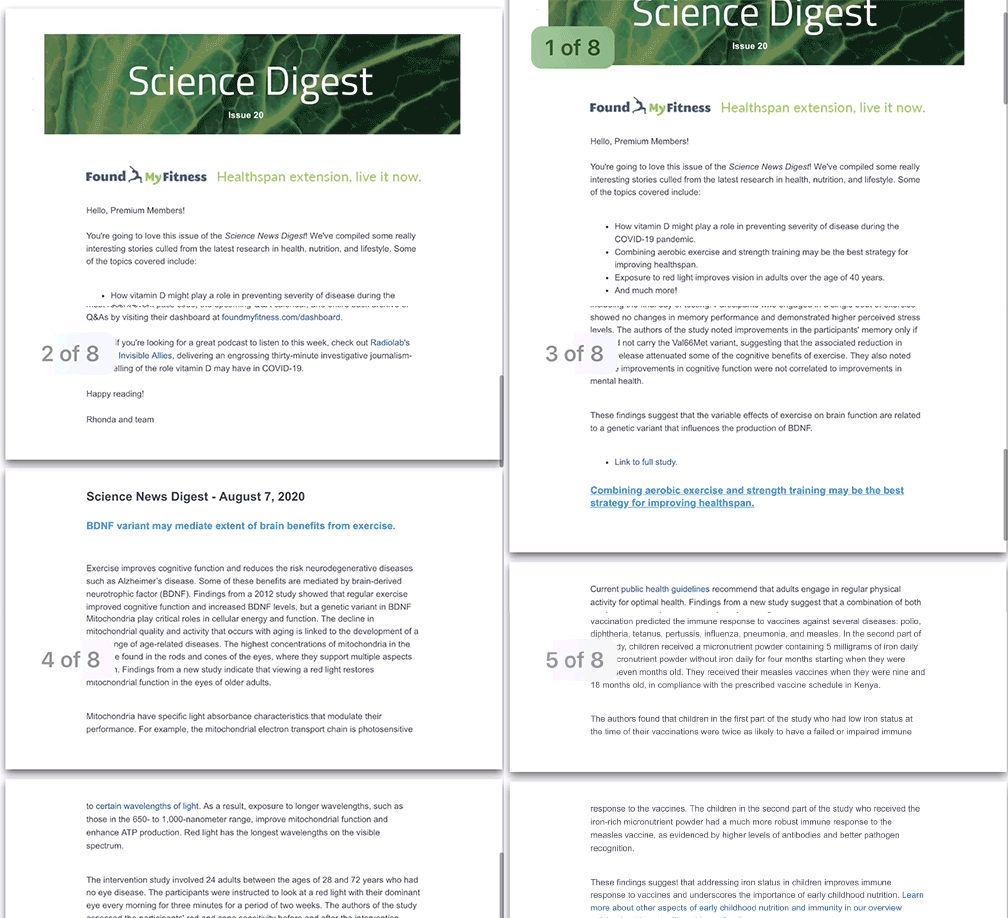
Every other week premium members receive a special edition newsletter that summarizes all of the latest healthspan research.
Supplements News
- Omega-3 fatty acid supplementation benefits people with depression.
- Alpha-lipoic acid supplements promote weight loss in obese people who are otherwise healthy.
- Study reveals a sixfold decrease in C-reactive protein levels among obese women who took omega-3s during pregnancy.
- Curcumin reduces pain associated with osteoarthritis of the knee.