Migraine
Episodes
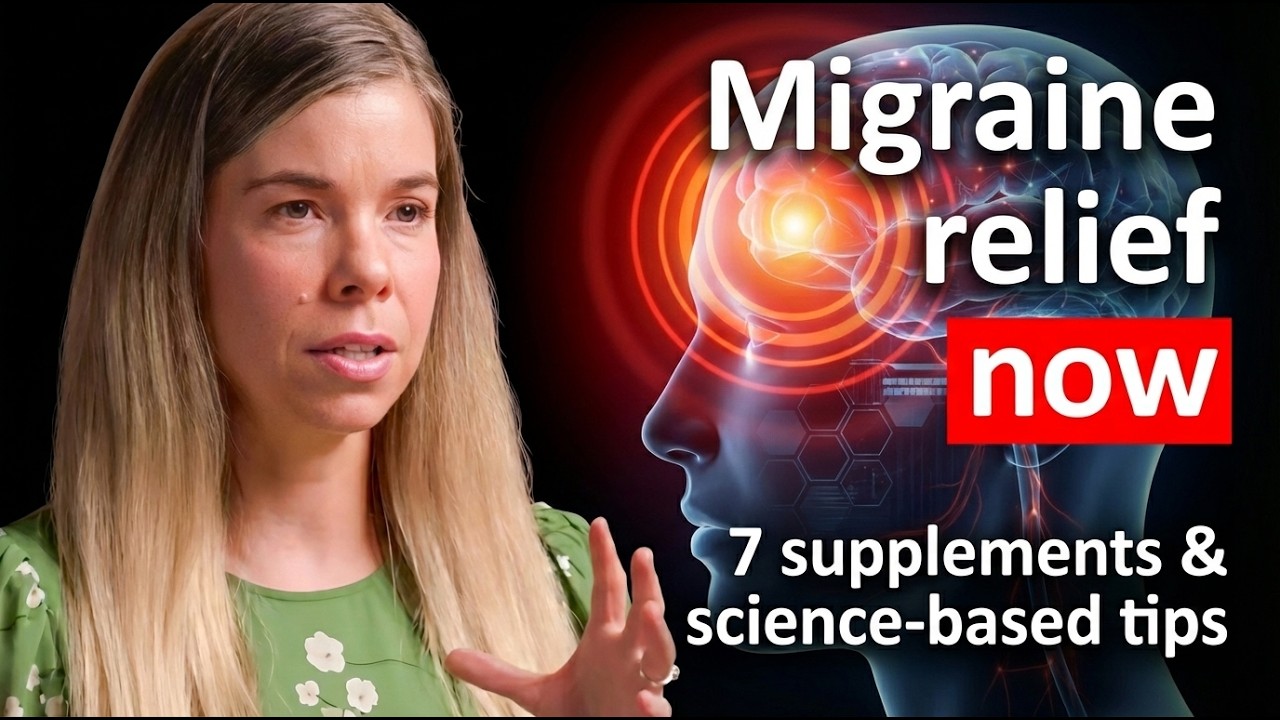
Dr. Rhonda Patrick reviews sleep, hydration, exercise, diet, and selected nutrients that may reduce migraine frequency and severity.

Dr. Rhonda Patrick discusses joint aging prevention, avoiding heavy metals in protein, reducing migraines, nicotinamide for skin, and minimizing jet lag.

Dr. Rhonda Patrick reviews magnesium, brain health, and one cited crossover trial of magnesium oxide for migraine prevention.
-
Dr. Rhonda Patrick reviews sleep, hydration, exercise, diet, and selected nutrients that may reduce migraine frequency and severity.
-
Dr. Rhonda Patrick discusses joint aging prevention, avoiding heavy metals in protein, reducing migraines, nicotinamide for skin, and minimizing jet lag.
-
Dr. Rhonda Patrick reviews magnesium, brain health, and one cited crossover trial of magnesium oxide for migraine prevention.
-
Migraine is a neurological disorder that typically manifests as an intense, debilitating headache and is often accompanied by nausea, vomiting, and light sen...
Topic Pages
News & Publications
-
Chronic migraines increase the risk of developing vascular dementia by 33 percent – even for younger, otherwise healthy individuals. journals.plos.org
Migraine is a neurological disorder commonly manifested as severe headache pain accompanied by nausea, vomiting, and light sensitivity. Approximately 15 percent of people worldwide experience migraine, with women reporting migraine more often than men. A new study shows that migraine increases a person’s risk of vascular dementia.
Researchers used data from a large, population-based cohort study involving nearly 6 million adults with or without regular migraines. They tracked the participants' health for about ten years and assessed their risk for developing vascular dementia.
They found that people with chronic migraines were 33 percent more likely to develop vascular dementia than those without. Those with episodic migraines were 16 percent more likely. The risk of developing vascular dementia was greater among younger people, women, non-smokers, and those without hypertension or diabetes.
These findings suggest that migraine increases the risk of developing vascular dementia, possibly manifesting in younger, otherwise healthy adults. Migraines and vascular dementia share many pathophysiological traits that may explain their interconnected risk. For example, both conditions elicit alterations in cerebral blood flow, with migraines characterized by impaired blood vessel tone and responsiveness and vascular dementia characterized by chronic cerebrovascular insufficiency. In addition, inflammatory processes contributing to brain endothelial dysfunction play a critical role in both disorders.
However, some evidence suggests magnesium prevents migraines. Learn more in this clip featuring Dr. Rhonda Patrick.
-
Dietary fiber may protect against severe headaches or migraines. pubmed.ncbi.nlm.nih.gov
Eating more fiber may reduce the risk of severe headaches or migraines, a recent study shows. For every 10 grams of dietary fiber consumed, the risk of severe headache or migraine decreased by 11 percent.
The study involved nearly 13,000 people living in the United States. Participants provided information about their regular dietary fiber intake and the number and severity of their headaches or migraines.
People who consumed the highest amount of dietary fiber (more than 22 grams per day) were 26 percent less likely to report experiencing severe headaches or migraines than those who consumed the least amount of fiber (less than 7.8 grams per day). For every 10-gram per day increase in dietary fiber intake, the frequency of severe headaches or migraines dropped by 11 percent.
Dietary fiber refers to the indigestible components of plant-based foods. The fermentation of dietary fibers in the gut produces molecules that modulate immune function by way of T regulatory cells, such as the short-chain fatty acids.
According to the Dietary Guidelines for Americans, the recommendations for combined fiber intake vary according to age and sex. Women need between 22 and 28 grams of fiber per day, and men need between 28 and 34 grams per day. Most people living in the United States only get about half of the recommended amounts of fiber daily.
The findings of this study suggest that consuming dietary fiber protects against severe headaches and migraines. Obtaining enough fiber when following a ketogenic diet may prove challenging. Learn how to include fiber in a ketogenic diet in this episode featuring Dr. Dominic D'Agostino.
-
Estrogen and other sex hormones may be responsible for the higher prevalence of migraine in women, while testosterone may be protective. (2018) www.sciencedaily.com
From the article:
Ferrer-Montiel and his team reviewed decades of literature on sex hormones, migraine sensitivity and cells' responses to migraine triggers to identify the role of specific hormones. Some (like testosterone) seem to protect against migraines, while others (like prolactin) appear to make migraines worse. They do this by making the cells' ion channels, which control the cells' reactions to outside stimuli, more or less vulnerable to migraine triggers.
Some hormones need much more research to determine their role. However, estrogen stands out as a key candidate for understanding migraine occurrence. It was first identified as a factor by the greater prevalence of migraine in menstruating women and the association of some types of migraine with period-related changes in hormone levels. The research team’s evidence now suggests that estrogen and changes in estrogen levels sensitize cells around the trigeminal nerve to stimuli. That makes it easier to trigger a migraine attack.
-
Omega 3 fatty acids may reduce migraine headaches. www.eurekalert.org
Migraine is a neurological disorder commonly manifested as severe headache pain accompanied by nausea, vomiting, and light sensitivity. Approximately 15 percent of people worldwide experience migraine, with women reporting migraine more often than men. Findings from a new study suggest that oxylipins reduce headache pain among people with migraine.
Oxylipins are byproducts of polyunsaturated fatty acid metabolism. They play both pro- and anti-inflammatory roles in the human body and are key regulators of pain. Whereas oxylipins derived from omega-6 fatty acids promote pain, those derived from omega-3 fatty acids reduce pain.
The authors of the report conducted a three arm, parallel group, randomized controlled trial. Participants included 182 adults (average age, 38 years) who experienced migraine headaches five to 20 times per month. They were randomly assigned to consume one of three specially designed diets that contained omega-3 fatty acids (eicosapentaenoic acid [EPA] and docosahexaenoic acid [DHA]) and an omega-6 fatty acid (linoleic acid) for 16 weeks. A high omega-3 diet provided 1.5 grams of EPA+DHA and approximately 7 percent of total caloric intake from linoleic acid daily. A high omega-3/low omega-6 diet provided 1.5 grams of EPA+DHA and approximately 1.8 percent or less of total calories from linoleic acid. A control diet provided less than 150 milligrams of EPA+DHA and approximately 7 percent of total caloric intake from linoleic acid daily. Participants tracked their migraine headache frequency, and the authors measured levels of 17-hydroxydocosahexaenoic acid (17-HDHA), a type of pain-reducing oxylipin, in the participants' blood.
The high omega-3 and high omega-3/low omega-6 diets decreased the number of headache hours participants experienced per day as well as the number of headache days experienced per month. The high omega-3/low omega-6 diet was nearly twice as effective at reducing the number of headache days per month than the high omega-3 diet, suggesting that lowering linoleic acid provided an additional beneficial effect. The high omega-3 and high omega-3/low omega-6 diets both increased 17-HDHA levels in the participants' blood, but the control diet did not.
These findings demonstrate that omega-3 fatty acids may help reduce migraine headaches and highlight yet another beneficial health effect associated with these healthful fats.