Creatine
Creatine featured article
Creatine is a naturally occurring compound that is critical in storing and releasing cellular energy. It also participates in many biological processes driving pregnancy outcomes, maintaining bone mineral density and muscle mass in older adults, improving neurological function, and aiding the immune system to fight cancer. Creatine is best known for its widespread use as a dietary supplement to enhance physical performance.
Creatine uptake, synthesis, storage, and supplementation
Creatine uptake
Creatine can be supplied exogenously (from dietary or supplemental sources) and taken directly into cells by the creatine transporters designated CreaT1 and CreaT2. Dietary sources of creatine include meat, such as red meat and poultry, as well as fish. Meat contains approximately 4 to 5 grams of creatine per kilogram of the animal's weight, while fish contains approximately 4 to 10 grams per kilogram. However, creatine converts to creatinine when heated, so estimates of creatine...
Episodes
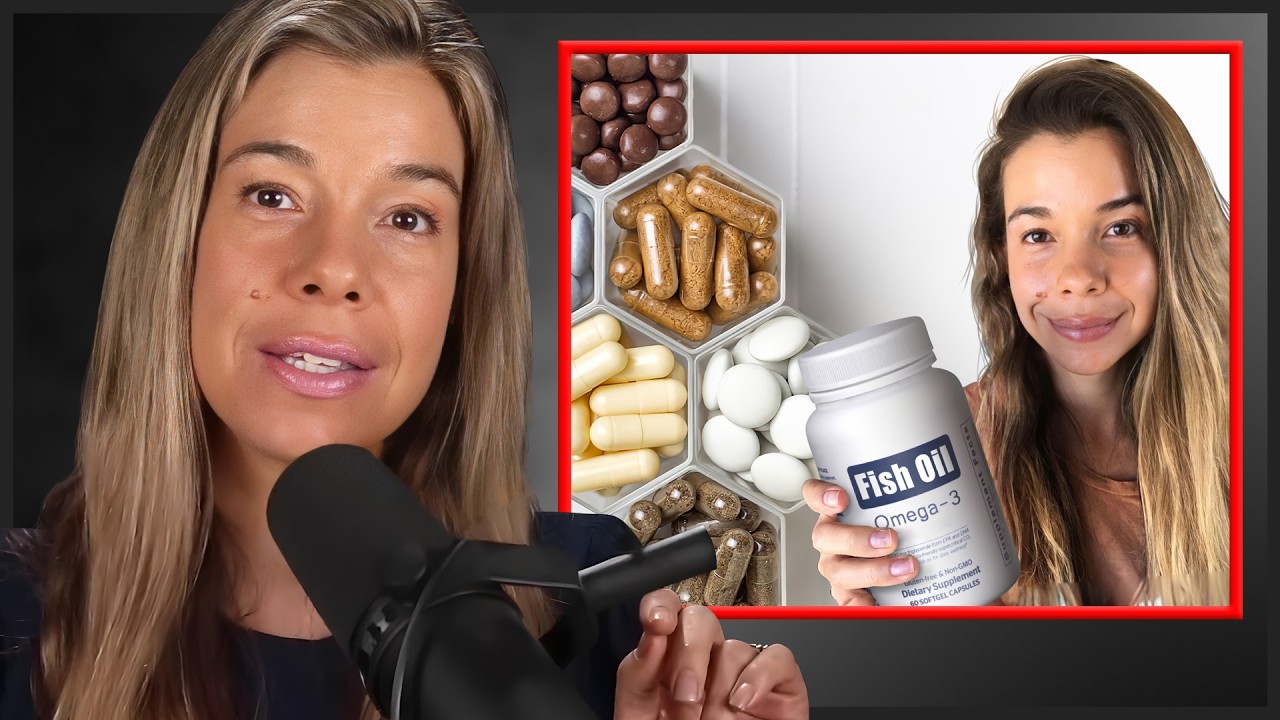
Dr. Rhonda Patrick walks through her October 2024 supplement routine, including omega-3s, creatine, magnesium, collagen, and zinc lozenges.

Drs. Rhonda Patrick and Darren Candow explain why one lean-mass trial does not overturn the broader creatine evidence.

Dr. Rhonda Patrick explains how creatine supports high-intensity exercise and reviews a small sleep-deprivation study.
-
Dr. Rhonda Patrick walks through her October 2024 supplement routine, including omega-3s, creatine, magnesium, collagen, and zinc lozenges.
-
Drs. Rhonda Patrick and Darren Candow explain why one lean-mass trial does not overturn the broader creatine evidence.
-
Dr. Rhonda Patrick explains how creatine supports high-intensity exercise and reviews a small sleep-deprivation study.
-
Dr. Rhonda Patrick and Dr. Peter Attia discuss creatine dosing, cognition under stress, product quality, and muscle performance.
-
Nutrition Exercise Omega-3 Magnesium Rhonda Heat Stress Sauna Protein Aerobic Strength Supplements CreatineDr. Rhonda Patrick shares how she combines exercise, protein, creatine, omega-3s, magnesium, and heat in her weekly routine.
-
Dr. Rhonda Patrick reviews vitamin D, omega-3s, multivitamins, magnesium, creatine, and melatonin for adults over 65.
-
Dr. Rhonda Patrick discusses creatine dosing for muscle and brain energy, cognition, sleep loss, and methylation.
-
Dr. Rhonda Patrick explains how meals, consistency, and individual goals shape the timing of vitamin D, omega-3s, magnesium, and more.
-
Dr. Rhonda Patrick explains how creatine supports training and brain energy and reviews high-dose research during sleep loss.
-
Dr. Rhonda Patrick discusses food-first calcium and iron, vitamin D, omega-3, multivitamins, creatine, and protein powder for children.
-
Dr. Rhonda Patrick discusses resistance and weight-bearing exercise, calcium, vitamin D, creatine, and collagen for bone health after 65.
-
Dr. Rhonda Patrick explains creatine for training and explores brain energy, cognition during severe sleep loss, and product quality.
-
Dr. Rhonda Patrick explains how to match glutathione, vitamins, omega-3, creatine, and magnesium to individual needs.
-
Dr. Rhonda Patrick explains creatine loading and maintenance for muscle and explores cognition and brain energy during severe sleep loss.
-
Exercise Circadian Rhythm Meditation Behavior Mental Health Rhonda Caffeine Protein Creatine CognitionDr. Arthur Brooks shares a five-part morning routine combining exercise, spiritual practice, creatine, caffeine, and protein for deep work.
-
Dr. Rhonda Patrick explains creatine dosing for muscle performance and explores brain energy and cognition during severe sleep deprivation.
-
Dr. Rhonda Patrick reviews omega-3, multivitamins, vitamin D, magnesium, and creatine for nutrient gaps, exercise, and brain energy.
-
Dr. Rhonda Patrick explains creatine for muscle energy and explores brain dosing and cognitive performance during sleep loss.
-
Dr. Rhonda Patrick reviews multivitamins for cognitive aging and creatine for muscle energy and cognitive performance during sleep loss.
-
Magnesium Alzheimer's Vitamin C Curcumin Fiber Arthritis Sauna BFR Red Light Therapy Carotenoids Creatine RhondaDr. Rhonda Patrick discusses glucosamine and Alzheimer's, blood flow restriction, beta-glucan fiber, creatine, collagen, red light therapy, and curcumin.
-
Rhonda Pollution Fiber Sauna Caffeine Supplements Urolithin A Creatine Reproductive Health Exogenous Ketones Cholesterol Ubiquinol PfasBeta-glucan versus psyllium for lowering LDL, PFAS reduction, creatine and caffeine, urolithin A, exogenous ketones, IVF, Botox, and sauna.
-
Dr. Rhonda Patrick discusses child nutrition, osteoporosis, cholesterol-lowering supplements, her skincare routine, and fasting versus prioritizing protein.
-
Jet lag often shows up as fatigue after a long flight, reflecting a mismatch between your internal clock and the external...
-
Dr. Rhonda Patrick discusses protein needs, choline in pregnancy, urolithin A, melatonin's benefits and risks, and creatine's effects on liver health.
-
Dr. Rhonda Patrick explains how creatine supports muscle and brain energy and reviews high-dose research during acute sleep deprivation.
-
Dr. Rhonda Patrick explains creatine's muscle and brain effects, including evidence in vegetarians and during acute sleep loss.
-
Drs. Darren Candow and Rhonda Patrick discuss emerging evidence that creatine may support sleep and brain health after training.
-
Drs. Darren Candow and Rhonda Patrick examine creatine myths about hair loss, blood pressure, sleep, cancer, and urination.
-
Drs. Rhonda Patrick and Darren Candow discuss creatine dosing for brain energy, aging, sleep loss, and mental fatigue.
-
Drs. Rhonda Patrick and Darren Candow explain how creatine supports strength, training capacity, recovery, and muscle adaptation.
-
Dr. Rhonda Patrick and Brady Holmer explain how omega-3s and creatine support muscle preservation, training, and recovery.
-
Dr. Darren Candow and Dr. Rhonda Patrick discuss the science of creatine for muscle performance and brain health.
-
Dr. Stuart Phillips and Dr. Rhonda Patrick discuss creatine monohydrate for strength, muscle, cognition, and healthy aging.
-
Dr. Rhonda Patrick details her supplement routine, including omega-3s, creatine, melatonin, magnesium, and product-selection criteria.
-
Dr. Layne Norton ranks creatine, rhodiola, and ashwagandha by evidence for performance, cognition, stress, and recovery.
-
Dr. Rhonda Patrick reviews creatine for performance, recovery, healthy aging, dosing, safety, kidney concerns, and hair-loss claims.
-
Exercise stresses the entire body – the heart, lungs, bones, muscles, and even the brain. The body responds by inducing a wide range of adaptations that incr...
Topic Pages
News & Publications
-
Losing weight can mean losing lean tissue along with fat, an increasing concern as muscle mass and strength tend to decline with age. A clinical trial tested whether creatine could improve that balance, both alongside a training program and without structured exercise.
Researchers recruited 73 adults aged 45–65 for a 12-week trial, with 64 completing the study. Participants first chose whether to join an exercise program, then were randomly assigned within each group to creatine monohydrate (5 grams twice daily) or placebo. Exercisers completed supervised resistance and aerobic training three times weekly while following a diet that aimed to reduce calories by 300–500 per day.
- Among adults exercising and dieting, lean mass increased by 1.27 kilograms (2.80 pounds) with creatine over 12 weeks, compared with 0.14 kg (0.31 lb) with placebo.
- Among adults not participating in the structured exercise and diet program, lean tissue increased by 1.10 kg (2.43 lb) with creatine, versus a 0.16-kg (0.35-lb) decrease with placebo.
- During the exercise and diet program, maximum leg-press strength increased more with creatine than placebo: 54.82 kg (120.86 lb) versus 25.85 kg (56.99 lb).
- Among adults not participating in the structured exercise and diet program, maximum bench-press strength increased by 4.02 kg (8.86 lb) with creatine, compared with a 2.96-kg (6.53-lb) decline with placebo.
- During the exercise and diet program, body-fat percentage fell significantly more with creatine than placebo: 3.24 versus 1.87 percentage points.
Creatine increases muscle stores of phosphocreatine, which rapidly replenishes energy during forceful contractions. That extra reserve could improve lifting performance even without structured training and, with regular exercise, help muscles sustain the work that drives adaptation. This may become increasingly relevant with age, as muscle mass and strength decline and weight loss can further reduce lean tissue. Creatine can also increase body water, so some of the increase in lean tissue may reflect changes in hydration rather than muscle growth.
Creatine is not a substitute for exercise, but it may still help both alongside training and without a structured exercise program. Benefits that do not depend on structured training become increasingly relevant with age, when illness or limited mobility may make exercise harder to maintain.
-
Creatine is best known as a muscle supplement, but a new study examined whether it can also support immune cells involved in cancer defense. The researchers focused on dendritic cells, a type of immune cell that helps alert the immune system by presenting antigen fragments from viruses, bacteria, and tumors to T cells, which can then mount responses against infected or abnormal cells.
The work combined cell experiments with an animal tumor model. In mouse dendritic cells, the researchers tested whether the ability to take up creatine affected cell survival, immune signaling, and the activation of T cells. They did this by comparing cells with and without the protein that transports creatine into cells, and by examining how the cells responded to additional creatine. Human dendritic cells made from blood samples from healthy donors were then used to see whether creatine could produce similar immune-supporting effects in human cells. Finally, mice implanted with melanoma cells received creatine injections to determine whether these cellular changes were accompanied by differences in tumor growth and immune activity within tumors.
- Mouse dendritic cells grown in the lab increased activity of the gene for the creatine transporter after immune stimulation, and dendritic cells taken from tumors also showed high activity of that gene.
- Mouse dendritic cells without the creatine transporter were less likely to survive, produced fewer inflammatory signals, showed weaker immune-alert markers, and had lower ATP, the molecule cells use as a direct energy source.
- Creatine-treated dendritic cells survived better, showed stronger immune-alert markers, turned on more inflammatory-response genes, and had higher levels of ATP.
- Human dendritic cells treated with creatine turned on more genes for inflammatory immune signals and were better able to activate T cells engineered to recognize a tumor antigen.
- In the melanoma model, creatine-treated mice had slower tumor growth, and dendritic cells inside the tumors showed stronger signs of immune activity, especially in a subtype that helps present tumor material to T cells.
The results suggest that creatine may help supply the energy needed for dendritic cell activation. Once inside cells, creatine can be converted into phosphocreatine, a stored form of energy support that helps maintain ATP availability. That extra energy support may help dendritic cells send inflammatory signals, display tumor material more effectively, and activate T cells.
Because the study was only conducted in cells and mice, it does not show whether creatine would have the same effects in human cancer patients. If confirmed in clinical trials, creatine could become a simple and inexpensive way to support immunotherapy strategies for cancer treatment. In episode #100, Dr. Darren Candow breaks down the optimal creatine protocol for supporting strength, brain health, and longevity.
-
A single 14-gram dose of creatine helped preserve cognitive performance after a sleepless night. doi.org
High doses of creatine have recently been shown to help preserve cognitive performance during acute sleep deprivation, but it is less clear whether a lower dose can provide similar benefits.
A new study included 29 healthy adults aged 20 to 40 in a crossover trial. Each participant completed two separate sleepless nights in random order, receiving a single dose of 0.2 grams of creatine monohydrate per kilogram of body weight (0.2 g/kg; about 14 grams on average) on one night and a placebo on the other. Participants stayed awake from about 7 a.m. until around 4:30 a.m. the next morning. Cognitive testing was performed several times throughout the sleep-deprivation period, with creatine or placebo given after about 14 hours of wakefulness.
- The clearest benefit was on reasoning questions. Across the three overnight tests, participants scored 6.1% higher with creatine than with placebo after accounting for their starting scores. On the placebo night, reasoning performance fell by 6.8%.
- A few other measures also leaned in favor of creatine compared with placebo, but the evidence was statistically less robust. Participants scored 6.2% higher on numerical reasoning questions, answered verbal questions 12.3% faster, and had 9.2% less variation in their reaction times, while average reaction speed changed little.
- Creatine did not clearly reduce sleepiness or fatigue compared with placebo. By 4 a.m., sleepiness had risen 155% from the 6 p.m. baseline measure with creatine and 173% with placebo. Fatigue also rose in both conditions, by 148% with creatine and 115% with placebo.
- Not every measure improved with creatine: word memory, memory for number sequences, the ability to briefly hold visual information in mind, and language accuracy were not clearly better than with placebo.
Creatine supports cellular energy through the creatine kinase and phosphocreatine system, which helps regenerate ATP, the main energy molecule used by cells. Sleep deprivation is a stress condition that may strain energy reserves and make creatine uptake more relevant than it would be after a restful night, especially during demanding cognitive tasks. This could explain why creatine modestly helped preserve performance during the sleepless night, even though participants still felt increasingly sleepy and fatigued.
This was a small, one-night study in healthy young adults, so it is unclear how well the findings would apply outside this controlled setting. Still, the results suggest that creatine may help preserve some aspects of cognition during sleep loss even at 0.2 g/kg, although the effects appeared less pronounced than in earlier work from the same group using 0.35 g/kg. In this clip, I explain why I increased my creatine intake and how creatine may support brain energy during sleep loss and mid-afternoon dips.
-
Depression research often focuses on neurotransmitters, but the brain also depends on a steady supply of energy to function properly. A new study tested whether problems in how creatine moves from the gut to the brain play a role in depression, and whether certain gut bacteria can help restore this process.
To examine this, researchers combined human data with experiments in mice and cell models. They compared adults with major depressive disorder (MDD) to healthy controls, and mice that developed depression-like behaviors during chronic stress to unstressed control mice, using metabolite profiling (measurement of small molecules involved in metabolism), along with behavioral testing, gut microbiome manipulations, genetic models, and a small, 28-day pilot study in MDD patients taking antidepressants (SSRIs).
- Broad metabolite profiling revealed differences in metabolism between MDD patients and healthy controls, and between mice with depression-like behavior and control mice, with creatine emerging as a key altered molecule.
- People with MDD and mice with depression-like behavior had more creatine in feces but less in blood plasma and in the cerebrospinal fluid (liquid that surrounds the brain and spinal cord). In mice with depression-like behavior, creatine was also lower in the medial prefrontal cortex, a brain region involved in mood and decision-making.
- Creatine improved several depression-like behaviors in mice. It reduced how long the animals remained passive in stress-based tests, improved social interaction, and increased preference for sweet solutions, a common measure of motivation or pleasure-related behavior in animals. These effects were not due to increased overall activity, as creatine did not make the mice more active in general.
- When the gut microbiome was depleted with antibiotics, or replaced with microbes from MDD patients, mice showed a smaller rise in blood creatine after supplementation and lost much of creatine's behavioral benefit.
- The bacterium Bifidobacterium pseudolongum was found at lower levels in MDD patients and in mice that received gut microbes from MDD patients. Mice that had more of this specific gut bacterium also tended to have more creatine in their plasma.
- Bifidobacterium pseudolongum increased levels of the creatine transporter Slc6a8 in intestinal cells, supporting creatine uptake from the gut. This effect was observed in mice and reproduced in human intestinal cells using compounds produced by the bacteria, with acetate identified as a key contributing factor.
- Removing this creatine transporter at the blood–brain barrier and in nerve cells in mice disrupted creatine's effects on behavior, while additional nerve cell experiments showed reduced energy production and impaired neuronal activity when Slc6a8 was absent.
- In the human pilot study, among those MDD patients who completed the experiment, receiving a combination of Bifidobacterium adolescentis (a related strain with established applications in food and medicine) and creatine was associated with greater reductions in depression scores than placebo.
The data point to a disrupted gut–brain energy pathway in depression. Creatine supports cellular energy by helping regenerate ATP, the molecule that powers cellular activity, so reduced availability in the brain could impair normal function. Gut bacteria appear to regulate this pathway: B. pseudolongum and B. adolescentis produce acetate, a short-chain fatty acid that increases levels of the transporter that allows intestinal cells to take up creatine, thereby supporting its absorption into the bloodstream. Creatine must then cross the blood–brain barrier and enter nerve cells to support energy production and signaling. Disrupting this transporter at these steps prevented creatine's behavioral effects, indicating that impaired transport along this pathway may contribute to depression, while restoring it could help improve symptoms.
If this potentially synergistic effect of creatine and specific probiotics is confirmed in larger, well-controlled human trials that compare the effects of creatine and probiotics individually to their combination and placebo, targeting this gut–brain energy pathway could offer a new approach to improving depression treatment. In Aliquot #133, Dr. Candow and I discuss the surprising brain benefits of creatine.
-
Many women going through menopause describe feeling mentally slower or more fatigued, a phenomenon often called "brain fog". Researchers in Serbia explored whether small daily doses of creatine could ease these symptoms and improve brain function.
The study included 36 healthy women around 50 years old, half of whom were menopausal and half perimenopausal. Over eight weeks, participants took creatine capsules twice daily for eight weeks, totaling 750 mg or 1,500 mg of creatine hydrochloride per day, or a combination providing 400 mg of creatine hydrochloride plus 400 mg of creatine ethyl ester per day, or a placebo.
Here is what the researchers found:
- Low-dose creatine hydrochloride (750 mg/day) improved alertness, executive control, and information-processing speed. Women reacted roughly 5–6 percent faster on attention tasks compared with baseline, while the placebo group became about 1 percent slower.
- Medium-dose creatine hydrochloride (1,500 mg/day) improved reaction time by 6.6 percent from baseline, compared with a 1.2 percent change in the placebo group. It also reduced general fatigue by about 14 percent and concentration difficulties by about 48 percent, with a trend toward fewer mood swings.
- The combination of creatine hydrochloride and creatine ethyl ester (800 mg total/day) improved attention and reaction speed on a cognitive task, and uniquely lowered self-reported anxiety by about 39 percent.
- Brain scans showed that all creatine treatments increased total creatine across multiple regions, with notable increases in frontal areas, which are involved in focus and decision-making. For example, right frontal white matter creatine rose by roughly 16 percent in the medium-dose group compared with less than 1 percent in the placebo group.
Creatine helps recycle adenosine triphosphate (ATP), the molecule that powers most cellular activity. The authors suggest that menopause-related hormonal and metabolic changes might make women particularly responsive to creatine's energy-stabilizing effects. Even at these low doses, brain creatine rose measurably—possibly because of improved absorption or slower clearance during this life stage.
Although the findings point to a safe and practical way to support attention, mood, and brain creatine levels during menopause, the trial was small, lasted only eight weeks, and included brain scans from just 16 participants. Larger, longer studies are needed to confirm these results and determine how different creatine formulations and doses might best support women's brain health. Explore the optimal creatine protocol for ftrength, brain, and longevity in episode #100, featuring Darren Candow, PhD.
-
Creatine supplementation does not influence hair growth or hormone levels even after three months of usage, undermining theories of its potential link to hair loss. www.tandfonline.com
Concerns about hair loss have long surrounded creatine, one of the most widely used and extensively studied supplements for enhancing muscle strength and lean mass. Although these claims persist, they are primarily based on anecdotal reports and limited evidence. A recent study found no support for the idea that creatine contributes to hair loss.
Researchers administered either 5 grams of creatine monohydrate or a placebo daily for 12 weeks to 45 healthy, resistance-trained men aged 18 to 40. They excluded participants who had used anabolic-androgenic steroids (which can promote hair loss) or other hormonal enhancement agents within the preceding six months. At the beginning and end of the study, researchers measured testosterone levels, free testosterone, and dihydrotestosterone and assessed hair density and growth. The men maintained their regular diets and workout routines throughout the intervention.
The men taking creatine showed no significant changes in hormone levels or hair health compared to those taking the placebo. Both groups experienced a modest increase in total testosterone—about 15%—regardless of which supplement they consumed. Free testosterone dropped slightly in both groups, while levels of dihydrotestosterone and hair growth measurements remained stable.
These findings suggest that creatine does not harm hair follicle health or elevate dihydrotestosterone levels in healthy men, even after three months of use. Learn more about creatine supplementation in this episode featuring Dr. Darren Candow.