Choosing Urolithin A Supplements and Weighing Less Frequent Dosing
The Omega-3 Supplementation Guide
A blueprint for choosing the right fish oil supplement — filled with specific recommendations, guidelines for interpreting testing data, and dosage protocols.
You'll also receive updates from Rhonda & FoundMyFitness
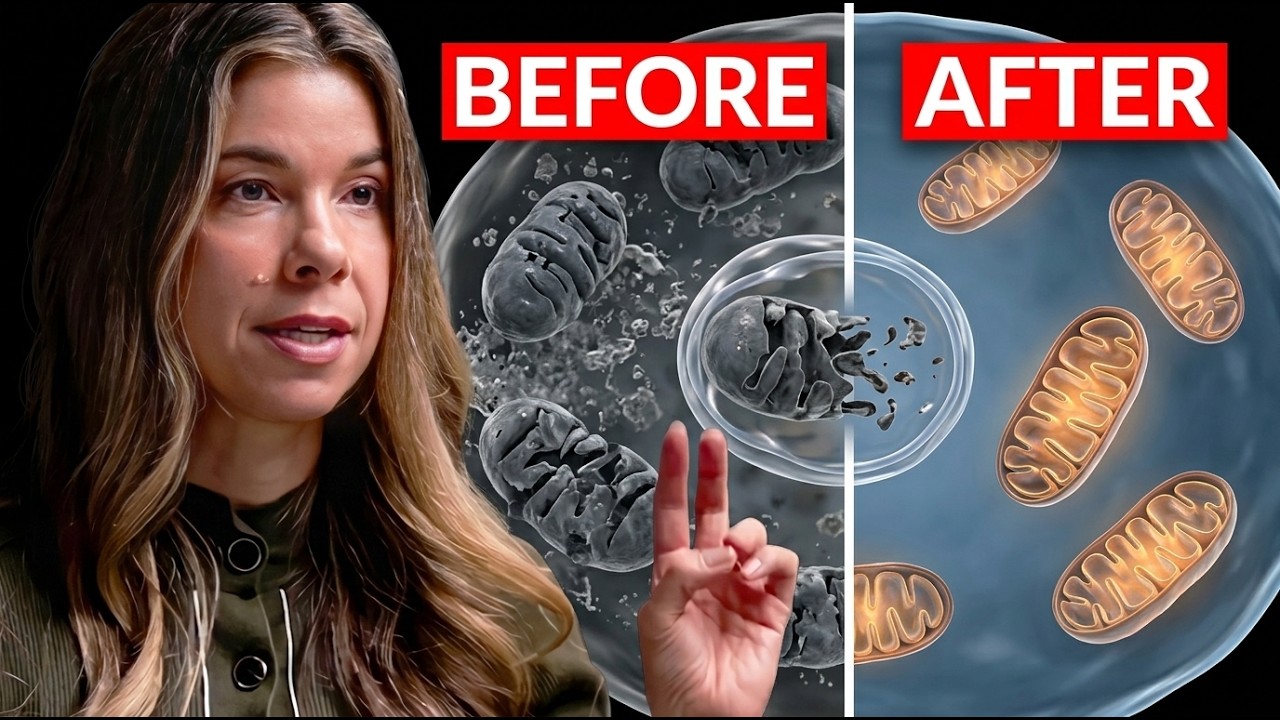
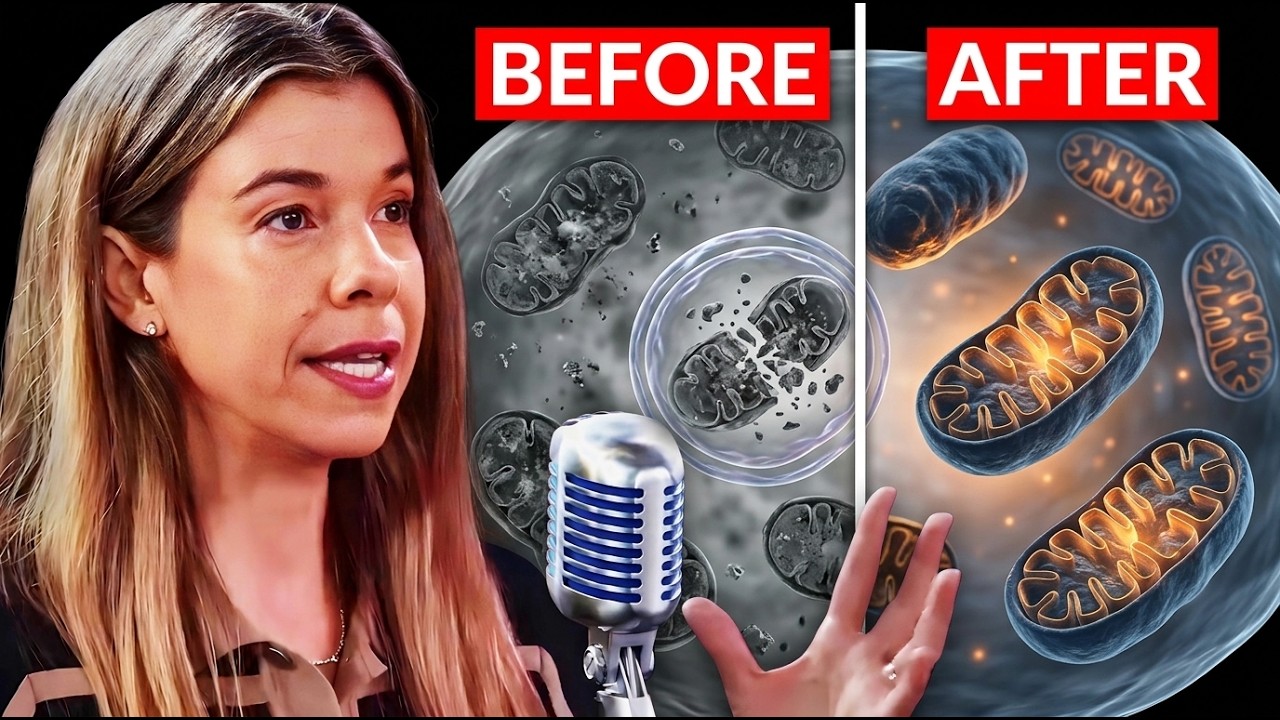
Urolithin A is produced when certain gut microbes transform compounds from foods such as pomegranates, raspberries, and walnuts. In this clip from Q&A #85, Dr. Rhonda Patrick explains why supplementation can provide more predictable exposure than relying on food alone. In a study of 100 adults, only 12 percent had detectable circulating urolithin A at baseline, while roughly 40 percent became high converters after pomegranate juice. A direct 500-milligram supplement produced more consistent blood levels. [1]
Much of the interest centers on mitophagy, the removal of damaged mitochondria, and its possible role in maintaining muscle function. Dr. Patrick describes how this quality-control process may complement the production of new mitochondria stimulated by exercise. In a four-month randomized trial of 66 adults ages 65 to 90, 1,000 milligrams of urolithin A daily improved laboratory measures of hand and leg muscle endurance at two months and changed several blood biomarkers. These findings help explain why she pays attention to products used in published human studies. [2]
Cost and product quality are the practical questions in this discussion. Dr. Patrick reviews independent testing of labeled urolithin A content and describes alternatives to the product she uses. She also considers whether slower clearance from the body could make less frequent dosing useful. Human studies have established oral absorption and mitochondrial biomarker changes with daily doses of 500 to 1,000 milligrams, including a four-week trial in older adults. Her suggestion of dosing every two or three days is an exploratory idea based on pharmacokinetics, rather than a schedule tested against daily use. Product testing and the actual dosing schedule used in research remain useful distinctions when comparing options. [3]
- ^ Singh, Anurag; D’Amico, Davide; Andreux, Pénélope A.; Dunngalvin, Gillian; Kern, Timo; Blanco-Bose, William, et al. (2021). Direct Supplementation With Urolithin A Overcomes Limitations Of Dietary Exposure And Gut Microbiome Variability In Healthy Adults To Achieve Consistent Levels Across The Population European Journal Of Clinical Nutrition 76, 2.
- ^ Liu, Sophia; D’Amico, Davide; Shankland, Eric; Bhayana, Saakshi; Garcia, Jose M.; Aebischer, Patrick, et al. (2022). Effect Of Urolithin A Supplementation On Muscle Endurance And Mitochondrial Health In Older Adults JAMA Network Open 5, 1.
- ^ Andreux PA; Blanco-Bose W; Ryu D; Burdet F; Ibberson M; Aebischer P, et al. (2019). The mitophagy activator urolithin A is safe and induces a molecular signature of improved mitochondrial and cellular health in humans. Nat Metab 1, 6.
The first question was something that I was going to cover last time and it was essentially brand alternatives to Mitopure. Mitopure is by Timeline and it is a source of urolithin A. For those of you that don't know anything about urolithin A, just a really brief back background. urolithin A is not actually something that exists in foods. There is a precursor to it. It's a polyphenol. It's certain type of polyphenol called ellagitannins. Ellagitannins are in a variety of different foods. Things like pomegranates, raspberries, pecans, walnuts, they have pretty good amounts of the ellagitannins.
Once we eat the ellagitannins, they are digested and when they make their way to our colon, certain bacteria in our colon then convert the ellagitannins into a compound called urolithin A. As you guys know, the problem is that all of our microbiome compositions are hugely variant. They're they're very different from person to person. Not everyone has a large amount of the type of bacteria that converts the ellagitannins into urolithin A and there have been studies that have documented this and found that, you know, even in studies with 100 participants, you can find only 12% of those participants actually have detectable levels of urolithin A biomarkers.
So, there is an argument to supplement with urolithin A even though you can potentially make it in your gut from polyphenols. Again, there's a lot of variability there. That said, most of the human studies that show potential benefits from urolithin A supplementation do used a certain brand because I guess this probably this brand is funding a lot of the research. Timeline's Mitopure and that's the reason why I've been using that one because it's, you know, been used in a variety of different studies and so that to me carries a lot of weight.
Generally speaking, doses between 500 mg to 1,000 mg a day have been shown to do a variety have a variety of different positive benefits in humans. We're talking about muscle endurance, certain measures of muscle strength, improvements in biomarkers of mitochondrial proteins in muscle, even a newer study showing immune function improvements as well. There's also preclinical studies that are in animals showing the mechanism by which urolithin A improves muscle health and overall mitochondrial health is that it is activating a process called mitophagy, very similar to autophagy. Mitophagy is clearing out pieces or even potentially whole parts of damaged mitochondria.
So, it's sort of like a repair system cleaning out the bad types of, you know, gunk and just accumulated mutations in the mitochondrial DNA, things like that's that's leading to damage. And if you combine that with exercise, it's very beneficial because exercise is one of the best ways to increase the new biogenesis, the new creation of mitochondria. And so, essentially, if you combine these two processes, mitophagy clearing out damaged mitochondria with mitochondrial biogenesis, the generation of new mitochondria, you're having you're talking about an entirely self-contained rejuvenation process for your mitochondria.
It's very beneficial for cellular health, whether we're talking about muscle or immune cells or the brain, on and on. So, that's the I would say background information as to why we're even talking about urolithin A and why we're talking about a supplement that makes it. The reason people are asking about brand alternatives is because Mitopure is very expensive. it is a purified form of urolithin A that is used in supplements as well. the advantage again is that it's used in several published human trials. So, there my suggestion for people looking for brand alternatives is to always look for third-party testing.
We did find, my team and I did find that there was a test done by a company called supply company or S Sorry, sup company, SuppCo, that tested several different urolithin A products and they found many of them contained little to no urolithin A in them. And so, if a product did pass their test, it had to have at least 95% of the labeled urolithin A in the actual supplement, which is like compared to what's on the nutrition facts label. Six out of 10 tested products failed and a lot of those that failed only had between 0.01% to 2% urolithin A.
So, it's really terrible. Timeline passed, so that would be the Mitopure. Another one that would seem to be that passed this test was CodeAge, their liposomal urolithin A, and then Pure Encapsulations Renual, and also Neurogan Health's Pro+ Urolithin A. So, those are the ones that seemed to pass that test. to I use Mitopure from Timeline as you guys know, but there are some alternatives out there and if you want to look up that test, then you can see those other brands that also passed that I just mentioned as well. I just want to touch on a related question that was also submitted by Maiko, and that is The question was, "Urolithin A promises mitophagy and autophagy benefits, but it's fairly expensive.
Can it be used periodically to clear out damaged and senescent mitochondria in cells. If so, what would a protocol look like? I thought this was a very interesting question. Obviously, I'm going to just say, you know, at the start that there are no studies actually looking at this directly. So, we can't really say definitively, here's a protocol to do, right? But, I would say looking into some of the pharmacological data, I do think we can kind of connect some dots. So, there's at least one study where researchers looked at the pharmacokinetics of urolithin A and did find that urolithin A and its main circulating metabolites have about anywhere between 17 to 22-hour half-life.
So, their concentrations declined by half over that period of time. But, there was another metabolite of urolithin A that persisted even longer. So, that half-life was between 25 to 58 hours. So, I think it seems as though urolithin A and its metabolites are essentially cleared from circulation anywhere between 3 to 4 days after the last dose. So, it's possible that if you miss a day, your blood levels won't drop to zero. They're going to be highest after about 24 The first within the first 24 4 hours after taking the urolithin A dose is when they're going to peak, but they're not going to go to zero immediately.
And they might just hang around for a couple of days. So, it is possible that someone who is trying to I would say get the minimum effective dose, trying to be conservative, being very conscie- cons- conscientious of the cost of these supplements, you might do some testing and see maybe you can get away with, you know, every 2 to 3 days. What endpoints would you measure? I mean, it's it's very hard cuz a lot of the endpoints that are done in these studies aren't really clinically, I would say, available right now to the consumer.
Like, you're not going to be measuring mitochondrial function very accurately. But, there's some functional tests you can do. I mean, like, exercise-related tests or perhaps measuring some inflammatory biomarkers cuz it does affect immune function as well. my bottom line here would be you're kind of just it's kind of just a shot in the dark, and I think the best way to be conservative but not be missing the benefits might be taking the supplement every two to three days would be maybe the maximum. I wouldn't I wouldn't go much further than that.
Get email updates with the latest curated healthspan research
Support our work

Every other week premium members receive a special edition newsletter that summarizes all of the latest healthspan research.
Urolithin a News
- Supplemental urolithin A enhances cardiac function by preserving mitochondrial function and reducing pro-inflammatory lipids.
- A compound found in pomegranate improves muscle function and endurance by 42% in mice and increased lifespan by more than 45% in worms.
- Consuming sugar-sweetened beverages increases the risk of early-onset colorectal cancer among young women.
- A week of urolithin A injections improved memory and reduced brain inflammation after sleep loss in mice.