How Urolithin A Supports Mitochondrial Health
The BDNF Protocol Guide
An essential checklist for cognitive longevity — filled with specific exercise, heat stress, and omega-3 protocols for boosting BDNF. Enter your email, and we'll deliver it straight to your inbox.
You'll also receive updates from Rhonda & FoundMyFitness
Urolithin A is a metabolite produced when certain gut microbes transform ellagitannins from foods such as pomegranate and walnuts. In this clip from Q&A #81, Dr. Rhonda Patrick explains how this compound may support mitochondrial quality control through mitophagy. Microbial conversion varies substantially between people, while direct supplementation produces more consistent exposure. [1]
Human trials provide promising but limited support. Daily doses of 500 or 1,000 milligrams changed blood metabolites and muscle gene-expression patterns associated with mitochondrial function. In later randomized trials, urolithin A improved some laboratory measures of muscle endurance or hamstring strength, but it did not significantly improve key primary outcomes such as six-minute walk distance, muscle ATP production, or peak power. The placebo-adjusted VO2 max result in one trial also fell just short of conventional statistical significance. [2] [3] [4]
Dr. Patrick discusses taking 500 to 1,000 milligrams daily, not cycling it, and taking it with food. However, human trials have not compared continuous use with cycling or established that food improves absorption. The available randomized trials support tolerability for up to four months in selected adults, not indefinite use. A small 28-day trial also found changes in immune-cell composition and metabolism, but it did not test infections, vaccine responses, or clinical immune rejuvenation. [2] [3] [5]
- ^ Singh, Anurag; D’Amico, Davide; Andreux, Pénélope A.; Dunngalvin, Gillian; Kern, Timo; Blanco-Bose, William, et al. (2021). Direct Supplementation With Urolithin A Overcomes Limitations Of Dietary Exposure And Gut Microbiome Variability In Healthy Adults To Achieve Consistent Levels Across The Population European Journal Of Clinical Nutrition 76, 2.
- ^ a b Andreux PA; Blanco-Bose W; Ryu D; Burdet F; Ibberson M; Aebischer P, et al. (2019). The mitophagy activator urolithin A is safe and induces a molecular signature of improved mitochondrial and cellular health in humans. Nat Metab 1, 6.
- ^ a b Liu, Sophia; D’Amico, Davide; Shankland, Eric; Bhayana, Saakshi; Garcia, Jose M.; Aebischer, Patrick, et al. (2022). Effect Of Urolithin A Supplementation On Muscle Endurance And Mitochondrial Health In Older Adults JAMA Network Open 5, 1.
- ^ Singh, Anurag; D’Amico, Davide; Andreux, Pénélope A.; Fouassier, Andréane M.; Blanco-Bose, William; Evans, Mal, et al. (2022). Urolithin A Improves Muscle Strength, Exercise Performance, And Biomarkers Of Mitochondrial Health In A Randomized Trial In Middle-Aged Adults Cell Reports Medicine 3, 5.
- ^ Denk D; Singh A; Kasler HG; D'Amico D; Rey J; Alcober-Boquet L, et al. (2025). Effect of the mitophagy inducer urolithin A on age-related immune decline: a randomized, placebo-controlled trial. Nat Aging 5, 11.
The next question was submitted by Ruth. Ruth says, “For Mitopure, do you cycle on and off, or can you take it continuously? Do you take it with food?”
For those of you who don't know what Mitopure is, it is a source of urolithin A. Urolithin A is a gut-derived compound that is made from a specific type of polyphenol, ellagitannin. That polyphenol is predominantly found in pomegranate, which would be the number one highest source of it. Walnuts also have some ellagitannins. The problem is that only about 50 percent of the population has enough of the bacteria that ferment the ellagitannin polyphenol and convert it into urolithin A. It's kind of a coin toss whether you're going to make this beneficial compound from eating pomegranate, for example.
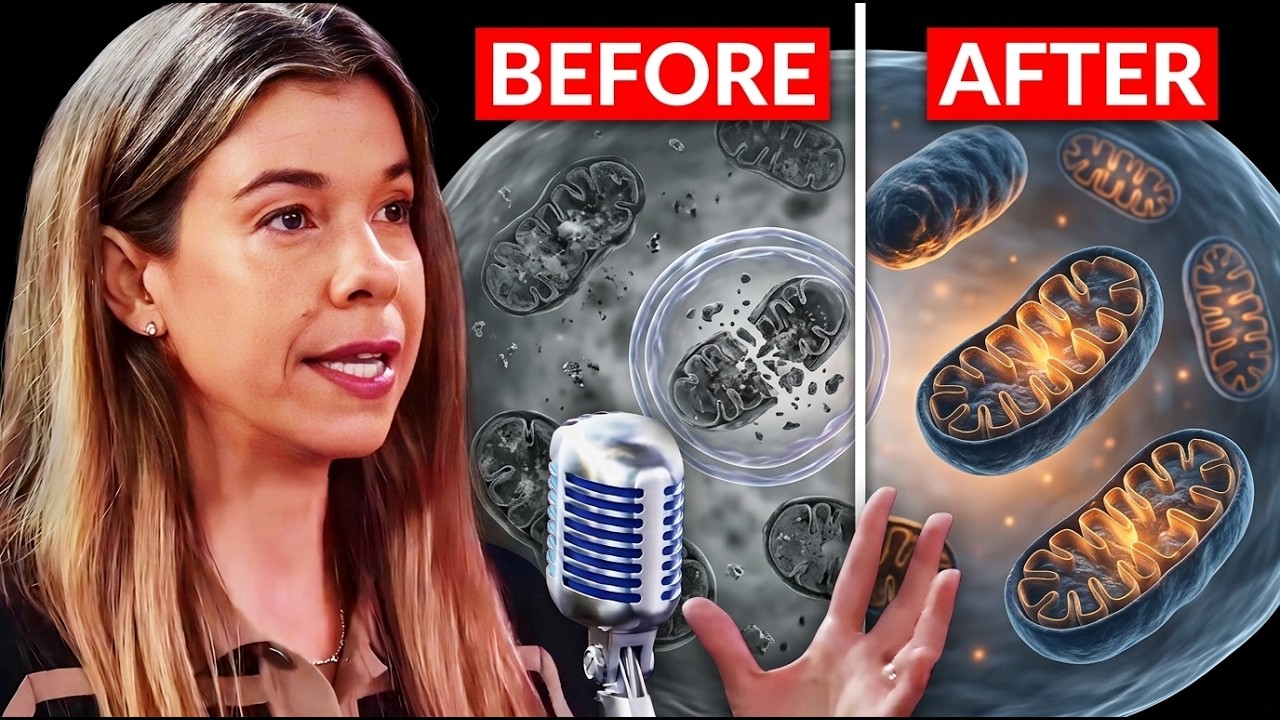
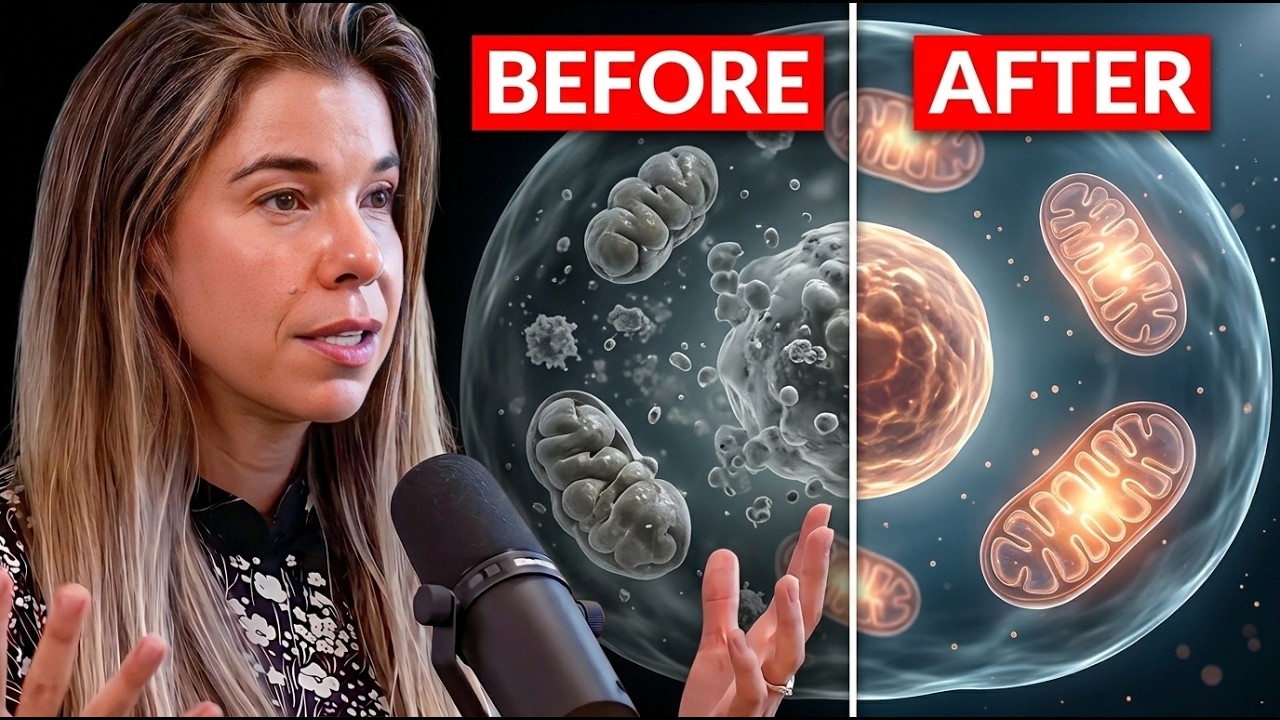
Urolithin A is a pretty powerful signaling molecule. It's able to activate a process inside your cells called mitophagy, which is similar to autophagy. Autophagy clears out the gunk inside your cells. It cleans out the trash and keeps them youthful. Mitophagy cleans up the mitochondria within your cells. Mitochondria are the major energy-producing organelles. They're your source of energy. You need them for everything. Anything that can clean up damaged pieces of mitochondria or whole damaged mitochondria can have a rejuvenating effect.
Urolithin A can stimulate that process. It's been shown in animal studies and clinical studies. Clinical studies have examined biomarkers that indicate mitophagy is happening. They have also examined clinical endpoints, including exercise performance, VO2 max, muscular hypertrophy, and rejuvenating the immune system by delaying immunosenescence. With inflammaging, immune cells don't work as well with age because of a variety of inflammatory processes. These outcomes have been studied with urolithin A supplementation. One of the best sources of urolithin A, and the one used in most of these trials, is Mitopure.
Now you understand why I'm supplementing with Mitopure. The question is whether I supplement continuously or cycle it, and whether I take it on an empty stomach or with food. I supplement with it continuously, every day. I see no reason why you would have to cycle it. This isn't deactivating or downregulating any endogenous pathways in our body. This is a signaling molecule that activates an important rejuvenation process inside cells by rejuvenating the mitochondria.
When you combine this mitophagy process with exercise, particularly vigorous high-intensity interval training, you also increase the growth of new mitochondria. You have this important cellular rejuvenation process by getting rid of damaged pieces of mitochondria and whole damaged mitochondria, then coupling that with making new mitochondria. I take it continuously.
You can take anywhere from 500 to 1,000 milligrams a day. If you're taking 500 milligrams, that would be one gel cap. I take it with food because it increases bioavailability, so you get more bang for your buck. If you don't take it with food, it doesn't seem to upset people's stomachs, but you take a small hit on bioavailability. I recommend taking it with food.
I have no association or affiliation with the Mitopure company. I like the supplement and the evidence behind it. Studies suggest that it can improve cellular rejuvenation with respect to mitochondrial function and health. Anything that rejuvenates mitochondria and improves mitochondrial function could affect a broad range of things, including neuronal health, fertility, and immune health. Not all these endpoints have been studied. But when you affect something as basic as mitochondrial health, you're talking about potentially broad effects on aging.
Let's take a look at the live chat. Joe is asking, “Mitopure plus ubiquinol plus PQQ: are they redundant or synergistic?” Joe, I also take ubiquinol and Mitopure. I no longer take PQQ, but I still think it's great. I think combining them might be useful. It's just a matter of how many pills you can take.
David is talking about the cost of vitamins. Unfortunately, they do add up. But I can't emphasize how often I've seen improvements in a variety of biomarkers in people after simply adding important vitamins. There are also randomized controlled trials on them. I think it's one of the easiest things that can be done to improve health.
For the dose range, I mentioned 500 to 1,000 milligrams of Mitopure, which is urolithin A. Five hundred milligrams would be one gel cap, and 1,000 milligrams would be two. I recommend splitting them up by taking one with breakfast and one with dinner. It is costly. If you're on a budget, I think 500 milligrams is good enough.
The most recent study in older adults that examined rejuvenating the immune system used the higher 1,000-milligram dose. There have also been studies showing performance and mitophagy benefits at 500 milligrams a day. If you're taking that dose, I think it is beneficial. Some days I take 500 milligrams. Some days I take 1,000. It's just a matter of time.
Hear new content from Rhonda on The Aliquot, our member's only podcast
Listen in on our regularly curated interview segments called "Aliquots" released every week on our premium podcast The Aliquot. Aliquots come in two flavors: features and mashups.
- Hours of deep dive on topics like fasting, sauna, child development surfaced from our enormous collection of members-only Q&A episodes.
- Important conversational highlights from our interviews with extra commentary and value. Short but salient.
Urolithin a News
- A week of urolithin A injections improved memory and reduced brain inflammation after sleep loss in mice.
- Supplemental urolithin A enhances cardiac function by preserving mitochondrial function and reducing pro-inflammatory lipids.
- Pomegranate juice as a neuroprotective for infants at risk of hypoxia in the womb: differences in white matter and functional connectivity in brain
- A high-polyphenol diet is protective against age-related brain shrinkage.
- Compound derived from walnuts and pomegranates may boost mitochondrial and muscle health.