What Research Shows About Creatine and Hair Loss
Get the full length version of this episode as a podcast.
This episode will make a great companion for a long drive.

The Omega-3 Supplementation Guide
A blueprint for choosing the right fish oil supplement — filled with specific recommendations, guidelines for interpreting testing data, and dosage protocols.
You'll also receive updates from Rhonda & FoundMyFitness
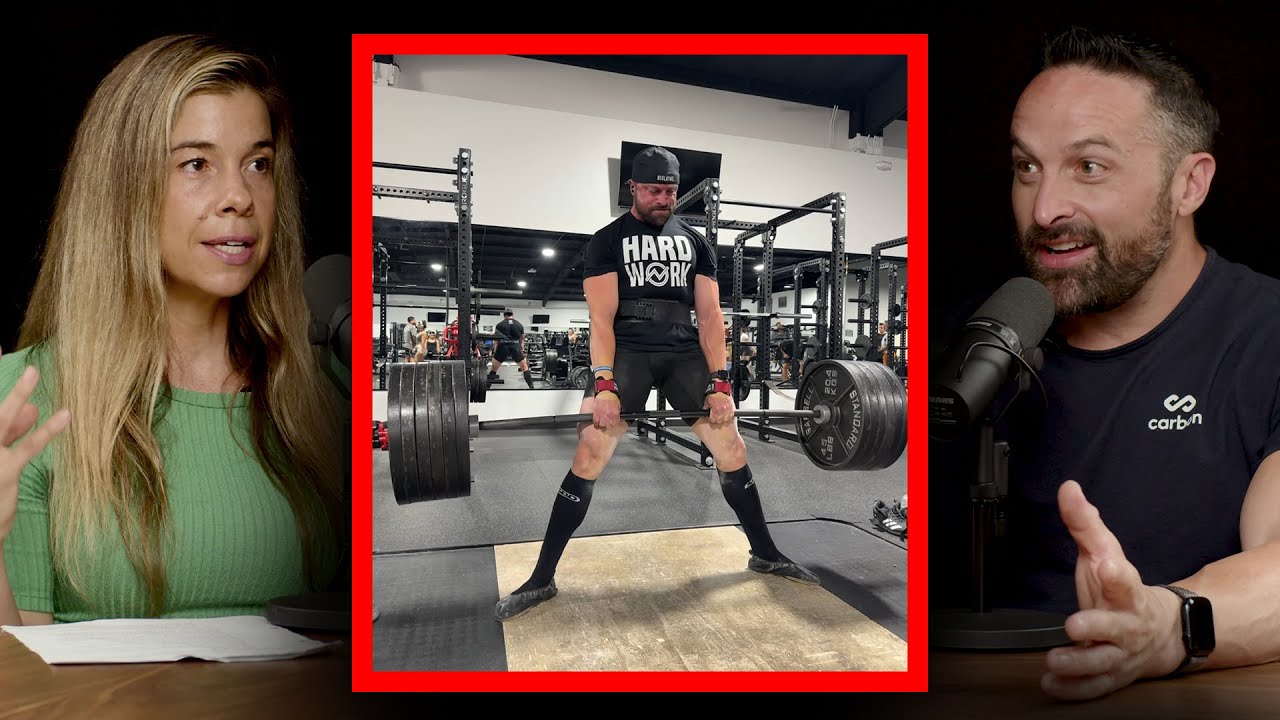
In this clip from his FoundMyFitness interview with Dr. Rhonda Patrick, Dr. Darren Candow traces the hair-loss concern to a small crossover study in rugby players. That study measured a rise in circulating dihydrotestosterone during a short high-dose creatine phase, but it did not measure hair density, follicle health, or hair loss. Dr. Candow explains why a hormone change within the physiological range cannot by itself establish a hair effect.
A later 12-week randomized trial directly measured hormones and hair-follicle outcomes in resistance-trained men taking five grams of creatine per day. Creatine did not produce a significant difference in dihydrotestosterone, hair density, follicular-unit count, or cumulative hair thickness compared with placebo. The direct measurements address the original concern more closely than the earlier surrogate result. [1]
Dr. Candow and Dr. Patrick also review common questions about blood pressure, sleep, cancer, and urination. At recommended doses, creatine is not a diuretic, and drinking it in extra fluid can explain more frequent urination. They keep emerging medical uses separate from established sports-nutrition evidence and encourage judging each claim by the outcome that researchers actually measured.
- ^ Lak, Mohammadyasin; Forbes, Scott C.; Ashtary-Larky, Damoon; Dadkhahfar, Sahar; Robati, Reza Mahmoud; Nezakati, Farshid, et al. (2025). Does Creatine Cause Hair Loss? A 12-Week Randomized Controlled Trial Journal Of The International Society Of Sports Nutrition 22, sup1.
Dr. Rhonda Patrick: baldness.
Dr. Darren Candow: That's one. That's one.
Dr. Rhonda Patrick: Yeah, it was that— it was that rugby— was it rugby players? Yeah, yeah, yeah.
Dr. Darren Candow: I was going bald way before I started taking creatine. So a lot of people say, oh, well, obviously. And it's interesting. It was a great study in a sense that they looked at a novel concept. So they had elite rugby players do a crossover design, and a crossover design is really powerful. That means the group gets both placebo and creatine. So it really controls for diet, genetics, hormones, things like that. And when they took 20 grams a day, might have been even 25 grams a day for 7 days during the creatine supplementation phase. They increased the hormone dihydrotestosterone or DHT. And most people say, oh, I think I've seen commercials about this.
It's a surrogate of testosterone, but it's been highly linked to hair follicle loss and thinning from a cellular perspective. They measured it in the blood. So the correlation, you know, it's just a surrogate. But when they went up, I think it went up by about 57%, but it was still within the physiological range. And what I mean by that is when you go to your doctor and they measure your blood glucose and it comes back and doctor says, no, it's within the normal range, cholesterol's in the normal range, even increasing by 57%. I think that was the number. It was still within the normal range when they were on placebo. It increased by about 40%. So everybody says, whoa, hormone went up, correlation, causation. Everybody was freaking out that this hormone went up.
They did not measure hair follicle loss, thinning, cross-sectional area. No dermatologist was involved. But a lot of people have run with this, and to this day they cite this single study that even didn't look at free testosterone. There was no increase. So just because DHT went up a little bit and they started lower, so there was more room to improve, people think it causes baldness. I've assessed easily over 1,000 people, males and females, not a single person has said, hey, whatever you're giving to me, double-blind, is causing my hair to fall out. And I gotta believe a participant would say, I'm not taking this anymore, my hair's falling out.
Um, and I do know— I can't talk about it because I'm not sure— but I do know that there's been a paper submitted that have looked directly at hair follicle loss and thinning with creatine supplementation. And I—
Dr. Rhonda Patrick: that was going to be my next question. I mean, has— well, first of all, has anyone replicated this study? It sounds like No. And has— second, has anyone, you know, directly looked at hair follicle?
Dr. Darren Candow: It's in, it's in review right now. But if I had to have a magical guess, it doesn't affect hair follicle loss or thinning. So if people are watching me, they're like, oh, and then they look at other creatine researchers. I can blame my parents and primarily my mother for that, for the maternal DNA. But then there's other people with full heads of hair, so it can't be a cure.
It's like, carbohydrates cause obesity. That's nonsensical. It's, it's everybody's different. But I still get this on a daily basis, both from males and females. They don't want to take it or their hair is thinning. And I'm really glad that this study is coming out because the way we should have answered this is we don't know until the study emphatically says, no, we didn't see any of the effects. We would have to say we don't have any evidence to suggest it does, and we don't have any evidence to suggest it doesn't. And even when the study gets published, we'll probably have to do multiple. But, um, it just has never been done.
Dr. Rhonda Patrick: And no rodent studies?
Dr. Darren Candow: No rodent studies, nothing. I think it's an area that people said no one cared about, and then all of a sudden everybody cared about it.
Dr. Rhonda Patrick: Yeah. That's so— is there, is there any other, uh, really, I think, prevalent misconceptions or myths that you want to talk about?
Dr. Darren Candow: Oh geez, there's so many. I think the big one, um, that, uh, the big one we're getting a lot is, does it increase hypertension or blood pressure? Because if it increases water into the body, could that have any effects? And we're not seeing any adverse effects there. The other one is we do not see any evidence it disrupts sleep, although we talked about the study earlier, it doesn't have any negative effects there. And then cancer. So this is an area that is difficult to answer or talk about because we just don't have a lot of human cellular data.
From the in vitro data, we're not seeing any in humans, at least from recommended dosages, any malignant growth or any cancer. If anything, we're seeing anti-cancer properties from improving anti-inflammatory responses there. And in our latest paper, The Myths and Misconceptions Part 2, one of the world's best creatine researchers and medical doctor, Mark Tarnopolsky, wrote a really good section on that. So, if anybody's interested, read that. And it seems to have some potential for cancer rehabilitation when you're looking at tissue loss, cachexia. It seems to have some beneficial effects there. I'm collaborating with Kieran Fairman in University of South Carolina looking at prostate and breast cancer rehabilitation.
So, I think you're going to start to see some medical applications growing more than just young healthy individuals. Again, the common denominators, all these are sort of asking something for help. It's either rehabilitation or prevention. And that's where I think creatine has really changed. It used to be for just young individuals who are healthy, and now it seems to have some of these health aspects. Very exciting times to be talking about it.
Dr. Rhonda Patrick: Yeah. Yeah. Are you familiar with any of the research of Dr. Kerry Courneya out of the University of Alberta?
Dr. Darren Candow: Yeah. Cancer there. I don't think he's ever looked at creatine, but he does a lot of community-based.
Dr. Rhonda Patrick: Yeah. Yeah. I just had him on the podcast and he was, you know, he does a lot of exercise, the role of exercise in cancer treatment.
And, you know, not just aerobic, but resistance training. So that would be interesting for you guys to have a discussion.
Dr. Darren Candow: Yeah. The other thing that came to my mind that I now remember, I've, I've heard a lot of people talk about
Dr. Rhonda Patrick: Is creatine supplementation increasing their urination, particularly during sleep, like having to go urinate more frequently?
Dr. Darren Candow: I just answered this question on Instagram. So an individual, because I, I said I take a pre-sleep sometimes and all that'll keep me up peeing all night. And I said, oh, actually, that's interesting. So in this myths and misconceptions paper as well, there's a section there that the creatine molecule itself does not increase urinary output. People thought since it's creating creatinine, you need to filter it.
We think it's the increase in fluid ingestion that you're probably taking either with exercise or what is usually recommended with creatine. That's actually a myth as well. You don't need to increase tons of water consumption, but the molecule doesn't cause an increase in urination. It's not a diuretic or it doesn't increase urinary flow that way. I do hear that a lot. My logical guess is you're probably putting the creatine in 8 ounces of water and you're probably drinking more water or exercising, and that's one of the things. But there's no evidence to suggest the molecule itself stimulates urination.
Dr. Rhonda Patrick: Yeah. Okay. Well, that's good to know.
Supporting our work
If you enjoy the fruits of
 , you can participate in helping us to keep improving it. Creating a premium subscription does just that! Plus, we throw in occasional member perks and, more importantly, churn out the best possible content without concerning ourselves with the wishes of any dark overlords.
Creatine News
- Gut bacteria may help creatine reach the brain and support its antidepressant effects.
- Creatine supplementation does not influence hair growth or hormone levels even after three months of usage, undermining theories of its potential link to hair loss.
- Creatine improved bench-press strength and increased lean mass even without structured exercise in middle-aged adults.
- Creatine strengthened cancer-fighting immune cell activity and reduced tumor growth in a mouse melanoma model.