How Creatine Dose Relates to Muscle and Brain Energy
The Omega-3 Supplementation Guide
A blueprint for choosing the right fish oil supplement — filled with specific recommendations, guidelines for interpreting testing data, and dosage protocols.
You'll also receive updates from Rhonda & FoundMyFitness
In this clip from Dr. Rhonda Patrick's conversation with Derek from More Plates More Dates, she describes creatine as an energy buffer for muscle and brain tissue. Creatine monohydrate has strong evidence for repeated high-intensity exercise, and standard maintenance protocols commonly use 3 to 5 grams per day after an optional loading phase. Larger daily doses are not required for everyone to obtain muscular benefits. [1]
Brain response varies with baseline diet, age, dose, and physiological stress. A meta-analysis of 16 randomized trials found a modest benefit for memory, while effects on overall cognition and executive function were not significant. A small magnetic-resonance spectroscopy study also found that 20 grams per day for four weeks increased brain creatine by an average of about 8.7 percent, showing that brain uptake is possible but variable. [2] [3]
Dr. Patrick discusses taking 10 grams daily and sometimes more during travel or sleep loss as her personal regimen. In a randomized crossover experiment, 15 healthy adults received a single weight-based dose after about 21 hours awake, producing changes in brain-energy metabolites and improvements on selected cognitive tasks. The findings provide an early stress-specific signal, while routine dosing and the role of high-dose creatine during sleep loss still need larger trials. [4]
This clip is excerpted, with permission, from a conversation between Dr. Rhonda Patrick and Derek from More Plates More Dates. Thank you to More Plates More Dates for allowing us to share it.
- ^ Kreider, Richard; Almada, Anthony L; Kalman, Douglas S.; Antonio, Jose; Ziegenfuss, Tim N.; Wildman, Robert, et al. (2017). International Society Of Sports Nutrition Position Stand: Safety And Efficacy Of Creatine Supplementation In Exercise, Sport, And Medicine Journal Of The International Society Of Sports Nutrition 14, 1.
- ^ Xu, Chen; Bi, Siyuan; Zhang, Wenxin; Luo, Lin (2024). The Effects Of Creatine Supplementation On Cognitive Function In Adults: A Systematic Review And Meta-Analysis Frontiers In Nutrition 11, .
- ^ Dechent P; Pouwels PJ; Wilken B; Hanefeld F; Frahm J (1999). Increase of total creatine in human brain after oral supplementation of creatine-monohydrate. Am J Physiol 277, 3.
- ^ Gordji-Nejad, Ali; Matusch, Andreas; Kleedörfer, Sophie; Jayeshkumar Patel, Harshal; Drzezga, Alexander; Elmenhorst, David, et al. (2024). Single Dose Creatine Improves Cognitive Performance And Induces Changes In Cerebral High Energy Phosphates During Sleep Deprivation Scientific Reports 14, 1.
Dr. Rhonda Patrick: And then now I'm going into creatine, which I'm finding now it's not just a gym-bro supplement.
Derek: Yeah.
Dr. Rhonda Patrick: It's important not just for muscle health, but also, I think, for brain health. I'm becoming increasingly convinced that people should be thinking about their brain health because if they're thinking about their brain health, then they're going to get the muscular benefits. Studies show that the liver makes a certain amount of creatine, perhaps one or two grams a day. It's not much, but your muscles consume it all. Your muscles are greedy because as you know very well, creatine is stored as creatine phosphate, and that is essentially a precursor needed to make energy, right?
So, it's important for energy production. We now know there are other roles as well that are indirect and separate from energy production. It seems to have an anti-inflammatory effect as well. Not quite sure how that works.
That is interesting, but we do know that supplemental creatine dosing depends on body weight. But let's just say five grams a day seems to be the sweet spot for muscle benefits. I would say generally speaking, your muscles are saturated after about a month or so of consuming five grams a day.
And once your muscles are saturated and happy, any spillover, anything left can spill over to the brain. Your brain also makes a small amount of creatine itself, but muscles are greedy and consume anything that you're orally consuming. And so after the five grams, if you go up to 10 grams a day, then we're talking about maybe getting some brain benefits. And that's what studies have shown in terms of improving cognitive function.
You start to get that more at 10 grams. 10 grams a day, you can see increases in creatine levels in certain brain regions in human studies. And then going even beyond that, it seems as though creatine supplementation seems to work well in situations when there's a stress component in the brain. And that stress can be a variety of different factors. It can be sleep deprivation.
It can be psychological stress. It can be my everyday life which is cognitively demanding: reading studies, analyzing them, and writing about them. That is a stress.
Derek: How much creatine did you take today?
Dr. Rhonda Patrick: Today I took 15 grams.
Derek: Okay. A light day.
Dr. Rhonda Patrick: Huh?
Derek: Light day.
Dr. Rhonda Patrick: Yeah, when traveling.
Typically, I take 10 grams a day. That's my baseline. I used to take five grams a day. As the literature progressed, I had Darren Candow on my podcast, and he discussed some of his research.
I became convinced that 10 grams is what's needed for brain benefits. And so I got myself and my family, including my mom, on 10 grams a day.
Derek: So she's tossing the powder.
Dr. Rhonda Patrick: She is. She puts it in her coffee. And so 10 grams a day is usually what I do.
There is some evidence involving sleep deprivation. Again, creatine works well under a stressful situation for the brain and sleep deprivation is like probably the prime example of that, right? Giving people 20 to 25 grams, depending on body weight, seemed to attenuate the effects of 21 hours, or a full night, of sleep deprivation. So, not only did it attenuate the cognitive deficits of sleep deprivation, it also seemed to bring their baseline up higher, like they were functioning better than normal if they weren't sleep deprived. Yeah. And there's other studies out there showing again that it's in the background of some kind of stress like an all-nighter or an exam or something.
Creatine supplementation seems to improve cognition in that respect. I have personally been doing it. Today I took 15 grams because I divided my travel packets among my mom, my husband, and myself. I typically take about 20 grams when I travel.
I wasn't really sleep deprived last night. But recording a long podcast is stressful for the brain, right? I like to increase my dose in those instances.
The other thing I've noticed came from increasing my dose from 5 to 10 grams. I was taking five grams a day when I started lifting. I noticed that the 10 grams a day really took away the afternoon sleepiness.
Derek: Oh yeah.
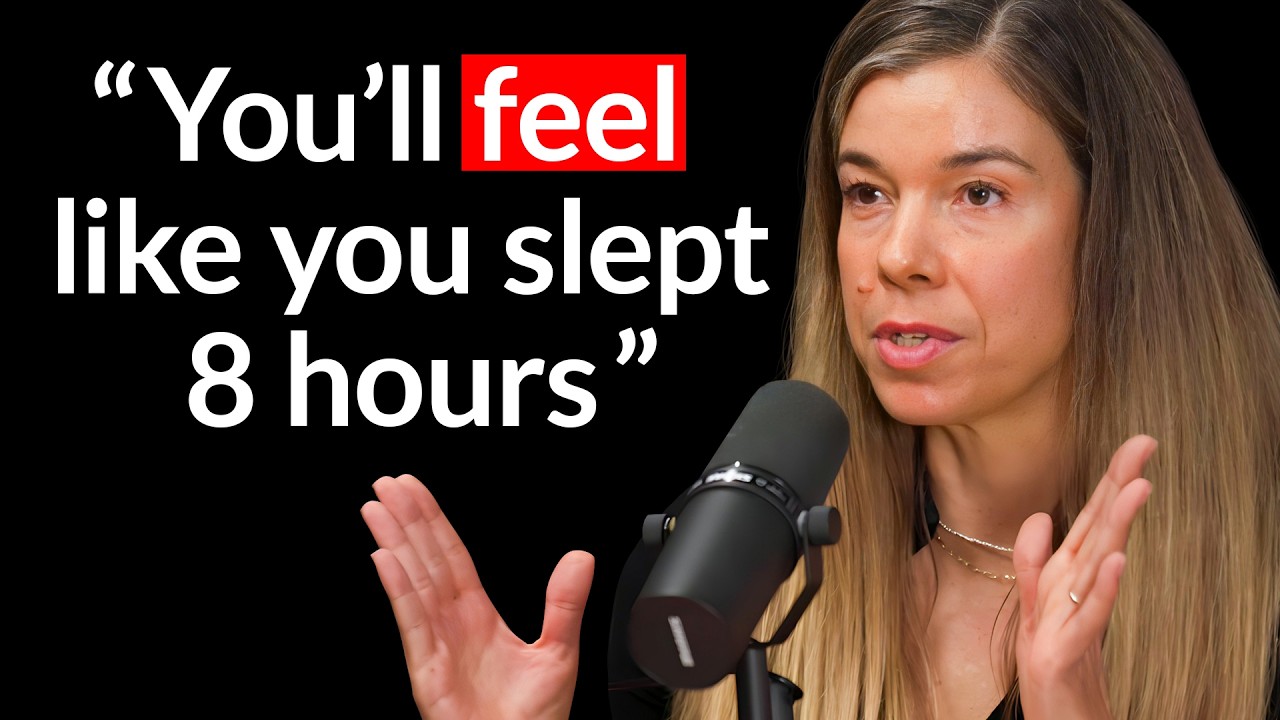
Dr. Rhonda Patrick: The difference is pretty clear. When I forget my creatine or go down to five grams, I get sleepier in the afternoon. I'm not extremely sleepy, but I feel more fatigued. When I take creatine, it feels like a form of mental endurance.
Derek: It may be local energy maintenance or enhancement, separate from glucose management. If it's doing what you perceive, it is presumably acting as its own fuel source rather than only improving glucose handling.
Dr. Rhonda Patrick: I don't really know. It could involve anti-inflammatory effects. Studies suggest that when there is no stressful situation, creatine does not seem to act like a conventional nootropic.
Derek: I know some people who can't get to sleep if they take it too late in the day.
Dr. Rhonda Patrick: I've heard about that. I typically take all my creatine before noon.
Derek: Yeah. I think you're getting the perfect sweet spot if it addresses the afternoon slump without it bleeding into your sleep. At least that's what I'd speculate.
Dr. Rhonda Patrick: Yeah, same. Many people have told me, "It makes me feel like I can't sleep as well." Friends have also told me that they don't seem to require as much sleep and they're like, "I have like this energy that I haven't had and I don't need as much sleep." That's another common report, which is interesting. Again, creatine is important for energy production.
I have a couple of vegan or nearly vegan friends who say it has changed their lives. Creatine is found in meat, right? If you are vegetarian or vegan, there is very little creatine in plants, so you're relying on a tiny amount. And if you add exercise on top of that, like I've got vegan athlete friends. Yeah.
They are now taking 10 grams a day, and they describe major improvements in energy and mental performance.
Derek: Much better. I can't even imagine the incremental jump in just everything if you were a vegan who had an MTHFR polymorphism and then you went from literally never having creatine in your body essentially because you're just burning through it non-stop to like being fully topped out.
Dr. Rhonda Patrick: Yeah. For people listening who are wondering, "What is Derek talking about?" I haven't heard many people discuss this, but creatine synthesis is a major sink for methyl groups. The body needs methylation to make creatine, and about 40 percent of the methyl groups that are formed go toward creatine synthesis. Energy is important, so the body prioritizes that process. This leaves about 60 percent for other processes that need methylation.
When you take supplemental creatine, you alleviate some of that synthetic burden. The body can shift methyl groups to other processes. Some people have lowered their homocysteine by supplementing with creatine. There is not a large body of literature, but some studies have reported this effect.
Derek: Yeah, I think there was one where somebody who was homozygous C677T supplemented with creatine and normalized their homocysteine from what was otherwise clinically high just by that.
Dr. Rhonda Patrick: Yes. It's interesting because most people do not discuss it, and few researchers are studying it. It is an open field, and creatine research is expanding. I think we will see more evidence. Creatine is not just a gym-bro supplement. I also know that some women are concerned about water-weight gain. At the dose I take, it might be about two pounds.
Derek: It's intramuscular, so it can make the muscle look fuller. It is not subcutaneous and should not make you look fat.
Some people might perceive any weight gain as bad, but if you are reasonably lean and training, it is going to the right place, right?
Dr. Rhonda Patrick: Yeah.
Supporting our work
If you enjoy the fruits of
 , you can participate in helping us to keep improving it. Creating a premium subscription does just that! Plus, we throw in occasional member perks and, more importantly, churn out the best possible content without concerning ourselves with the wishes of any dark overlords.
Creatine News
- Gut bacteria may help creatine reach the brain and support its antidepressant effects.
- Creatine supplementation does not influence hair growth or hormone levels even after three months of usage, undermining theories of its potential link to hair loss.
- Creatine improved bench-press strength and increased lean mass even without structured exercise in middle-aged adults.
- Creatine strengthened cancer-fighting immune cell activity and reduced tumor growth in a mouse melanoma model.