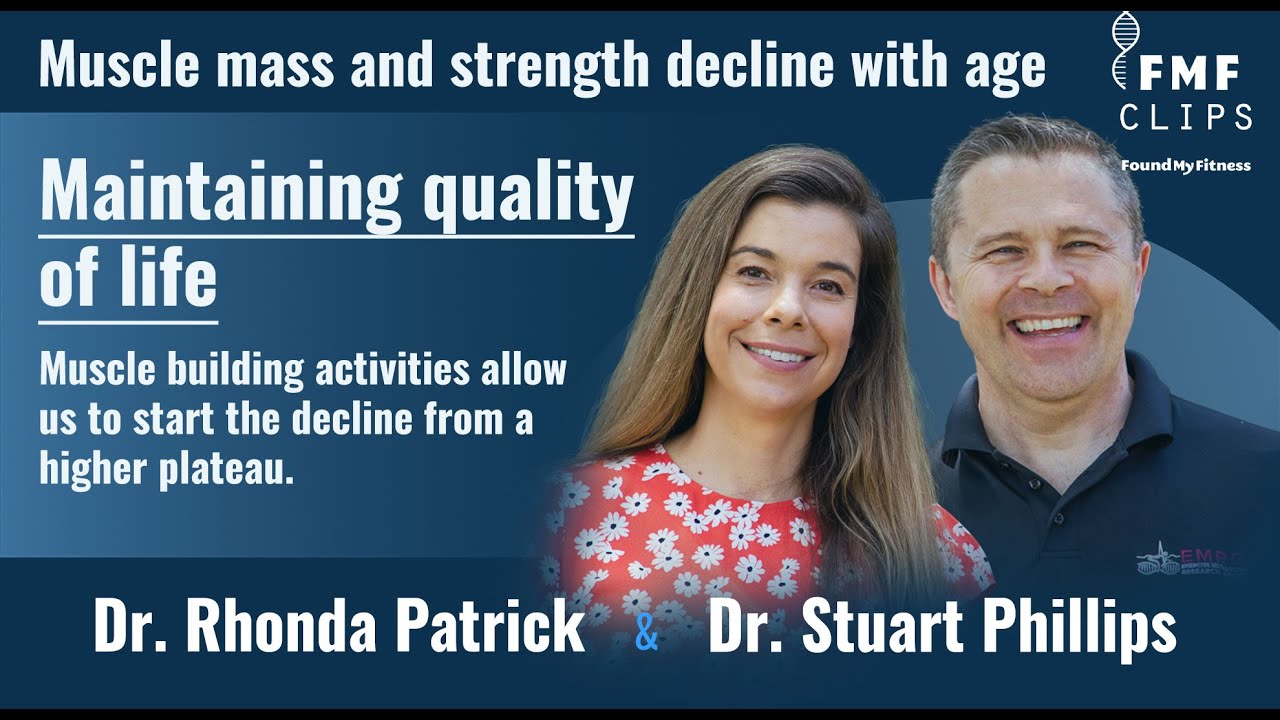
Growth hormone and collagen | Dr. Stuart Phillips
Get the full length version of this episode as a podcast.
This episode will make a great companion for a long drive.
The Omega-3 Supplementation Guide
A blueprint for choosing the right fish oil supplement — filled with specific recommendations, guidelines for interpreting testing data, and dosage protocols.
You'll also receive updates from Rhonda & FoundMyFitness
Growth hormone is important during growth and development, playing a role in determining one's stature. It is also beneficial for healthy bones and stimulates collagenous tissue synthesis. Dr. Phillips speculates that growth-hormone stimulated collagen may strengthen tendons that support muscles. He further states that although not applicable for most men, clinically replacing low testosterone and growth hormone levels may be valid. However, in excess these hormones may be drivers of certain cancers. In this clip, Dr. Stuart Phillips discusses how growth hormone promotes collagen synthesis and how this might relate to muscle strength.
This transcript is reserved for members.
FoundMyFitness Members get access to exclusive content not available anywhere else, including a transcript of this episode.
You wouldn't believe how cool being a premium member of the world's best cross-disciplinary science-focused website and podcast really is.
Member only extras:
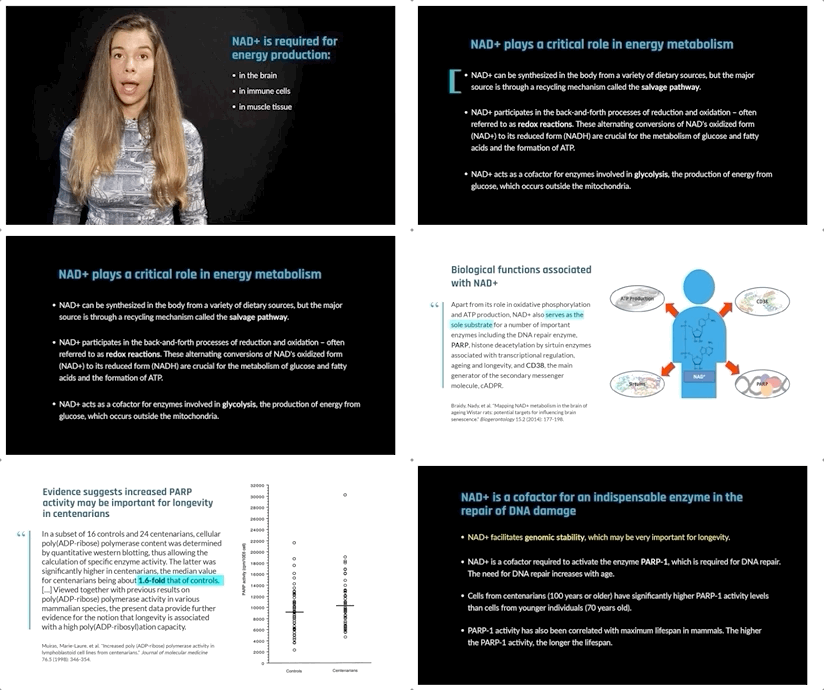
Learn more about the advantages of a premium membership by clicking below.
Get email updates with the latest curated healthspan research
Support our work
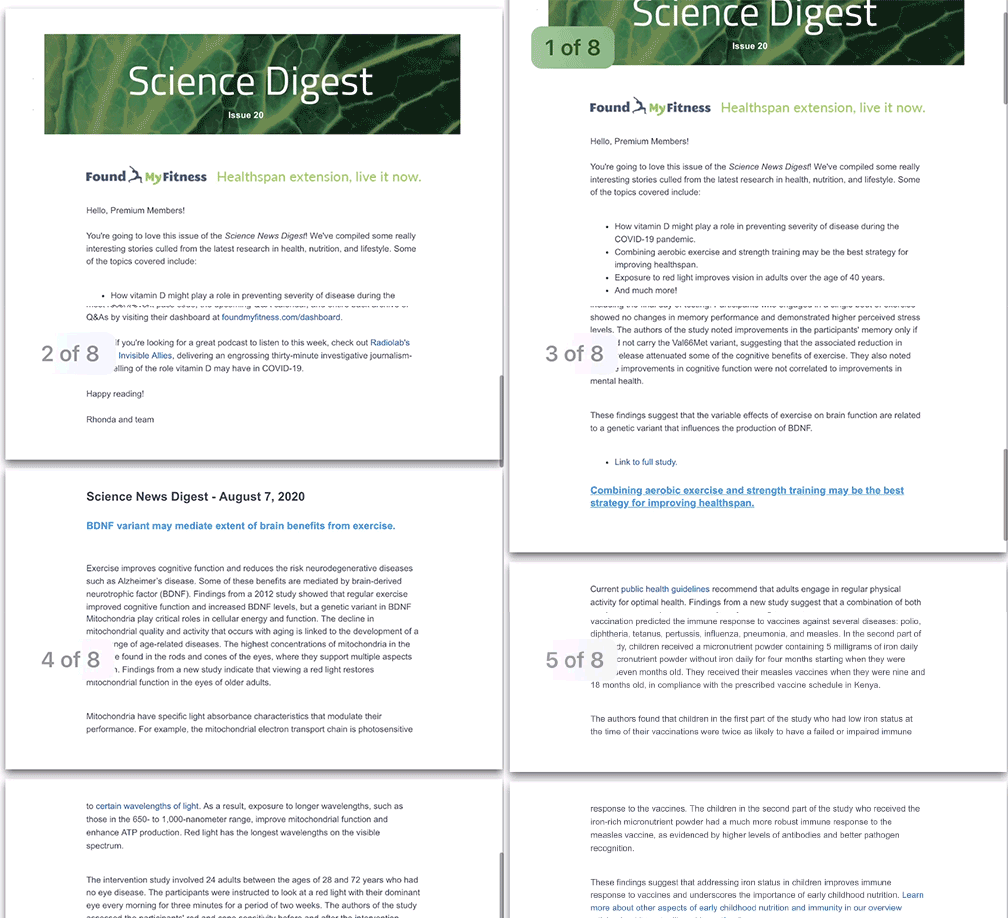
Every other week premium members receive a special edition newsletter that summarizes all of the latest healthspan research.
Muscle News
- Standing for 30 minutes each hour during the workday improved insulin responses better than an evening workout in sedentary adults.
- Ketone supplementation preserved muscle and its energy-producing machinery during weight loss induced by a GLP-1 drug in mice.
- Less than 12 minutes of daily exercise improved fitness and reduced insulin resistance in sedentary women.
- Photobiomodulation (red light therapy) may support recovery after exercise.
- In a decades-long study, 90 minutes or more of weekly resistance training showed the strongest association with lower mortality.