How to Evaluate a Supplement Stack: Evidence, Dose, and Quality
The Omega-3 Supplementation Guide
A blueprint for choosing the right fish oil supplement — filled with specific recommendations, guidelines for interpreting testing data, and dosage protocols.
You'll also receive updates from Rhonda & FoundMyFitness
Supplements are most useful when they match a clear need, an appropriate dose, and a reliable product. In this clip from Dr. Rhonda Patrick's appearance on The Diary Of A CEO, she reviews glutathione, vitamin D, multivitamins, omega-3 fatty acids, creatine, iron, and magnesium. Oral glutathione can increase levels in blood and cells, while vitamin D3 generally raises blood vitamin D more effectively than vitamin D2. [1] [2]
Evidence also depends on the goal and population. In older adults, a daily multivitamin produced small improvements in global cognition and episodic memory across related COSMOS studies. Creatine monohydrate has stronger support for resistance and high-intensity training, with three to five grams per day serving as a standard maintenance dose. A small sleep-deprivation study also found that a single, higher weight-based creatine dose improved selected cognitive tasks during one night without sleep, an early result that invites further study. [3] [4] [5]
Product quality and individual context help determine whether a supplement is appropriate. Independent finished-product testing can verify identity and selected contaminants, while diet, laboratory results, medicines, kidney health, age, and life stage can guide decisions about iron, vitamin D, omega-3, and magnesium. Magnesium supports many enzyme reactions, but trials of supplementation for sleep remain small, making measured need and a defined goal more useful than a universal supplement stack. [6]
This clip is excerpted, with permission, from Dr. Rhonda Patrick's appearance on The Diary Of A CEO. Thank you to The Diary Of A CEO for allowing us to share it.
- ^ Richie JP Jr; Nichenametla S; Neidig W; Calcagnotto A; Haley JS; Schell TD, et al. (2015). Randomized controlled trial of oral glutathione supplementation on body stores of glutathione. Eur J Nutr 54, 2.
- ^ Tripkovic L; Lambert H; Hart K; Smith CP; Bucca G; Penson S, et al. (2012). Comparison of vitamin D2 and vitamin D3 supplementation in raising serum 25-hydroxyvitamin D status: a systematic review and meta-analysis. Am J Clin Nutr 95, 6.
- ^ Vyas, Chirag M; Manson, JoAnn E; Sesso, Howard D; Cook, Nancy R; Rist, Pamela M; Weinberg, Alison, et al. (2024). Effect Of Multivitamin-Mineral Supplementation Versus Placebo On Cognitive Function: Results From The Clinic Subcohort Of The COcoa Supplement And Multivitamin Outcomes Study (COSMOS) Randomized Clinical Trial And Meta-Analysis Of 3 Cognitive Studies Within COSMOS The American Journal Of Clinical Nutrition , .
- ^ Kreider, Richard; Almada, Anthony L; Kalman, Douglas S.; Antonio, Jose; Ziegenfuss, Tim N.; Wildman, Robert, et al. (2017). International Society Of Sports Nutrition Position Stand: Safety And Efficacy Of Creatine Supplementation In Exercise, Sport, And Medicine Journal Of The International Society Of Sports Nutrition 14, 1.
- ^ Gordji-Nejad, Ali; Matusch, Andreas; Kleedörfer, Sophie; Jayeshkumar Patel, Harshal; Drzezga, Alexander; Elmenhorst, David, et al. (2024). Single Dose Creatine Improves Cognitive Performance And Induces Changes In Cerebral High Energy Phosphates During Sleep Deprivation Scientific Reports 14, 1.
- ^ Mah, Jasmine; Pitre, Tyler (2021). Oral Magnesium Supplementation For Insomnia In Older Adults: A Systematic Review & Meta-Analysis BMC Complementary Medicine And Therapies 21, 1.
Steven Bartlett: This is my supplement cupboard. Which products are useful, unnecessary, or potentially harmful?
Dr. Rhonda Patrick: Glutathione is an important antioxidant produced inside the body. Plain oral glutathione has variable absorption. Liposomal products may increase blood exposure, but neither form is proven to slow aging or improve clinical outcomes in healthy adults.
Vitamin D3 usually raises and sustains blood 25-hydroxyvitamin D better than vitamin D2. D2 can still correct deficiency when properly dosed. Lichen-derived D3 is available for people who avoid animal-derived products.
Vitamin D deficiency should be corrected for established bone and muscle reasons. One nonrandomized cohort found more favorable epigenetic-clock values among deficient older adults who began supplements. This did not prove that vitamin D reversed biological age or added years of life.
In COSMOS, one standard multivitamin produced small benefits on selected cognitive tests in older adults. The “years younger” figures were statistical age-equivalence comparisons, not literal brain rejuvenation. A separate analysis found modest changes in two of five epigenetic clocks. It is not known whether those changes persist, accumulate, or improve clinical outcomes.
Some people have dietary micronutrient shortfalls, but this does not support a universal multivitamin or the claim that glyphosate broadly depletes food minerals. Supplements are regulated as foods in the United States, but they do not receive drug-like premarket approval for efficacy. Mislabeled and contaminated products do occur, so independent finished-product testing is useful.
Iron should be taken for a demonstrated need or clinician-directed indication. Many adult men and postmenopausal women do not need extra iron, but deficiency can affect anyone. Menstruation, blood loss, diet, malabsorption, donation, and endurance training can change risk. CBC, ferritin, transferrin saturation, symptoms, bleeding, and inflammation provide better guidance than sex alone.
Higher blood omega-3 levels are associated with lower mortality and dementia risk, but observational models do not prove that fish oil adds five years, offsets smoking, or cuts Alzheimer risk by 66 percent. EPA and DHA supplements can raise omega-3 status and lower triglycerides. Routine supplementation for every person is not established.
DO-HEALTH tested one gram per day of omega-3, vitamin D, and a home exercise program over three years. Separate exploratory analyses found small methylation-clock changes and selected prefrailty or cancer signals. The clock result was not four months per year, and it did not cause or validate the clinical findings.
Fish oil oxidizes more readily with heat, light, and oxygen. Follow the product label. Refrigeration is common for opened liquid oil, while sealed capsules can be shelf-stable. Freezing is optional. A total oxidation value below 10 may indicate freshness, but the Codex limit is 26 and no clinical-outcome threshold of 10 is established.
Creatine monohydrate is the best-studied form. Three to five grams per day supports resistance and high-intensity training. Loading is optional: divided higher doses saturate muscle faster, while three to five grams per day reaches similar stores over about three to four weeks.
Ten grams per day is not a proven universal brain dose. A small sleep-deprivation crossover study used a single weight-based dose of about 0.35 grams per kilogram in only 15 healthy adults. It improved selected tasks during one night without sleep. It did not establish routine 20-to-25-gram rescue use or replace sleep.
Some creatine gummies have failed independent potency tests, but not every gummy lacks creatine. A current finished-product certificate or credible independent certification is more useful than dosage-form generalization.
Magnesium supports hundreds of enzyme reactions, including DNA synthesis and repair. This biological role does not prove that a magnesium supplement prevents cancer. Sleep trials are small and low certainty. Many adults consume less than estimated needs, but intake inadequacy is not the same as clinical deficiency.
Fish oil, vitamin D, a multivitamin, magnesium, and creatine are not a universal daily stack. The useful choice depends on diet, measured status, age, pregnancy, disease, medicines, training, and the goal of supplementation.
Get email updates with the latest curated healthspan research
Support our work
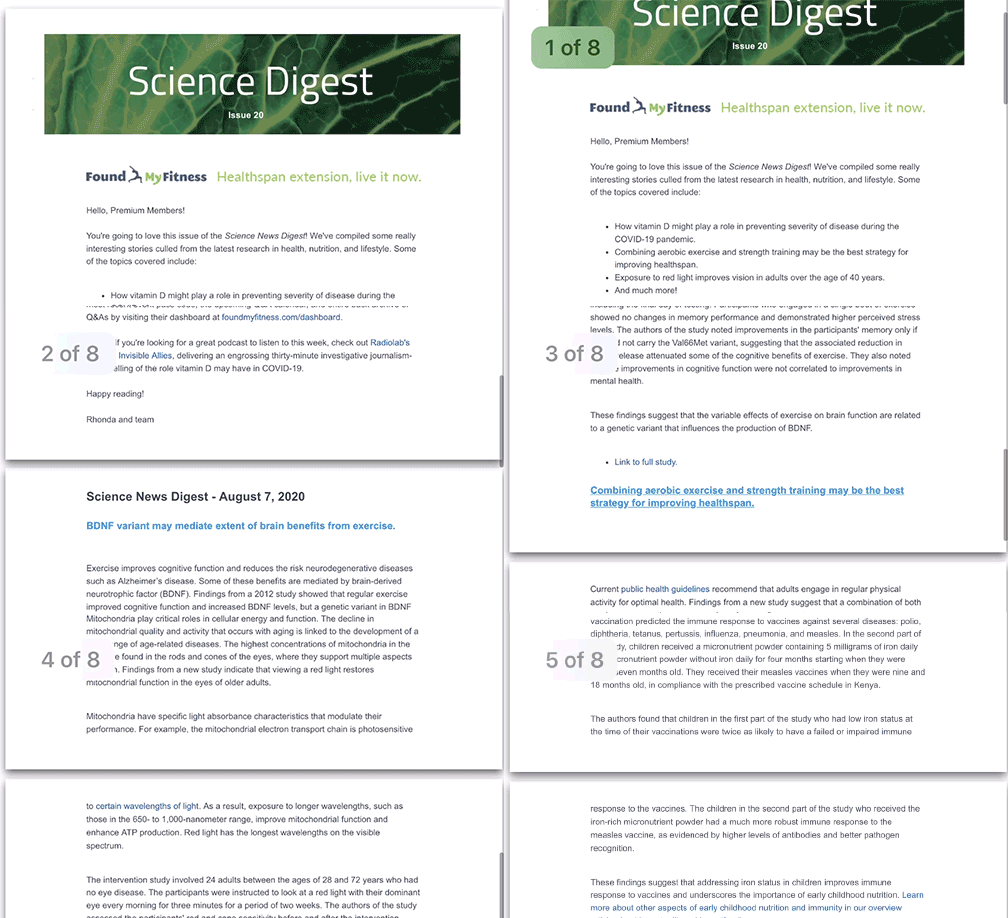
Every other week premium members receive a special edition newsletter that summarizes all of the latest healthspan research.
Supplements News
- Supplementation with essential phospholipids lowered liver-fat markers in fatty liver disease.
- Silicon supplementation shows promise for improving hair strength and thickness.
- Large-scale screening of common dietary supplements identified early signals associated with slower biological aging.
- Olive leaf extract modified muscle mitochondrial responses to both moderate and sprint exercise.
- Collagen supplementation improves skin elasticity and osteoarthritis symptoms, but not short-term exercise recovery.