What Collagen Supplements Can and Cannot Do
Get the full length version of this episode as a podcast.
This episode will make a great companion for a long drive.
The BDNF Protocol Guide
An essential checklist for cognitive longevity — filled with specific exercise, heat stress, and omega-3 protocols for boosting BDNF. Enter your email, and we'll deliver it straight to your inbox.
You'll also receive updates from Rhonda & FoundMyFitness
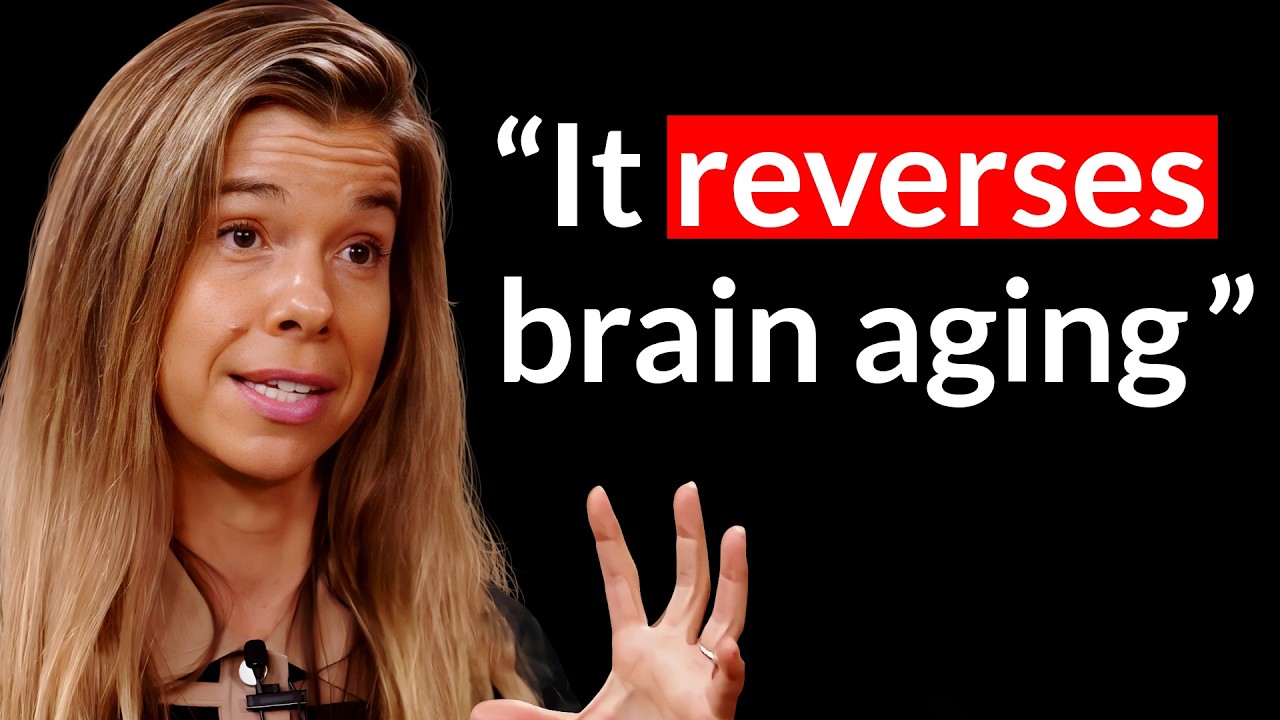
In this clip from the FoundMyFitness interview with Dr. Luc van Loon, Dr. Rhonda Patrick asks what happens after a person consumes hydrolyzed collagen. Dr. van Loon explains that digestion releases amino acids and small peptides into circulation, including glycine, proline, and hydroxyproline. Their appearance in blood confirms absorption, but tissue delivery and biological action still need to be measured directly.
Collagen is a lower-quality protein for skeletal muscle because it provides relatively little leucine and lacks a balanced essential-amino-acid profile. Dr. van Loon therefore would not use it in place of a complete protein when the goal is muscle protein synthesis. In a randomized training study, collagen peptides raised circulating collagen amino acids but did not further increase myofibrillar or muscle-connective protein synthesis over placebo. [1]
Other tissues may respond differently. A meta-analysis of randomized trials reported improvements in skin hydration, elasticity, and wrinkles after hydrolyzed collagen supplementation, although most participants were women and products and methods varied. Dr. van Loon sees useful research questions in skin, joints, and recovery after orthopedic surgery, but he keeps those possibilities separate from established muscle-building effects. [2]
- ^ Kirmse M; Lottmann TM; Volk NR; DE Marées M; Holwerda AM; VAN Loon LJC, et al. (2024). Collagen Peptide Supplementation during Training Does Not Further Increase Connective Tissue Protein Synthesis Rates. Med Sci Sports Exerc 56, 12.
- ^ de Miranda RB; Weimer P; Rossi RC (2021). Effects of hydrolyzed collagen supplementation on skin aging: a systematic review and meta-analysis. Int J Dermatol 60, 12.
Dr. Rhonda Patrick: I want to shift gears and talk about collagen last, because you've also been getting involved in some of this research. And I'm very interested in hydrolyzed collagen powder for skin, for example, and skin aging. And so I wanted to ask you if you think there are effects from supplemental hydrolyzed collagen powder that are independent of the muscle connective protein, which I think, if I'm correct, does not have a huge amount of collagen. But do you think there are effects in maybe other tissues like the joints, skin, for example, bone? That's a lot of questions in one.
Dr. Luc van Loon: So collagen nowadays is much seen as a potential supplement to support muscle conditioning. And of course, we were interested from that perspective.
We often look at myofibrillar protein, which is the contractile proteins in the muscle, of course, because that's what generates the force. But you have to understand that the force that is generated by the contractile proteins has to be transferred towards your tendon and your bone in order to make movement possible. And so the muscle has a whole intricate network of connective proteins that allow the contractile apparatus to be transferred throughout the whole muscle in both longitudinal as well as transversal way towards the tendon and the bone. And there's now suggestions that strength is very much dependent on the quality of that connective protein network. And in muscle, that is, a lot of it is collagen.
But if we get a fraction of the muscle is the connective proteins, and of those connective proteins, about 5% is collagen. And so we were interested to see whether collagen ingestion will actually stimulate that specific fraction in muscle. Now, so far, studies have not shown increase in muscle protein synthesis when you ingest collagen. Now, why could that be the case? Because it responds to high-quality protein, but not to collagen. Now, collagen is, from amino acid composition, not a very high-quality protein, because almost 50% is composed of proline and glycine. And so, it has a lot less essential amino acids. And so, if you give collagen protein, you generally don't see an increase in mixed muscle protein. We've done a study to see whether it increases connective protein in muscle.
We don't see it, at least not with the, with the 20 grams or the 30 gram amounts. Why would it work, or why would it have an effect? Because the suggestion is, and that's the story behind it, there's actually 2 stories. One is that collagen has a lot of glycine and proline, and of course collagen is composed in your body also a lot of glycine and proline, and maybe there's not enough of those amino acids in our, in our foods, in our nutrition. But of course, it doesn't matter that it actually increases muscle protein synthesis. So now we've tried it now like 3 studies, and so far we have not shown evidence that collagen increases connective tissue protein synthesis in muscle. But yeah, I have to admit that the muscle fraction is only a very small amount of collagen.
So what about other tissues? Cartilage, bone, tendons, ligaments, which are more than 80% collagen. Maybe there it's more relevant, and maybe even more relevant when you have surgery and you basically have to reattach everything, you have to renew all those collagen structures. Maybe there it is of benefit. Now, there are also people suggesting that in collagen, and especially hydrolyzed collagen, there are functional or bioactive peptides. So far, we haven't seen anything of that. There are always discussions like, what are those peptides then? I haven't seen any data to convince me yet. And of course, it is not that the amino acids in collagen are not being used.
We used intrinsically labeled protein, for example, to also show that the glycine or that the amino acids actually show up in collagen. So yes, collagen can be used and is a good source of glycine and proline, but does it further increase connective protein synthesis when compared to a high-quality dairy protein or a different protein? So far, we haven't seen any evidence for that. But of course, again, it's just a matter of the amount. If you give twice the amount of collagen, which has the same essential amino acids, than half the amount of, for example, egg or dairy protein, you might actually see exactly the same response. But there's a lot of studies that still need to be done to figure this one out.
Dr. Rhonda Patrick: It's interesting. There have been a lot of people who think that hydrolyzed collagen powder doesn't actually go to cartilage, but there have been some animal studies that have radiolabeled hydrolyzed collagen powder, and it does go to cartilage.
Dr. Rhonda Patrick: Do you think that's applicable, like that's translatable to humans?
Dr. Luc van Loon: So the amino acids, I mean, so like I said, collagen contains, like any other protein, a lot of amino acids, and particularly the amino acids glycine and proline. And of course, those amino acids are going to be used to synthesize proteins, whether that's connective protein or whether that's myofibrillar protein. So yes, I mean, this is just a protein source which has a lot of glycine and proline. So yeah, why not?
But from a complete constitution, it doesn't have as much as a balanced amino acid profile as most animal or higher-quality animal-derived proteins. But that doesn't mean that— I mean, I think— I mean, this is something that I think we— so, in muscle, I think that the availability of the amino acids is not restricting the increase after physical activity. Because after physical activity, we see the connective tissue protein synthesis rates go up. But it doesn't seem to depend on the amount of protein or collagen that you provide. So I think there, it's not limiting, at least not in the first few hours after exercise. Maybe in a longer time frame? I don't know. That's a possibility.
I think the greater benefits are to be expected, if they are there, on the tissues that have a higher collagen content. And so I think there's still a window of opportunity there as a good source of glycine and proline for recovery, restoration, or repair of collagen-rich tissues, which could be skin, which could be tendon, cartilage, bone, etc. Whether it is of greater benefit than the same amount of amino acids provided by other protein sources, I don't know. But that's all stuff that we start— we should start doing in the future. And we are actually doing a few of those studies, and we finished a few studies also where we actually looked at skin. Because skin is still easy to take samples from. The other ones, we can only do that pre-surgery.
So we actually take people who get a new knee, and then we do the intervention prior to surgery. But of course, with skin, we can take a skin biopsy, and we can take a muscle biopsy repeatedly over a few hours. And that's also stuff that we've done, but we still need to analyze everything.
Dr. Rhonda Patrick: So what about the signaling role? We've been talking, you've been talking a lot about proline, hydroxyproline, glycine. I mean, these are amino acids that are certainly in greater quantity in something like hydrolyzed collagen powder versus a protein source from food or even a protein powder. But there's been a lot of, at least a lot of preclinical evidence looking at these small peptides as signaling molecules in their tissues.
Dr. Luc van Loon: And there's been a lot of sort of, I would say, speculation that perhaps the signaling role of these collagen peptides may be as important, if not more important, than the incorporation of proline, hydroxyproline, and glycine into tendons and, you know, skin. So that's of interest. And of course, it's really difficult to figure out in vivo in humans whether this is really happening. Because first of all, what dipeptides, tripeptides, or oligopeptides are you looking for? And then, with 20 different amino acids, you can have an enormous number of different dipeptides, tripeptides, and oligopeptides. And even if you measure them in the circulation, do they actually come from the protein that you ingested, or were they newly synthesized in the liver? So it's so difficult to figure that one out.
But It's really funny that I was in a podcast where somebody said, like, how do you get along with Professor Barr from UC Davis, who actually does a lot of this in vitro work? And so he must be your greatest enemy. And I said, do you want me to pick him to get him? And then the guy was completely just surprised. And he said, like, what do you mean? I said, he's in my office next door. He's on a sabbatical here. And so actually during the podcast, I actually got Keith out and we sat together. And then he thought that we had completely opposite perspectives, and we don't. I mean, I'm a human physiologist, and he is also a physiologist, but he looks at a lot of also ligaments, engineered ligaments, and looks at what happens there.
But then the translation is, to what extent can you actually translate this to supplement use or stimulation in vivo? We're still far from that. But yes, the individual amino acids are important. Whether there's bioactive peptides, I don't really see any evidence yet. So yeah. The thing that really piqued my interest in that was there's been a few studies looking at like very small amounts of hydrolyzed collagen powder. I mean, amounts that you would get in a pill, giving them either the hydrolyzed collagen powder or a placebo in people with arthritis. A very, very small amount of hydrolyzed collagen powder was having an effect on reducing some of their— a lot of it is subjective, but there was also some inflammation that was reduced.
And I was thinking— I'm certainly not an expert on the topic, but I've seen a lot of those papers and a few meta-analyses, and there seems to be going on something on pain perception. But of course, pain perception is also something very subjective. So is it working through the guts? Is it working through maybe gut-brain axis? Or is it really something between gut and muscle or gut and musculoskeletal tissues? I don't know. But yeah, I mean, my outcome parameters are generally not pain. That's why I brought up the signaling molecule as well, because it's like when I saw the doses and these are placebo-controlled, it was very surprising to me. I'm like, well, that's a Like it's got to be something else going on.
Yeah, I mean, we're giving like 20 or 30 grams of protein and if half of it is glycine and proline, those are huge amounts. The last thing about the hydrolyzed collagen powder I wanted to talk about was getting your thoughts on— so typically hydrolyzed collagen powder is available in a wide variety of— So anywhere between 2 kilodaltons to 10. And there's some evidence that suggests perhaps that smaller, like 2 to 5 kilodaltons, those peptides are better absorbed, better used as signaling molecules, getting to the tissues better. Like, for example, skin, getting smaller ones like 2 to 3 kilodaltons. Interesting. I mean, again, there's not an overwhelming amount of evidence on this.
It's really up and coming and I think in its infancy, but I just wanted to get your thoughts and any speculation as to why smaller, perhaps not the 10-kilodaltons, but maybe, you know, the 2 to 5 range might be— So quantitatively, most of the protein will be completely digested and absorbed as amino acids over the intestinal wall. Then released in the portal vein, then actually released via the liver into the circulation. Now, there are transporters for small peptides in the gut. And so they have been recognized and shown. The question is, do they then on the other side, do they stay in the intestinal cells? Are they released on the other side towards the portal vein? We don't really know that. And then what happens in the liver with them?
So there are some evaluations of oligopeptides in the circulation. Are they directly coming from the ingested protein or the hydrolyzed protein? Is there a difference in their amount whether you have a further hydrolyzed collagen protein with smaller compounds? And we don't know. I mean, in vivo, I wouldn't And what are your thoughts on the skin studies? That's one area where, again, you mentioned tissues with a lot of collagen might be more important. So sometimes people don't realize how little we know because we know that if you provide protein and you see an increase in circulating amino acids, you see muscle protein synthesis increase. And I still think that's magical.
I mean, I'm a complete nerd, of course, that I'm saying that, but do realize that you constantly have amino acids being released from the turnover. I told you that all those other tissues have a huge turnover, much higher than muscle. So there's constantly free amino acids being thrown in your circulation very rapidly. And then you only give like 20 grams of protein, of which 10 grams is released in the circulation over the next 4 hours. And that is only, only a spark, like maybe 15% on the total turnover, the release of amino acids in circulation. And that sets off a process that makes the muscle start synthesizing muscle protein. That's remarkable because it's not a huge increase. It's on the top of everything. It's only a little stimulus. Now we know this from muscle.
We know how it works. We know what it does. And now we have the signaling molecules, the signaling pathways. We know the mTOR, we know leucine, etc., etc. We don't know anything about all these other tissues. So do the other tissues respond to nutrition or not? And that includes skin, but it also includes the liver and the heart, whatever. So the big question is, do these tissues respond to protein ingestion by greater muscle protein synthesis, or are they just having the same turnover, but they use, of course, the amino acids that are being released by the, by the protein in our diet? So that's the big question. Now, for skin, it's interesting because we can figure that one out, because I can't take 3 samples of the liver or the lung or the brain in 6 hours. That's impossible.
I can maybe obtain 1 sample after like a 2-hour surgery. For the skin, of course, we could actually do the same thing as muscle. And now I'm not that much interested in skin, but if skin is actually an easier way of finding this, investigating the same process as muscle, that's interesting because then we only have to take skin biopsies, which is much easier than taking muscle biopsies. So I'm really interested to see what comes out of that study.
Dr. Rhonda Patrick: The other interesting thing too would go back to that signaling role because again, I've seen, and this is, as you mentioned, largely in vitro when scientists are looking at mechanistic potential explanations is that, you know, these collagen peptides that are small, they're decreasing matrix metalloproteinases that are breaking down collagen, they're increasing enzymes that are synthesizing collagen in the skin, like these are in, you know, these are skin cells, fibroblasts, but—
Dr. Luc van Loon: But the big question is, I mean, so we've seen people, I mean, there's people doing in vitro work with all kinds of compounds, throwing them in the dish and seeing something happening. But does the muscle see those compounds? That's one. And in what concentration?
Dr. Rhonda Patrick: Absolutely. And that's where it's limited.
So a lot of that research has not been done. And to be honest, a lot of the collagen research is still in— how do you say that— its infancy. It's basically— it still has to happen. I mean, it took us many years to convince people to co-support in public-private partnerships these kind of studies to see what are the benefits of collagen. Because, I mean, the story can be good, but I mean, we need to verify it. But of course, it's always scary because what if it doesn't do anything? What if? And that's always what restricts science, of course, because I mean, science is costly. But I think the studies just need to be done.
Dr. Rhonda Patrick: Do you think there might be beneficial aspects to consuming a type of what you in some ways called a low-protein source because it doesn't have all the great—
Dr. Luc van Loon: Low-quality protein.
Dr. Rhonda Patrick: Yeah, low-quality protein. It doesn't have all the great amino acids for skeletal muscle protein synthesis. But proline, hydroxyproline, glycine, it's high in arginine. Arginine plays a role in our vascular system. Do you think there could be a role just for consuming hydrolyzed collagen powder just for those amino acids that are a little more abundant in that type of protein source?
Dr. Luc van Loon: If there's an unbalanced need for specific amino acids, then of course a source that is richer in those amino acids might be of benefit. But those amino acids can also be provided by other protein sources, of course.
But then again, it's a matter of compensating with greater quantity in order to get the same amino acids in. What I think and what I would like to study, but we're not doing that yet, is whether collagen is actually of benefit after large orthopedic surgery to resynthesize all those collagen-rich tissues. Because then, knowing that 50% is glycine and proline in these tissues, that's a lot of glycine and proline. So maybe in those conditions, you need sources of extra glycine and proline, and then you might actually have a benefit from taking collagen supplements. But of course, you could also get that through your normal nutrition.
But there are some interesting calculations and assumptions that nowadays our diet is low in, for example, glycine and proline because we're not consuming bone broth anymore and stuff, and a lot of our food is processed. I mean, so the story is still there, but I mean, the science is not there to back it up yet.
Dr. Rhonda Patrick: I don't know that most people are consuming high amounts of proline and glycine and hydroxyproline from food sources unless they are eating the cartilage of their chicken and, you know, making the bone— boiling the bone broth. I mean, yes, some people are doing that, but the general population is not. And so it is easier to take a hydrolyzed collagen powder, which has a much higher concentration of those specific amino acids than eating a steak.
Dr. Luc van Loon: What I often also hear, I mean, the hydroxyproline that might have a— I mean, that actually is increased in the circulation after ingesting collagen, but the hydroxyproline is not a precursor for your incorporation in your own collagen. But it might have a stimulatory effect or signaling effect. We don't know. I mean, again, what does the muscle see? What do those other tissues see? What does the synovium see? The only thing that— I mean, to be honest, I mean, about, I think, 4 or 5 years ago, I think that we were the first to assess the synthesis rate of all the proteins in and around the knee. So what we did is we infused people before they underwent full knee surgery, and we measured the synthesis rate of muscle, cartilage, synovium, menisci, the ACL, the PCL.
So everything there was really funny because normally we take a muscle biopsy and then we have 100, 150 milligrams of muscle and we're completely happy. And then we have to measure all these different things in that small amount of muscle. Now you're standing in the surgery room and you're getting a whole mixed grill. I mean, I'm getting a meniscus, I'm getting an ACL and PCL, I'm getting all this tissue, and I can measure this and this and this. Now, we have a whole spectrum of all the tissues in and around the knee, and the synthesis rates were almost all in the same ballpark as muscle. And I thought that was already, for me, the first step towards nutrition in these tissues, because the regenerative capacity of these tissues is higher than anticipated.
Dr. Rhonda Patrick: Do you know of a role that growth hormone plays in collagen synthesis in humans?
Dr. Luc van Loon: We know, especially from abuse, of course, that growth hormone, in combination with, for example, anabolic steroids, can help you with connective tissue protein synthesis and stuff like that. So, yeah, I'm not sure whether to suggest that you have to combine that with collagen peptides or anything like that.
Dr. Rhonda Patrick: But you increase growth hormone with exercise.
Dr. Luc van Loon: Yes. And you also increase testosterone. But like I said, I mean, the exercise is much more potent than the hormonal changes that you see.
Attend Monthly Q&As with Rhonda
Support our work

The FoundMyFitness Q&A happens monthly for premium members. Attend live or listen in our exclusive member-only podcast The Aliquot.
Supplements News
- Omega-3 fatty acid supplementation benefits people with depression.
- Alpha-lipoic acid supplements promote weight loss in obese people who are otherwise healthy.
- Study reveals a sixfold decrease in C-reactive protein levels among obese women who took omega-3s during pregnancy.
- Curcumin reduces pain associated with osteoarthritis of the knee.