Four Factors That Support Muscle Mass
The Omega-3 Supplementation Guide
A blueprint for choosing the right fish oil supplement — filled with specific recommendations, guidelines for interpreting testing data, and dosage protocols.
You'll also receive updates from Rhonda & FoundMyFitness
In this member Q&A clip, Dr. Rhonda Patrick identifies adequate protein and resistance training as the foundation for building and preserving muscle. A meta-analysis of resistance-training trials found that protein supplementation produced modest additional gains, with average fat-free-mass benefits leveling near 1.6 grams per kilogram per day. [1]
Dr. Patrick also discusses marine omega-3 fatty acids. In a small immobilization trial, five grams per day of omega-3 fatty acids reduced the loss of muscle volume in young women compared with sunflower oil, supporting continued research on omega-3s and disuse atrophy. [2]
Heat is the fourth proposed tool. A study using targeted daily muscle heating reduced atrophy during short-term limb immobilization, although this protocol was not an ordinary sauna or hot tub. The practical hierarchy remains clear: resistance training and adequate protein lead, while omega-3s and heat are promising adjuncts for specific settings. [3]
- ^ 10.1136/bjsports-2017-097608
- ^ 30629458
- ^ Hafen PS; Abbott K; Bowden J; Lopiano R; Hancock CR; Hyldahl RD (2019). Daily heat treatment maintains mitochondrial function and attenuates atrophy in human skeletal muscle subjected to immobilization. J Appl Physiol (1985) 127, 1.
All right. Chris says, hi, Rhonda. In an interview a long time ago with Joe Rogan, you mentioned 2 supplements that counteract muscle atrophy, ursolic acid and tomatidine, that they were looking promising. Has there been any more research on their usefulness in preserving muscle in older adults? I will say this. The most important players for muscle mass are protein intake, at least 1.6 grams per kilogram body weight. Resistance training, anything you can do, bodyweight exercise, that, that anything. Then after that would be omega-3. So you want to have more of the higher, higher, you know, you're going to get to the 2 to 4 gram triglyceride form range. And heat from either a sauna or hot tub.
So both omega-3 and heat work on basically preventing disuse atrophy, which is a pretty big problem in older adults. So, like, when you're not physically active, you know, when you're not doing resistance training, you know, atrophy, sarcopenia, these things, you're battling these things. And so omega-3 seems to sensitize your muscle to amino acids that are anabolic, like leucine. And so it kind of almost seems to help make a lower dose of protein more effective. In other words, you're getting more bang for your buck with the same dose of protein. That's the working hypothesis, at least from Dr. Chris McGlory. You know, more work to really confirm that, but it's the working hypothesis right now. Heat from the sauna, there's now been a couple of studies on that.
Those studies really seem to suggest that heat is preserving and preventing muscle atrophy, and possibly even in combination with resistance training, more anabolic than resistance training itself, by itself. So, you know, more work needs to be done on that. But I would say I would focus on those things. Those are the major players.
Get email updates with the latest curated healthspan research
Support our work
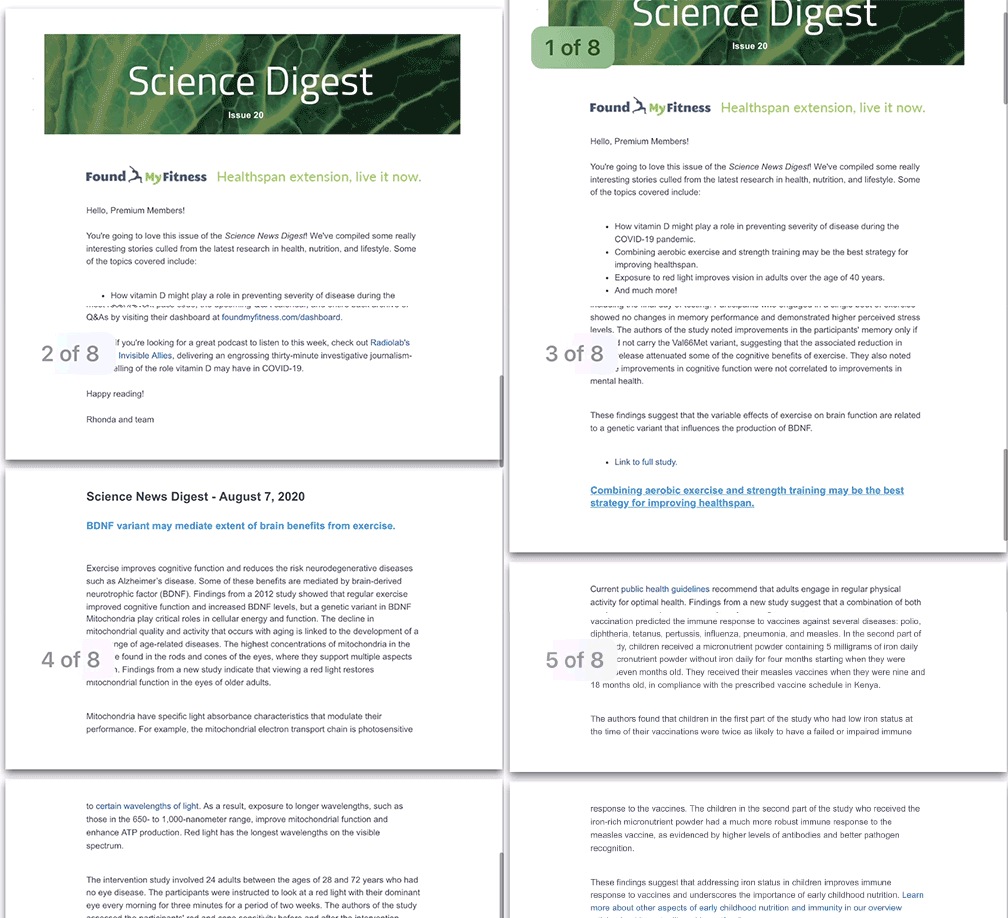
Every other week premium members receive a special edition newsletter that summarizes all of the latest healthspan research.
Muscle News
- Standing for 30 minutes each hour during the workday improved insulin responses better than an evening workout in sedentary adults.
- Ketone supplementation preserved muscle and its energy-producing machinery during weight loss induced by a GLP-1 drug in mice.
- Less than 12 minutes of daily exercise improved fitness and reduced insulin resistance in sedentary women.
- Photobiomodulation (red light therapy) may support recovery after exercise.
- In a decades-long study, 90 minutes or more of weekly resistance training showed the strongest association with lower mortality.