Supplementing with Vitamin D while breastfeeding (prevents infant deficiency) | Biology of Breast Milk
Get the full length version of this episode as a podcast.
This episode will make a great companion for a long drive.

The Omega-3 Supplementation Guide
A blueprint for choosing the right fish oil supplement — filled with specific recommendations, guidelines for interpreting testing data, and dosage protocols.
You'll also receive updates from Rhonda & FoundMyFitness
Vitamin D is crucial for many aspects of infant development. Breast milk contains negligible amounts of vitamin D and is typically considered inadequate to prevent vitamin D deficiency in exclusively breastfed infants. But evidence suggests that supplemental vitamin D in lactating women can increase breast milk concentrations to levels that are adequate to reduce the risk of deficiency in breastfed infants. In this clip, Dr. Rhonda Patrick describes the data suggesting that maternal supplemental vitamin D can reduce the risk of deficiency in breastfed infants.
Breast milk also contains very little vitamin D, certainly not enough to prevent vitamin D deficiency in exclusively breastfed infants. But recent studies have shown that moms who take a daily high dose vitamin D supplement of 6,400 IUs a day can increase the vitamin D concentration of their breast milk to a level that provides sufficient vitamin D intake for their infant.
Get email updates with the latest curated healthspan research
Support our work
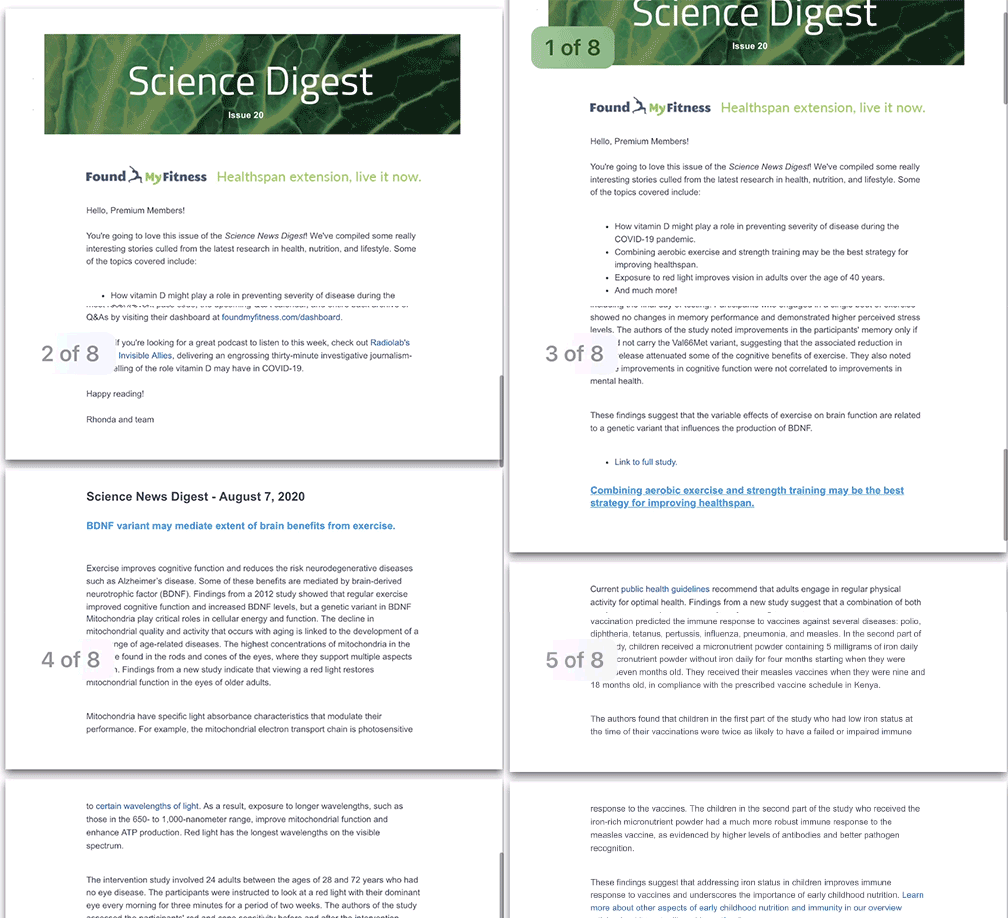
Every other week premium members receive a special edition newsletter that summarizes all of the latest healthspan research.
Micronutrients News
- People who ate 1 serving of leafy, green vegetables showed an equivalent of being 11 years younger cognitively than people who rarely ate them.
- Two new studies find organic milk & meat contain ~50% more omega-3 fatty acids than non-organic milk & meat.
- Vitamin B3 treatment prevented glaucoma in mice prone to glaucoma & will be tested in glaucoma patients next.