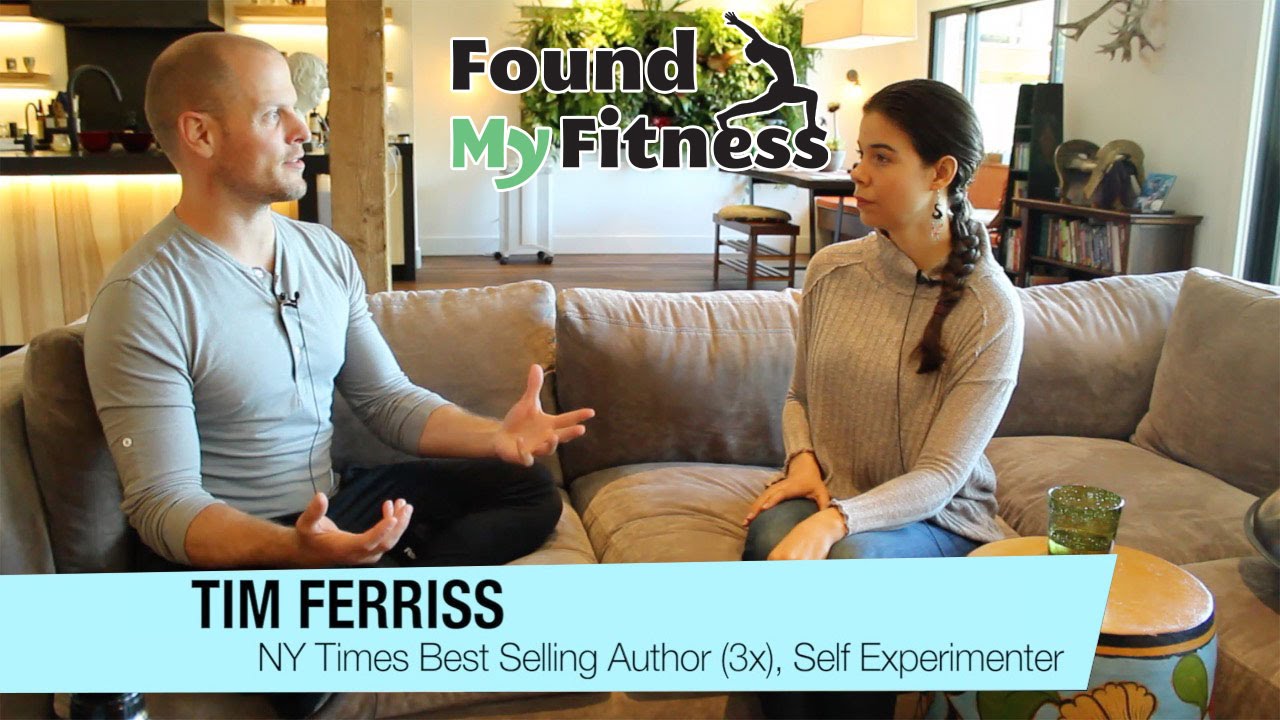
The Tim Ferriss Show Ep. 12: Dr. Rhonda Patrick on Life Extension, Performance, and More
The Omega-3 Supplementation Guide
A blueprint for choosing the right fish oil supplement — filled with specific recommendations, guidelines for interpreting testing data, and dosage protocols.
Dr. Rhonda Patrick's first visit on The Tim Ferriss Show (episode #12) entitled "Rhonda Patrick on Life Extension, Performance, and More."
Related links
-
Who the episode is for: nerds, biohackers, people interested in life extension, dangers and promises of supplements, and performance enhancement.
-
Brief mention of Dr. Bruce Ames from Tim
-
Brief intro of who Rhonda is and what she is researching.
-
Tim mentions he did work with St. Jude on the "Child Genome Project" and suggests everyone donate.
-
Bluehost sponsor plug.
-
Podcast music starts
-
Discussion of how and where Tim and Rhonda met. (At the WellnessFX fireside chat.)
-
Discussion of Jim Kean's (former CEO of WellnessFX) mad levels of athleticism.
-
Rhonda mentions she's a Guinness book of world record holder (at one point). FYI: she's referring to jump roping.
-
Rhonda was a part of starting jump rope teams around the U.S. when she was a kid.
-
Begin Rhonda's covering of her own professional background. Chem/biochem major at UCSD, worked at Salk Institute before grad school doing research on aging in nematodes/worms (c. elegans). Performed experiments where they were able to extend their lifespan by up to 2-fold. Fell in love with biology as a consequence. Did cancer research at St. Jude for grad school and studied mitochondrial metabolism and apoptosis and their role in cancer survival. After grad school wanted to do clinical research for human relevance.
-
Micronutrient deficiencies (magnesium, vitamin K, vitamin D, etc.) over time cause insidious deficiency that rear their head as age related diseases later like cancer, neurodegenerative diseases, type II diabetes and more.
-
Explanation of Rhonda's use of the term "translational research". Applying mechanistic insights from science directly into practice where it's used in the real world.
-
Problem of some bloggers of interpreting in vitro (in the test tube) science in a way that should be reserved for in vivo studies (in whole organism).
-
Tim talks about how identifying micronutrient deficiencies, in particular, a selenium deficiency (in his case) had adversely affected his own testosterone production.
-
What causes micronutrient inadequacies?
-
Clarification of definition of micronutrient inadequacy. Inadequacy is different from deficiency because symptoms may be subclinical and not observable unless you know what to look for.
-
Magnesium is in the center of the chlorophyll molecule.
-
Magnesium is essential for about 300 different enzymes in the body.
-
Enter discussion of the triage theory. A theory that the body rations micronutrients to proteins and enzymes in the body for short-term, immediate survival. Therefore, proteins required for long-term survival are sacrificed and do not get the micronutrients.
-
It makes sense to try to prevent damage (e.g. that of the insidious damage caused by micronutrient deficiency over years) rather than try to patch it up after the damage has been done.
-
Discussion of Vitamin K in nato, kimchee and vegetables. Covers pronunciation of nato!
-
Focus on eating more green leafy vegetables chiefly instead of focusing on supplementing K2, since the K1 from green leafy vegetables gets converted into K2 in the liver. (Note: most people get sucked into minutiae instead of just addressing the most important fundamental -- eat green leafy vegetables.)
-
What does Rhonda's diet looks like? Goes right into explaining the importance of having a powerful blender (vitamix/blendtec) for improving consumption of vegetables. Consists of kale, spinach, swisschard, two large carrots, a tomato, an avocado, a banana, frozen berries or citrus fruits, almond milk (unsweetened), sometimes protein powder or glutamine. Tim mentions he likes to take his glutamine on an empty stomach.
-
Rhonda elaborates on her dinner choices a bit: salmon, spinach, turkey chili. Tim refers to this as paleo-ish.
-
Tim brings up phytic acid & saponins. Rhonda hedges a little on this but in general hasn't been convinced and still prefers her kale raw.
-
"This is a country known for the most expensive urine in the world and the olympics." - Tim
-
Minerals are required as cofactors for a lot of enzymes, because they're very small they're very similar in their structure. If you supplement too much of a given mineral and are disproportionately lacking in a mineral that is close on the periodic table then your enzymes will start to take use the wrong cofactors, which causes them to not work as well. The example used is calcium and magnesium.
-
Some studies show that the maximum amount of magnesium you can absorb from a single dose (via supplementation) is something like 123mg.
-
Tim suggests that it may be possible for people to shift their mineral intake even from raw eating enough to cause dysfunction. Not even talking about supplementing in this case. His basis for this hypothetical scenario is due to the sheer absurdity of the fact that some people have died from even excessive consumption of even water.
-
"I always wonder what the doses are that will make the poison, even for the naturally occurring stuff." - Tim
-
70% of the population has inadequate vitamin d.
-
Supplementing context radically changes if a person is already in a diseased state.
-
Begin discussion of folic acid. Lack of folate causes double strand breaks in DNA, similar to being irradiated by x-rays. Surplus of folate when you already have cancer, however, will actually be used to help synthesize the new DNA required for the cancer cells to proliferate.
-
Tim brings up the fact that there is a small subset of people that are taking metformin in an attempt to reduce their risk of cancer by manipulating how their liver handles glycogen & (theoretically, by their estimations) extend their own life expectancy.
-
Tim has a polymorphism in the MTHFR which leads to him being a "bad methylator" increases his bodies need for folate relative to people without this particular genetic polymorphism.
-
Rhonda explains the difference between cancer initiators, which cause the initial mutation, and cancer promoters, which allow the caner cells to proliferate and reproduce.
-
Begin discussion of IGF-1 (insulin-like growth factor 1).
-
IGF-1 is downstream of growth hormone. It can be induced by exercise, and protein. IGF-1 induces the mTOR pathway, and this helps logically connect the reason why protein consumption induces IGF-1. (Because when you ingest amino acids or proteins which are composed of amino acids your body ultimately needs to use those amino acids... and do so by building them into new proteins via the mTOR pathway.)
-
Most important thing for cognitive performance? Doing exercise!
-
Begin the dark side of IGF-1. IGF-1 activates the AKT pathway which, in part, inhibits the FOXO pathway -- an important transcription factor. When FOXO is NOT inhibited it activates genes which help with stress resistance, anti-oxidant genes, genes involved in DNA repair, genes involved in degrading bad proteins.
-
Rhonda relates story about how inactivating IGF-1 in worms (during research at Salk) would double the lifespan of worms (c. elegans) from 15 days to 30 days.
-
Tim says there is research in animals that seems to hint at the fact that abstaining from any and all form of sexual activity (in males) may actually increases lifespan.
-
Begin discussion of what getting the best benefits of certain dieting configuration (high protein) while still avoiding the down-side of increasing things like IGF-1 excessively which ends up inducing AKT which inhibits FOXO which prevents the production of important stress response genes.
-
Mechanism action of EGCG in green tea is hormesis -- it activates NRF2 pathway which activates glutathione and other antioxidant genes.
-
Rhonda & Tim have a laugh at their mutual love of "The Princess Bride". Tim compares hormesis to a character in The Princess Bride inoculating himself against poison.
-
Tim talks about a prospective study he wants to see happen (somewhere, somehow). He would like to compare two cohorts FOXO status. One cohort has high protein, moderate to low fat, moderate to low carbohydrate. This group would be similar to a lot of paleo people. The second cohort follows a ketogenic diet super strictly (e.g. epileptic diet)... very high fat, low carbohydrate, moderate protein intake.
-
Begin "what is methylation?" (Epigenetics 101)
-
DNA is wrapped up in protein called histones which make up chromosomes. DNA has methyl groups which are attached to CPG islands in the DNA. The CPG islands are where transcription factors bind, which is why when methyl groups are bound to these islands it (usually) means that the transcriptions factors cannot bind there, and therefore that gene will not be expressed as protein. In other words, DNA methylation often means genes are being turned off.
-
Other important term to know in the context of epigenetics: acetyl groups.
-
Tim relates funny story about how he used to say democracy as a little kid (dih-moe-crassy). Context being variation in the pronunciation of autophagy.
-
Explanation of autophagy: the process by which cell essentials eats itself, destroying dysfunctional organelles, dysfunctional mitochondria & endoplasmic reticulum.
-
Rhonda accidentally and somewhat hilariously implies Tim doesn't "know what he's talking about." (She most certainly didn't mean it in this way, but it's sort of funny anyway.)
-
Explanation of a polymorphism: variation in a gene that changes its functionality. (Context: MTHFR)
-
MTHFR polymorphism can lead to a decrease in methyl group precursors which may affect global methylation patterns.
-
Study done at Duke University: diet rich in folic acid turned off "agouti" gene in yellow mice which turns their hair yellow and predisposes them to obesity and cancer. The presence of this epigenetic change that occurred presumably as a consequence of silencing methyl groups turned off the gene (stopped expression of) that makes them die earlier and causes them to be yellow.
-
Epigenetic: epi means "on-top of". Epigenetics definition: changes in methylation/acetylation patterns (mostly) within your lifetime which influence the behavior of your genes in the context of your environment.
-
Epigenetics is now showing that the pattern of methylation/acetylation can be passed on to offspring (e.g. inter-generationally) via changes in the DNA in germline cells.
-
"Epigenetics is kind of terrifying in the sense that you are beholden to what your parents did." - Rhonda
-
Begin discussion of new study where the authors were able to demonstrate with an accuracy of around 96% the ability to predict a person's age within 4 years by the methylation pattern of their genome alone.
-
The fact that outliers exist demonstrating some people which have a dramatically different chronological and biological age is good news for people optimizing diet/lifestyle for a (hopefully) younger epigenome.
-
Cancer cells demonstrate a methylation pattern consistent with accelerated or advanced ageing.
-
Begin discussion of ageing as a sort of set epigenetic "program" (or progression) that all our cells are progressing through. ARF gene example: ARF, which stops your cells from dividing in a process known as senescence, isn't expressed in stem cells until old age or until you have enough inflammation such that NF-kB activates the demethylase which takes the "blocking" methyl group off of the area of the genome responsible for producing ARF.
-
Begin stem cell discussion & the banking of them. Stem cell sources for banking: umblical cord blood, wisdom teeth (Rhonda's source, recently banked).
-
Dental pulp stem cells in wisdom teeth are from a mesenchymal origin: they can form bone, cartilage, teeth (eventually), and can be coerced to form neural populations. One study on dental pulp stem cells taken from human adults were transplanted into mice with spinal cord damage and were found to be able to replace motor neurons.
-
Dental pulp stem cells from extracted teeth found to also regenerate bone in humans in an italian study.
-
The stem cell banking process: stem cell banks send your dental surgeon a kit (balanced saline solution) and your dentist will do a minimal amount of manipulation and then (usually) cryogenically freeze down the whole tissue.
-
Most stem cell banks average around $625 for initial banking, and then $125 a year to keep them frozen (from that point forward).
-
Children's baby teeth, which usually get thrown away, are one of the best sources of stem cells (but you need to have the balanced saline solution in advance). A few banks that exist out there: StemSave, National Dental Pulp Laboratory.
-
Begin discussion of taking terminally differentiated cells (non-stem) such as skin cells and turning them or "reprogramming them" into multipotent stem cells which can then be used to create a neuron, kidney cell, or other varieties. This was demonstrated by Shinya Yamanaka's lab. Update from Rhonda: Pluripotency, not multipotency, was the term she meant to use during the interview.
-
Dialogue about japanese work ethic. Tim mentions that the japanese actually have a special word just for death by overworking: Karōshi.
-
Scientists have been able to take renal cells excreted in urine and convert them into multipotent stem cells. Update from Rhonda: Pluripotency, not multipotency, was the term she meant to use during the interview.
-
Rhonda excited about increasing accuracy of gene therapy. (Twitter individual suggests she was talking about the CRISPR system.)
-
How far away are using these induced multipotency gene therapy OR stem cell banking techniques away from legitimate consumer use? Update from Rhonda: Pluripotency, not multipotency, was the term she meant to use during the interview.
-
Tim Ferriss mentions Daniel Kraft. Tim met Daniel via Singularity University. Daniel develops process and technology for bone marrow harvesting.
-
Tim asks: "What are the low hanging fruit for extending your lifespan?"
-
Using something like vitamix/blendtec blenders to consume mass quantities of vegetables is key to getting broad spectrum dose of nutrients from many sources of vegetables & fruits (some of which probably haven't been characterized by science).
-
Focus on diet is usually on elimination. Tim: "Absence of bad things doesn't guarantee the presence of good things."
-
Tim has personally met at least a dozen readers of his that have lost over 150 pounds. Tim believes for the super obese it's a better prescription to ask them to force certain foods down in certain specified quantities and then allow them the option of eating whatever they like after that point.
-
Tim is a proponent of legumes because they're ability to induce satiation and prevent over eating via the fiber content's modulation of the glycemic response and digestion duration. (He refers to this as hilariously controversial among the paleo community.)
-
Lectins get heat inactivated or removed with conventional preparation usually.
-
Tim begins to "jones" for what he calls a "Jake Shields Green Drink" (local MMA fighter). Mentions Sidewalk Cafe which serves blended greens in the Mission.
-
Parting FoundMyFitness plug.
-
Fade out to music.
Supporting our work
If you enjoy the fruits of
 , you can participate in helping us to keep improving it. Creating a premium subscription does just that! Plus, we throw in occasional member perks and, more importantly, churn out the best possible content without concerning ourselves with the wishes of any dark overlords.
Performance News
- Post-exercise infrared sauna use contributes to a 25% increase in jump height and a 6.8% peak power boost in female athletes—a potential tool for enhancing power production.
- Curcumin, a compound derived from turmeric, aids in reducing muscle damage and soreness after intense exercise, potentially speeding up recovery.
- Omega-3 supplementation linked to lower levels of brain injury markers in athletes exposed to repeated subconcussive impacts.
- The absence of gut microbes limits exercise capacity and reduces glucose utilization, highlighting the surprising role of microbiota in physical endurance.
- Initiating exercise later in life improves physical performance by up to 31%, demonstrating its beneficial effects against age-related decline.