Why Cardiorespiratory Fitness Matters for Longevity
The BDNF Protocol Guide
An essential checklist for cognitive longevity — filled with specific exercise, heat stress, and omega-3 protocols for boosting BDNF. Enter your email, and we'll deliver it straight to your inbox.
You'll also receive updates from Rhonda & FoundMyFitness
In this clip from Dr. Rhonda Patrick's appearance on The Diary of a CEO, she explains how quickly inactivity can reduce physical capacity. In the Dallas Bed Rest and Training Study, three weeks of strict bed rest at age 20 reduced the five participants' exercise capacity more than 30 years of aging, showing how strongly deconditioning can affect cardiorespiratory fitness. [1]
The same men also demonstrated that fitness remains adaptable. After the 30-year follow-up, six months of endurance training increased absolute VO2 max by 14% and restored it to the level measured before their original training program three decades earlier. This small longitudinal study illustrates that a substantial part of age-related aerobic decline can respond to consistent training. [2]
Large cohorts link higher cardiorespiratory fitness with longer survival. Among 122,007 adults who completed treadmill testing, elite fitness was associated with an 80% lower adjusted mortality rate than low fitness. A separate Copenhagen cohort found that people reporting lower fitness than their peers had about five fewer years of life expectancy than those reporting higher fitness, reinforcing the value of moving out of the lowest fitness category. [3] [4]
This clip is excerpted, with permission, from Dr. Rhonda Patrick's appearance on The Diary of a CEO. Thank you to The Diary of a CEO for allowing us to share it.
- ^ McGuire DK; Levine BD; Williamson JW; Snell PG; Blomqvist CG; Saltin B, et al. (2001). A 30-year follow-up of the Dallas Bedrest and Training Study: I. Effect of age on the cardiovascular response to exercise. Circulation 104, 12.
- ^ McGuire DK; Levine BD; Williamson JW; Snell PG; Blomqvist CG; Saltin B, et al. (2001). A 30-year follow-up of the Dallas Bedrest and Training Study: II. Effect of age on cardiovascular adaptation to exercise training. Circulation 104, 12.
- ^ Mandsager, Kyle; Harb, Serge; Cremer, Paul; Phelan, Dermot; Nissen, Steven E.; Jaber, Wael (2018). Association Of Cardiorespiratory Fitness With Long-term Mortality Among Adults Undergoing Exercise Treadmill Testing JAMA Network Open 1, 6.
- ^ Holtermann A; Marott JL; Gyntelberg F; Søgaard K; Mortensen OS; Prescott E, et al. (2015). Self-reported cardiorespiratory fitness: prediction and classification of risk of cardiovascular disease mortality and longevity--a prospective investigation in the Copenhagen City Heart Study. J Am Heart Assoc 4, 1.
Steven Bartlett: Where is the most important place to start this conversation, based on everything you know? Presumably, there is some foundational information.
Dr. Rhonda Patrick: I think the important place to start is with aging as a disease. I think being sedentary is a disease, and that's a good place to start. By sedentary, I mean not physically active or not engaging in any type of physical activity.
Steven Bartlett: What is the spectrum between someone who doesn't move at all for 24 hours a day and someone who constantly runs marathons? Where are most of us on that scale, and are we moving enough?
Dr. Rhonda Patrick: Most of us are not moving enough. Globally, most of us are on the sedentary end of the scale. We sit at a computer, desk, or cubicle all day and do not move much.
I call sedentary behavior a disease because it has been shown to increase the risk of early mortality even more than diseases such as type 2 diabetes and cardiovascular disease, or habits such as smoking. Being sedentary can predict early mortality even more strongly than those diseases. But let's take a step back. It's even bigger than that.
An amazing study called the Dallas Bed Rest Study began in the 1960s. Ben Saltin and Jerry Mitchell were involved in this early study. They took five male college students and placed them on bed rest for three weeks. This was legitimate bed rest. They couldn't get up to use the bathroom, so they had catheters. The researchers wanted to know what happens to the cardiovascular system when you do not move for three weeks. This is not completely irrelevant because people can be bedridden for three weeks after surgery or a serious illness such as influenza.
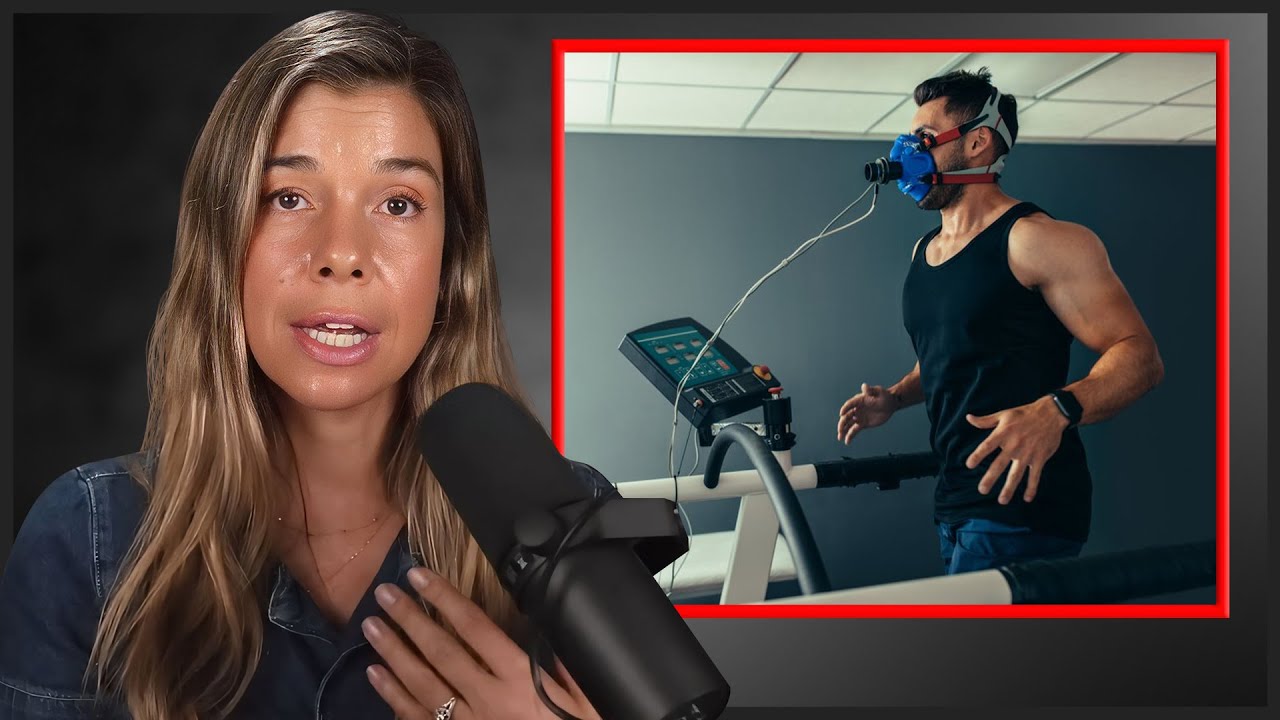
After three weeks, their cardiovascular systems had deteriorated. These were probably some of the most thoroughly studied men at the time. One of the major measurements was cardiorespiratory fitness, often called VO2 max. This is the maximum amount of oxygen that you can breathe in, deliver through your lungs and circulation, and use in your muscles during maximal exercise. Their cardiorespiratory fitness plummeted.
Approximately 30 years later, Ben Levine, a cardiovascular exercise physiologist at UT Southwestern in Dallas, joined the study. The researchers found the five men and measured their cardiorespiratory fitness and other parameters again. Three weeks of bed rest had affected their cardiorespiratory fitness more than 30 years of aging. Their fitness 30 years later was no worse than it had been after three weeks of bed rest. You might expect 30 years of aging to be worse.
Steven Bartlett: These were the same individuals?
Dr. Rhonda Patrick: The same five men. After the three weeks of bed rest in the 1960s, they regained their cardiorespiratory fitness once they started exercising and moving again, though it took some time. When the researchers compared the men's original baseline fitness with their baseline fitness 30 years later, the later value wasn't worse than their fitness after three weeks of bed rest.
Why is a decline in cardiorespiratory fitness so significant? We know that cardiorespiratory fitness is one of the best predictors of longevity. Studies have shown that people with high cardiorespiratory fitness live five years longer than people with low fitness. They're approximately 80% less likely to die from many causes, including cardiovascular disease, cancer, and respiratory disease, than people with low fitness. You're gaining approximately five years of life expectancy and delaying age-related diseases, such as cardiovascular disease and cancer, until later in life.
We also know that moving anywhere out of the lowest cardiorespiratory-fitness category matters. People with the lowest fitness are sedentary. If you move from low fitness to low-normal fitness, you gain approximately two years of life expectancy, and that's not very hard to do.
Think about cardiorespiratory fitness. Sitting quietly takes approximately three milliliters of oxygen per minute per kilogram of body weight. Carrying groceries to your car takes approximately 11 milliliters per minute per kilogram.
As you age, you head toward a cliff because cardiorespiratory fitness naturally declines. If you do not work on your fitness or remain physically active, you reach that cliff faster. Some exercises improve cardiorespiratory fitness more than others. Without improvement, everything becomes a maximal effort. You're out of breath talking or carrying groceries to your car. That quality of life is not good, and you also die sooner. This means both decreased healthspan and decreased lifespan.
Steven Bartlett: We should be moving more. How do you improve cardiorespiratory fitness? Do you lift weights, run, or bike?
Dr. Rhonda Patrick: Exercise physiologists have answered that question over the last few decades. You want to engage in vigorous-intensity exercise, the kind of exercise where you cannot have a conversation. Your heart rate rises to approximately 80% of your maximum, and you cannot really talk.
You can do it in intervals through high-intensity interval training. You have intervals where your heart rate rises and you perform vigorous exercise, followed by recovery periods where you rest, lower your heart rate, and stop the maximal effort.
Hear new content from Rhonda on The Aliquot, our member's only podcast

Listen in on our regularly curated interview segments called "Aliquots" released every week on our premium podcast The Aliquot. Aliquots come in two flavors: features and mashups.
- Hours of deep dive on topics like fasting, sauna, child development surfaced from our enormous collection of members-only Q&A episodes.
- Important conversational highlights from our interviews with extra commentary and value. Short but salient.
Aerobic News
- Cardiorespiratory fitness may be a far greater predictor of gut microbiota diversity than either body fat percentage or general physical activity
- A combined aerobic-resistance training regimen proves equally effective for cardiovascular health as aerobic alone.
- 30 minutes of moderate-intensity aerobic exercise (64.9% of VO2 max) three times a week stabilized choline concentrations in the brain.