How Creatine Supports Brain Energy Under Stress
The Omega-3 Supplementation Guide
A blueprint for choosing the right fish oil supplement — filled with specific recommendations, guidelines for interpreting testing data, and dosage protocols.
You'll also receive updates from Rhonda & FoundMyFitness
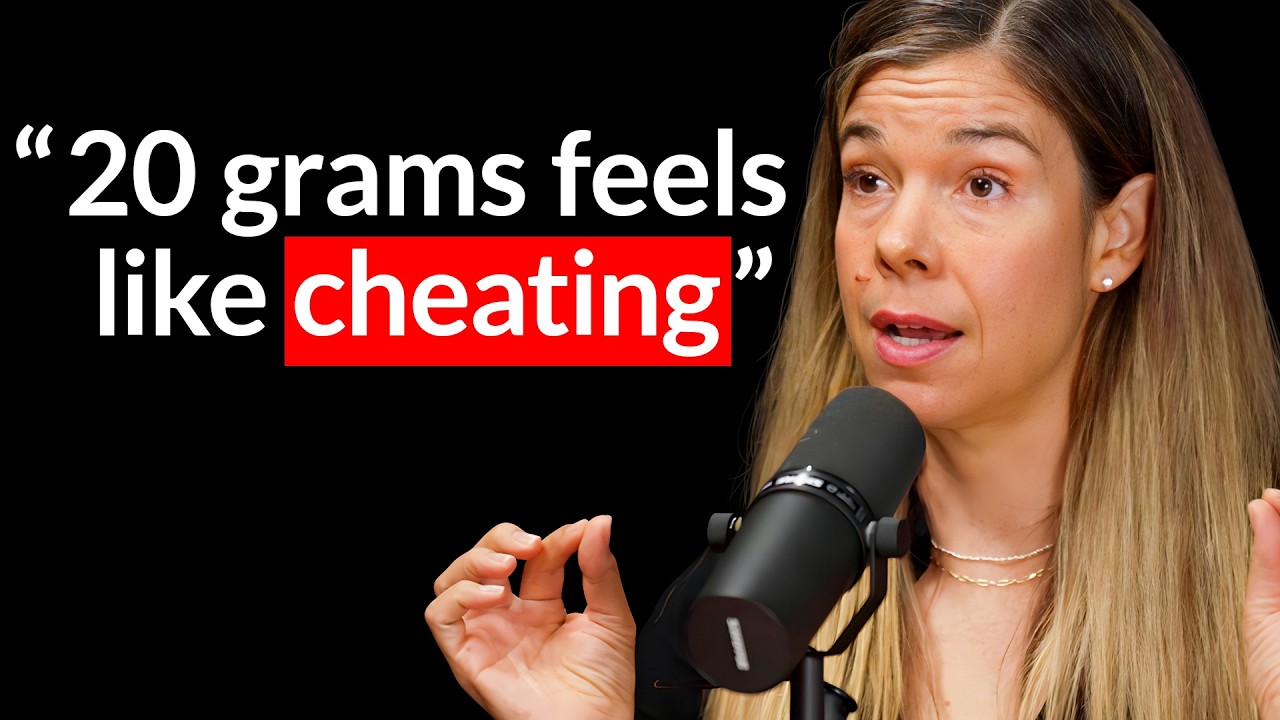
In this clip from Dr. Rhonda Patrick's appearance on Mayim Bialik's Breakdown, she explains how creatine supports rapid ATP regeneration through the phosphocreatine system. Creatine's benefits for high-intensity exercise capacity and training adaptation are well established, while brain responses can vary with baseline diet, tissue uptake, dose, and cognitive demand. [1]
Controlled studies have examined whether people with low dietary creatine respond differently. Six weeks of 5 grams per day improved selected memory and reasoning measures in 45 vegetarian young adults, and a short 20-gram loading protocol improved some memory outcomes in vegetarians. A larger recent trial found smaller and less certain cognitive effects without a clear vegetarian advantage. [2] [3] [4]
Acute stress may create a different context. In a double-blind crossover study of 15 adults undergoing 21 hours of sleep deprivation, a single 0.35-gram-per-kilogram dose changed brain high-energy phosphate measures and improved selected cognitive outcomes. This provides early evidence that creatine can support brain energetics when cognitive demand is unusually high. [5]
This clip is excerpted, with permission, from Dr. Rhonda Patrick's appearance on Mayim Bialik's Breakdown. Thank you to Mayim Bialik's Breakdown for allowing us to share it.
- ^ 10.1186/s12970-017-0173-z
- ^ 10.1098/rspb.2003.2492
- ^ Benton D; Donohoe R (2011). The influence of creatine supplementation on the cognitive functioning of vegetarians and omnivores. Br J Nutr 105, 7.
- ^ 10.1186/s12916-023-03146-5
- ^ Gordji-Nejad, Ali; Matusch, Andreas; Kleedörfer, Sophie; Jayeshkumar Patel, Harshal; Drzezga, Alexander; Elmenhorst, David, et al. (2024). Single Dose Creatine Improves Cognitive Performance And Induces Changes In Cerebral High Energy Phosphates During Sleep Deprivation Scientific Reports 14, 1.
Jonathan Cohen: Should everyone be on creatine?
Dr. Rhonda Patrick: I know, right? I mean, like, I mean, you sprinkle that all around the room. I mean, I did. I was like, I was, I was, I dosed up today because I wanted my brain to be working. But yeah.
Mayim Bialik: What is creatine? Tell us what creatine is.
Dr. Rhonda Patrick: Yeah. I mean, so creatine, you probably think of creatine, you think of the bodybuilder muscle guys, right?
Mayim Bialik: 100%. It's in a big white plastic tub, whatever it is. Right. And then I always think about the water weight I'm going to gain like that. Like, those are the images that I think about when I think of creatine.
Dr. Rhonda Patrick: Well, creatine is, it's really important for energy production, and I don't want to get like too much into that mechanism, but essentially what you need to know is that it is important for energy production, and so—
Mayim Bialik: But is it a thing that's in our body already?
Dr. Rhonda Patrick: It is something that's in our— it's in our muscles. It's in our body. Yes, it's in our brain. We make it in our brain. We make it in our muscles. Sorry, we make it in our liver. We make it in our brain, not in our muscles. Our muscles take it up from what's made in our liver. Our muscles are what crave it the most, right, especially because when we're working out and working our muscles, then the creatine's really coming from either what we're making in our liver to our muscles, or from what we're supplementing. So, we're not— essentially, creatine is, especially vegan, vegans are not getting enough of it, because creatine is found in muscle meat. So, people that are eating meat are getting a dietary source of creatine.
Mayim Bialik: Right.
Dr. Rhonda Patrick: But vegans and vegetarians are not getting that creatine.
Mayim Bialik: So, it's vegan to take it.
Dr. Rhonda Patrick: It's an organic compound.
Mayim Bialik: Yes.
Dr. Rhonda Patrick: It's synthesized. Right. Yeah, you're not— it's not like being isolated from cow muscle. Right, right. Yeah.
Mayim Bialik: But so, what is it doing?
Dr. Rhonda Patrick: Uh-huh. You know, it's really— so the muscles are really greedy and your muscles take it up because it's, you know, helps with energy production, right? But aside from that, other organs in the body also need it like the brain, and that's why the brain also makes its own creatine pool. And when you get like a higher amount of creatine, if you dose, if you're taking a higher amount of creatine, whatever your muscles don't take up, your muscles get the first pick because they're very, very greedy.
Mayim Bialik: Uh-huh.
Dr. Rhonda Patrick: Creatine's leftover to kinda get into the brain. And so people that are taking about 5 grams of creatine a day, which is what I used to take, it's enough for your muscles. That's pretty much what your muscles are happy with. And when I say your muscles, like why do your muscles want it? It's not necessarily gonna bulk you up. It's not like protein. It doesn't— creatine doesn't increase muscle protein synthesis. You're not gonna, you know, get bigger muscles unless you work out. What it does do is helps you work out harder. Because you have, like, you're able to basically get more energy and more power. So, the volume of your workouts are better.
Mayim Bialik: No, it feels like you're giving me a steroid.
Dr. Rhonda Patrick: But it's not. It's not a steroid.
Mayim Bialik: Am I going to be like grunting?
Dr. Rhonda Patrick: It's all the effort, right? Yeah. I definitely was grunting yesterday morning. I had my strength training.
Mayim Bialik: So, you said that you used to take 5 milligrams.
Dr. Rhonda Patrick: 5 grams. I used to take 5 grams because I wanted it for my workouts.
Mayim Bialik: And now you take?
Dr. Rhonda Patrick: And now I take 10. Every day, all the time, no matter what? Every day, all the time, no matter what. Baseline is 10, and I do that because of the brain effects. So, there's been studies now coming out that it improves cognitive function. It might be important for brain aging. Depression is another one that's coming out. Again, energy production in the brain, very important, but you have to get above that 5 grams to have spillover to the brain, but there's an even bigger I would say, dose that I take. On days when I don't sleep well, so if I'm traveling, I'm jet-lagged, I'm in the other part of the country, and I have to give a talk at 8:00 AM, which is 5:00 AM my biological time, in those sorts of scenarios, I actually take 15 to 20 grams, and it's amazing what it does to me.
Mayim Bialik: No, it's like speed. It's like without the speed.
Dr. Rhonda Patrick: It's like speed without the speed. It's like caffeine without the caffeine.
Mayim Bialik: Can you abuse it?
Dr. Rhonda Patrick: I mean, I wouldn't take much more than that. So it's not addictive. I don't feel like, I don't wake up in the morning—
Mayim Bialik: Yes, but you know what is addictive? Being alert and on target.
Dr. Rhonda Patrick: In the context, it only really works in the context of a background deprivation.
Mayim Bialik: Got it.
Dr. Rhonda Patrick: Stress, something stressful like sleep deprivation. Right. And this has been shown—
Mayim Bialik: Life.
Dr. Rhonda Patrick: I mean, yeah, right? Well, no, but I'm kind of curious. It's been shown in studies, and so what it's— I guess the question is, okay, well, how much stress in your life? A lot of us do have a lot of stress, so I do think it makes—
Mayim Bialik: How much do you want?
Dr. Rhonda Patrick: It does make a difference, right? But it helps, it helps. You don't need as much sleep even. So this has been shown in studies, and in fact, one of my vegan friends was like, she messaged me back, she's like, I don't need as much sleep and I have all this energy, what's going on? And I'm like, well, you weren't getting any dietary creatine because you don't eat any meat, and you weren't supplementing with it, so you were only relying, and you work out, I'm like, you're only relying on what your liver can make, which is not that much. So, it really kind of changed her life.
Mayim Bialik: She was Bruce Banner, now she's Hulk.
Dr. Rhonda Patrick: What happens is creatine, I'm talking about the role it plays in energy production, but it also plays another role. Interestingly, it plays a role in that whole methylation process as well, that we think about folate, choline, and creatine does it too. So, creatine can also help turn homocysteine back into methionine. It can help with gene expression. So, methylations are like carbon with 3 hydrogens. They can basically change the way our genes are activated. You need methylation groups to have that happen, and creatine helps with that. So, I think when you free up creatine, when it's like, okay, the muscles aren't using every last bit of it because now you're giving it an exogenous source through supplementation, then other things can happen, right? Other things like the methylation process can happen, right? So, changing the way genes are activated in the brain. But in the context of stress, stress requires a lot of energy. It depletes your creatine. And so, in that background, giving your body the extra creatine will give you more energy, because that energy that you would've had otherwise was taken, because the stress is very energy-consuming.
Mayim Bialik: Well, also, I'm thinking just in terms of the creatine conversation, how many of those things diagnostically would earn you a prescription for an SSRI, right? I can't sleep, I don't have energy, which means I'm not working out, so then you're not generating any positive feel-good chemicals, right? You're not going to feel good about yourself. You don't have the kind of like oomph to get up and go. Many doctors would see that and be like, you're— for me, you know, you're a woman of a certain age, like take an SSRI and you'll feel better. Right?
Dr. Rhonda Patrick: Right.
Mayim Bialik: And how many people are disappointed by that because there's other biochemical things going on that we don't even know about?
Dr. Rhonda Patrick: Right. It's fascinating.
Supporting our work
If you enjoy the fruits of
 , you can participate in helping us to keep improving it. Creating a premium subscription does just that! Plus, we throw in occasional member perks and, more importantly, churn out the best possible content without concerning ourselves with the wishes of any dark overlords.
Creatine News
- Creatine strengthened cancer-fighting immune cell activity and reduced tumor growth in a mouse melanoma model.
- A single 14-gram dose of creatine helped preserve cognitive performance after a sleepless night.
- Gut bacteria may help creatine reach the brain and support its antidepressant effects.
- Low-dose creatine improved attention, reduced fatigue, and increased brain creatine levels in peri- and postmenopausal women
- Creatine supplementation does not influence hair growth or hormone levels even after three months of usage, undermining theories of its potential link to hair loss.