Creatine, Rhodiola, and Ashwagandha for Performance and Recovery
Get the full length version of this episode as a podcast.
This episode will make a great companion for a long drive.
The Omega-3 Supplementation Guide
A blueprint for choosing the right fish oil supplement — filled with specific recommendations, guidelines for interpreting testing data, and dosage protocols.
You'll also receive updates from Rhonda & FoundMyFitness
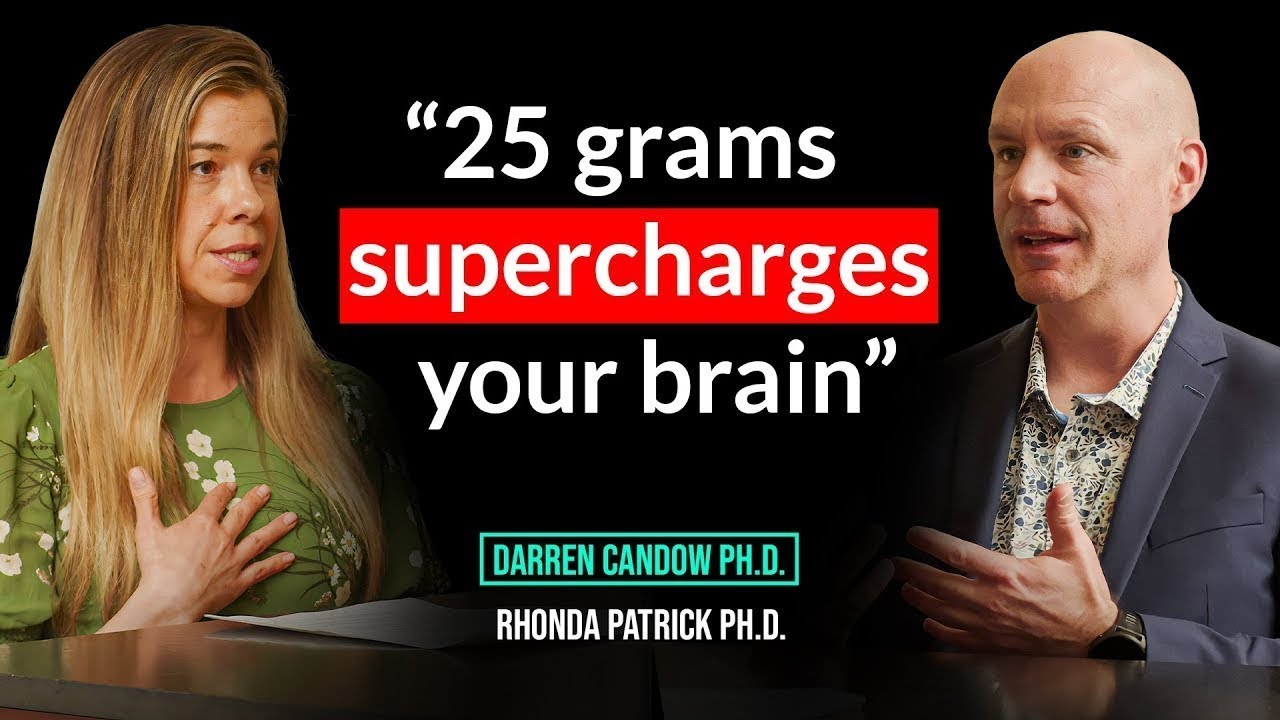
In this FoundMyFitness interview clip with Dr. Rhonda Patrick, Dr. Layne Norton places creatine monohydrate in his highest evidence tier because it supports repeated high-intensity performance, strength, and gains in lean mass. The International Society of Sports Nutrition position stand describes creatine as effective and well studied, with a strong safety record in healthy people. He usually recommends a simple daily dose and suggests splitting it if gastrointestinal discomfort occurs. [1]
Dr. Norton also discusses emerging cognitive applications. In a placebo-controlled crossover study during sleep deprivation, a single high dose of creatine improved several cognitive measures and altered brain high-energy phosphate metabolism. He separates this unusual experimental dose from routine daily supplementation and explains that a modest rise in creatinine after creatine use does not by itself establish kidney injury. [2]
Rhodiola and ashwagandha sit in Dr. Norton’s second tier because the human evidence is promising but less mature. He uses rhodiola for perceived fatigue and describes ashwagandha as a stress and recovery aid. In a small randomized trial, ashwagandha combined with resistance training improved strength and muscle size more than placebo. Dr. Norton wants more independent, long-duration trials before placing either supplement beside creatine. [3]
- ^ Kreider, Richard; Almada, Anthony L; Kalman, Douglas S.; Antonio, Jose; Ziegenfuss, Tim N.; Wildman, Robert, et al. (2017). International Society Of Sports Nutrition Position Stand: Safety And Efficacy Of Creatine Supplementation In Exercise, Sport, And Medicine Journal Of The International Society Of Sports Nutrition 14, 1.
- ^ Gordji-Nejad, Ali; Matusch, Andreas; Kleedörfer, Sophie; Jayeshkumar Patel, Harshal; Drzezga, Alexander; Elmenhorst, David, et al. (2024). Single Dose Creatine Improves Cognitive Performance And Induces Changes In Cerebral High Energy Phosphates During Sleep Deprivation Scientific Reports 14, 1.
- ^ Wankhede, Sachin; Langade, Deepak; Joshi, Kedar; Sinha, Shymal R.; Bhattacharyya, Sauvik (2015). Examining The Effect Of Withania Somnifera Supplementation On Muscle Strength And Recovery: A Randomized Controlled Trial Journal Of The International Society Of Sports Nutrition 12, 1.
Dr. Layne Norton: Supplement-wise, I mean, if I had to build my Mount Rushmore of supplements, it is very clearly 3 supplements. It is creatine monohydrate, caffeine, whey protein. The amount of research data on all 3 of those is enormous. And honestly, especially for creatine, I just can't see an argument at this point not to take it because of the cognitive benefits. There appear to be benefits on memory formation, even short-term. There was a study that just came out showing like 30+ grams of creatine at a sitting actually acutely increased memory formation, which I was very surprised by. Depression— there was a study that showed that creatine helped a little bit with the symptoms of depression. Again, cognition, possibly cognitive decline.
And then of course all the lean mass, strength benefits, performance benefits that we talk about. And it's very, very safe. I mean, if you take creatine, you might see your creatinine levels go up. Your— it doesn't mean your kidneys are failing or anything like that. Again, there's so many long randomized controlled trials looking directly at kidney function showing that creatine does not negatively impact kidney function. The one thing that I hear pop up consistently now is, well, it causes hair loss. No. One study in 2009 showed that increased DHT, okay, which is a metabolite of testosterone, it didn't show any changes in the precursor or the thing that comes after DHT. And so how is this happening, right? Like, where is this happening?
I mean, it must be directly affecting the enzyme that catalyzes the conversion if we believe this, right? But again, even if it was true, an increase in DHT is not the same thing as showing hair loss, right? You're showing a surrogate marker, you're showing a mechanism. And it's never been replicated. And again, very, to me, a suspect mechanism because you're not seeing either the precursor or whatever came after— I forget what comes after DHT. You're not seeing a difference in those. And so how is this effect happening? And more importantly, hair loss wasn't measured. They didn't measure hair loss, yeah. And so I tell people, I'm like, I'm just not worried about it. Again, it was 15 years ago. I would think by now, if it was a legit thing, it would have come back.
So that's my tier 1 of supplements.
Dr. Rhonda Patrick: What kind of dose for creatine?
Dr. Layne Norton: 5 grams a day, plenty for people. 3 grams for small women, probably enough.
Dr. Rhonda Patrick: Do you think it causes water gain?
Dr. Layne Norton: The water is all intracellular. It doesn't increase extracellular water. People who feel bloated on creatine, creatine can be a gut irritant for some people. So what I recommend is splitting the dose and taking it morning and night if you find it's a gut irritant. But it doesn't increase like extracellular water. All the water that we see— it does increase total body water and intracellular water, which is a good thing. That actually makes you visually look better. Like if you're full with glycogen, for example, your muscles look better.
There's a reason bodybuilders load carbohydrates before a competition, because you look more volumized, your muscles look fuller. So creatine, whey protein, I just take as needed to get my total protein intake. I don't think it's anything magical about whey protein. I think it's just a very high-quality, tasty, relatively inexpensive way to get in high-quality protein. People are worried about an insulin response from protein powder. Are you like— Again, this is where it's important to have guidelines, not rules, right? Okay, well, let's look at the randomized controlled trials. Okay, yeah, it does seem to have an insulin response. It does. But does insulin sensitivity get worse? No, if anything, in the studies, it gets better. So again, I'm not worried about an acute insulin rise, right?
One of the things I'll tell people is if we're going to worry about acute changes and stuff, you're not going to be able to eat anything because fat impedes flow-mediated dilation after a meal. Carbohydrates raise blood glucose, which is, you know, blood glucose is toxic over time. And protein stimulates mTOR, which is involved in, you know, formation of cancer in some cancers. Big difference between acute rises in these systems versus like long-term dysregulated signaling. Big difference. Then my tier 2 of supplements would be things like, um, I really like rhodiola rosea as a, uh, as a cognitive enhancer, um, as an adaptogen. Um, it improves time to fatigue and improves perception of fatigue and appears to be pretty consistent.
Dr. Rhonda Patrick: Mental fatigue?
Dr. Layne Norton: Yeah, so even in exercise, their perception of fatigue. But yes, it also, I think it's task completion is how they measured it. I could get that wrong, so if any experts are out there and want to correct me, please do.
Dr. Rhonda Patrick: What dose? I recently got interested in this, in rhodiola rosea, and I ordered it and I have it. And it was because of the potential mental effects.
Dr. Layne Norton: It depends on the standardization of the salidrosides. The rosavins and salidrosides. I think it's like you want like 3%, but the dose that's usually used for most people is like anywhere from, I think, like 100 to 600 milligrams. But if you go above that, they actually show like it actually starts to fall off. So there appears to be like an optimal curve. So like in our pre-workout, I believe we have, um, 150 milligrams.
And so Or maybe 150 milligrams per scoop. I'd have to go back and look. But it's an amount that's kind of like right in that middle range to get the benefits. And anecdotally, I find it takes the edge off caffeine too. So like you don't have as much of a comedown off caffeine. So I like that. Ashwagandha, I'm very bullish on ashwagandha. There's a few meta-analyses now showing improved lean mass. Improved strength, improved sleep, better stress management. You know, there's been some worries about, like, I think liver, some people said, or also, like, depression and mood. I haven't seen it pop up in any of the randomized controlled trials, and so I just don't— I don't really— it's not something I worry about.
That seems to be another adaptogen that kind of, like, helps really with stress management. And interestingly, none of the— It raises testosterone too, but— not an amount that would— it doesn't raise the testosterone or lower cortisol enough to where it explains the changes in lean mass. So this could be like a, a matrix thing again, where there's like acting on multiple, multiple pathways summing up to an outcome. Now I am a little bit— it's in our, it's in our recovery product, but I— it's, it's tier 2 because I just want to see more studies over a longer period of time. Like if you look at creatine, caffeine, whey protein, there are thousands of placebo-controlled trials showing the benefits to this across multiple labs over decades in different countries. Very strong evidence.
I just want to see more from things like ashwagandha, rhodiola over a longer period of time before I would move that into a tier 1, right? And the mechanism isn't really understood yet of ashwagandha. And so I just want to see that fleshed out a little bit more, right? And then there's things like betaine or trimethylglycine, which may improve power output during exercise. You have things like beta-alanine, which if you're exercising like intense between 30 seconds and 10 minutes, that appears to have some benefits. Citrulline may have some benefits, and at least if you're— at least if you're getting like 6 grams, uh, in terms of like fatigue resistance. So those are some like— and then fish oil, melatonin, those things would kind of go into my tier 2.
Actually, melatonin has shown an increase in lean mass as well.
Dr. Rhonda Patrick: Yeah.
Dr. Layne Norton: There are some studies now, randomized controlled trials, showing an increase in lean mass. So some people might say it's improved sleep is improving lean mass, but there's actually some evidence that it may act outside of the improved sleep. I'm not sure the exact mechanism. So again, I want to see more of that.
Dr. Rhonda Patrick: It's a hormone. It changes 500 different genes.
Dr. Layne Norton: Right. Those would kind of be my tier 2. I'm sure I'm missing some stuff. Multivitamin would probably go in there somewhere.
Dr. Rhonda Patrick: Insurance.
Dr. Layne Norton: Yeah. I mean, just make sure you're covering your bases, right? If you have a real hard time eating vegetables, you know, I always tell people fruits and vegetables, whole foods are better.
If you need a fiber supplement, okay, fiber supplement. You know, you could take Metamucil and Benefiber, so you're getting soluble, insoluble. You know, again, I think it's better to get a diverse array, but let's not let perfection be the enemy of good, right? So if you need a fiber supplement, by all means. So those would kind of be like the things that I'm having and stuff. And that's the supplements I sell. We sell a sleep supplement. There's other things in there. There's like a few other ingredients that have been shown to improve sleep, but melatonin is the big hammer in there. And then there's our recovery supplement, which has creatine, it has ashwagandha, it has betaine, you know, so some of the stuff I'm talking about.
Dr. Rhonda Patrick: What do you think of glucosamine?
Dr. Layne Norton: I mean, I think that's probably in a tier 2 if you want. I think the evidence is, I haven't looked into it super specifically, I think there's good evidence that it does a little bit, is what I would tell people. It's a small effect, but it seems to have an effect. So if you're throwing the kitchen sink, I mean— Yeah, if you want to do that, that's fine. And, you know, other things that fall into like, people are like, what's tier 3? I'm like, tier 3 is where there's just not a lot of consistency in the data, right? You know, or you got stuff like, you know, ectosterone, which there's a couple studies out there that show, hey, an increase in lean mass and ectosterone. And I'm like, does it stimulate protein synthesis?
Doesn't do anything to protein degradation. Where is this increase in lean mass coming from, right? So that HMB, probably something in tier 3, you know, where like in specific populations there might be a benefit, but for most people does nothing. So that's kind of how I categorize my supplements. But I really like, we only have 4 supplements in my entire line. You know, we have a pre-workout, we have a recovery, we have sleep, and we have whey protein. And our whole deal— we're probably going to come up with an electrolyte supplement as well, but our whole deal is basically like, the line is not going to do the work for you. You got to do the work, which is why we call it Outwork. And we're just going to help you be able to train a little bit harder, recover a little bit faster, but it's your training that's going to move the needle.
Get email updates with the latest curated healthspan research
Support our work
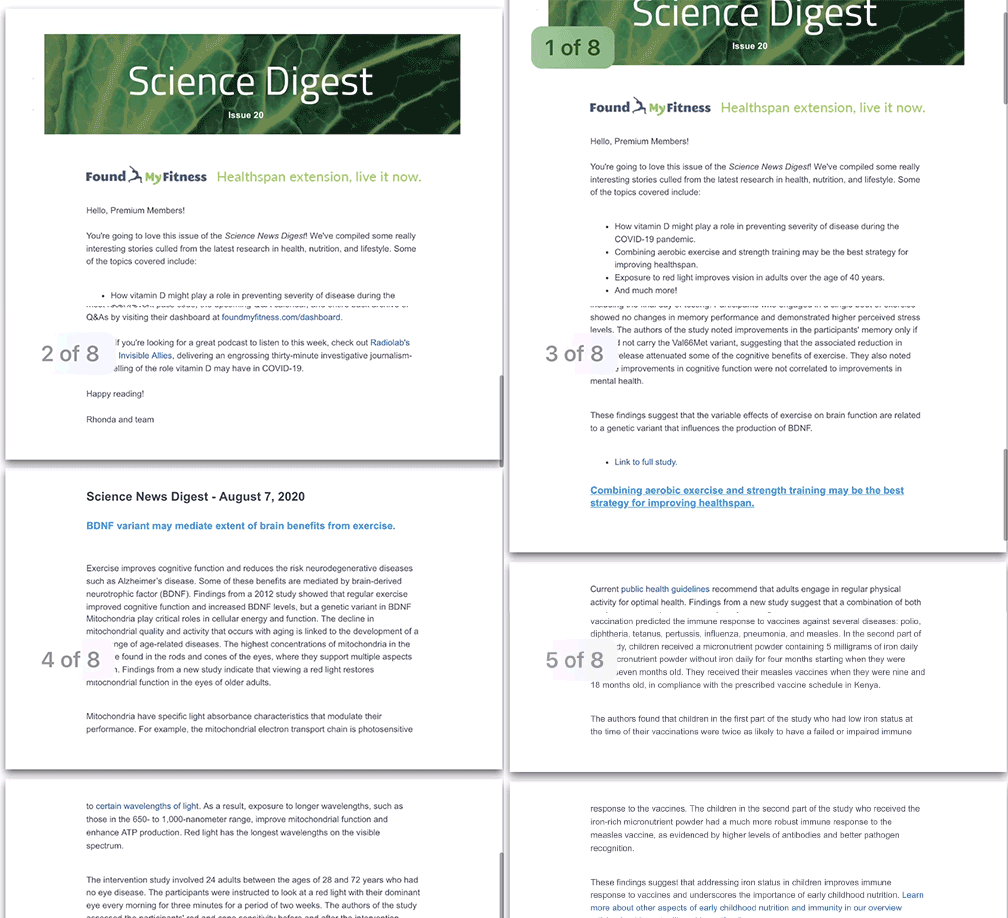
Every other week premium members receive a special edition newsletter that summarizes all of the latest healthspan research.
Creatine News
- Gut bacteria may help creatine reach the brain and support its antidepressant effects.
- Creatine supplementation does not influence hair growth or hormone levels even after three months of usage, undermining theories of its potential link to hair loss.
- Creatine improved bench-press strength and increased lean mass even without structured exercise in middle-aged adults.
- Creatine strengthened cancer-fighting immune cell activity and reduced tumor growth in a mouse melanoma model.