How High-Intensity Intervals Improve VO2 Max
The Omega-3 Supplementation Guide
A blueprint for choosing the right fish oil supplement — filled with specific recommendations, guidelines for interpreting testing data, and dosage protocols.
You'll also receive updates from Rhonda & FoundMyFitness
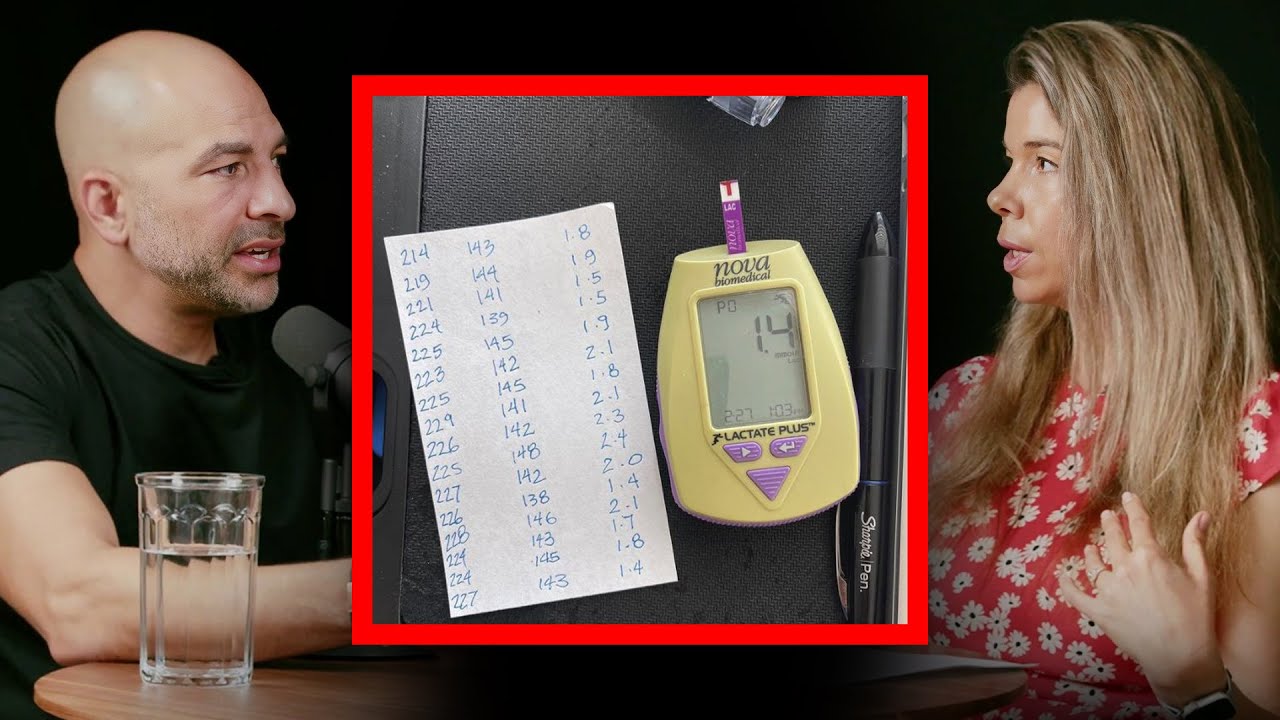
VO2 max measures the greatest rate at which the body can take in and use oxygen during maximal exercise. In this clip from Dr. Rhonda Patrick's presentation for Biote, she describes cardiorespiratory fitness as a powerful marker of healthy aging. In 5,107 middle-aged men followed for 46 years, moving from very low fitness into progressively higher categories was associated with roughly two to five additional years of life, and each one-unit increase in VO2 max was associated with 45 more days of longevity. [1]
High-intensity interval training can provide a strong stimulus for improving VO2 max. A meta-analysis of 53 randomized trials found that intervals lasting at least two minutes, with at least 15 minutes of high-intensity work and programs lasting four to twelve weeks, produced the largest gains and outperformed moderate-intensity continuous training. In one small trial of inactive men with overweight, both one four-minute interval and four four-minute intervals performed three times weekly increased VO2 max after ten weeks. [2] [3]
Dr. Patrick also reviews a two-year randomized program in healthy but sedentary adults ages 45 to 64. The progressive plan combined moderate aerobic work, a longer low-intensity session, weekly four-by-four intervals, and resistance training. It increased directly measured VO2 max by 18 percent and improved measures of left-ventricular stiffness and filling, showing that sustained training in midlife can meaningfully improve both fitness and cardiac flexibility. [4]
This clip is excerpted, with permission, from Dr. Rhonda Patrick's presentation for Biote. Thank you to Biote for allowing us to share it.
- ^ Clausen JSR; Marott JL; Holtermann A; Gyntelberg F; Jensen MT (2018). Midlife Cardiorespiratory Fitness and the Long-Term Risk of Mortality: 46 Years of Follow-Up. J Am Coll Cardiol 72, 9.
- ^ Wen D; Utesch T; Wu J; Robertson S; Liu J; Hu G, et al. (2019). Effects of different protocols of high intensity interval training for VO(2)max improvements in adults: A meta-analysis of randomised controlled trials. J Sci Med Sport 22, 8.
- ^ Tjønna AE; Leinan IM; Bartnes AT; Jenssen BM; Gibala MJ; Winett RA, et al. (2013). Low- and high-volume of intensive endurance training significantly improves maximal oxygen uptake after 10-weeks of training in healthy men. PLoS One 8, 5.
- ^ Howden, Erin J.; Sarma, Satyam; Lawley, Justin S; Opondo, Mildred; Cornwell, William; Stoller, Douglas, et al. (2018). Reversing The Cardiac Effects Of Sedentary Aging In Middle Age—A Randomized Controlled Trial Circulation 137, 15.
So, let's get started. And I like to start with this slide because if you could put what vigorous-intensity exercise does into a pill, it would be the biggest anti-aging blockbuster out there. So, when I say vigorous-intensity exercise, what I'm talking about here is the kind of exercise during which you can't really have a conversation. You're really putting in some hard effort. So you're really not able to talk while you're doing that kind of exercise. If you wear a heart rate monitor, it's the kind of exercise where you're at about 80% of your maximum heart rate or greater. That's the kind of exercise that when I say vigorous-intensity, that's what I'm talking about today.
And I want to start by talking about cardiorespiratory fitness. So cardiorespiratory fitness is often measured by something called VO2 max. You've probably heard of this. VO2 max is really just the maximum amount of oxygen that you can take up during maximal exercise. Cardiorespiratory fitness has really become a very important biomarker of our health span and lifespan. So there have been countless studies now and the study I am showing here stratifies people based on their cardiorespiratory fitness and their life expectancy. The data show that, for people with low cardiorespiratory fitness, moving above that level, even into the low-normal range, is associated with a 2-year increase in life expectancy. And if you compare people from the low to the high, that's about a 5-year increase in life expectancy.
Other studies have analyzed each unit of improvement in VO2 max. One unit is 1 milliliter per kilogram of body weight per minute, and it is associated with a 45-day extension in life expectancy. For each unit of increase, that's 45 days added to your lifespan. Why is VO2 max important? We measure it during maximal exercise, but everything we do relies on cardiorespiratory fitness. Sitting still and breathing takes about 3 milliliters per kilogram per minute of oxygen. Having a conversation, like I'm doing up here on stage, takes about 11 milliliters per kilogram of body weight per minute of oxygen, right? So, as we age, we start with our cardiorespiratory fitness and there are things we can do to reach a high level, right? And that's where we want to be.
But as we age, we kind of head towards this cliff. We're going down. Our cardiorespiratory fitness declines with age. And so you want to really bank in all you can and improve your cardiorespiratory fitness early on because you want to be higher up because you will reach that cliff. You just want to reach it at a later time point. There was a study that was published a few years back in JAMA, and I really like this study because it showed that there really didn't seem to be an upper limit in the benefits for improving cardiorespiratory fitness. So people at the elite level, the top 2% for cardiorespiratory fitness, had an 80% lower all-cause mortality than people with low cardiorespiratory fitness. Not a big surprise. Even compared with people who had high cardiorespiratory fitness, the elite group had a 20% lower all-cause mortality than people with high cardiorespiratory fitness. But what was so fascinating about this study was that researchers looked at biomarkers that could predict mortality.
And so they looked at things like type 2 diabetes, smoking, cardiovascular disease. These factors predicted lower life expectancy and higher all-cause mortality. However, low cardiorespiratory fitness was a stronger predictor of mortality. In fact, people with low cardiorespiratory fitness had a lower life expectancy than people with type 2 diabetes or people who smoked. So in other words, having a low cardiorespiratory fitness was like smoking in terms of life expectancy. And people don't think about that. We think about all these diseases. We talk a lot about type 2 diabetes. We talk a lot about cardiovascular disease, how terrible it is for your health, how bad smoking is.
But nobody's talking about how harmful being sedentary, meaning not being physically active, can be. It is a disease and it should be treated as a disease. We really need to think about our cardiorespiratory fitness. We need to think about how important it is to move and improve cardiorespiratory fitness. So, how do we improve it? Endurance aerobic exercise is one of the best ways to improve cardiorespiratory fitness. However, vigorous-intensity exercise is actually better. And we know this because there have been multiple studies and there have been meta-analyses of these studies looking at people who meet the physical activity requirements in current guidelines. So, this is about two and a half hours per week of moderate-intensity physical activity. So, this is an aerobic exercise during which you can talk, but you're very breathy. So, you're really not at that intense level where you're pushing really hard, but you're getting physical activity. About 40% of people doing two and a half hours per week cannot improve their cardiorespiratory fitness. They're so-called nonresponders unless they engage in vigorous-intensity exercise, particularly high-intensity interval training. That type of exercise uses short, high-intensity intervals. It could be a 20- or 30-second interval, or maybe a minute-long interval where you're going hard and then you have a period of recovery. When individuals who did not respond to moderate-intensity exercise engaged in high-intensity interval training, they were able to improve their cardiorespiratory fitness. This may be because cardiorespiratory fitness depends on oxygen transport. You breathe oxygen in, your lungs take it up, and your vascular system transports it to tissues such as muscle and the brain. It's thought that the greater the stress you apply, the greater the adaptation. So, your body is responding to a greater amount of stress when you work out harder.
A variety of protocols have been shown to improve cardiorespiratory fitness. I like to talk about probably one of the hardest ones. It's called the Norwegian 4x4. The reason it's called that is because the Norwegian ski team uses it as part of their training protocol. This is a four-minute interval where you're going as hard as you can maintain for the entire four minutes, but not all out. And it takes a little bit of trial and error to figure out what that intensity is. It's going to be hard, but you're not going all out. That would be impossible.
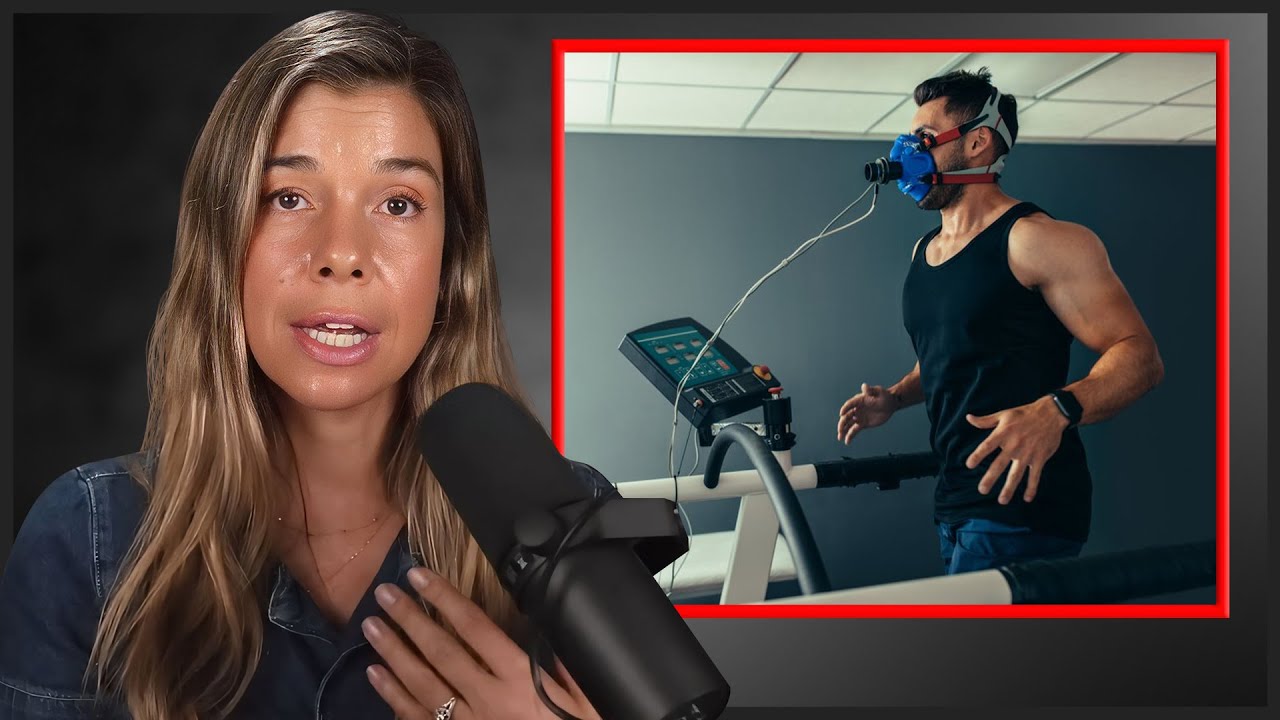
Then you do very light exercise. You let your heart rate go down and recover for three minutes. And you do that four times. So it's four by four. And this protocol has been shown in countless studies to improve VO2 max. Now there's other ways to improve your cardiorespiratory fitness. You can do one minute on, one minute off, even 20 seconds on, 10 seconds off. Whatever works for you. I think the most important thing here is what are you going to do? What are you going to do on a weekly basis? What are you going to be able to do? What do you like to do? That's the most important. You don't necessarily have to do the 4x4. I do this once a week. I think it's great if you can, but you don't necessarily have to. If you haven't gotten a VO2 max test, that's where you go into a lab and you wear one of those masks, you get on a treadmill or a stationary bike, and you work as hard as you can for about 15 minutes.
It's pretty brutal if anyone has done it. You can estimate your own VO2 max using a wearable device that tracks your distance and your heart rate. And so it's called the 12-minute run test. And basically what you're doing is you're running for 12 minutes on a flat surface. It has to be flat. And you're calculating your distance. And there's an equation you can look up called the Cooper test equation, and it will estimate your VO2 max essentially. And that's a pretty good way to do that. I want to take a minute here. We're going to talk about that Norwegian 4x4 again as part of the protocol led by Dr. Benjamin Levine at UT Southwestern in Dallas. He's probably one of the world's leading experts in cardiovascular exercise physiology. He studies how the heart ages and how we can reverse that aging through different lifestyle strategies and also what accelerates that aging as well. So he's looking at both ends of the spectrum and just generally speaking, what happens to our heart as we age? Well, a lot of things. I'm not going to spend hours discussing them. You probably have other people here talking about that, but generally speaking, as we age, our heart shrinks and it gets stiffer. It gets stiffer with age, and that's not a very good thing for cardiovascular health. You want your heart to be flexible. You want to be able to respond to stressful situations. You don't want your heart to be stiffer. And so, what Ben set out to do was see whether he could reverse some of this shrinking and stiffening of the heart in people who are middle-aged. These were 50-year-olds who didn't have any identifiable diseases other than the fact that they were sedentary. So they had one disease as I just mentioned.
Being sedentary is a disease. But they didn't have any other diseases. They just weren't physically active. And he separated these 50-year-olds into two groups. One was the treatment group, and one was the sham control group. The treatment group underwent a pretty intense two-year exercise training protocol. By the end of the two years, they were exercising for about five hours a week. A large portion of that was vigorous-intensity exercise. They were doing the Norwegian 4x4 once a week. But they didn't start out there. It was a progressive workup, right? You can't just take someone who has never worked out in the gym and then start them on the 4x4 and five hours of exercise per week, right? So they progressively worked up to that point. The sham control was yoga-like stretching, enough that they thought they were getting a treatment, but it wasn't actually the treatment.
After these two years of exercise, they measured their hearts and compared them with their baseline measurements. Their hearts grew and became more flexible to an extent equivalent to reversing about 20 years of aging. So, their hearts actually looked like a 30-year-old heart rather than a 50-year-old heart. This was after two years of this intense exercise training protocol. And I love this study because it really shows, first, that it's never too late. These were 50-year-olds in middle age. Second, you have some control over the way your heart ages, right? This is pretty unbelievable that after just two years of sustained effort, you can reverse about 20 years of heart aging.
The control group didn't have any of this, by the way.
Supporting our work
If you enjoy the fruits of
 , you can participate in helping us to keep improving it. Creating a premium subscription does just that! Plus, we throw in occasional member perks and, more importantly, churn out the best possible content without concerning ourselves with the wishes of any dark overlords.
Aerobic News
- Cardiorespiratory fitness may be a far greater predictor of gut microbiota diversity than either body fat percentage or general physical activity
- A combined aerobic-resistance training regimen proves equally effective for cardiovascular health as aerobic alone.
- 30 minutes of moderate-intensity aerobic exercise (64.9% of VO2 max) three times a week stabilized choline concentrations in the brain.