How to Time Supplements for Better Absorption
The Omega-3 Supplementation Guide
A blueprint for choosing the right fish oil supplement — filled with specific recommendations, guidelines for interpreting testing data, and dosage protocols.
You'll also receive updates from Rhonda & FoundMyFitness
Supplement timing matters most when it changes absorption, tolerance, or adherence. Dr. Rhonda Patrick explains that consistency is the foundation, while meal composition can be useful for fat-soluble nutrients. In a randomized absorption study of 50 older adults, taking vitamin D3 with a fat-containing meal produced a 32 percent higher peak vitamin D3 concentration than taking it with a fat-free meal. [1]
A second randomized trial found that a single vitamin D3 dose taken with food increased vitamin D status, with a larger rise when the meal contained at least 15 grams of fat. These findings support taking vitamin D with a meal that contains some fat. The same practical approach can improve tolerance for other supplements, while omega-3, magnesium, and creatine timing can be organized around meals, personal goals, and a schedule that is easy to maintain. [2]
Exact clock timing is less certain. Human trials have not established that vitamin D must be taken in the morning, that creatine must stop by midafternoon, or that sulforaphane, nicotinamide riboside, and urolithin A work best at a specific hour. Medicines, kidney function, anticoagulant use, sleep response, and total supplement burden can also change the safest plan. The most evidence-aligned strategy is to prioritize consistent use, take fat-soluble products with food when appropriate, and adjust timing for tolerability and individual clinical needs.
- ^ Dawson-Hughes B; Harris SS; Lichtenstein AH; Dolnikowski G; Palermo NJ; Rasmussen H (2015). Dietary fat increases vitamin D-3 absorption. J Acad Nutr Diet 115, 2.
- ^ Raimundo FV; Lang MA; Scopel L; Marcondes NA; Araújo MG; Faulhaber GA, et al. (2015). Effect of fat on serum 25-hydroxyvitamin D levels after a single oral dose of vitamin D in young healthy adults: a double-blind randomized placebo-controlled study. Eur J Nutr 54, 3.
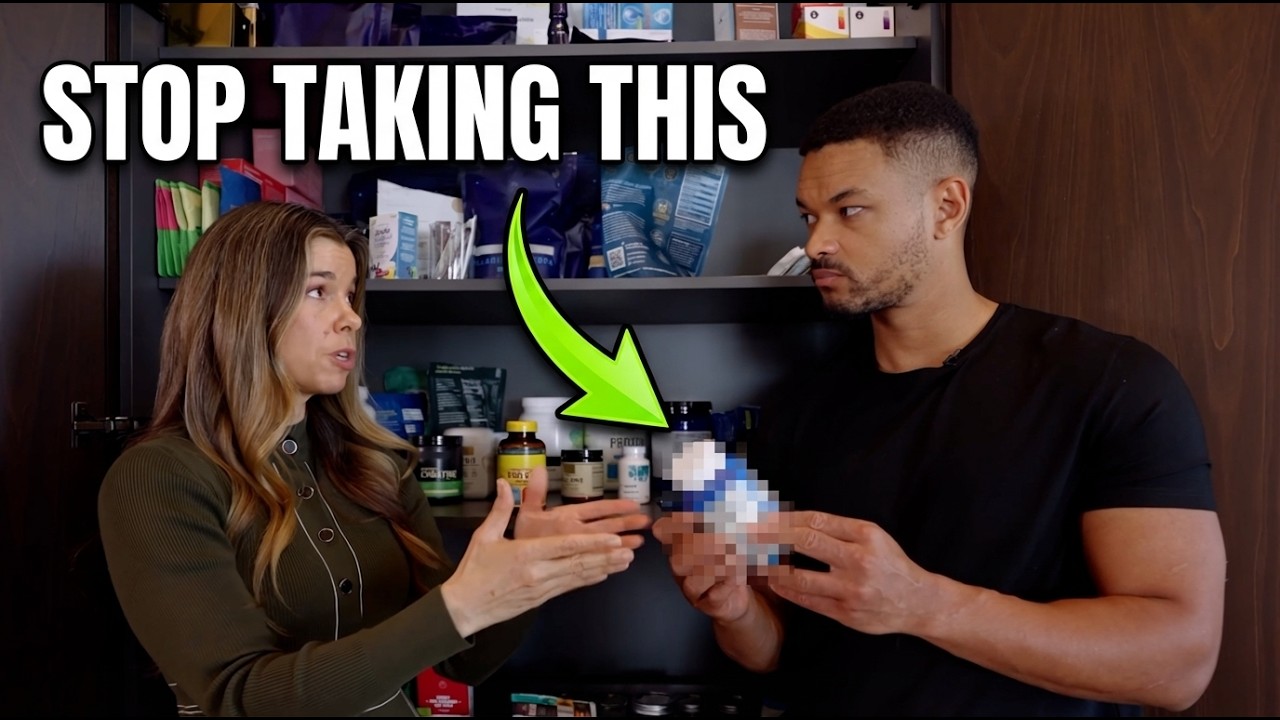
The next question was submitted by Earl, and Earl says, "Could you talk more generally about which supplements you take early in the day, which you take later in the day, on an empty stomach versus food?" I've answered this question before in a previous Q&A. I'll briefly go through this. I'm not going to go into too much detail because I have answered this kind of question before. I'm going to run through some of the most important supplements, including the ones I have already mentioned and think most adults, including older adults, should take, and then when to take them. So, vitamin D, top of the list. Really best to take in the morning or midday. There have been a variety of anecdata at this point where individuals have reported sleep disruption when vitamin D is taken too late.
That could be because vitamin D hormone can have downstream effects on melatonin. So, you might be getting some melatonin suppression there. That's one possible reason to take your vitamin D earlier in the day. You also want to take it with a meal, particularly one that's higher in fat, and that is because vitamin D is a fat-soluble vitamin. Therefore, taking it with a meal that has more fat in it, compared with a fat-free salad, you'll increase the bioavailability of the vitamin D. The next one would be omega-3. Omega-3s are fatty acids.
We're talking about fatty acids, EPA and DHA. So, you do want to take that with a meal, again, particularly with a higher fat meal. Studies show that you absorb more EPA and DHA with a high-fat meal versus a lower-fat meal. And certainly, if you take it on an empty stomach, you're going to be missing a lot of it. You won't absorb as much. So, that's very important. When it comes to taking it in the morning versus the evening, it really is about consistent dosing, right?
We're really trying to raise our omega-3 index. Omega-3s are stored in our cell membranes. They're also used acutely as anti-inflammatory molecules as well. They're resolving inflammation. It's not as important, but you might consider that if you have more inflammation happening during the day, maybe you want to take it during the day, or maybe you want to split your dose between the morning and evening. I would say that one thing to consider is taking it with meals. So, maybe both meals because omega-3 fatty acids have been shown to blunt the lipopolysaccharide or LPS release from the gut when you eat a meal.
This is the transient, quote-unquote, leaky gut that happens with every meal. It's a postprandial inflammatory effect. Even if you eat the healthiest meal, you'll get a postprandial inflammatory effect because digestion stresses the gut. Some foods are harsher on the gut than others, but there are studies showing that taking omega-3 with a meal blunts some of that inflammation that happens when you're digesting your food. Magnesium timing depends on your goal. So, most people are interested in improving their sleep and relaxation, and I think that is why people are taking it mostly in the evening time. I take it in the evening time.
I take magnesium glycinate, as I mentioned. Glycine molecules are attached to the magnesium, so you're getting that relaxation effect. However, studies show that magnesium may help improve cramps and headaches. If the goal is to help with migraines, you may want to take it during the day or whenever the migraine or cramps occur. Some people also want to replete their magnesium. They're physically active, they use a sauna. They may take electrolytes and magnesium after doing a lot of sweating.
It is goal-dependent. You may want to just add a standard magnesium glycinate to your evening relaxation protocol. In addition, you may take a little extra magnesium throughout the day to replete magnesium stores after exercise or sauna, or to help with headaches or cramping. When it comes to vitamin K2, again, I do think the timing is flexible. However, many people take vitamin K2 with vitamin D. It can be taken with vitamin D. I personally take Pure Encapsulations vitamin D K2 combo.
That provides everything in one pill, which is great for someone who's already taking too many supplements. You don't have to take it in the morning with vitamin D, but it is convenient. The goal of taking them together is to help ensure that all the extra dietary calcium that you're absorbing by becoming vitamin D adequate, you're going to move that calcium to the bones into the muscle, and that's where vitamin K2 comes in because it is activating a lot of proteins like matrix Gla protein, osteocalcin. These proteins are activated by vitamin K2, and they're able to help shuttle calcium out of the vascular system, direct it to your bones and muscles where you want it. You don't want it sitting around your vascular system forming calcium precipitates and plaques. The next would be a multivitamin. Multivitamins contain a lot of different micronutrients including vitamin B, the different B vitamins, which can be a little stimulating for people.
So, I think ideally you want to take your multivitamin earlier in the day. It does contain some of the D and some of the K and you're getting vitamin A and E in there. Those are all fat-soluble vitamins. So, you probably want to take the multivitamin with your first meal of the day. That's probably the best approach. When it comes to creatine, I do think for most people who are doing creatine for just muscular function, like they take 5 g a day, it is the consistency that's important. You are trying to saturate your muscle stores.
It takes about a month or so to do that if you're doing 5 g a day consistently. However, if you're really going for the brain effects, which I think most of us here are now interested in, I do think the timing matters. You may want to take it in the morning or afternoon, so you don't want to be taking it necessarily later in the evening time. Some people have reported when they take creatine right before bed, they have difficulty going to sleep. I've never really taken creatine before bed, so I don't really know how that's going to affect me. I always take it in the morning. I stop taking it by the afternoon.
I would say like 2:00 p.m. Or so is like the last time I take the creatine, but again, I don't know that timing is as important, although I would speculate it might be better to take it in the morning or afternoon than in the evening. Sulforaphane, if you're taking Avmacol, there is no established best time of day. Some people take it on an empty stomach because it may increase absorption a little bit. However, other people experience some GI irritation when they take it on an empty stomach. Taking it with a small meal can be helpful. I personally think just based on the detoxification part of what sulforaphane is doing, you probably want to take it during the daytime when you're constantly bombarding your system with all the plastic chemicals.
Taking it during the day may be ideal, but if taking it in the evening is easier, I wouldn't worry too much about it. Nicotinamide riboside is one I forgot to mention for people in their 70s. That also I think is a new important one that I would take. Nicotinamide riboside is a precursor for NAD. I've been taking it now since last August. I take Tru Niagen. I take about 500 mg to 1,000 mg a day depending on the day.
Sometimes I only do 500, sometimes I do 1,000. Interestingly, nicotinamide riboside is on a circadian rhythm and it is higher in the day. I think it's probably better to take it in the morning versus the evening. I suggest this because you want to make sure there's no chance of it disrupting circadian rhythm or sleep. So, I think nicotinamide riboside is one to do during the day. For urolithin A, I don't know that timing is crucial, and I take it during the day. I take it around the time I exercise.
I don't know that it's really essential. I think it is more of a cumulative effect. But that's something, at the end of the day, if you're going to take a lot of the vitamins with your first meal, why not just take the bulk of them and then save the ones for the evening that are best reserved for the evening, such as melatonin. That's the way I approach it. With respect to CocoaVia, the cocoa flavanols, that's another one that I take for acute cognitive effects. I feel its effects 30 minutes to an hour after I take it and feel a stimulant effect in my brain. I feel like I'm in a better mood.
There are studies showing that it increases blood flow to the brain. There are studies showing that it improves cardiovascular function. It also improves some measures of cognitive function. That's one that I like to take earlier in the day. Sometimes I mix it in my coffee and it really seems like there's a synergistic effect with the caffeine as well. With ubiquinol, you want to take that one with a fat-containing meal. I do think if you're taking a higher dose of it, there's a saturation effect that occurs.
You don't want to take, for example, 200 mg all at once. You might take 100 and then another 100. You might split it across meals, with 100 in the morning, 100 in the evening. I think it's better to split that across meals if you are going for the higher dose rather than taking it all at once. Typically, the blood levels rise 6 to 8 hours after you take the ubiquinol. I don't know that it really matters when you take it. I take it at night.
Supporting our work
If you enjoy the fruits of
 , you can participate in helping us to keep improving it. Creating a premium subscription does just that! Plus, we throw in occasional member perks and, more importantly, churn out the best possible content without concerning ourselves with the wishes of any dark overlords.
Supplements News
- Supplementation with essential phospholipids lowered liver-fat markers in fatty liver disease.
- Silicon supplementation shows promise for improving hair strength and thickness.
- Large-scale screening of common dietary supplements identified early signals associated with slower biological aging.
- Olive leaf extract modified muscle mitochondrial responses to both moderate and sprint exercise.
- Collagen supplementation improves skin elasticity and osteoarthritis symptoms, but not short-term exercise recovery.