Choosing Supplements With Formulation and Absorption in Mind
The BDNF Protocol Guide
An essential checklist for cognitive longevity — filled with specific exercise, heat stress, and omega-3 protocols for boosting BDNF. Enter your email, and we'll deliver it straight to your inbox.
You'll also receive updates from Rhonda & FoundMyFitness
Supplement choices involve the compound, its formulation, and how it fits into a daily routine. Dr. Rhonda Patrick shares a starting list that includes vitamin D, omega-3s, magnesium, a multivitamin, urolithin A, sulforaphane, creatine, curcumin, glucosamine with chondroitin, and ubiquinol. She then describes taking magnesium glycinate in the evening. Relevant human evidence includes a four-week randomized trial in 155 adults with poor sleep: 250 milligrams of elemental magnesium as bisglycinate produced a small improvement in insomnia symptom scores compared with placebo. [1]
Dr. Patrick also considers sulforaphane stability and the distinction between an active compound and its precursors. Glucoraphanin can be converted to sulforaphane by the enzyme myrosinase, making enzyme activity an important feature of a formulation. Small human experiments found greater sulforaphane bioavailability from preparations with active plant myrosinase than from glucoraphanin alone. A pilot study of Avmacol also measured sulforaphane metabolites after participants consumed its glucoraphanin-and-myrosinase formulation. These studies help explain why delivery method matters when comparing products. [2] [3]
The final question concerns taking vitamins alongside psyllium in a protein shake. Dr. Patrick discusses the gel that psyllium forms and distinguishes slower absorption from complete blockage. Longer-term nutrient status offers another perspective: in a randomized trial of adults with overweight or obesity, 15 grams of psyllium daily for three months did not significantly alter serum micronutrient concentrations relative to control. That result is useful context for everyday fiber use, although the study did not directly compare vitamin timing within a protein shake. [4]
- ^ Schuster J; Cycelskij I; Lopresti A; Hahn A (2025). Magnesium Bisglycinate Supplementation in Healthy Adults Reporting Poor Sleep: A Randomized, Placebo-Controlled Trial. Nat Sci Sleep 17, .
- ^ Fahey JW; Holtzclaw WD; Wehage SL; Wade KL; Stephenson KK; Talalay P (2015). Sulforaphane Bioavailability from Glucoraphanin-Rich Broccoli: Control by Active Endogenous Myrosinase. PLoS One 10, 11.
- ^ Fahey JW; Wade KL; Stephenson KK; Panjwani AA; Liu H; Cornblatt G, et al. (2019). Bioavailability of Sulforaphane Following Ingestion of Glucoraphanin-Rich Broccoli Sprout and Seed Extracts with Active Myrosinase: A Pilot Study of the Effects of Proton Pump Inhibitor Administration. Nutrients 11, 7.
- ^ Pal S; McKay J; Ho S; Jane M; Gahler RJ; Wood S (2022). Micronutrient status of individuals with overweight and obesity following 3 months' supplementation with PolyGlycopleX (PGX®) or psyllium: a randomized controlled trial. BMC Nutr 8, 1.
The next rapid-fire question was submitted by Jim. Jim says, "I'm a new member, and I've been looking for a list of recommended supplements. I'm coming up on 71 and want to make sure the times and supplements are optimized."
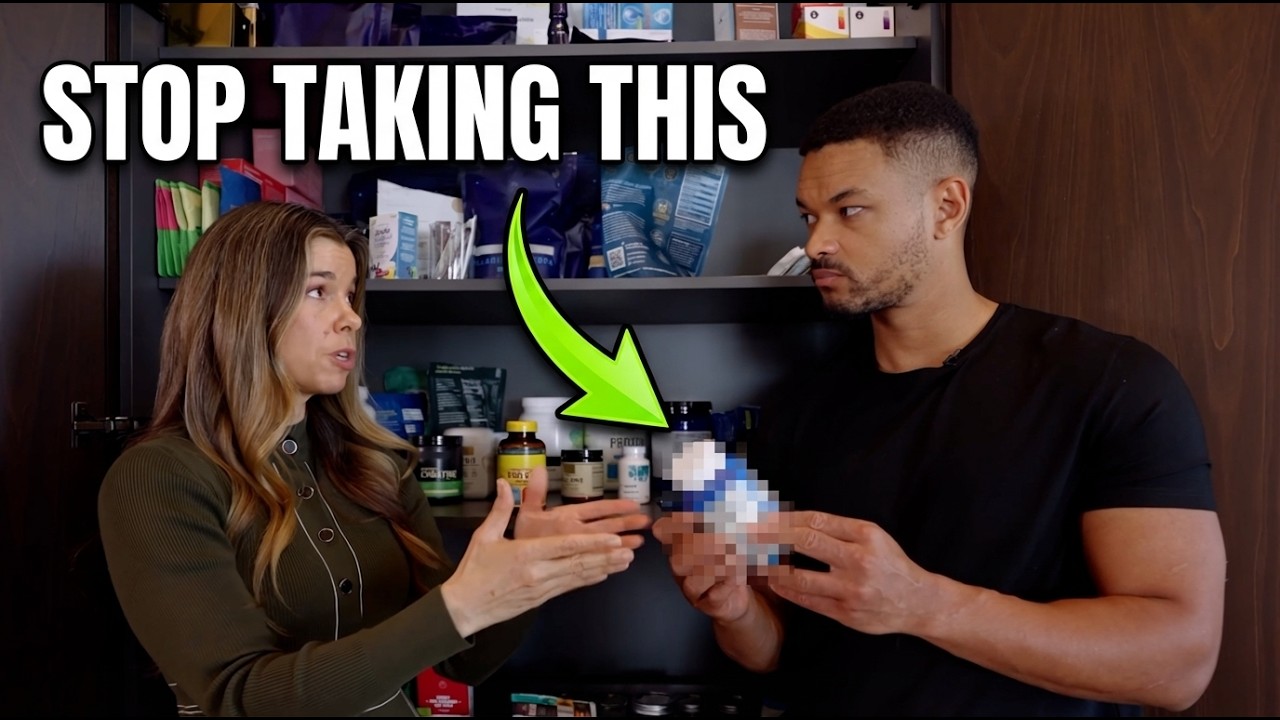
I think a general list of supplements that are good for not only someone who's 71, but also just generally people, healthy people, unhealthy people, all the above. This is my list: vitamin D, omega-3, magnesium, multivitamin, urolithin A, Avmacol, which is sulforaphane, creatine, curcumin, glucosamine chondroitin, ubiquinol. I think that's a pretty good baseline that people can have. They can also add in some nicotinamide riboside to experiment with if they want as well. But that would be my bare-bones list. I think that would be a good place to start.
A related question was by KB. KB says, "Just curious what brand of magnesium do you take, or do you look for certain patented magnesium products?" I take magnesium glycinate. I take two capsules of the Pure Encapsulations magnesium glycinate. I believe it's about 240 to 250 total for two capsules that I take per day. And then I add in the rest with my food. That's my preferred form. I like taking it at night.
I've noticed that taking the magnesium glycinate—by the way, the glycinate are glycine molecules. Glycine is also an inhibitory neurotransmitter, and so it really can have a calming effect as well as the magnesium. That's why I like taking it at night, because it does seem to, along with my L-theanine, help calm me and give me that calming effect that I'm looking for before sleep.
Another related question was from Heather. Heather says, "Would love to hear your thoughts on the standardized sulforaphane supplement called BrocElite from Mara Labs. I've taken Avmacol for years, but was interested when I heard about BrocElite because rather than the precursors to sulforaphane, it contains the actual sulforaphane." The company states that all batches are third-party tested for potency.
I know from my read of the literature and my conversations with many different researchers that actually research sulforaphane, it's a highly, highly unstable compound. A company can claim to have sulforaphane in it, and they can third-party test it right after the sulforaphane's made, or sorry, right after the supplement is made. But if you don't do any stability studies and test it a year later or months later, I'm going to bet that sulforaphane is heavily degraded, heavily degraded.
For that reason, and also the reason that Avmacol has over 12 published studies, many clinical, showing clinical benefits, there's just all the reason to take that. They do long-term testing, stability studies where they even go beyond years. They even go like 2 years. They go above and beyond what it takes to really show that their supplement is stable, and for ones that are not stable, they trash them. That's my thoughts.
I want to quickly get to some of this absorption because I know people are asking about this in the chat as well. The question is, "Does psyllium husk powder in a protein shake for my first meal interfere with the absorption of any of the supplements I take, for example, a multivitamin?"
The short answer is yes, it can interfere with some supplements, but I think that more likely what it's doing is delaying the absorption. It's not blocking it. Maybe a little bit. With respect to fiber, most plant foods, if you're talking about the whole food like a seed or a grain or a legume or something like that, it contains a phytate in it. Phytates do bind to minerals. They bind to things like iron or zinc or calcium or magnesium, right? And that reduces their absorption.
Psyllium husk is a little different. Psyllium husk has a very low amount of phytate in it. That's really not the concern here. What it's doing is it's affecting absorption because it's got this gel-forming effect. It becomes very viscous in the gut, and that gel physically slows or reduces the absorption of some nutrients. But it doesn't necessarily block it like the phytates do.
I think that it's not such a big deal if that's the way you like to take your vitamins. If you're taking it with your protein shake that has the psyllium husk, I wouldn't really freak out about it. If you really, really do want to optimize the absorption, then maybe I would wait a couple of hours after taking the protein psyllium shake before taking the vitamins, but I wouldn't worry about it too much. That's my two cents.
Hear new content from Rhonda on The Aliquot, our member's only podcast

Listen in on our regularly curated interview segments called "Aliquots" released every week on our premium podcast The Aliquot. Aliquots come in two flavors: features and mashups.
- Hours of deep dive on topics like fasting, sauna, child development surfaced from our enormous collection of members-only Q&A episodes.
- Important conversational highlights from our interviews with extra commentary and value. Short but salient.
Supplements News
- Supplementation with essential phospholipids lowered liver-fat markers in fatty liver disease.
- Silicon supplementation shows promise for improving hair strength and thickness.
- Large-scale screening of common dietary supplements identified early signals associated with slower biological aging.
- Olive leaf extract modified muscle mitochondrial responses to both moderate and sprint exercise.
- Collagen supplementation improves skin elasticity and osteoarthritis symptoms, but not short-term exercise recovery.