Multivitamins and Vitamin D After 65: What the Evidence Shows
The Omega-3 Supplementation Guide
A blueprint for choosing the right fish oil supplement — filled with specific recommendations, guidelines for interpreting testing data, and dosage protocols.
You'll also receive updates from Rhonda & FoundMyFitness
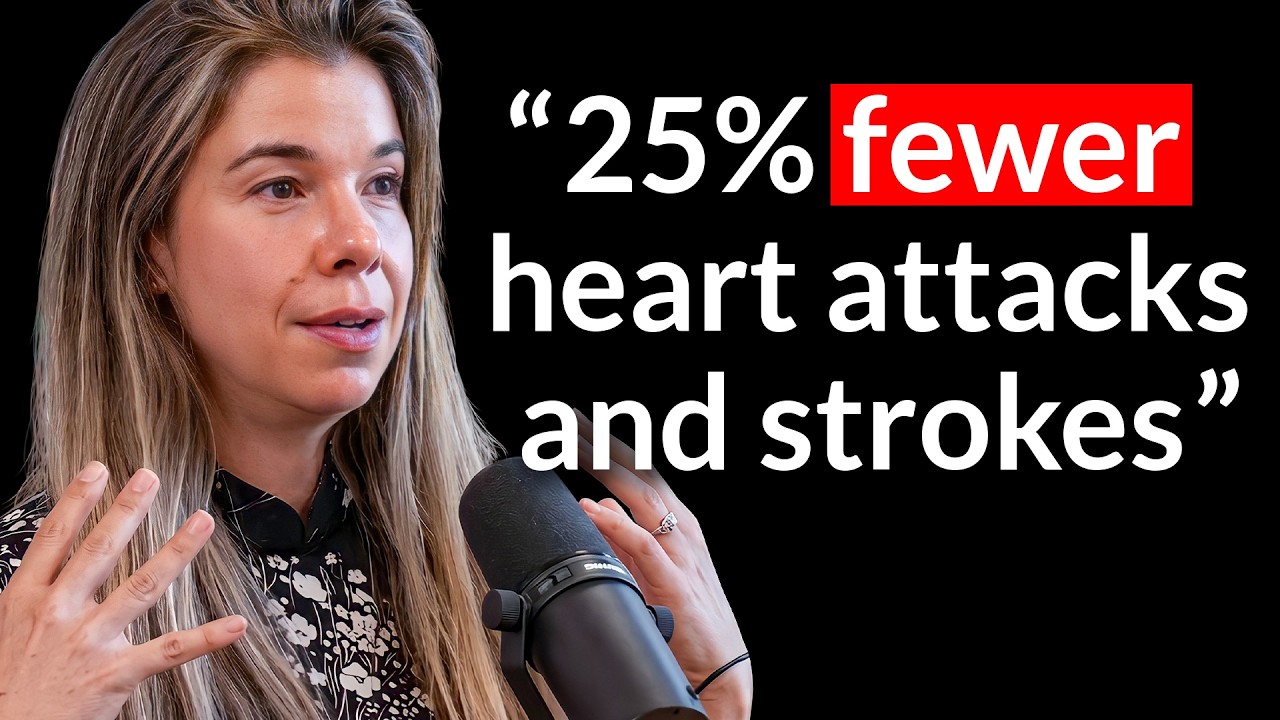
The COSMOS trial program tested a daily multivitamin in generally healthy older adults over two to three years. In this clip from Dr. Rhonda Patrick's appearance on Next Question with Katie Couric, she discusses three cognitive substudies that found small average improvements in global cognition and episodic memory. A pooled analysis estimated effects of about 0.07 standard deviation for global cognition and 0.06 for episodic memory, providing evidence that a standard multivitamin can support selected cognitive outcomes in some older adults. [1] [2] [3]
A multivitamin can serve as a dietary backstop, while omega-3 and magnesium need separate consideration because typical formulas contain little of either. Fish and microalgae provide EPA and DHA directly, whereas conversion of flax-derived ALA to EPA and especially DHA is limited. Omega-3 decisions can account for seafood intake, the actual EPA and DHA content, cardiovascular indication, medicines, and atrial-fibrillation history. Magnesium intake also depends on diet and kidney function, and higher supplemental doses commonly cause diarrhea. [4] [5]
Vitamin D is converted to calcitriol, a hormone that regulates gene transcription. Status and dosing can reflect baseline levels, diet, body size, absorption, medicines, kidney and calcium disorders, season, and sun exposure. In a 16-week trial of overweight or obese African American participants with low vitamin D, supplementation produced dose- and clock-specific changes in DNA-methylation age estimates. This early biomarker research adds to vitamin D's established roles in bone and mineral physiology, while clinical use remains individualized. [6] [7]
This clip is excerpted, with permission, from Dr. Rhonda Patrick's appearance on Katie Couric's Next Question. Thank you to Katie Couric and Next Question for allowing us to share it.
- ^ Baker LD; Manson JE; Rapp SR; Sesso HD; Gaussoin SA; Shumaker SA, et al. (2023). Effects of cocoa extract and a multivitamin on cognitive function: A randomized clinical trial. Alzheimers Dement 19, 4.
- ^ Yeung LK; Alschuler DM; Wall M; Luttmann-Gibson H; Copeland T; Hale C, et al. (2023). Multivitamin Supplementation Improves Memory in Older Adults: A Randomized Clinical Trial. Am J Clin Nutr 118, 1.
- ^ Vyas, Chirag M; Manson, JoAnn E; Sesso, Howard D; Cook, Nancy R; Rist, Pamela M; Weinberg, Alison, et al. (2024). Effect Of Multivitamin-Mineral Supplementation Versus Placebo On Cognitive Function: Results From The Clinic Subcohort Of The COcoa Supplement And Multivitamin Outcomes Study (COSMOS) Randomized Clinical Trial And Meta-Analysis Of 3 Cognitive Studies Within COSMOS The American Journal Of Clinical Nutrition , .
- ^ Burdge GC (2006). Metabolism of alpha-linolenic acid in humans. Prostaglandins Leukot Essent Fatty Acids 75, 3.
- ^ Manson JE; Cook NR; Lee IM; Christen W; Bassuk SS; Mora S, et al. (2019). Marine n-3 Fatty Acids and Prevention of Cardiovascular Disease and Cancer. N Engl J Med 380, 1.
- ^ Demay MB; Pittas AG; Bikle DD; Diab DL; Kiely ME; Lazaretti-Castro M, et al. (2024). Vitamin D for the Prevention of Disease: An Endocrine Society Clinical Practice Guideline. J Clin Endocrinol Metab 109, 8.
- ^ Chen, Li; Dong, Yanbin; Bhagatwala, Jigar; Raed, Anas; Huang, Ying; Zhu, Haidong (2018). Effects Of Vitamin D3 Supplementation On Epigenetic Aging In Overweight And Obese African Americans With Suboptimal Vitamin D Status: A Randomized Clinical Trial The Journals Of Gerontology: Series A 74, 1.
Katie Couric: Do you recommend a multivitamin? Is that a good idea?
Dr. Rhonda Patrick: I previously criticized the 2013 Annals of Internal Medicine editorial “Enough Is Enough,” which argued that multivitamins were useless or potentially harmful. Nutrient trials can be difficult to interpret because people begin with different nutrient status, diets, absorption, and genetics. Baseline measurements can improve interpretation, although they are not required for a valid intention-to-treat trial.
Three cognitive ancillary studies within COSMOS later tested a daily Centrum Silver multivitamin in older adults. They found small average benefits on some global-cognition and episodic-memory tests over two to three years. Researchers translated some differences into years of age-related test-score change. That does not mean the multivitamin literally reversed structural brain aging, prevented dementia, or made participants years younger.
A standard-dose multivitamin can be a practical dietary backstop for some people. It does not replace a healthy diet, and it is not automatically appropriate for everyone.
Katie Couric: Does a multivitamin remove the need for omega-3, magnesium, or other nutrients?
Dr. Rhonda Patrick: No. Multivitamins often contain little magnesium because a useful amount takes substantial pill volume. They also cannot contain a large fish-oil dose. Omega-3 and magnesium needs should be assessed separately.
ALA from flax converts inefficiently to EPA and especially DHA. Fish and microalgae provide EPA and DHA directly. However, 1.5–2 grams per day is not a universal requirement. The dose should reflect diet, indication, actual EPA plus DHA content, medicines, and atrial-fibrillation risk.
Supplemental magnesium also is not one-size-fits-all. The adult upper limit for supplemental magnesium is 350 mg per day, mainly because higher doses can cause diarrhea. Kidney impairment can make magnesium accumulation dangerous.
Lutein and zeaxanthin have a defined role in an AREDS2-style formula for selected people at risk for advanced macular degeneration. That evidence does not show that an ordinary multivitamin prevents macular degeneration or cognitive decline in every older adult.
Katie Couric: Why is vitamin D important in aging?
Dr. Rhonda Patrick: Vitamin D3 is converted into calcitriol, a steroid-like hormone that regulates gene transcription. Latitude, season, time of day, skin pigmentation, age, and exposed skin affect vitamin D production from sunlight. Real-world sunscreen use should not be presented as a clear cause of deficiency, and sun protection remains important.
Vitamin D thresholds and optimal targets vary by authority and indication. A universal 40–60 ng/mL target is not established. Four thousand IU per day is the adult tolerable upper intake level from all sources, not a routine dose or a guarantee of safety.
A small 16-week trial in overweight or obese African American participants with low vitamin D reported dose- and clock-specific changes in DNA-methylation age estimates. It did not show that vitamin D reversed clinical aging, made people two years younger, or extended life.
Vitamin D repletion can be appropriate for established deficiency, but dosing should reflect baseline status, diet, body size, absorption, medicines, kidney and calcium disorders, and clinical guidance.
Get email updates with the latest curated healthspan research
Support our work

Every other week premium members receive a special edition newsletter that summarizes all of the latest healthspan research.
Supplements News
- Supplementation with essential phospholipids lowered liver-fat markers in fatty liver disease.
- Silicon supplementation shows promise for improving hair strength and thickness.
- Large-scale screening of common dietary supplements identified early signals associated with slower biological aging.
- Olive leaf extract modified muscle mitochondrial responses to both moderate and sprint exercise.
- Collagen supplementation improves skin elasticity and osteoarthritis symptoms, but not short-term exercise recovery.