Which Supplements Matter Most After Age 65?
The Omega-3 Supplementation Guide
A blueprint for choosing the right fish oil supplement — filled with specific recommendations, guidelines for interpreting testing data, and dosage protocols.
You'll also receive updates from Rhonda & FoundMyFitness
In this clip from Q&A #77, Dr. Rhonda Patrick organizes supplements around age-related nutrient status, diet, and physical activity. Vitamin D production in skin declines with age, while omega-3 dose needs vary with baseline status, body weight, chemical form, and EPA plus DHA intake. These differences favor laboratory-guided and diet-aware decisions over one universal dose for every older adult. [1] [2]
A basic multivitamin may help cover small nutrient gaps. In three related COSMOS cognitive substudies, a daily multivitamin produced a small average improvement in global cognition and episodic memory among older adults. Lutein and zeaxanthin also have evidence in age-related eye disease, although the AREDS2 trial did not find an additional reduction in progression to advanced macular degeneration in its primary comparison. [3] [4]
Magnesium and creatine address different needs. Magnesium supports hundreds of enzyme reactions, but supplemental intake should reflect diet, kidney function, medications, and tolerance. Creatine monohydrate can support resistance training and lean tissue in older adults, while Dr. Patrick's 10-gram brain-focused regimen goes beyond standard muscle maintenance dosing. Melatonin may be useful for selected sleep or circadian goals, but timing, dose, and medication context matter more than age alone. [5] [6]
- ^ MacLaughlin, J; F. Holick, Michael (1985). Aging Decreases The Capacity Of Human Skin To Produce Vitamin D3. Journal Of Clinical Investigation 76, 4.
- ^ 10.1038/s41598-019-54855-0
- ^ Vyas, Chirag M; Manson, JoAnn E; Sesso, Howard D; Cook, Nancy R; Rist, Pamela M; Weinberg, Alison, et al. (2024). Effect Of Multivitamin-Mineral Supplementation Versus Placebo On Cognitive Function: Results From The Clinic Subcohort Of The COcoa Supplement And Multivitamin Outcomes Study (COSMOS) Randomized Clinical Trial And Meta-Analysis Of 3 Cognitive Studies Within COSMOS The American Journal Of Clinical Nutrition , .
- ^ Evans JR; Lawrenson JG (2012). Antioxidant vitamin and mineral supplements for preventing age-related macular degeneration. Cochrane Database Syst Rev , 6.
- ^ Chilibeck PD; Kaviani M; Candow DG; Zello GA (2017). Effect of creatine supplementation during resistance training on lean tissue mass and muscular strength in older adults: a meta-analysis. Open Access J Sports Med 8, .
- ^ Kreider, Richard; Almada, Anthony L; Kalman, Douglas S.; Antonio, Jose; Ziegenfuss, Tim N.; Wildman, Robert, et al. (2017). International Society Of Sports Nutrition Position Stand: Safety And Efficacy Of Creatine Supplementation In Exercise, Sport, And Medicine Journal Of The International Society Of Sports Nutrition 14, 1.
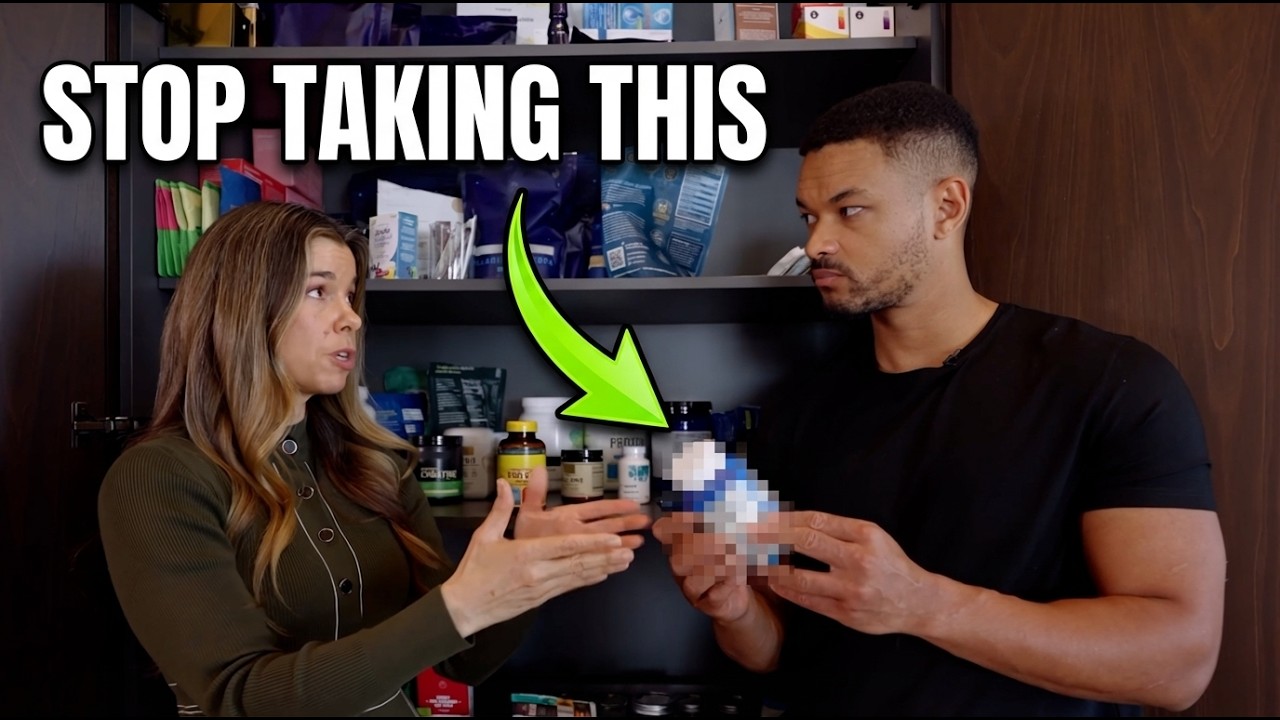
Okay, we're going to move on to the next question, which also has to do with supplements. This was the top voted question for this Q&A. The question was submitted by Debbie, and Debbie says, "If you were in your 70s, what supplements would you prioritize, assuming healthy, still getting the recommended exercise, including weight training and high-intensity interval training a couple times a week?" Essentially, Debbie is asking what to prioritize if you're healthy and doing everything possible through lifestyle, exercise, and diet.
What are the top supplements that you would think are important for a 70-year-old in the context of that background? And I'm going to tell Debbie and all of you guys that I think most of the supplements I'm taking are what I think a healthy 70-year-old would take. And that is because we're really talking about prevention. We're talking about increasing our health span, delaying the onset of age-related diseases like cardiovascular disease, like dementia, Alzheimer's disease, like cancer.
So, there's really not much of a difference here with respect to what I would take versus what a 70-year-old would take. And that would be the typical vitamin D supplement. Vitamin D. Most older people are not going out in the sun.
In fact, most younger people are not going out in the sun. And depending on where you live, you may not even be making vitamin D in your skin. And certainly if you're older, you're like almost four times less efficient at producing vitamin D3 from UVB radiation upon sun exposure. So vitamin D is at the top of the list.
Omega-3 is also at the top of the list, right? I think there is now substantial evidence showing that you want a high omega-3 index. You really want to have an 8% or more omega-3 index. And what will get you to that 8% is about 1.5 to two grams of omega-3 per day.
And if you read our recent email that we sent out on omega-3, you'll see that atrial fibrillation is really not a concern at that dose. I would also put a multivitamin at the top of the list. This is important. I think that a lot of people aren't aware of this data.
Multivitamins have now been shown in three large randomized controlled trials compared to a placebo in older adults 65 and older, showing that after a year of supplementing with a standard multivitamin, in this case it was Centrum Silver, it delayed global brain aging by 2.1 years and it delayed episodic brain aging by almost 5 years. Episodic brain aging essentially is referring to episodic memory which declines with age. Episodic memory is the type of memory that is important for remembering experiences, remembering people, events, that sort of thing that if you ask your elder parent or grandparent, you start to notice that they're forgetting these sort of things. So, there's nothing easier than taking a standard multivitamin a day.
On top of that, you're getting a variety of micronutrients that are just covering your bases. That includes selenium and other essential trace minerals and elements. People just aren't eating good diets. We're not eating micronutrient-rich diets like we used to.
And the soils are depleted as well. Our vegetables are not even taking up the same micronutrients that they used to decades ago. So, there's just every reason to cover your bases with a multivitamin. It's so easy to do.
The other one would be finding a multivitamin with lutein and zeaxanthin. That was in the Centrum Silver. It's also in the multivitamin that I take called ONE by Pure Encapsulations. Lutein and zeaxanthin are important not only for eye health.
They support the rods and cones in your eye and help prevent age-related macular degeneration. That's been shown in randomized controlled trials compared to a placebo. We're talking gold standard here, people. This is not a placebo effect.
This is real evidence. And there's also a variety of studies showing that older adults given lutein and zeaxanthin improve cognition. Why is that? Because they accumulate in the brain.
In fact, it's not just older adults. This is why I take lutein and zeaxanthin. It's also been shown to improve cognition in younger adults as well. That is another reason to find a multivitamin with lutein and zeaxanthin.
You can also supplement with them separately. Mine is found in my multivitamin. I also eat a lot of kale which is probably one of the vegetables with the highest concentration of lutein. The other supplement I would say is magnesium.
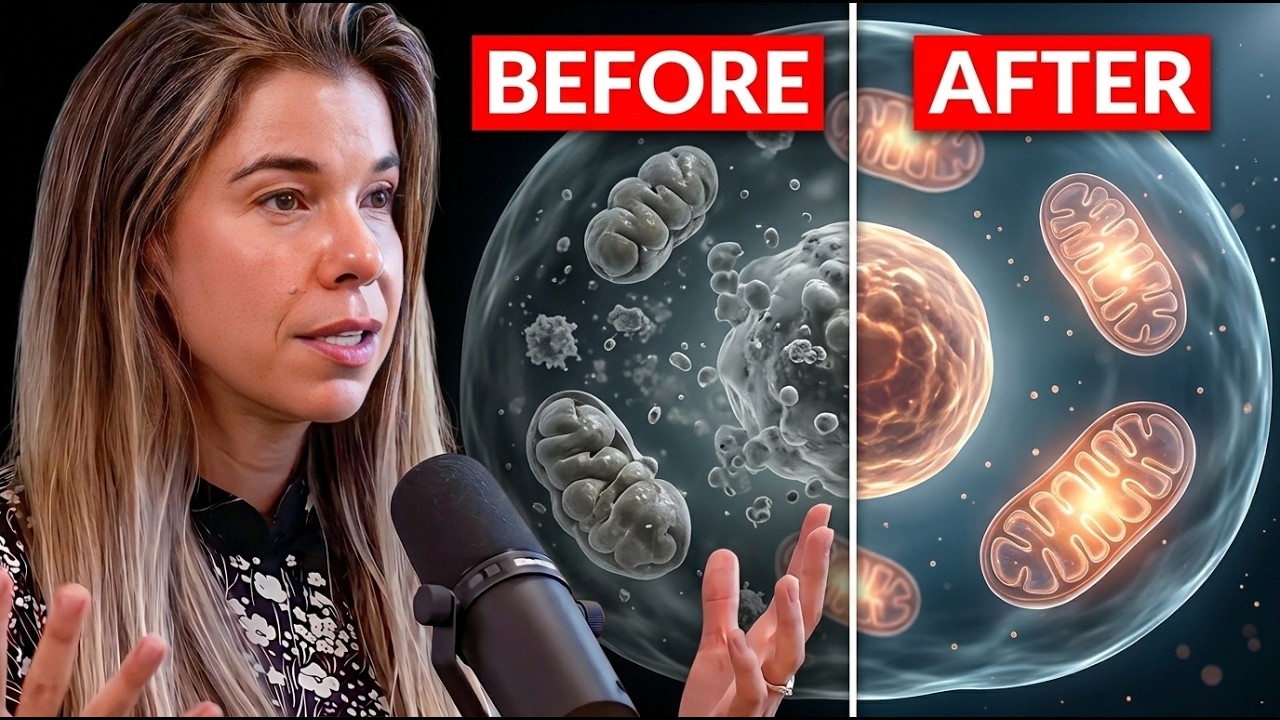
You guys know I've talked about this at great length. Magnesium is really essential for 300 different enzymatic processes in the body, including DNA repair and energy function. You can't make or use energy without magnesium. It's also important to convert vitamin D3 into the active steroid hormone.
So, you really want to make sure you're getting enough magnesium. Why do I think this is relevant? Because half of the US population is not meeting the requirements. The magnesium requirements are about 300 milligrams per day for a woman and about 350 to 400 milligrams per day for a man.
I'm talking about adults. So, I really think it's important to get magnesium from a supplement because most people are not eating dark leafy greens, nuts, or oats, which are important dietary sources of magnesium. People just aren't eating these sorts of diets. A supplement can help cover that base and provide magnesium. And you might say, well, why isn't it in a multivitamin? The answer is because the molecular weight of magnesium is so high, you just can't get enough of it into a multivitamin. Instead of taking one multivitamin, you might have to take five to get enough magnesium.
That is the practical limitation, right? So, you have to add that supplement to your regimen as well. Another supplement that may be important for older adults is melatonin. After age 40, our natural production starts to decrease, and that continues with each decade. By age 70, melatonin production can be quite low, so I think supplementation can benefit older adults. You do not need very large doses. You can take 1.5 to 3 milligrams at night, at least two hours before your natural bedtime. And that's again something that would be easy to add to your supplement routine.
The other one is creatine. I think creatine is important for everyone. Certainly if you are exercising, you're weight training, you're doing high-intensity training, you absolutely need to get a minimum of 5 grams of creatine monohydrate a day. Creatine monohydrate is the best form to take.
It is the most bioavailable. It is the most well studied. So you want to be taking at least five grams per day for muscular function. But I would urge people to go above that to 10 grams a day because when you get past 5 grams a day, five grams are really what's going to help saturate that muscle tissue.
Your muscles are very greedy. They really want that creatine to be involved with the energy production. They become saturated after taking about five grams a day. Once you go above that, then the spillover can happen in the brain.
There are studies showing that once you get to 10 grams a day, you do start to see higher amounts of creatine accumulating in the brain. A variety of smaller studies suggest that 10 grams or more may improve cognitive function and help with the effects of sleep deprivation. And when I say improve cognitive function, it's usually in the background of some kind of stress, whether that's older adults, brain aging, dementia, Alzheimer's disease, sleep deprivation. I would argue in most of our cases, we're chronically stressed.
In modern-day environments, we're constantly working our brains. We're constantly stressed out. Psychological stress, emotional stress, financial stress, these are all types of stressors on our brain. There are not studies showing that creatine improves brain function under every type of stress I just listed. But in my opinion, and I am speculating, 10 grams of creatine per day probably helps against different forms of brain stress. And that's really where it shines. And so, aging is a type of stress on the brain.
Certainly when you're in your 70s, you're battling that stress on the brain. And so I do think that 10 grams a day is beneficial. Ubiquinol is also important for mitochondrial and heart function. I think most adults should take it.
I take it as well. This is the sulforaphane supplement that I consider best. That is also something to add to the regimen, and I just explained why. I'm not going to cover that again.
Get email updates with the latest curated healthspan research
Support our work

Every other week premium members receive a special edition newsletter that summarizes all of the latest healthspan research.
Supplements News
- Supplementation with essential phospholipids lowered liver-fat markers in fatty liver disease.
- Silicon supplementation shows promise for improving hair strength and thickness.
- Large-scale screening of common dietary supplements identified early signals associated with slower biological aging.
- Olive leaf extract modified muscle mitochondrial responses to both moderate and sprint exercise.
- Collagen supplementation improves skin elasticity and osteoarthritis symptoms, but not short-term exercise recovery.