1
Collection
What FoundMyFitness Has Covered
PremiumSatiety is shaped by food composition, energy balance, and physiological state rather than calories alone. Protein tends to improve fullness and can help preserve lean mass during fat loss, although it does not replace resistance training…
Your Premium Brief connects insights across FoundMyFitness to help you see the bigger picture.
Based on available source text from 9 of the first 10 results.
2
 Clip
Clip
Clip
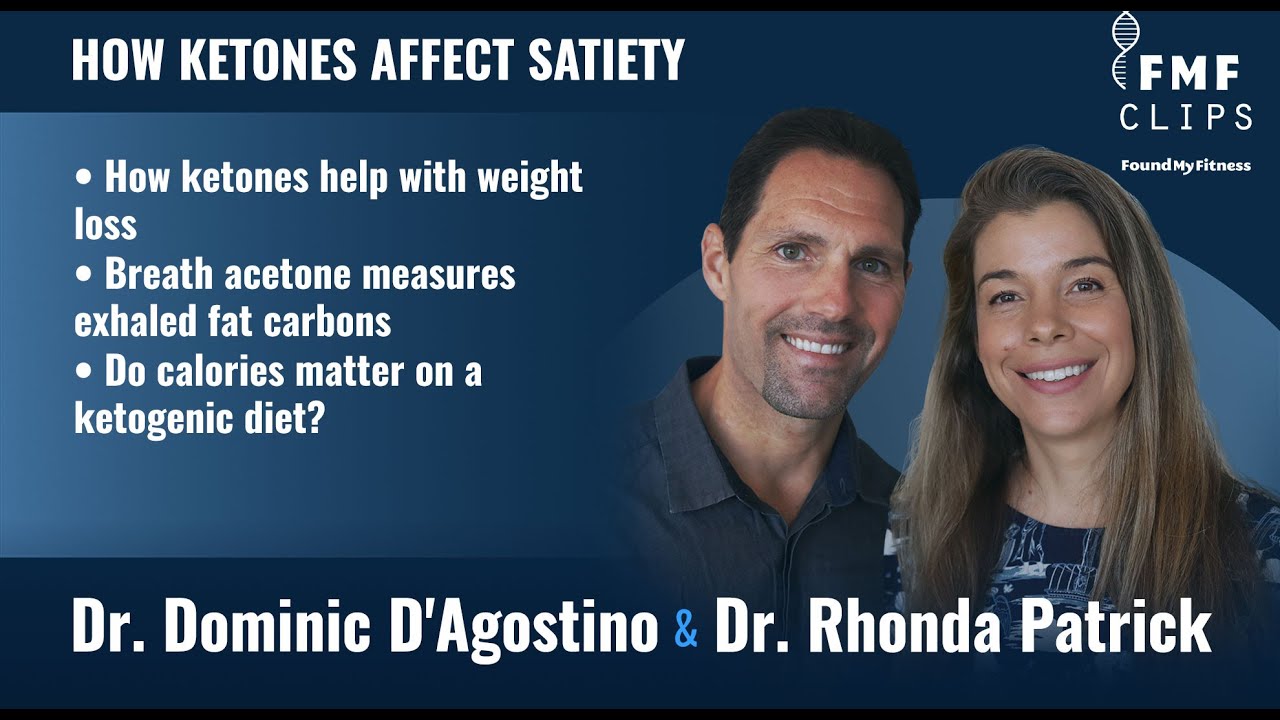
How ketones affect satiety | Dr. Dominic D'Agostino
“When starting a ketogenic diet, it is important to track macronutrients, calories, and relevant biomarkers. Dr. D'Agostino notes that breath acetone is a suitable way to measure ketones if you are interested in fat loss since all the carbons in breath acetone derive from fat molecules.”
3
Topic
Topic
Ultra-processed Foods (UPFs)
“The real danger of UPFs isn't just their calorie content but their ability to disrupt metabolic and neurological pathways before visible signs of disease appear. By altering insulin signaling in the brain and dampening satiety cues, these foods make overeating not just likely—but almost inevitable.”
4
Topic
Topic
Caloric restriction
“In human trials of voluntary caloric restriction, however, participants rarely achieve the desired level of restriction and most gradually increase their intake over time. Furthermore, people who follow a calorie-restricted diet tend to gravitate toward higher protein foods, which provide greater satiety.”
5
Topic
Topic
Protein Intake
“Protein improves satiety, helping control hunger, and supports fat loss by preserving lean body mass during calorie restriction. Combined with resistance training, a high-protein diet ensures more weight loss comes from fat rather than muscle.”
6
 Clip
Clip
Clip
How Much Protein Supports Muscle Growth
“That is not a general-population requirement. Protein can improve satiety and help preserve lean mass during fat loss, but it does not replace resistance training or energy balance. Meal distribution can make the daily target practical.”
7
 Clip
Clip
Clip
How Ultra-Processed Foods Promote Overeating
“The trial shows that the tested food pattern directly changed intake and short-term weight. She also connects this eating pattern with added sugar, weaker satiety, and the possibility that people continue eating to meet protein needs.”
8
Topic
Topic
Coffee
“A 2023 review concluded that, compared to regular caffeinated coffee, Bulletproof coffee didn't improve cognition, alertness, or energy levels and the effects on hunger, satiety, and metabolism were equally as unimpressive.”
9

Science Digest
A small study found that 4 nights of sleep restriction (5hrs sleep/night) resulted in decreased satiety after a calorically dense meal.
“A small study found that 4 nights of sleep restriction (5hrs sleep/night) resulted in decreased satiety after a calorically dense meal and altered lipid metabolism in healthy people. Catch up sleep one night only helped a little.”
10
Topic
Topic
Brain-derived neurotrophic factor (BDNF)
“Brain-derived neurotrophic factor, or BDNF, is a growth factor relevant to aging, brain function, behavior, metabolism, energy expenditure, and satiety. BDNF serves as a cell signaling protein, plays vital roles in numerous signaling pathways associated with a variety of disorders ranging from depression, schizophrenia, and addiction to obesity and diabetes, and may serve as a hormone.”
Results 1–10 of 85