Q&A
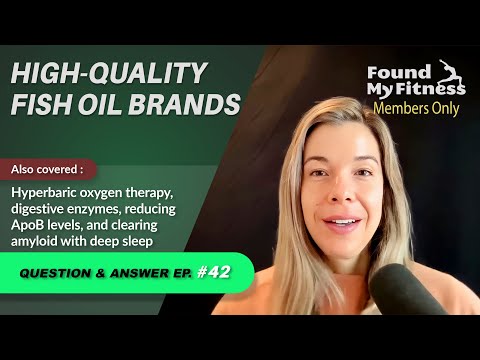
Q&A #42: How to Lower ApoB—and Can Hyperbaric Oxygen Improve Health?
Dr. Rhonda Patrick answers audience questions on various health, nutrition, and science topics in this Q&A session.
FoundMyFitness library
Ranked by shared topics, with one result from each original episode.
Q&A
Dr. Rhonda Patrick answers audience questions on various health, nutrition, and science topics in this Q&A session.

Q&A
Dr. Rhonda Patrick answers audience questions on various health, nutrition, and science topics in this Q&A session.
Q&A
Dr. Rhonda Patrick answers audience questions on various health, nutrition, and science topics in this Q&A session.
Q&A
Dr. Rhonda Patrick discusses resistant starch, red light therapy risks, stem cells, and the link between benzodiazepines and dementia in her latest Q&A session.
Q&A
Dr. Rhonda Patrick answers audience questions on various health, nutrition, and science topics in this Q&A session.
Q&A
Dr. Rhonda Patrick discusses fish oil and Afib risk, hyperbaric oxygen therapy, supplements for kids, and curcumin's impact on testosterone.
Clip
“In a randomized trial of resistance-trained women, an eight-hour eating window did not reduce gains in lean mass, muscle thickness, strength, or performance when energy and protein intake were matched and the participants completed supervised resistance training.”
Clip
“In a placebo-controlled study of eight healthy adults, adrenaline infusion lowered plasma magnesium, and levels had not recovered one hour later. Investigators proposed a shift into cells after beta-adrenergic stimulation; the study did not measure cortisol, urinary loss, total-body depletion, or clinical deficiency.”
Clip
“Protein before or after exercise can support adaptation, while total daily intake matters most. Third, distribute protein across three or four meals, with older adults often needing 20–30 grams or more per meal, while there is no small hard ceiling.”
Clip
“A systematic review and meta-analysis found no evidence that one time of day produces universally better improvements in health or performance, although gains can be larger when the time of training matches the time of testing.”