Q&A #47: How to Improve Slow-Wave Sleep—Plus Berberine for Cholesterol and Atherosclerosis
Get these episodes in a convenient podcast format.
These live recorded Q&A episodes make great companion listening for a long drive. You can find these Q&A episodes alongside great interview aliquots and other special members-only episodes on The Aliquot, our official premium FoundMyFitness podcast.
Dr. Rhonda Patrick answers audience questions on various health, nutrition, and science topics in this Q&A session.
-
Beginning of Q&A
-
-
Q: How can we impact sleep duration? 1
-
-
Q: What are some lesser known determinants of sleep quality? 1
-
Q: Does melatonin supplementation decrease deep sleep? 1
-
Q: Is sauna before bed helpful for sleep?
-
Q: Does white noise aid sleep? 1
-
-
-
Q: Should berberine be skipped on workout days? 1
-
-
Q: Do microwave-safe plastic food packages exert any toxic effects?
-
Q: Is there evidence that infrared saunas reduce Alzheimer's risk?
-
Q: Can exercise in the heat, such as hot yoga, yield all the benefits of exercise and sauna? 1
-
Q: Are omega-3 fatty acids from algal sources better than those from fish?
-
Q: What are your thoughts on liquid biopsies for cancer detection, for example Galleri?
-
Q: Do post-prandial blood sugar spikes contribute to the formation of advanced glycation endproducts? 1
-
Q: How can a person with long COVID handle doctor-recommended limitations on exercise?
-
Q: Which brand of non-toxic nail polish does Rhonda use?
-
Q: Are the pregnancy resources combined in an aliquot?
-
-
Q: Can you share some of your parenting approaches?
Okay. I'm so excited that we are here another month. This is the 47th live Q&A that we've done. You guys know I enjoy these very, very much. And for those of you, if this is your first time, welcome. Excited to have you here. You'll kind of get to know the format. Typically, I ask people to submit questions at the beginning— at the end of the previous month. And you get to submit questions in the Ask a Question section. I go through the questions myself and I choose questions that are top voted. I choose questions that we haven't covered before. I choose questions that we have covered before that need to be updated. And I also choose questions that I think are interesting to our audience as well as to myself.
And my team and I both work together to come up with some deep dives for those questions that kind of require a deeper understanding. And then I also do a variety of what I call rapid-fire questions at the— towards the end of the Q&A. These are answers I give in, you know, a sentence, sometimes a paragraph, maybe even a word. So that's typically the format. My team and I have also been trying hard to go back and look at questions that people submitted that we didn't cover in these Q&As and try to give you guys somewhat of an answer, maybe some references or some directional input, something. So hopefully those of you that have submitted questions that I haven't gotten to, you have been getting emails from my team on those questions. Today it's going to be a really interesting podcast Q&A.
We're going to cover a lot of great topics, the first of which I'm really excited about. It's sleep. And I know this is a topic that a lot of people are interested in and we have covered before. So Chris submitted the question. Chris says, hi, Rhonda. I have a question on deep sleep. I have read that deep sleep declines with age and it is important to minimize Cognitive decline. The question is, how much is required at different ages and what can one do to positively impact that amount? If you have answered this question before, please direct me to the answer. So I have addressed sleep before and in many Q&As. So the previous Q&A episodes you guys can access on the FoundMyFitness dashboard. So you go to foundmyfitness.com/dashboard. You make sure you log in.
And there we have a PDF of all the previous Q&A episodes that have links to the timelines. And if you click on the link, it will jump you to the part of that episode that you may be interested in listening to, watching, You, again, you can— these Q&As can be replayed at any time. We send out summary emails typically around a week after the live Q&A event with the replay. Also, you can listen to them on your— straight on the dashboard. You can just, on the dashboard, listen to the podcast. But also, if you have downloaded the private podcast feed where you also listen to the aliquots as well, Those are episodes we release pretty frequently, almost weekly, including the replays of these Q&As.
So I'm going to go ahead and tell you the Q&A numbers and some of the topics where I've previously addressed sleep before getting into some new— some of the new sleep-related topics that we're going to cover today. So in Q&A session number 39, we talked about what factors can help with REM sleep. So we talked about alcohol can lower REM sleep, and we talked about how sauna may increase REM sleep and how hot tub usage has also been shown to improve sleep. In Q&A number 36, we talked about omega-3 fatty acids and how they may impact sleep, so particularly DHA. In Q&A episode number 29, we talked about whether or not any supplements including magnesium threonate, apigenin, and L-theanine may affect sleep. So apigenin is found in chamomile tea. We talked about the limited evidence there.
And theanine, also very limited evidence, you know, potentially helping improve sleep. Nothing to really, you know, get too excited about in my opinion. Q&A session number 28, we talked about melatonin and how melatonin may improve sleep onset by about 4 minutes. It increases total sleep by about 15 minutes. And we also talked about dosage with 3 milligrams of melatonin a night decreasing sleep interruptions from about 4.5 times a night to about 3.1 times per night. We also talked about in that episode the importance of early bright light exposure to reset the circadian clock so that you go to bed at a reasonable time. We talked about avoiding blue light exposure After sunset and having lights that are dimmer at night, or perhaps orange in color, not blue.
And then we talked about avoiding caffeine later in the day after about noon, because that also can delay the circadian rhythm by about 45 minutes to an hour. In Q&A session number 22, we talked about my own personal experience with different beds that you can change the temperature on, either, you know, a sleep pad or things like that. In Q&A session number 19, I talked about some of my own, you know, factors that I use to improve sleep. And one thing that's really important being that going to bed early and going to bed at a consistent time every night is very important. Slow-wave sleep happens early in the night. And so You know, when you go to bed later because of a social activity, you end up, you know, missing, missing that important part of slow-wave deep sleep.
Q&A session number 5, we talked about, you know, some other practices and supplements for sleep, avoiding, you know, food, you know, 3 hours before bed, avoiding things that emotionally arouse you like emails or social media, things like that. So please go back and check out those episodes. Also, you can check out our previous podcast episodes with people that are experts in sleep, including Dr. Matthew Walker and Dr. Ashley Mason, who also talked about some sleep factors as well. Okay. So let's dive into some newer aspects of sleep, starting with sleep duration. That was part of the question. In 2015 and 2016, the National Sleep Foundation in the US, and the American Academy of Sleep Medicine, and the Sleep Research Society released updated sleep duration recommendations.
They weren't specific to slow-wave sleep, but they are nonetheless duration recommendations, and they're pretty much like throughout the lifespan. So although sleep duration recommendations are based on the best available evidence, and there's expert consensus, they're also still largely reliant on observational studies. Using self-reported sleep duration. So with that caveat, obviously, more longitudinal studies are needed on sleep restriction, on sleep extension, to really, I would say, better quantify the upper and lower limits of healthy sleep duration, and to also really shape the dose-response curve with, you know, a wide variety of different health outcomes. So there's really no magic number or ideal amount of sleep to get each night that could be broadly applied to all.
But there's an optimal amount of sleep that probably should be individualized, and it really depends on a lot of factors. So the National Sleep Foundation gives more of a range, and the other, you know, the National Sleep Foundation and then the other one that I mentioned, which was the American Academy of Sleep Medicine, they both kind of, they have similar ranges, in fact. So starting With newborns, 14 to 17 hours per night. Infants age 4 to 11 months is about 12 to 15 hours per night. Toddlers, that would be about 1 to 2 years of age, 11 to 14 hours per night. Preschoolers, about 3 to 5 years in age, that's 10 to 13 hours per night. Children age 6 to 13, The recommendation is 9 to 11 hours per night.
Teenagers who are 14 to 17 years of age, the recommendation is 8 to 10 hours per evening. Young adults, so these are 18 to 25 years in age, the recommendation is about 7 to 9 hours per evening. And that sort of holds true for adults 26 to 64 and older adults. 65-plus. So 7 to 9 hours a night, mostly for young adults and adults. And then as you get to 65 years, 7 to 8 hours a night. And that's pretty, I would say, pretty standard for most of these different types of sleep foundations and societies and groups in terms of their recommendations for sleep duration. And I think those ranges make a lot of sense. Of course, there's always people that are going to have— there's going to be outliers in these groups, right? Some people genetically do not require as much sleep.
That's not the majority of the population, but those people do exist. And so, you know, it's not that people— some people that, you know, are getting fewer hours of sleep per night and they feel very rested, they're, you know, cognitively Fine. They may have one of the variety of SNPs in genes that basically make them, you know, not require as much sleep. So again, there's room for individual variation within those recommendations. I'm going to shift gears and talk about slow-wave deep sleep. So let's dive into some lifestyle factors that may affect slow-wave deep sleep. Activities that increase brain energy consumption during wakefulness also can increase slow-wave activity during subsequent sleep.
So brain and body heating from warm baths and sauna use, and from heavy exercise, from vigorous exercise, result in increases in slow-wave sleep. So acute exercise leads to small but significant effects on slow-wave sleep. But large effects are found in highly fit individuals when the rate of energy expenditure is high rather than when total energy expenditure is high, possibly because the former is more strongly related to an increased body temperature. So keep in mind, the rate of energy expenditure during exercise refers to the speed at which energy is used while performing physical activity. So that's That's really what we're referring to when we talk about the rate of energy expenditure and that being important for slow-wave sleep.
Whereas total energy expenditure represents more of a sum of all of the energy that's expended by an individual over a given period of time, like 24 hours. And this really includes factors like basal metabolic rate, the thermic effect of food. So this is the energy required to digest, absorb, and metabolize food. And it also includes then energy expended during exercise. So keep in mind, we're only discussing energy expended during exercise, and that being something that seems to be important for also affecting slow-wave deep sleep, not total energy expenditure. I just don't want people to get confused. So let's dive into heating. So, you know, there's heating, elevating core body temperature via exercise.
There's also elevating core body temperature Through different heat modalities like hot baths and saunas, for example. But heating via exercise stimulates ATP release and increases adenosine and signaling of sleep-regulating cytokines. So these include TNF-alpha, IL-1. These are released from the periphery or from astrocytes in the brain. So let's talk about ATP release. So exercise increases the demand for energy in the body. Right. That leads to the product— to the production and release of adenosine triphosphate. That's ATP, the major energy, you know, currency in the body. So ATP is a molecule that stores and provides energy for all the cellular processes, including muscle contractions. Adenosine. So as ATP is being used or utilized during exercise, it breaks down into adenosine.
And adenosine is a neuromodulator that plays a role in promoting sleep. So accumulation of adenosine in the brain, particularly in the basal forebrain, is associated with increased sleep pressure that causes you to feel drowsy, sleepy, and it promotes the transition from wakefulness to sleep. Sort of as a side note, caffeine is binding to adenosine receptors and essentially blunting the effect of adenosine, any adenosine that's still left over in the morning, from binding to those receptors and causing you to feel sleepy. And it's one of the reasons why you get that acute alertness effect from drinking caffeine, because you're not then feeling that effect of adenosine, the impact of adenosine binding to those receptors.
So sleep-regulating cytokines I mentioned, also exercise stimulates the production of certain cytokines such as tumor necrosis factor alpha, that's also known as TNF-alpha or interleukin-1 or IL-1. These are actually somnogenic cytokines. They're involved in sleep regulation. These cytokines are released from the periphery or from astrocytes, which is a type of glial cell in the brain, and they act on specific brain regions to promote sleep. So TNF-alpha and IL-1 have both been shown to increase non-rapid eye movement sleep, non-REM sleep, which, you know, could be referring to deep restorative phases of sleep.
So in short summary of that section, you know, heating the body, particularly through exercise, which does stimulate the utilization, the release and utilization of ATP, which then breaks down into adenosine, and then that increases the signaling of the sleep-regulating cytokines as well, like TNF-alpha, IL-1. These factors contribute to promoting feelings of drowsiness via the adenosine, the somnogenic cytokines. They facilitate the transition from wakefulness to sleep. So they potentially then improve overall sleep quality, you know, and, you know, also the deep sleep as well.
But it is important to know that exercising too close to bedtime might have the opposite effect due to the increase— increased— the acute effects of the increased alertness and the increases in core body temperature without being able to cool down before going to bed. So it's generally, I think, recommended to engage in exercise earlier in the day or just not right before bedtime. So you want to at least do it a couple of hours before bedtime to allow the body to cool down, to promote more restful sleep, to allow the alertness in your brain to kind of calm down as well. Of course, like any exercise is better than none, but when we're talking about it in the context of sleep, it is better to try to not do it literally like right before you're going to go to bed.
So the effects of heat and exercise. Let's talk about some very interesting effects that we've definitely discussed in the past. Growth hormone and prolactin are— they're two key hormones that are important in the regulation of slow-wave activity. Regular sauna use is probably one of the most powerful stimuli that increases both growth hormone and prolactin. So growth hormone, the effects of sauna use on growth hormone levels really depend on many factors, including duration, temperature, and frequency. So for instance, 2 20-minute sauna sessions at 80 degrees Celsius with 30 minutes of cooling period in between can double growth hormone levels basically from their baseline.
On the other hand, 2 15-minute sauna sessions at about 100 degrees Celsius, dry heat, separated by a 30-minute cooling period can cause a 5-fold increase in growth hormone levels. So there's also a really remarkable effect when you do sort of repeated sauna use. So, repeated sauna use, for example, you do 2 1-hour sauna sessions at 80 degrees Celsius, this is very, very high, for 7 days in a row, that leads to a 16-fold increase in growth hormone levels in men. That's not something— it's kind of just as a proof of principle example of how there is a dose-dependent effect of heat stress on growth hormone, and that's something, again, that is temperature and duration dependent. I don't necessarily think it's good to do that much heat stress. That's pretty intense.
But I just wanted to highlight the effect that sauna use does have on growth hormone levels. The heightened growth hormone levels typically last a few, I would say more like a couple hours after sauna use. They released after about 2 hours, they start to go down close to baseline levels. It's also kind of interesting that combining exercise with heat stress or sauna use may also increase growth hormone levels even further than when you just use, for example, sauna alone. And mostly, it probably has to do with, again, your elevations in core body temperature are going even higher than one alone, right? So let's talk about prolactin.
Prolactin, in one study, men that used the sauna, they were in the sauna for an 80-degree Celsius sauna until they felt exhausted, they had a tenfold increase in prolactin levels. In another study, women who did a 20-minute dry sauna twice a week had a 510% increase in prolactin levels after each sauna session. And similar to growth hormone, prolactin levels lasted for a couple of hours. There are some other lifestyle factors in addition to sauna use, potentially even hot baths. Again, something that is going to elevate core body temperature. Exercise is one. So exercise can also increase both growth hormone and prolactin. I don't know the exact quantitative numbers and how much, but they also do increase it. And then sexual activity is another one that also increases. Both prolactin.
So, you know, the effects of growth hormone and prolactin also, again, affect slow-wave deep sleep. And so the idea is that, you know, doing these activities a couple of hours— so you want to make sure you're not doing it, again, right before bed because you want to allow your body time to cool down. Right. And if you're— if you get in the sauna literally like, like right before bed, you might still be really hot and you won't cool down unless you then, you know, perhaps get into a cold plunge or do a cold shower to cool down. But doing it like, you know, a couple of hours before bedtime seems, seems like a good time. It's typically when I do my hot tubs. I do a lot of hot tubs in the evening, and I do them a couple of hours before before I go to bed.
So that's all, I think, super interesting stuff that we haven't talked about before. Heating activates warm-sensitive neurons in the hypothalamus that promote slow-wave activity in response to increased core body temperature and skin temperature. Yet again, another potential mechanism behind why sauna use, why hot baths, and even exercise which elevates core body temperature, may promote slow-wave deep sleep. And then exercise combined with body cooling and warm baths combined, you know, with body cooling also, you know, may help, again, to promote slow-wave activity in deep sleep. So let's talk about another aspect, another lifestyle factor that can also perhaps Promote non-REM sleep. This would be cognitive activity throughout the day. So what we're doing right now, learning.
Learning commonly leads to changes in non-REM sleep. So this increases spindles, hippocampal sharp wave ripples, and the EEG coherence. Salient or repeated learning experiences additionally result in local enhancements of slow-wave activity. So seeking out, you know, novel things that you're learning, and then also having these repeated learning experiences, they're also really probably a beneficial thing for promoting slow-wave sleep activity as well. Meditation also, meditation practice has been shown to increase global slow-wave sleep and sleep spindles. And there's a variety of mechanisms that have been proposed. for that, including the— they result from using dependent plasticity associated with mental training and focused attention.
So the focused attention and the mental training that's involved in meditation seems to be an important component to that. Meditation is also associated with increased theta EEG activity. So this is 4 to 7 hertz, which commonly co-occurs with working memory and memory encoding. So going back to a little bit of the cognitive stimulation that we were talking about, learning, memory coding, these things are kind of interconnected. That also may drive sleep drive. It may be important for sleep drive during wakefulness, and that could be associated with enhanced slow-wave activity during subsequent sleep.
And then there's some other things that I would say are— there's less it's less robust in terms of looking at the scientific literature, but there's a couple of studies you can find where scented oils, particularly using aromatherapy oil diffusers, lavender seems to be a big one that may increase slow-wave sleep, for example, when using the oil diffuser safely during sleep. that a couple of human studies have shown that it increases greater slow-wave sleep. So, you know, not a huge— in my opinion, not something I would start with, but still, it's interesting to mention. Now, let's talk a little bit about diet and sleep. And we did— I know we have talked about this in one of the previous Q&A episodes that I think I had mentioned one of them.
And when you do, if you go back to some of those episodes, It will be in one of those episodes. There was a meta-analysis of 11 different studies. These were 8 crossover trial designs. And, you know, there was pooled evidence to suggest that a low carbohydrate diet, basically right— so the last meal before bed, if that last meal being dinner was a low carbohydrate diet ranging between 0 to 47 grams carbohydrate, Or basically comparing that to a higher carb diet, so 2 to 100 grams of carbohydrate. Sorry, no, the 2 to 100 grams of carbohydrate was the low carbohydrate diet. And the 0 to 47 is like the ultra-low diet. So both of those increased the slow-wave sleep stage by about 8.5 minutes. Or 3.2% compared to a high carbohydrate diet— sorry, meal before bed.
So I should differentiate, these aren't people that are doing low-carb diets. It was a single meal before bed. So it seems as though eating— if you want to try eating your last meal before bed, having that a more low-carb diet— might help promote more slow-wave sleep, at least according to a few studies. There's some acute effects that having a high glycemic index right before, you know, right before bed. So this would kind of be the opposite, right? That could affect sleep latency. So it's kind of a trade-off. A high glycemic meal right before bed or 4 hours before bed, so this is dinner, like your high glycemic dinner, might cause people to get sleepy earlier. So it decreases what's called sleep latency compared to people that were not eating a high carb or high glycemic Yeah.
index meal before bed. But again, if you're looking to particularly increase slow-wave sleep, that would be a low-carbohydrate dinner. That would be something to try to increase the slow-wave sleep, not the high carb. So there's different— if people are looking for different things, right? Some people may have problems with sleep latency that might be They might go to bed late. And, you know, to be honest, I can see how that even also could affect slow-wave sleep, because if you have a person that consistently is going to bed at midnight or later, I mean, you're already missing out on some of that slow-wave sleep, because that's typically when it is occurring.
So, you know, there's always little things to think about with, you know, these studies, and certainly, again, room for individualized variation. You know, there's a lot of personalized approaches that are important as well. A higher carbohydrate meal before bed has also been shown to increase REM sleep compared to a lower carbohydrate meal before bed. So again, it's what are we looking for here? You know, are we looking for increased REM, decreasing sleep latency, or are we looking for increasing the slow-wave sleep? And this is kind of, I would say, a general phenomenon as well, higher carbohydrate intake. So when you are increasing your glycemic index, you're having a higher insulin response. And there's an effect of insulin on tryptophan regulation. So tryptophan is an amino acid.
It's an essential amino acid found in proteins. It is transported into the brain, and when it gets into the brain, it can be then metabolized into serotonin, but also it can be metabolized then subsequently into melatonin in the pineal gland. And so in order for tryptophan to get into the brain, it has to go through a transporter, and it competes with other large neutral amino acids that are in plasma, and it's usually outcompeted by them. We've talked about this in the context of exercise. So exercise also will alleviate some of that competition because some of the, for example, branched-chain amino acids will be taken up into muscle. And this allows more tryptophan to get into the brain.
Well, insulin, postprandial insulin secretion also triggers the peripheral uptake of the larger neutral amino acids, including some of the branched-chain amino acids. And this then basically allows tryptophan to get into the brain more readily. Once it's then in the brain, it can be converted into serotonin and then subsequently into melatonin in the pineal gland. So this is another way in which a higher carbohydrate meal at any point of the day may cause sleepiness. And probably many of you have experienced this during a time of the day when you don't want to, like lunchtime, right? You get that postprandial tiredness and sleepiness. Well, that really tightly correlates with a couple of factors.
One being the actual insulin response, and that is correlated to how much, you know, what the glycemic index of the meal was. The other thing it corresponds to is the postprandial inflammatory response, which also can release somnogenic cytokines, which we talked about in the context of exercise. So that's also just something to keep in mind. I think specifically the question was related to slow-wave sleep, but I wanted to cover all the bases here because— There are people that are interested in sleep latency. There are people interested in REM sleep as well. And interestingly, the quality of carbohydrate intake did not seem to affect different sleep stages. Okay.
So now we're going to shift gears, and we're going to talk a little bit about the determinants on sleep quality that I haven't mentioned so far. One that kind of was interesting to me was listening to music. So listening to music, and this is probably where the lullaby comes into the equation, you know, lullabies, you know, are when you're putting— singing your child to sleep. So listening to music prior to bedtime for 30 to 60 minutes, regardless of the musical genre, improves sleep quality. The positive effect can sort of diminish over time, but it doesn't have a deteriorating effect on sleep. So the music seems to replace— I mean, there's a lot of possible reasons and explanations, right?
I mean, it could be having a direct effect on the brain and maybe, you know, the different slow-wave, you know, sleep waves and stuff in the brain. But also, we talked about arousing activities that you do at night. So arousing activities would be email, social media, television shows even. They get you hyper-aroused. Or even bad habits that you're perhaps ruminating or thinking about stressful events that were in the past or coming up in the future. So replacing the ability of your brain to ruminate on something or replacing the hyper-arousing show you're going to watch or the social media with listening to music seems to have a positive effect on sleep quality. And that is something that I don't personally— actually, I have done it.
My husband and I, for a while, we were listening to some calming music. If you just even tell Apple Music, play calm music, it'll play pretty interesting, kind of cool, relaxing music for you. It really does seem to help. I haven't done it recently, but I kind of want to circle back to it. But I do sing lullabies to my son before bed, and it's like, it just works. It really seems to really work for him as well. To a lesser extent, air quality seems to play a role. Again, distinctive scents in the environment.
So the terrible scents, like cooking fumes, smoking, things like that, that can be lingering in the air during sleep seem to decrease both sleep late— sorry, they increase sleep latency, so people fall asleep later, but they also decrease the quality of sleep, so people have more frequent waking up episodes during the night. There's also an effect of decreasing oxygen level. So for example, if you're sleeping at a really high altitude, over 2,000 meters, or perhaps in a very unventilated bedroom, that can decrease sleep efficiency, and it also may generate a decreased perceived sleep quality.
Air pollution has an adverse effect on sleep, but above all else, air pollution increases the prevalence of respiratory problems, which are also related to You know, disordered breathing, and this causes interrupted sleep as well. Noise being an obvious one, things that are even perhaps, you know, you wouldn't even expect to be waking you up, just low-level noise, things outside if you live on a busy street, they can cause you to wake up. And maybe perhaps you're thinking you're waking up to go to the bathroom, but actually the noise is waking you up. And then once you're awake, you realize you have to go to the bathroom. and that wakes you up even more. So noise is a big factor. You obviously want it quiet. Another kind of interesting one is green space.
So increased exposure to green space, like, you know, being out in nature, away from an urban metropolitan environment during daytime, actually lowers the risk of short sleep duration and insufficient sleep quality. But again, all the You know, that may be confounded by just, you know, bright light exposure during the day, which is probably one of the biggest things that really does affect most all aspects of sleep. And we have discussed that in previous Q&A episodes. So I am going to look at some of the live questions. I see a question about melatonin from Fitz and whether melatonin supplementation decreases deep sleep due to its increased REM sleep? I have not seen any evidence of that, Fitz, so far.
And if I were to have talked about it, it would have been in one of the previous Q&A episodes I mentioned at the start of this question where I talked about melatonin, but I don't recall there being a trade-off. And in fact, melatonin, supplemental melatonin, has been shown to at least decrease sleep latency, again, For people that are falling asleep later in the evening, they could be missing out on the slow-wave deep sleep. And so, if anything, I would even argue it would— you would think it should even improve somewhat slow-wave deep sleep, but I haven't seen any evidence that it decreases the deep sleep. Adriana is asking if I'm saying that sauna before bed can be helpful.
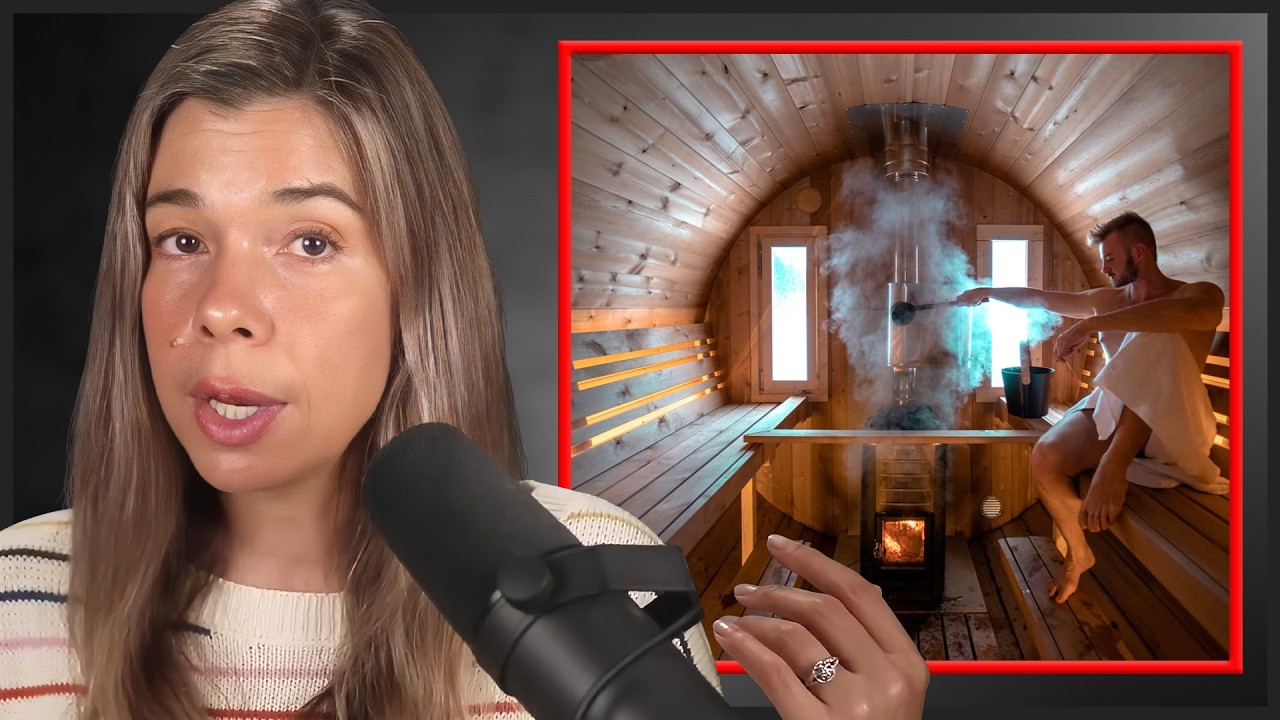
So I do think doing sauna in the evening time is can improve improve sleep and including deep sleep, and for the reasons I mentioned, there were many reasons I mentioned. But again, you want to make sure you give yourself enough time for your body temperature to cool down after doing that sauna, right? For me, that is my my typical. I typically get in. Either a hot tub or a sauna around 7:30 in the evening. So I put my, my son to bed at 7, and then 7:30 is time for my husband and I. And we typically then will either do a hot tub or a sauna around 7:30. And my, my natural bedtime is, is about 9:30. So I go to bed around 9:30. So I typically do mine 2 hours before I go to bed. And My husband as well.
He takes a little bit longer to cool down, which is why he'll like he'll he'll take a cooler shower. Typically, I don't need to. I cool down pretty. My my cool down time is is is not as long as his. So two hours for me is is quite nice. So making sure you're not doing it again right before bed is important because it can it can have the opposite effect where it disturbs your sleep, particularly because you were not able to to cool down. Right, right before going to bed, and that is also very important. Another question related to sleep from Bar in the chat asking if there's any science on white noise for sleeping. I have seen evidence for pink noise, and I don't—I honestly—if there's a huge, huge difference. I mean, I know the frequencies is you know allegedly.
I've listened to both, and like I don't like it seems like. the same. White noise can be really helpful, particularly in environments that are loud or have outside noise, because it kind of masks the noise. People get used to sleeping with the white noise generator as well. And so it does seem to help in that context as well. I think it really comes down to it's one of those individual types of choices where you either know it helps you sleep or it doesn't. And I kind of think there's a little bit of science on it, but I do think there's a big personal preference with respect to listening to the white noise or pink noise as well. And of course, we've talked a lot about cooling and being cool during sleep.
And in the previous Q&As I mentioned, I talked about my I use the Eight Sleep and how that, you know, it's really like I do both. I increase the temperature of my mattress in the winter when it gets cold, and then I decrease it in the summertime when the ambient temperature is warm. We are now going to move on to the next question, which was submitted by Christy, and it has to do with genetic testing. So Christy says, according to my geneticist, The 23andMe raw data is inaccurate for things they don't report on. She said an independent study showed inaccuracies up to 50% in 23andMe raw data comparing it to genetic reports performed by a geneticist. This is concerning when taking 23andMe data and uploading it to other websites. What are your thoughts?
I'm very glad that this question was submitted by Christy because there's a lot of confusion about what that study actually found. And so we're going to talk about this. So the study that Christie linked and that her geneticist was referring her to was conducted in 2018 by Ambry Genetics. This is a genetic testing company. So just keep in mind, there's a conflict of interest. This is a genetic testing company that does not like direct-to-consumer genetic testing companies like 23andMe or AncestryDNA. They're the authors of the paper. They're the ones that did the study. This is a conflict of interest, just an FYI, you know, for your knowledge, because a lot of people are interested in when a pharmaceutical company sponsors a drug trial, and it's, it's a conflict of interest, right?
Potentially. So this, this is the same. It's, it's a conflict of interest. So in this paper, um, this genetic testing company reported that 40% of genetic variants in several genes analyzed by direct-to-consumer raw data were false positives. This was a very small sample size for this type of claim and test, it was 49 patients. So there were 49 patient samples. They confirmed results in 26 of these patients, and they found 17 false positive— 17 false positives out of those 26 results. The single nucleotide polymorphism chips were originally designed to assay common genetic variants present present in more than, for example, 1 in 100 individuals. So this is 0.01% of the population.
This is the minor allele frequency cutoff that we use for the SNPs that FoundMyFitness selects for in our genetic report that we have available. So we only are doing the common variants that are occurring in 0.01% 1% of the population. The false positives that I just talked about, those 17 false positives that were reported, were almost exclusively in extremely rare variants with the population. So these are present in 1 to 100,000 people. That is 0.00001%. So very different sample population. In fact, the 23andMe and these direct-to-consumer genetic testing companies, they are, again, they're mostly doing the common— their chips were designed for the common variants, and that's mostly what they are testing.
So there was a more recent study in 2021 that examined SNP data from the UK Biobank participants. Okay, this is 50,000 people, okay, not 27 people. It's 50,000 people and a few of the 23andMe customers also. They found that genetic testing, these SNPs are unreliable for the rare pathogenic SNPs. So these are the ones that are in 1 to 100,000, or even in, you know, 0.001% of the population, because there's a propensity for high false positive rates, and that could potentially cause misinterpretation. However, when looking at the common variants, they were 99% accurate for 108,574 common variants. common variants, 99% accurate. So this study in 2018 didn't even test for that. They were doing the rare, rare, rare variants. It's a very, very misleading study, very misleading.
So again, these SNP chips, they're called SNP, single nucleotide polymorphism. These were designed to assay common genetic variants present in 0.01% of the population. Again, those false positives that Amber, in the 17 people, okay, so this is based— the 50% error, or, you know, it being 50% wrong, was from 17 people out of 26, and they were all the very, very rare variants. The ones, again, if you look at the huge study with over 100,000 people— you know, with over 59,000, with 60,000 participants, the accuracy was 99% for all the common variants that are typically used. So, this is 0.01% of the population that has these SNPs.
So, I think to sort of directly answer the question, Kristi, is my thoughts are if you have an extremely rare variant, to definitely do a genetic, you know, go to a geneticist, and that, you know, that the SNP chips that are used in 23andMe and AncestryDNA are not designed to be able to detect the rare variants. And in fact, they could misdetect them. But for, you know, the common variants, they're 99% accurate. And that's pretty good. And I've— myself, my husband, I've done families. I've rerun the same MyGeneticTest, like, more than once, and they're like more than 90— they're like 99.9% match. So I'm really not that concerned with the majority. I'm certainly not that concerned with our genetic report, which is we don't do the rare variants. We're not looking at those rare variants.
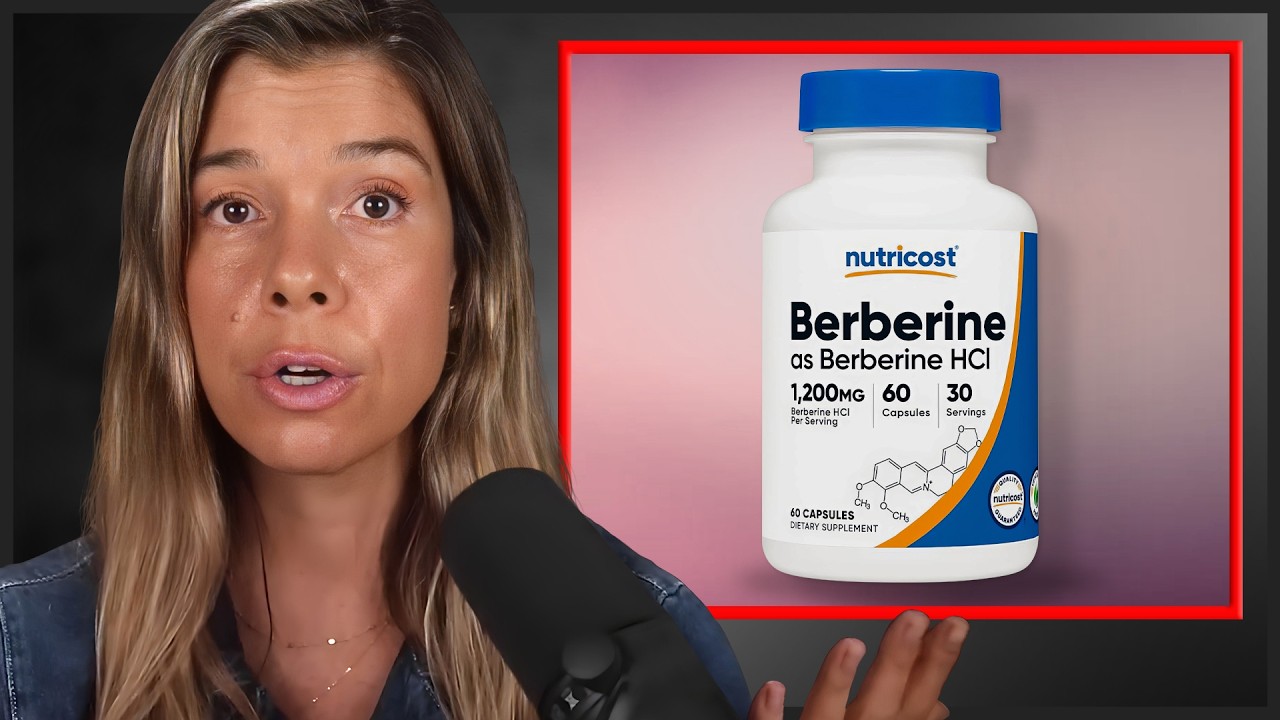
And, you know, the majority of 23andMe also is not— They're not doing the rare variants, and they even have a response on their website about rare variants and how they don't suggest— how it's not— the data isn't very accurate for that and wasn't— the SNPs weren't— the chips weren't designed to detect those types of variants. So I hope that clears up some confusion. Okay. So the next question was submitted by Richard, and Richard asks, have your thoughts on berberine changed now that we know it can actually reduce cholesterol plaque? And I chose this question because it piqued my interest considering we have a topic page on berberine. I believe the topic page went live in maybe 2020. So it's certainly time for an update.
And we will be updating it now based on all the deep diving that we did to look into this question. And also, I was interested in myself because, you know, I'm always looking for alternative ways to improve cholesterol, LDL, to improve, you know, plaque formation, disintegration, all of the above. All right. Before we dive in, I do want to mention that berberine can Okay. Berberine can interact with a number of prescription drugs. So taking berberine along with medications that lower blood pressure might cause blood pressure to go too low. Taking berberine along with medications that slow blood clotting might increase the risk of bruising and bleeding. So if someone decides to supplement with berberine, it is something to discuss with with your physician.
And certainly, if you are taking any prescription drugs, then you absolutely need to talk about it with your physician because of the fact that berberine can interact with a number of drugs. And what I'm going to talk about here obviously is not medical advice. I'm just going to cover the scientific literature on berberine. Berberine in terms of things that are updated since the last time I've talked about it in another Q&A episode and also on our topic page, our berberine topic page, which you can find at foundmyfitness.com/topics and then just scroll to the B and you'll find berberine there. There's a lot of animal studies. I'm not going to dive into the animal studies.
We will update the animal studies on the topic page, but there's a lot of animal studies that have shown berberine can significantly decrease plaque area and plaque macrophage content, which is definitely interesting. But I do want to focus on the human studies and the review of clinical data. So there's 44 different randomized controlled trials. So this is a 2023 publication. This is new. It's a systematic review and meta-analysis of 44 different randomized controlled trials. The trials, basically the age range of people in the trial were between 18 to 83 years. So really everything from a young adult to an older adult. The dosage range of berberine was about 0.3 grams to 1.8 grams per day. So Quite high, although the 0.3 grams would be on the low end.
And these clinical trials, there was a variety of ways they were done. In some instances, they were giving berberine in combination with other drugs like statins. And so the dosage range of statins were 10 milligrams to 80 milligrams per day. The treatment duration range was between 7 days to 2 years. Okay. So when berberine was given alone, this was 8 randomized controlled trials, and there was a sample size of about 804 people. Berberine alone significantly reduced a variety of things compared to routine therapy. So what did it reduce? what's called the NIH Stroke Scale. So this is a quantitative measure of stroke-related neurologic deficit. So berberine was able to reduce the tests that are given to quantify stroke-related neurologic deficit.
Berberine decreased high-sensitivity C-reactive protein. It decreased interleukin-6, IL-6, the This could be a pro-inflammatory cytokine. It is a pro-inflammatory cytokine. It also decreased tumor necrosis factor alpha, TNF-alpha, which plays a role in inflammation. These play a role in atherosclerosis as well, both, all 3 of these inflammatory molecules. So it seems as though berberine is reducing inflammation, inflammatory biomarkers, and it reduced the— the quantitative measure of, you know, stroke-related, you know, deficit. Now, when berberine— so berberine compared to a routine or routine care or statins, it reduced what's called the intima-media thickness.
So this is It's basically a quantitative index of atherosclerosis, and it's a value that is used to monitor disease progression and also the effects of treatment. So it's kind of like, it's used a lot in clinical studies because if you can decrease the intima-media thickness, the IMT, then that is a marker that the treatment is beneficial for atherosclerosis, either in preventing or in reducing perhaps atherosclerotic plaque as well. So berberine seemed to also significantly reduce that, the intima-media thickness, which again is really a marker of atherosclerosis, atherosclerotic plaque. Statins also did the same and also standard treatment did it. So it's interesting that berberine also did it.
Now, there was no differences in berberine alone versus either statins or, you know, the routine of care in improving total cholesterol, triglycerides, low-density lipoprotein, high-density lipoprotein. So basically, this is, you know, berberine was still having a positive effect on them, but it wasn't doing it more than statins or the routine care. To me, that's interesting because if you can still have an effect on— a positive effect on all the things that statins is, then why not try berberine? I mean, that's kind of what I would go to. That's where I naturally go first. Berberine plus statins or versus statins alone. So there was, you know, either giving statins with berberine or not, or just giving statins alone. There were a— it seems as though there were a number of benefits.
So berberine combined with statins significantly reduced, again, that stroke score. So looking at the, you know, potential damage from stroke, the NIH Stroke score was reduced from when adding berberine to statins compared to statins only. There was no significant difference in the inflammatory biomarkers like IL-6 when doing statins versus berberine plus statins. But remember, berberine alone did reduce IL-6. So it just wasn't reducing it when someone was already taking statins. It wasn't reducing it even more than what the statins was already reducing it. So statins are also reducing IL-6. The intima-media thickness level was also decreased significantly in the berberine plus statins group.
So again, it seems as though that berberine could be a promising alternative therapy for atherosclerosis, perhaps ischemic stroke, and coronary heart disease, considering the benefits it has on, you know, anti-hyperlipidemia, so, you know, the triglycerides, cholesterol, the effect it's having on the NIH Stroke Score, its effects on anti-inflammatory— its anti-inflammatory effects, so lowering all those inflammatory cytokines, and its effects on the IMT score. So that was the progression of atherosclerosis. So it's basically able to decrease the progression of it, and without really any serious adverse reactions.
But also, it seems as though berberine could be an adjunctive, potential adjunctive, have an adjunctive role to basically people with statin intolerance because it might improve the efficacy of statins by lowering the dosage and perhaps even reducing the side effects because the statin dosage may be lowered. Obviously, this is early. I mean, more studies are going to need to be done on this before it is adopted, I think, into routine clinical practice. But I do think it is something to, you know, bring up to a physician for people that are taking statins. In fact, you know, actually people that I know, I'm going to send them these studies and then tell them to talk to their physician as well. I also was convinced that I would like to start testing berberine on myself.
So I did already place an order for berberine from Thorne, and I also got some for my mother who has a higher risk for coronary heart disease, and she's got higher triglycerides, although the omega-3, she's been able to improve that with omega-3. She's been taking the Lovesa, and also she's got higher LDL cholesterol, total cholesterol, and so I'm curious to see. How berberine will affect her lipid levels as well. So I went ahead and ordered a few bottles of that for the family. And on a side note, I'll tell you guys the power of, you know, doing small interventions. So my mother, her physician was recommending that she get on antihypertensive medication because her blood pressure was quite high on the last several doctor's visits.
And so she— we had gotten her a blood pressure monitor, and then I had gone through and she hadn't— she'd been coming to my house and I'd been giving her a whole battery of supplements daily, and then she wasn't coming to my house as much anymore and she wasn't taking all those supplements. And she is homozygous for MTHFR. and wasn't taking any methylfolate. Her homocysteine was high. High homocysteine elevates blood pressure. So I started giving her those medication bottles where you— for each week, you can put all the vitamins in there, and I gave her a whole host of vitamins, magnesium, all the vitamins, the methylfolates, all the things that I think she needed. And she was doing great. Her blood pressure now, I mean, it's been below 130.
And so, you know, so she's measuring it multiple times throughout the day and she keeps a log at home. But also she's gone to the doctors for several visits and they're very impressed. And so far do not think she needs to get onto the medication. So again, you know, of course I was, you know, exercise and sauna, but it's much harder to get her to do that. It's a lot easier to get her to take some of the supplements and I immediately knew because of the homocysteine. that was probably contributing. And I'm very excited to know that her blood pressure has now normalized again and she does not have to get on hypertensive treatment.
So just a little anecdote there I thought I'd share with you guys before we continue on with the berberine because I did get pretty excited about some of this new data. So I'm very grateful that this question was submitted. There was some safety evaluation as well in the meta-analysis of these trials. And people— so patients that were receiving berberine alone appeared to have significantly lower risk of liver enzyme abnormalities and myalgia compared to those receiving statins. So that's really interesting and needs to be investigated further. Again, you know, whether or not people on statins could be combining berberine to lower their statin dose and perhaps lower the negative and adverse side effects is very interesting.
Also, there was no GI effects with people taking berberine compared to patients receiving statins. Those receiving berberine plus statins seemed to have a lower risk of abnormal liver enzymes again and the myalgia. So all in all, I think, you know, this is in the big greater context of things, this is still limited evidence. Even though we're looking at 44 different randomized controlled trials, there needs to be more before this is adopted into clinical routine clinical practice. But I do think for people like, you know, myself, I'm interested in definitely trying and also experimenting with my mother who has higher cholesterol as well, and she is not on a statin.
So, um, and then, you know, people that are on statins could ask their physician and, and, and try it out if, if they get the okay and see if, um, what berberine does and whether or not they could even lower their dose of statin. I think all very interesting. There's, there's some interesting stuff I'm not going to get into. I'm going to update the topic page on berberine Potentially lowering the TMAO production in the gut. And a lot of this is animal work. And so again, needs to be taken with a grain of salt. And that's why I'm not really going to get into it. There's one study that was in about 50 people, one clinical study. It was not a randomized controlled trial. Of course. So it's not— I mean, you're talking one study, not even a randomized controlled trial.
So again, not very high-quality evidence, nothing to, you know, to really make— draw any conclusions on. But again, seems to be indicating that berberine may really improve the progression of atherosclerosis in people with atherosclerosis that were not undergoing any drug treatment. And so take a look at the topic page if you want to kind of dive even further into this, because I'm not going to talk about all that stuff. But there's a lot of interesting updates that we will be making to that topic page. And I am going to be supplementing with berberine, and I'm going to be checking all my lipids and cholesterol. And I mean, my inflammatory biomarkers are just rock bottom low, so I don't— there won't be any difference there, but I will be curious to see how it affects my LDL. Okay.
So now I'm looking at the live questions. People are commenting that methyl B12 lowered their homocysteine. Lisa mentioned that. And so Yeah. I am giving my mom— she's getting methyl B12. She's getting methylfolate. She's getting— I got her something called Methyl Assist from Pure Encapsulations and she's taking that. But it's kind of amazing being able to lower her homocysteine and the effect. homozygous for the MTHFR SNP, and so that really— she's kind of at a high risk. And if she's not supplementing with folate, with methylfolate, her homocysteine can get quite high, and that will then subsequently increase blood pressure. And, you know, it's really— it comes down to, again, you go into the doctors, like, they don't know. They don't know you have MTHFR.
They don't know, you know, the homocysteine's high. Most of the time they don't even routinely measure homocysteine. You have to ask for it. So you kind of have to be an advocate in many ways to make sure you don't just go through the pipeline of, okay, high blood pressure, we get you on antihypertensives. I mean, obviously, it's bad to have high blood pressure, particularly, you know, as we've talked about with Dr. Axel Montagne, cumulative high blood pressure. So starting even in your 50s, earlier than 50s, but even 50s. really increases dementia risk.
So, you know, I certainly would not— I wouldn't avoid treatment, but I would definitely try all the lifestyle factors I could to lower my blood pressure before getting on, you know, the antihypertensives, which do have— obviously have negative side effects ranging depending on what type of treatment you're taking. Ed and Twilia are asking if you need to skip berberine on workout days. I— so, you know, we cover a lot of stuff in the topic page. So the way I plan on supplementing with berberine is I will take it in the evening. So I do my exercise in early morning. I mean, we're talking before 9:00 AM typically. And most of my supplements I take with dinner.
And so, you know, when you're talking many hours after the exercise, the biggest, I would say, you know, risk of taking supplements, you know, is within the one, you know, immediately after, you know, to maybe 3 hours after exercise. And once you start to get 4 or 5 hours after, you know, you've generated the inflammatory response, the oxidative response has been generated without blunting it, that has activated genetic pathways. And so you're not going to be dampening that, you know, if you're taking it several hours after that. Okay. So the next question was submitted by Sripathi, and they asked about whether or not, you know, it's okay to take different supplements at the same time. Do they need to be spaced out over time?
In other words, like, do some, you know, vitamins and minerals, like, inhibit others? You know, so that sort of thing. And it's an interesting question that lacks a lot of data. I mean, I would say there's a lack of high-quality studies Many of the available studies are from the '80s and '90s. Generally speaking, I would say it seems as though people that are taking high doses of certain minerals, they probably should space those out and not take them together or take them with phytochemicals like polyphenols. And, you know, like some of these herbal sort of extracts and things like that. We'll talk about that in a minute. But I would say one of the biggest, you know, it's mostly limited to like the minerals and, you know, taking high-dose polyphenols with some of those.
So I don't think people should be taking high-dose minerals. There's one context. I mean, when you're Yeah. If you've been exposed to a respiratory virus or it's circulating, you know, you're going to be exposed, taking, for example, taking the zinc lozenges in a higher dose and even taking, you know, up to like, you know, you're taking 80 milligrams of zinc a day, can It has been shown in different studies, and if you go to our zinc topic page, we cover this. It does seem to help lower the severity and duration of illness from respiratory viruses mostly. But again, that's higher dose zinc, and most people should not be taking 80 milligrams a day of zinc, mostly because, I mean, at 80 milligrams a day, you can actually inhibit the absorption of copper. Okay.
When you start to get above that, let's say you're really just going hard on the zinc lozenges because you just don't want to get sick, you're up to 100, 140 mgs per day, which is well above the upper tolerable intake, then you can decrease magnesium absorption and you can disrupt magnesium balance from taking really high doses of zinc like that. Most people on a— certainly in a zinc multivitamin, I mean, the zinc level in a multivitamin is not going to be more than like 30 milligrams. So nothing to really worry about there. It's those times when you've got your zinc stash and you're like, oh, okay, someone in my family is sick or someone at work or whatever, and you're taking the zinc lozenges or you're traveling. That's typically what I do.
I'm traveling, I'll suck on the zinc lozenge, or if someone in my family gets sick, and it does seem to help, at least it has in the past for me. So those are the times to be more aware of spacing out when you're taking your magnesium, and also just making sure you're getting enough copper as well, or just knowing that your copper absorption is going to go down during that week or whatever that you're going to be taking a much higher dose of zinc than usual. Vitamin C is important for the absorption of iron. This is mostly— most people are not supplementing with iron unless they've been prescribed, they're anemic. There's, you know, during menstruation, I think there is a justification for women to get their iron levels measured. Yeah.
When they're not menstruating and when they are menstruating to see how menstruation affects your iron levels. You may be fine. You're eating it. You're getting enough bioavailable iron from, let's say, your heme iron from meat. But let's say you're a vegan or a vegetarian and the iron you're getting from spinach or whatever is, you know, it's not as bioavailable because of the phytate that it's bound to and you have to really up your intake of iron. you may consider supplementing during menstruation. So taking a vitamin C supplement with the iron will dramatically increase the absorption of the iron as well. But also, again, most people are not supplementing with iron, and it's not a good thing to because free iron, too much free iron can have negative effects.
I mean, it's a very— it can cause oxidative stress. And through the Fenton reaction really disrupt mitochondrial function and a variety of other things. So supplementing with iron is, you know, there's very limited cases where people are supplementing, but not something that it's generally like the wider population is doing. The ratio of calcium to magnesium is important, and we've talked about Yeah. Most of the time calcium should be obtained from dietary sources, maybe a little bit of supplementation to bring you up to the RDA of about 1,000 milligrams a day. But really, by and large, you do not want to be taking, you know, a 500-milligram or 1,000-milligram calcium supplement.
You want to be getting it from your food, and you want to make sure your vitamin D status is good so that you're Really absorbing and that calcium is bioavailable. Because really vitamin D makes a big difference in the bioavailability of calcium. But importantly, the reason I'm mentioning the 2:1 ratio calcium to magnesium is because— not because you need to be supplementing with twice as much calcium. No, that's why I'm saying that's not why. The reason is because many people are supplementing with magnesium. And I will be— I'm going to be covering this in a podcast. I've been putting it together. I'm going to be covering this in a solo episode very soon.
You basically do not— you also want to try to get most of your magnesium from the diet and perhaps, you know, maybe 100, 200 milligrams, you know, supplemental. People that are athletic and they're, you know, sweating more magnesium, more supplemental magnesium can help there. particularly in the form of electrolyte supplements. I've been using them and like anytime I sauna, you know, I have a go hard on my Peloton, which is pretty much 5 days a week, I chase it down with LMNT, the electrolyte brand that I really like. And so that's also something to consider.
But what you don't want to do is go out and start taking 400 or 500 milligrams of magnesium a day, and then start having it where your magnesium ratio is higher than what you're getting from your dietary calcium, because calcium and magnesium, they're right next to each other on the periodic table. Structurally, they compete for the same enzymes, and you can basically have magnesium kicking out some calcium where it's supposed to be calcium in as a cofactor for enzymes, and it's not good. So you want to make sure you're not basically overdoing supplemental magnesium. And that is something that I will talk about in the podcast that I cover magnesium.
And then on top of that, like a tremendously high, high, high, high fiber meal could limit the bioavailability a little bit of some of the minerals like magnesium and zinc. But I mean, we're talking like Okay. You know, supplementing with psyllium on husk, like you're supplementing with fiber basically. So don't take a bunch of psyllium husk and then don't, you know, chase down your magnesium because it's not going to be as bioavailable. Other than that, there's just a lot of, I would say, unclear stuff in the literature. The other thing is the polyphenols.
I wouldn't even freak out about this so much, but like if you're taking large doses of quercetin, for example, you know, so the polyphenol examples are quercetin, luteolin, resveratrol, St. John's wort is something that can basically inhibit the CYP, one of the CYP enzymes, EGCG. These polyphenols possibly could reduce the absorption of iron if you're supplementing with iron, which again, most people are not. And maybe a little bit of a reduced absorption with vitamin C or folate. But I don't know that it's even anything to worry about, in my opinion. I think the biggest things to worry about are the ones I mentioned. I'm just telling you guys about the polyphenols. Okay. For your edification. I'm not worried about it myself.
You know, it's really— you just— it's certain minerals like the folate, most of us are getting in our multi and we're just getting a lot of it anyways. So it's just— I don't think it's a huge, huge issue and it just limits the bioavailability a little bit. So really, that's about it for the question of, I would say, whether or not you really have to be concerned about taking your vitamins and minerals together. I want to get to some of the rapid-fire questions. Next month, we will start with the question about sunflower oil, and I will also cover the soy and tempeh question about, is it bad, estrogen effects. There was about 3 different people that submitted a question related to that in a different form. And so I think it's good to cover that. So we'll start with those next time.
But let's talk about some rapid-fire questions. So James asks, are plastics said to be safe in the microwave actually safe to eat from? So I've been eating Lean Cuisines lately and I'm worried about plastic containers that might be toxic or steaming I would not steam— I would not use anything plastic in the microwave. I would not steam anything in plastic. I would not use plastic in any shape or form when heat is going to be applied because that really leaches, you know, even if it's BPA-free, it's leaching other, you know, BPS, other things that are not good into the food. So, There are instances where I've gotten some frozen things that have been in a plastic tray, and I essentially just pry it out and put it into a microwavable bowl. And that is highly recommended.
I wouldn't microwave anything in those plastic trays or cook them or steam them, any heat at all. Is there evidence that infrared saunas reduce Alzheimer's risk or Is that exclusive to traditional saunas? I would— there's no evidence. All the evidence is observational evidence. And the reason that traditional saunas are used is because those are common in countries like, you know, in Nordic countries like Finland, for example. And so you can gather data. IR saunas are not that common. And so there's no data, no evidence yet. You know, maybe in the future we'll get some, but I'm not too sure. I'm not too sure we're ever going to get that evidence. I mean, perhaps someone could try to get a study together on enough people that have infrared saunas.
But, you know, some of the mechanisms are cardiovascular improvements, cardiovascular-related, and also heat shock proteins. You know, the infrared saunas do also improve cardiovascular endpoints. Some are much more robustly improved by traditional saunas, but it also depends on the infrared sauna protocol. And, you know, like there's some protocols that are a lot more intensive and heart rate's getting elevated more. And that's, again, mimicking moderate-intensity cardiovascular exercise. So to answer the question, there's no evidence. Do I think it's possible that IR saunas would have You know, any effect on reducing risk of Alzheimer's disease? It's certainly possible, I think. It's certainly possible.
And it really would depend on the procedure that someone that is using the infrared sauna, how they're using it, you know, how hot they're getting and how high their heart rate's getting. And if they're activating heat shock proteins, that's also part of potentially the reduced risk for Alzheimer's disease. The next question was submitted by Susan. The question is, hi, Rhonda, I've pored over your sauna studies currently. I currently have a sauna and exercise regularly. My question, though, is about time efficiency. Would hot yoga or a HIIT class in a heated room accomplish both the sauna and the exercise at the same time? So that really depends.
There have been studies, whether you're talking about using So there have been studies that have compared exercise alone plus exercise and sauna, both observational data and then also interventional studies. And it's pretty clear that adding sauna to exercise improves cardiovascular fitness, improves VO2 max, it improves lipids and other biomarkers of cardiovascular health more than exercise alone. So I think that, you know, doing the exercise in the sauna or in a heated room is beneficial, but then is that going to just be in lieu of the sauna? Because then you'd also have to exercise in addition to that. Like, you don't— I think that the two combined are quite, you know, additive, and so perhaps even synergistic.
So I think it depends on if you're talking about basically doing the hot yoga, but then you're also doing all the other HIIT and other extra types of exercise, and the hot yoga is kind of substituting for the sauna. I do think that hot yoga, HIIT classes, and heated rooms are interesting, but I do think that doing both the exercise and the heat stress combined are beneficial, and there's data to suggest that. Hi, I'd love to hear your opinion on getting omegas from algae sources versus from fish. I've been taking omega supplements from the Ewee Life company. It seems more sustainable with less risk of heavy metals from the fish. Are they— what are your thoughts? My thoughts are there— it looks like a very scammy, fishy, pun intended, I took a look at it.
The claims— they claim better absorption than from triglyceride fish oil and krill oil, which are both very bioavailable, with no data or evidence to show that. It's a really unsubstantiated claim. Plus, it's got seaweed extract, and seaweed is sort of high in lead and cadmium and arsenic. My opinion is I'm very skeptical of their claims. Hi, Dr. Ronda. What are your thoughts on the liquid biopsies for cancer detection? The Galleri test sounds promising. So this is the GRAIL test. It's called GRAIL, and basically the Galleri test is part of the GRAIL test. We covered this toward the end of Crowdcast number 40, so go back, listen to the end of that if you want to learn more in detail about the GRAIL test.
But it's basically a liquid biopsy that can detect up to 50 different types of cancers. It's, you know, the test correctly identified cancer in about 55% of samples that were truly cancerous at any stage, including stage 4, but the test sensitivity was not as high for positive samples in earlier cancer stages. So for example, 20% of, you know, it was able to detect 20% of cancers for stage 1, 45% of cancers for stage 2, 81% for stage 3, and 93% for stage 4. Not bad. I, you know, it's about a $900 or so test. a little bit less than $1,000 to do the test. I am very interested in doing the test. I have friends that have done it. So I do, I kind of think it's not a bad idea.
Also, particularly for women, certainly women that there's a family history of breast cancer, for example, this is something that might also be an option as well as the other types of breast cancer screening. Ed and Twilia asked, is it true that higher glucose levels— higher— basically, the higher the glucose levels are, the higher the probability of advanced glycation end products being formed. Then would it be true that each time your postprandial blood sugar spikes, that you would then have more advanced glycation end products and then more cumulative damage? Do I consider the blood sugar spikes, like postprandial blood sugar spikes themselves, to be a risk factor? No. The short answer is no. It takes a while for the formation of the advanced glycation end products.
So it's more— it's not about the postprandial blood glucose spike. It's about the clearance of glucose after the postprandial blood glucose spike. So If you're clearing it at a normal rate, then you're not going to be getting the formation of these advanced glycation end products. And really, the bigger indicator for advanced glycation end products is HbA1c. So that's the long-term blood glucose levels. And so the longer— and this is why diabetics have the biggest problem with advanced glycation end products. because they have a problem clearing their blood glucose too. And they, you know, so their HbA1c is quite high.
And that is where— that's more of an indicator of advanced glycation end products than actual just a, you know, a postprandial spike, which then immediately, you know, goes down, you know, quite soon after it spikes up. My husband recently has been diagnosed with long COVID. At this stage, he's been advised to limit his exercise to slow 10-minute walks. Just wondering if I have any insight. So I would ask his physician, but ask his physician if using the sauna would be okay, because I've heard from several people, anecdotal evidence, that it has helped them with their long COVID. So that would be something to discuss. Discuss with his physician. Nicole asks, hi Rhonda, can you please tell us what brand of nail polish that you use when you do use it?
So the brand I use is called Aila, A-I-L-A, and it's free from formaldehyde, toluene, DBP, camphor, TPHP, parabens, sulfates, and formaldehyde resin. So it's pretty, um, the most kind of natural nail polish that I could find. Ashley asks about pregnancy prep and protocols, breastfeeding. While I've given a lot of info, it's spread out through various Q&As, and if we could get an aliquot with all of it condensed into a pregnancy aliquot. So you'll have— first of all, I do have an older one. So aliquot number 1, I believe it's called, like the pregnancy mashup. It's it's got everything from like 2020, before 2020. So 2020 and before. But you'll be happy to know we have a new one, a new pregnancy mashup with everything since 2020.
So it's kind of like part 2 coming, coming, will be, it'll be coming soon. We've been putting it together. So, so be excited that that'll be coming soon. Hi Rhonda, what do you think about The secondary analysis that was done by Paul Ridker et al. on the REDUCE-IT trial. So the REDUCE-IT trial was the trial on Vascepa, the purified EPA, high-dose purified EPA, and its effect on cardiovascular risk and mortality. We have an email coming out on that next week, Chad, so stay tuned. Okay, so Lisa asks, Hi, Rhonda, could you do a deep dive into things that that are important to you with respect to raising your son, anything that comes to mind, nutrition, blue light exposure at night, toys you use, sleeping arrangements, HEPA filters, specific shoe brands, anything at all.
So talking about nutrition, some of the important things that Obviously, going— that new pregnancy aliquot that's coming out will be important because it's like different life stages. Like right now, I've got a preschooler and protein is very important for growth lengthwise, so making sure I get the protein. But also, I find my son is a little bit of a picky eater, and so I've been doing a couple of things. One, smoothies are really key because I can get for example, like dark leafy greens in there, which are challenging to get to him. Kale chips he likes. I can make kale chips. But I can't— like, he doesn't just want to eat cooked spinach or cooked kale. And so the smoothies are key for that. And they also get, you know, you get the blueberries and avocado in there.
So trying to get, you know, the vegetables is usually more of the— The trickier part. I would say the limiting factor there versus fruits. Fruits are— most kids like a lot of fruits. So the smoothies are key for that. And then putting— sometimes I put the protein powder in the smoothies. I also do the Thorn chocolate whey protein smoothie as well, or chocolate protein shake. And he'll do that. We'll do that after maybe— Breakfast. You know, he's doing something physically active or physically demanding. With respect to picky eating, I've been doing this sort of method.
I think it's called like the tin cup method where I get— I have like a silicone muffin, you know, it's like 9 or 12, I think it's 9 different muffin like trays, you know, and so I'll just put a variety of small portions of different things in each of them and let him pick around at and try. And I find that really is helping with exposure to new foods and then just asking him, oh, will you just take a bite and try this? And so it's a way of getting him to try new things, things that I'm eating, would like him to eat more. So I really kind of like that. That method of just little servings and lots of different little servings in this muffin tray. It's really working well. I also do the Pure Nutrients multivitamin, and that has about 1,000 IUs of vitamin D in it.
I also do the— either I usually do the Pure encapsulations, the Pure Nutrients, the high DHA gummies. 2 to 3 a day of that as well to get the omega-3. Very important. Obviously, I don't do any juice. No juices for him. It's just a lot of sugar. So we do water and he does sparkling water. He likes sparkling water. And I like Mountain Valley or Gerolsteiner as well. Those are the couple of brands that I like. for sparkling water. We have a very rigid sleeping schedule, and it's been this way for years, where he goes to bed at 7:00 PM regardless of the time change. About a week before expected time change, I will adopt him— I will make him go to bed 15 minutes. So if it's like, for example, this spring forward where you're getting up an hour earlier, and going to bed an hour earlier.
We started to do bedtime 15 minutes earlier each day, and that kind of gradually gets him used to going to bed an hour earlier. So 7:00 PM is bedtime, and he usually wakes up at 7:00 AM, and he just— so he sleeps 12 hours, which is great for his age. And we also, we don't do any bright lights after bright blue light after sunset. So we have dim light in the house. I'm super, super anal about that, as you guys may know. And it's really important as a baby and stuff too, I mean, avoiding the blue light because they don't have any cataracts. So for them, they're super sensitive and that can really shift their circadian rhythm as well. For sleeping, I really— I never did co-sleeping. And, you know, I know some people do it. I had him, you know, in the crib.
Of course, when he was, you know, a newborn, he was, you know, in our room with us. And, you know, as I think he, you know, was about 1 when I finally had him in a separate room. So in a way, it was kind of co-sleeping because he was in the bedroom with me, but he was not in the same bed. And I never did any sleep training. I just couldn't bring myself to do it. And I don't, you know, the first year was hard for sure, but now I, you know, he sleeps like 12 hours. He, you know, it's great. He waits for me to come get him. I mean, it's— That's great. It's— I get all the sleep I want at night unless he's sick. When he's sick, he wakes up multiple times throughout the night calling for me. And so when he's sick, I allow him to sleep in my bed, much to my husband's dismay.
My husband gets kicked out into another room. But that stops with the sleep interruptions for some reason. If he's in the bed with me when he's sick, he— He stops. is able to calm himself back down and not keep calling out for me. So that's the only time I really do keep co-sleeping, and he knows, like, when he's sick, and when he's not sick, he goes back into his room, and it's like really not a problem. I don't know if all kids are going to be that way. So that's the sleeping arrangement. Now he's, you know, he's got his own sort of bed that's close to the floor. It's a tent bed. It's not a mattress on the floor, but it's like a bed that's, you know, Really close to the floor. I've got a just Honeywell HEPA filter in his room, you know, just something you can buy off of Amazon.
Things like, you know, early toys and things, you know, I really didn't do any Montessori-based type of toys. I did— I was very— like, I'm very, very anal about no screens, no iPads, no— you know, very little TV. I mean, he gets a treat once in a while. He can watch a show, but it's just— it's really, I think, crucial, particularly in the first couple of years of life. No television. You want to read to your children. You want to talk to your children. My son had exceptionally good verbal skills. He's now 5, and he's reading at 3rd, almost 4th grade level. What we did is we started— I started with alphabet sounds. I did them. I had the bath foam toys, and so he was sounding out alphabet letters. He could do the sounds before he could talk.
I could point to a letter and I'd say, what sound does this make? He'd say, duh, duh, duh, before he even could talk. I mean, he could say mama, but before he was actually talking. I did early, early exposure to sounds of the alphabet. And then I did flashcards. So like one-syllable word, hot, cat, things that we would be exposed to outside. And so I was doing flashcards with him. And so he started to memorize words when he was very, very, very young. And then I started with the BOB books, Bob Books, and they're really, really, really good. If you're wanting to get your child to be an early reader, highly recommend. BOB books, and it's just they've got it down to a science. It's really, it's just a great series of teaching kids how to read.
But before I did those, again, I did the alphabet sounds. I mean, we're talking, you wouldn't believe, an unbelievable— I mean, I was doing these with him when he was like, you know, I was doing them like in the bathtub when he was like 6 months old, just said like exposure, exposure, exposure, exposure. And then the flashcards, doing the flashcards. And then I went to the Bob Books. And so that was kind of the thing I focused on. A lot of reading, a lot of reading to him when he was little. And toys, he had lots of cars and things like that, but I just avoided the screens. So I didn't really follow any sort of Montessori-like thing. And then I did, The books I like, you know, it depends on the life stage.
You know, you start off with the board books, and then I got into the, you know, I can read books, you know, level 1, 2, 3. He's now reading chapter books. And he's a boy. He likes Nate the Great. It's a big one he likes. Miss Mallard. They're like mystery. He likes the mystery kind of books. So that's, you know, those are his favorites right now. But That's pretty much, you know, in a rapid-fire kind of way, some of the main things with respect to childhood raising and stuff. Anyways, I hope you guys enjoyed this Q&A. I really did. Like I said, the berberine was a big one, and also, you know, some of the effects of heat stress and exercise on sleep. We went a little more into mechanism. So I'm actually going to be doing a podcast on that as well.
We're going to cover a lot of— I'm going to go back to a lot of the Q&As. We're also going to put out an aliquot on it, on the sleep. So you guys have that to look forward to, but you can always go back and look at the old Q&As if you want to kind of dive into one section as well. But anyways, thank you guys so much for attending these lives. Thank you for all your questions you submit. Thank you for your support. You guys are amazing and awesome. I always love doing these Q&As. I look forward to them every month. I look forward to what I'm going to learn. I look forward to knowing, learning what you guys are interested in and what questions I see in the live chat and all that as well. So make sure you guys submit your questions for next month, and I look forward to seeing you guys then. And we'll be sending out a summary and a rebroadcast of this video probably within about a week. And you guys have a good rest of your day or evening wherever you are, and I'll talk to you soon.
Every month, Rhonda hosts a live chat with FoundMyFitness Premium Members.
Don't miss the next one.
Watch previously recorded Q&As with Dr. Rhonda Patrick
Q&A #84: Chemical Sunscreen Safety—Plus What Rhonda Eats
Dr. Rhonda Patrick discusses sunscreen safety, HIIT & brain health, diet, omega-3s, urolithin A, sulforaphane, homocysteine, peptides, and CoQ10.
Q&A #83: Does Glucosamine Worsen Alzheimer’s Disease?
Dr. Rhonda Patrick discusses glucosamine and Alzheimer's, blood flow restriction, beta-glucan fiber, creatine, collagen, red light therapy, and curcumin.
Q&A #82: Organic Food, Pesticides & Glyphosate—What Actually Lowers Exposure?
Dr. Rhonda Patrick discusses organic produce, fasting-mimicking diets, sleep, sauna, sunscreens, red light therapy, reverse osmosis water, and fiber.
Q&A #81: Beta-Glucan vs. Psyllium—LDL Reduction, PFAS, & Gluten
Beta-glucan versus psyllium for lowering LDL, PFAS reduction, creatine and caffeine, urolithin A, exogenous ketones, IVF, Botox, and sauna.
Q&A #80: Does Nattokinase Protect Your Heart?—What the Evidence Shows
Dr. Rhonda Patrick reviews the evidence for nattokinase, how oat beta-glucans may aid with PFAS excretion, and HRT for APOE4 carriers.