#73 Sauna Benefits Deep Dive and Optimal Use with Dr. Rhonda Patrick & MedCram
This episode is available in a convenient podcast format.
These episodes make great companion listening for a long drive.

The Omega-3 Supplementation Guide
A blueprint for choosing the right fish oil supplement — filled with specific recommendations, guidelines for interpreting testing data, and dosage protocols.
You'll also receive updates from Rhonda & FoundMyFitness
This episode features a discussion with MedCram co-founder Kyle Allred on the effects of sauna. I had the pleasure of being interviewed by Kyle on all things sauna science and we're posting that discussion for you here. As an exercise mimetic, sauna use has anti-inflammatory, mood-elevating, and detoxifying properties that research increasingly shows may deliver cardiovascular and brain benefits.
The science of sauna use has been a research interest of mine for many years and this discussion is by far one of the most well-rounded discussions I've had on the subject. Thanks to Kyle and MedCram for having me for his interview.
In this episode, we discuss:
-
Summary of sauna benefits
-
Heat is an aerobic exercise mimetic
-
Heat shock proteins may protect the brain
-
Investigating sauna for depression
-
Cellular repair mechanisms elicited by sauna use
-
Prevention of muscle atrophy
-
The synergy of sauna use and exercise
-
Rhonda's personal sauna protocol: duration, temperature, humidity, and frequency
-
Jacuzzis, hydration, cold therapy, and sauna safety
-
Limitations of current sauna research and hopes for future research
MedCram is a YouTube channel created by Kyle Allred, PA-C and Roger Sehuelt, MD, master educators of health and medical science. Their videos cover important topics such as immunity, metabolism, and vitamin D in an authoritative, but approachable way. Visit the MedCram YouTube channel for more efficient, engaging, fun, and lasting way to learn and review medical topics.
Related resources
- Overview article: Sauna
- Podcast interview: Dr. Jari Laukkanen on Sauna Use for the Prevention of Cardiovascular & Alzheimer’s Disease
- Podcast interview: Dr. Ashley Mason on Sauna Use for Depression, Conquering Insomnia, and Mindfully Breaking Bad Habits
- Podcast interview: Dr. Charles Raison on Depression, the Immune-Brain Interface & Whole-Body Hyperthermia
-
Introduction
-
Summary of sauna benefits
-
Heat as an aerobic exercise mimetic
-
Effects of heat acclimation on endurance
-
Why heat shock proteins may protect against dementia
-
The stress-relieving effects of sauna use (personal anecdote)
-
Investigating sauna for depression
-
Brain-derived neurotrophic factor (BDNF) and endorphins response
-
Cellular repair mechanisms elicited by sauna use
-
Prevention of muscle atrophy
-
Detoxification of heavy metals
-
Heart rate variability, a measure of stress resilience
-
The synergy of sauna use and exercise
-
Cross-cultural and historical prevalence of heat therapy
-
Infrared sauna vs. traditional saunas
-
Rhonda's personal sauna protocol: duration, temperature, humidity, and frequency
-
How jacuzzi, hot baths, and hot showers compare to sauna use
-
Hydration, cold therapy, and sauna safety
-
Who should not use saunas?
-
Does sauna use increase blood sugar levels?
-
Limitations of current sauna research and hopes for future research


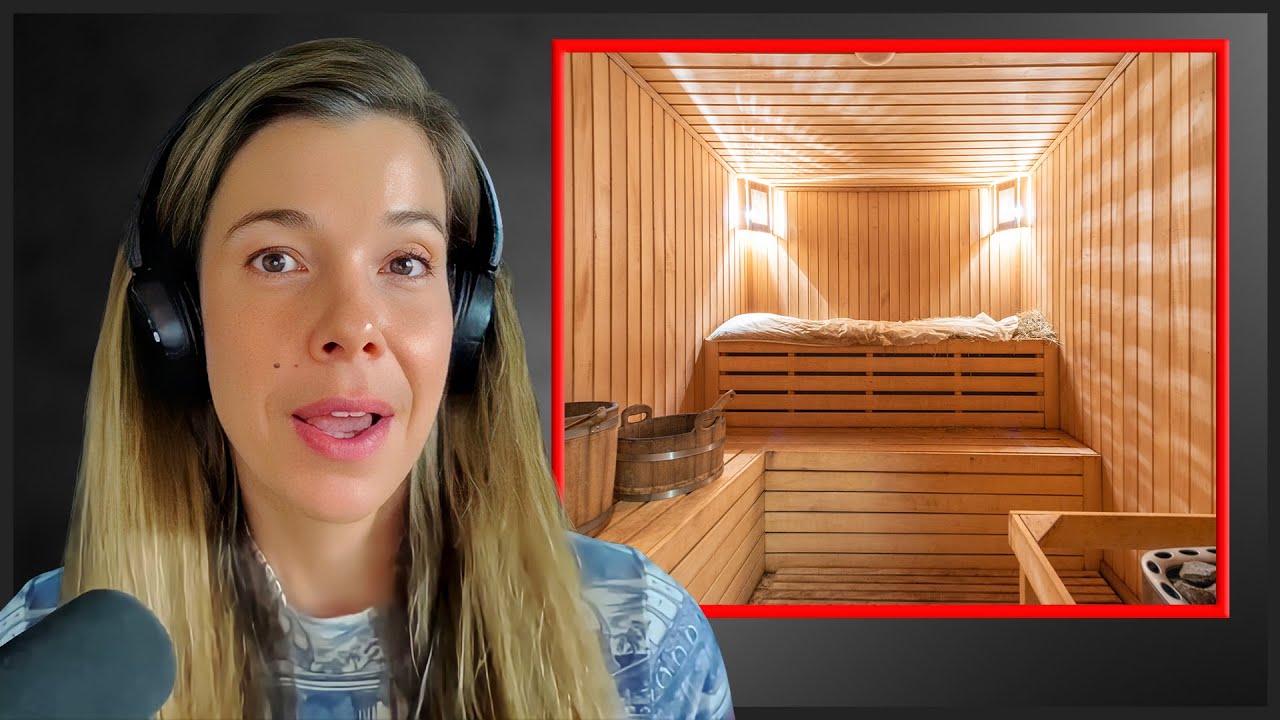
Dr. Patrick, you are a world expert on the many potential benefits of sauna use, from better cardiovascular fitness to a lower risk of dementia to better mood, mental health, and immunity. And you're also an expert on the specific ways that people can use saunas, or hot baths in many cases, to maximize these benefits. What temperature should the sauna be? How long should we stay in it? How often should we use it? So really excited to jump into this, but I wanna give you a brief introduction first. You have a PhD in biomedical science. You're published in a variety of reputable journals, including an excellent recent publication on saunas that was very comprehensive. And you're the co-founder of a popular website and YouTube channel called FoundMyFitness.
Dr. Patrick, welcome back to the show. Thank you, Kyle. I'm really excited to be here, and thank you for that very kind introduction. Well, I look forward to getting into as many details as possible about both the benefits and how we can effectively use saunas. But first, if you only had a couple minutes with someone who was totally new to saunas, how would you briefly summarize the benefits? Well, I would start with a lot of the studies that have come out of Finland, which have been, you know, very, very large population-based studies. These are observational studies. Where an association has been made.
And there have been quite a few that have found that frequent sauna use is associated with a lower risk of death from cardiovascular disease, a lower risk of sudden cardiac death, a lower risk of coronary heart disease, a lower risk of stroke, a lower risk of dementia, of Alzheimer's disease. And when I say a lower risk, : It occurs in a dose-dependent manner. So what that means is the more frequent the sauna bathing, the more robust the health benefits are. So, for example, people that use the sauna 2 to 3 times a week are about 22% less likely to die from sudden cardiac death compared to people that only use the sauna 1 time a week. But people that use the sauna 4 to 7 times a week are 63% less likely to die from sudden cardiac death compared to people that use the sauna 1 time per week.
: So there's a dose-dependent effect with more frequent sauna bathing, more robust effects on cardiovascular health. And I would say that to people that are not familiar with the sauna, a lot of people think of it as a time to relax. It's a very— it's a time to take some space out of your day and have it to yourself. So there is an aspect of this relaxation, almost a meditation type of... quality to sauna bathing. But there's also a very interesting aspect of it, which is sauna use is essentially mimicking moderate aerobic cardiovascular exercise. And so a lot of the same physiological responses that happen when you're exercising, for example, your heart rate elevates while you're exercising, you elevate your core body temperature, you get hot, you start to sweat.
These are the same things that are occurring while someone is in the sauna. So heart rate elevates. It elevates to around 120 beats per minute. You sweat. Your core body temperature is elevated. After the sauna and after exercise, and this has actually been compared head-to-head comparison of these 2, blood pressure is lower after sauna bathing or after exercise. Your resting heart rate is lower than before you did the exercise or before you started using the sauna. So I think that's also a really interesting aspect of sauna that most people are unfamiliar with, that it's really sort of a mimicker of moderate-intense cardiovascular exercise. And then the other thing is, is that there seems to be really profound effects on the brain.
And I don't think all the mechanisms have been teased out just yet. We can certainly dive into some details. You know, there's obviously a very strong link between cardiovascular health and brain function. You know, having proper blood flow to the brain is very important for lowering dementia risk. So there's definitely that aspect there. But, you know, there's been some observational studies looking at dementia risk and Alzheimer's risk in sauna bathers. And again, it's a very dose-dependent robust effect. Frequency matters. And so people that use the sauna 2 to 3 times a week, You know, they have somewhere like a 20% lower dementia risk, 20% lower Alzheimer's risk, more or less.
But using the sauna 4 to 7 times a week, it's associated with between a 60 to 66% reduction in dementia and Alzheimer's disease compared to people that use the sauna 1 time a week. So it seems like, you know, 4 times a week is kind of the sweet spot, and we can talk about all the details of that in a little bit. But— Yeah. But there's a lot of interest into why sauna use seems to help prevent neurodegenerative diseases like Alzheimer's disease and dementia. So I certainly have some hypothesis and hypotheses, I guess, there are more than one. So I'd love to dive into some of that. But I think that's a kind of a good start into the sauna. Oh, and also all-cause mortality. That's a really big one too, because— Yeah.
You know, there's been these studies, these large population studies finding that people that use the sauna 4 to 7 times a week have a 40% lower risk of dying from all causes of death than people that use the sauna one time a week. So to me, it really is is the beginning of understanding that you know sauna use seems to really be beneficial for our health, and much like a lot of these. lifestyle factors that are well known to modify our disease risk. So exercise, for example, so you don't want to be sedentary, good sleep, you know, healthy diet, meditation. I think these are pretty common knowledge at this point to be beneficial for overall health. And I think that sauna use should be up there.
I think it should be included in that sort of, you know, bag of things that are known to improve what's called our healthspan. Our healthspan is— it's basically compressing the diseases that we get into a shorter time period. So it's essentially extending the youthful part of our life. So you may not necessarily live, you know, X many years longer, although you may if you don't get cancer earlier. You'll probably end up not dying from cancer earlier. But ultimately, it's healthspan— improving your healthspan is about improving the quality of your life, not getting Parkinson's disease, not getting Alzheimer's disease, not getting cancer, not getting cardiovascular disease, type 2 diabetes, and having a better quality of life so that you're essentially enjoying your life and living healthier for a longer period of time.
I do want to make sure to distinguish the difference between my publication on the sauna, which was a very comprehensive review article covering multiple aspects of sauna health and someone doing primary research where they're actually doing experiments and having people, you know, come into a sauna and measuring heart rate and blood pressure changes, for example. So I am not doing those experiments. And a lot of the research that has been done on the health benefits of the sauna have actually come out of Finland from Dr. Jari Laukkanen's lab in Eastern Finland. And so, I just wanted to give him a little shout-out because his work has been invaluable in our understanding of the health benefits of the sauna.
Well, let's start by diving in a little bit deeper into the cardiovascular system because you mentioned there's some potentially excellent benefits from the sauna on the cardiovascular system. So, could you review what the cardiovascular system is briefly? And then what's known about the sauna's impact on that? And I think this is so important because, as you know, it's right there neck and neck are cardiovascular disease and cancer as the number 1 and 2 killers of both men and women in the United States. So what's known about the sauna's impact on the cardiovascular system?
Well, what's known about the impact— so I mean, I think generally speaking, when people think about cardiovascular health, They think about their cholesterol, they think about the health of their arteries, they think about not having a bunch of plaques build up inside their arteries and block blood flow and oxygen from getting to different tissues. It's definitely known that a lot of dietary and lifestyle factors can modify cardiovascular disease risk, one of the best ones being exercise. I don't know that there's anything better for cardiovascular health than exercise. Yeah. than exercise.
So, you know, the fact that sauna use mimics moderate-intensity cardiovascular exercise, as I mentioned a moment ago, is— it's just sort of like this proof of principle that, you know, sauna is going to be good for cardiovascular health. The same sort of physiological changes are happening. You know, you have an increased blood flow to the skin, also to the muscles, so that's to help facilitate sweating. Plasma volume increases, heart rate elevates during sauna bathing. You're getting hot, you know, you're getting hot and sweating, and you're doing the same thing that's happening while you're exercising. And changes in blood pressure go down as well afterwards, just like exercise. So I think that that is partly probably responsible for some of the cardiovascular benefits.
Dr. Jari Laukkanen and his colleagues have looked at so many different aspects of cardiovascular health. With respect to sauna bathing. And they found time and time again, whether you're talking about sudden cardiac death, whether you're talking about death from cardiovascular disease or coronary heart disease, and even talking about stroke risk, stroke risk is also significantly lowered, something in the realm of like 40% lower for people that use the sauna 4 to 7 times a week versus once a week. So there's a really large body of evidence that suggests that sauna use does mimic moderate aerobic activity, and this is potentially why it's beneficial for cardiac, you know, for cardiovascular health. Excellent. And does it lower cholesterol and hypertension as well, regular sauna use?
Hypertension, yes. Like, so there's been some studies looking at, Hypertension risk. So this, again, these are observational studies. And again, it's one of those dose-dependent effects where you see people that use the sauna 2 to 3 times a week, they have like a 24% lower risk of hypertension versus people that use the sauna 4 to 7 times a week who have about a 46% lower risk of hypertension. But there's also been just like studies where they've looked at a single sauna use, again, where they just— when a person goes into the sauna, uses it for, you know, 20 minutes, : And they measure blood pressure before and after the sauna. And even just a single sauna use lowers blood pressure, so both systolic and diastolic blood pressure after the sauna bathing, similar to what exercise does.
And so I think that helps sort of establish causality because there's always a question about associations and how much association, how much can you, you know, derive causality from these associations when it comes to observational studies. You mentioned how, you know, sauna use mimics exercise in many ways, moderate-intensity exercise. So, with regard to that, can it also just improve overall fitness and endurance as well? That's a great question. We cover this in my co-author Teresa Johnson and I, our review article that we published last year in Experimental Gerontology. I'd say so far the evidence seems to suggest that sauna use may improve endurance exercise.
There have been a variety of studies that have looked either at runners, for example, that use the sauna, and then they're able to improve their time and running distance. There have been some studies looking at people wearing a sauna suit. So this is like a type of clothing that's put on that sort of mimics the sauna because it makes you, you know, warm up. And so people train in that sauna suit, and that's been shown to help improve endurance. But I think there's a lot of evidence out there looking at just acclimating yourself to heat. And so, you know, when you're getting in the sauna, there's these physiological changes that start to occur where your body starts to adapt. So like if someone's never used the sauna before, it's really hard to stay.
And we haven't talked about temperature or duration yet in any of these. Yeah. : You know, studies that I've referred to with respect to cardiovascular health and all-cause mortality, for example. But, you know, if you're getting in a hot sauna that's 175°F and you've never done that before, and certainly if you're not someone that's physically active, you know, people that are physically active also are sort of adapted to heat because they're elevating their core body temperature when they're physically active, and so they're a little more heat acclimated. So you take a person that's not, you know, a person that's sedentary, not acclimated to heat, and it's going to be hard for them to stay in that sauna, hot sauna, for more than 5 minutes.
But as time goes on and as people start to use the sauna more and become more acclimated, then people start to sweat at a lower core body temperature, and this helps facilitate cooling down. And so they're able to tolerate it more. And they also— there's some other adaptations that we can talk about. : Yeah. At the molecular level that occur as well. And so, I think that it all comes down to basically if you are adapted to heat well, then when you're doing your marathon, you're going to be more heat adapted because if you're used to using the sauna and you're sweating at a lower core body temperature and all these physiological changes are happening, then that's going to affect you when you're also elevating your core body temperature through another modality.
that modality being running or exercise, you know, fill-in-the-blank type of exercise. So, you know, it kind of makes sense when you think about it. Definitely. Well, shifting gears to, you mentioned the mental and potential benefits that protect against neurodegenerative diseases like dementia or Alzheimer's. That's really, you know, once I saw the research on that, that's something that keeps me using the sauna regularly, even if I don't feel like it, or if you— even if I don't have time, is that potential significant reduction in dementia risk. So could you talk a little bit more about that research and, um, yeah, what's known about protection from neurodegenerative diseases?
Well, the research looking at sauna use, and specifically it's looked at Alzheimer's disease and dementia, It's really limited to just observational data, in which case sauna use is associated with a much lower risk. So, like I said, around 60%— 60 to 66% lower if people are using the sauna 4 to 7 times a week. Now, why that is, is probably, you know, again, very interesting question, probably something coming down to cardiovascular health, right? So, if you're basically in better cardiovascular health, you're going to have increased blood flow to the brain. You know, known to help protect against dementia. But there's also some evidence, and this kind of gets into some of the molecular details with sauna use, and something I'm extremely interested in are heat shock proteins.
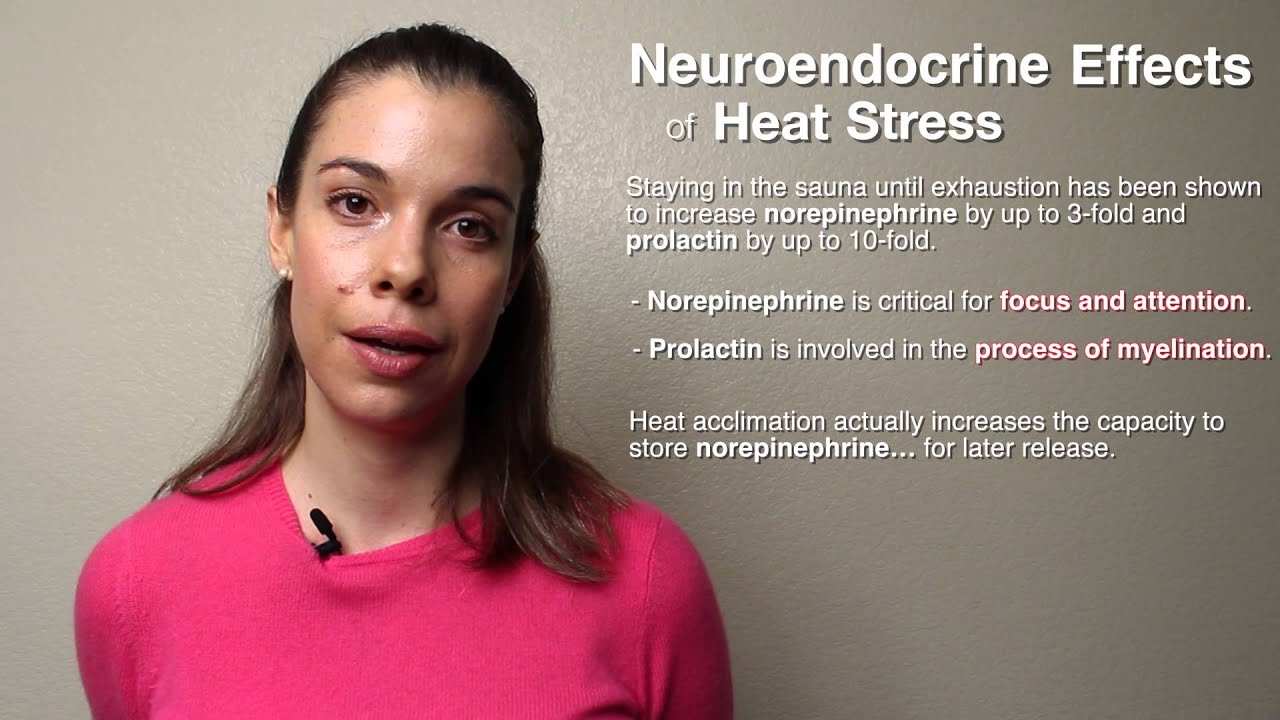
And heat shock proteins, as their name implies, are activated by heat stress, and sauna robustly activates them. There's been some studies looking at people that have sat in about a 163-degree Fahrenheit sauna for 30 minutes, they're able to activate their heat shock proteins about 50% over their baseline levels. So what are heat shock proteins and why do we even care about them? Well, heat shock proteins are a stress response protein, and we can talk a little bit more about what that means later. But essentially what they do is they help proteins inside of Uh-huh. Your cells, they help keep their 3-dimensional structure. So every protein in your body has a 3-dimensional structure and that's important for its function.
And these proteins in our body that are doing everything, all the work inside of our cells, they— they don't stay around forever. They eventually, you know, they get chewed up and degraded like in a— in a— in a garbage can basically, you can think about it. And so sometimes, you know, that doesn't happen properly and as we age, it definitely starts to go awry. And so heat shock proteins kind of help prevent that from happening. So they help prevent proteins from becoming disorganized and destructured because when they become that way, they tend to aggregate, and they can form aggregates. And these aggregates can then form plaques, and these plaques can form in places like the vascular system, or they can form in places like the brain.
So probably the classical example of plaques in the brain are amyloid beta-42. Plaques that are associated with Alzheimer's disease. So there's been a whole host of evidence in animal studies that have found that elevated levels of heat shock proteins can protect against the formation of amyloid beta plaques, and they can help prevent an Alzheimer's disease-like disease in animals. So there's been a lot of evidence of that, and that, I think, is one Interesting angle because saunas are well known to activate heat shock proteins. And once they're activated, they stay activated for about 48 hours. I mean, they're elevated for a while.
And, you know, so constant when you're talking about someone that's doing it 4 to 7 times a week, you know, we don't have empirical evidence looking at a person and measuring their heat shock proteins like each day. But— Yeah. You know, one could imagine that you would see that heat shock proteins are way elevated over what their normal baseline levels are. And so what you're having is almost this constitutive activation of this family of proteins that essentially help prevent plaques from forming, among other things. Yeah. So I think that's a really interesting angle as well. With respect to neurodegenerative disease.
And in fact, one of my first experiments when I was an early researcher at the Salk Institute for Biological Studies in La Jolla, I was doing some research on nematode worms, C. elegans, where we were injecting them with amyloid beta-42, the peptide fragment that's known to be associated with Alzheimer's disease causing these plaques in the brain. We're injecting them into these worms and into their muscle tissue and it— it causes the worms to become paralyzed because they have all these protein aggregates in their muscle and they can't move anymore. And it's— it's a really distinct phenotype. You look at them under a microscope and they're just— they're still but they kinda just move their nose around and feed but they can't move.
And so I did these experiments where I would boost up their heat shock proteins and like it totally corrected that, like these worms even though they had even though we were giving them amyloid beta-42, it totally corrected them from the paralysis because the amyloid beta-42 wasn't forming these aggregates. So, I always kind of go back to that original study that I, you know, had done with my own hands and it kind of made this aha moment. I'm like, wow, these heat shock proteins are doing something cool. Is that how you actually got interested in sauna use in the first place from that research? It's how I got interested in the molecular, some of the molecular aspects of sauna use.
I would say that the real way I became interested in the sauna, and this will take us into other brain function aspects, if you're okay with that. Sure. So when I was in graduate school, I lived across the street from a YMCA, and I used to go use the sauna almost every day before I would go into the lab and do my experiments. And as any graduate student or budding young scientist or even senior scientist will tell you, experiments fail. They fail all the time. And it's very stressful. It's very hard. So graduate school can be very hard because you're constantly being just bombarded down. It's like you're being hit, like, well, that didn't work. Well, that didn't work. Well, there goes 6 months of work, you know, and it's a very stressful time.
And what I started to notice was that using the sauna before going into the lab, my ability to handle stress was— is noticeable. Like, I was much more capable of handling stress. My anxiety was much lower. I mean, it was very, very noticeable for me to the point where I was like, something's going on here. I don't know what it is, but it's something. And so I started diving into the literature, you know, way back then in, like, You know, so that's where I kind of got into the sauna and the effects on the brain. And actually, in the publication that we published last year, I kind of riffed a little bit on some— I would say it's still more of a hypothesis than anything in terms of the reason for that.
You know, when you're in the sauna, you're dumping a bunch of endorphins, much like exercise. So it's sort of the same effect. So endorphins are those feel-good opioids that your brain is producing. The counter to that feel-good endorphin is the— it's called dynorphin, the endogenous counter to it. Dynorphin is that chemical in your brain that is responsible for making you feel dysphoria, not so good. So the kind of feeling you get when you're really hot, you're sitting in a sauna and you're like, not feeling good, like, this is hot. Or when you're going for your long-distance run and it's that feeling of of you just don't feel good, but you have to push past it, right? You push past it.
So dynorphin is something that's produced during that period, and dynorphin is actually involved in cooling the body. So I think that's partly why your body, your brain is making it when you're elevating your core body temperature. And the interesting thing about dynorphin is that although it's responsible for the dysphoric feeling, Uh-huh. It binds to a receptor in our brain called the kappa opioid receptor. When it binds to that receptor, it ends up doing this whole feedback loop, and this is like the beauty of biology, and the feedback loop is that those feel-good endorphins that we make bind to another type of receptor called the mu opioid receptor, and this is the same type of receptor that morphine and opioids also bind to that help make people feel good.
They help with pain and stuff. Well, kappa opioids, when you— when you bind to that receptor, that dysphoric feeling, it changes the mu opioid receptor. It basically makes them more sensitive to endorphins for a longer period of time. And so, you know, I sort of have this hypothesis that, like, when you get in the sauna and you, you know, you push past that, like, this feels terrible, it's hot, oh, it's hard, you know, you push past it a little bit. You get done with it, and then the endorphins that you make a day later, or 2 days later, or 5 days later from laughing at a joke, or for giving your loved one a hug, or whatever it is that's making you release endorphins, you're going to feel them better because they're more sensitive.
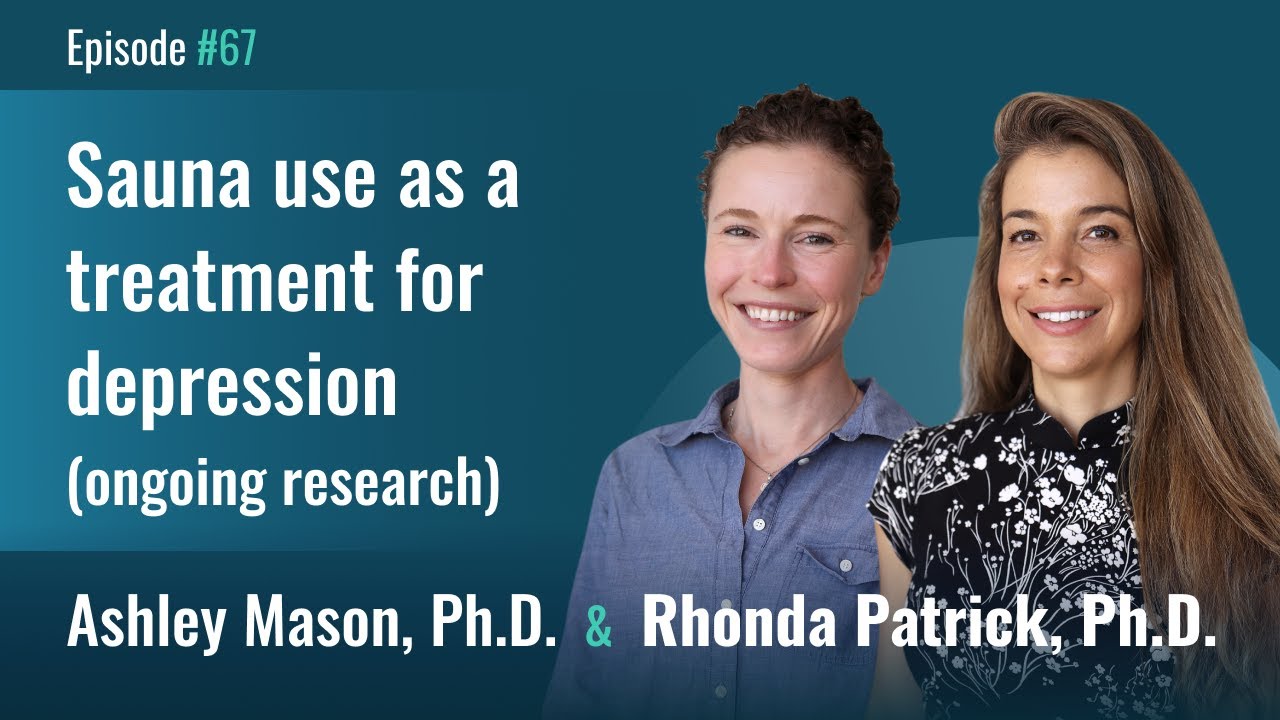
So that was a bit of a tangent, but that's sort of what got me interested in using the sauna. And as you mentioned and alluded to earlier, there's actually a lot of empirical evidence that has now come out. since that time looking at the effects of sauna use on mental health and specifically depression. So Dr. Ashley Mason right now, who I'm collaborating with, is looking at sauna use and people with depression that have not been able to manage it with different types of standard of care treatments. And so she's going off of work from her former mentor, Dr. Charles Raison, who found that basically elevating a person's core body temperature about 1 to 2 degrees was able to give people an antidepressant effect that lasted like up to 6 weeks with a single use.
And this was compared to a sham control. They used this device that basically made people feel like they were getting a little bit hot, but it wasn't hot enough. So it was a really great placebo control because people thought they were actually getting the treatment. Wow. Placebo controls are very important, particularly with depression studies, because a placebo response is a very real response. So that was a really seminal study looking at, you know, just a single session of sauna use and how it had a very robust antidepressant effect that lasted 6 weeks in these depressed patients compared to placebo control. Now, Ashley Mason is now— she's following up on this, and she's using an infrared sauna. And she's also— she's also elevating the core body temperature, you know, 1 to 2 degrees.
And she's doing now, instead of 1 session, she's doing up to 8 sessions. And we're looking at a variety of biomarkers to understand why that is. Like, is there— are there changes in the immune system? And there's some preliminary evidence to suggest there are. You know, there have been quite a few observational studies looking at sauna use and how sauna use is associated with lower biomarkers of like C-reactive protein. So these are markers of inflammation. Inflammation plays a major role in depression as well. Sauna use also can increase IL-10, which is an anti-inflammatory. So that's also been shown in an intervention study. So people that have used the sauna had their blood drawn before and after. There was some evidence that IL-10 was elevated after using the sauna.
So There's some suggestive evidence that you know the immune changes may be going on and changing it in a positive way, much like exercise. So exercise also it increases IL six, which is another cytokine that's kind of it's called a myokine. It's released from your muscle, and it can cause inflammation. But it's also this type of cytokine that can cause a very powerful anti-inflammatory response. So there's a we can talk about what this means. Hormesis. There's a bit of a hormetic. aspect to it. So, so that's also very interesting as well. Yeah. And with those depression studies and the hypothesis for why sauna use— wow, that's, I mean, it's amazing. One sauna use can have potentially a 6-week benefit for patients that are having depression.
Could part of the hypothesis be that they're Because you mentioned our endorphins and our internal opiate system and how sauna use can sensitize those receptors so the opiates, our own opiates inside of our body work better. Is that one of the hypotheses too of why this can help patients who are depressed? It is, it is. And we're trying to figure out how to measure that. Like, there's some tricks and stuff, and so we're trying to find some collaborators, and actually we do have some collaborators that are Potentially going to help us kind of figure out how we can test whether or not that is playing a role. It's certainly something I think is playing a role for sure.
I think there's multiple things at play here, and I think that one of them is the change in the opioid system in the brain for sure. But you can't measure opioid receptors and sensitivity and upregulation like you can in an animal, right? Like in people, like, that's not— Yeah. you know, we're not there yet with our technology. So that would be something that would be really cool. But there are some other things that can be measured in plasma. Interesting. So like what things are you guys currently measuring with regard to— Oh, we're doing a whole host. I mean, just like every kind of inflammatory panel you can imagine is being done, brain-derived neurotrophic factor. So that's another : Really interesting.
We are also measuring endorphins, but the brain-derived neurotrophic factor, BDNF as it's called, is something that's also elevated during exercise. A lot of people think of brain-derived neurotrophic factor as something that is very protective against brain aging. And I think there's a good bit of evidence to suggest that that's true, you know, so there Brain-derived neurotrophic factor, for those of you that are not familiar with it, is a growth factor that's produced in the brain that helps existing neurons survive. And it also— and there's some debate about this, but for the most part, it plays a role in certain brain regions in actually growing new neurons in adults.
So there's kind of this hope that brain-derived neurotrophic factor is a powerful anti-brain aging drug, and I think it is. But the other thing that it does is it plays a role in neuroplasticity. And what that refers to, like essentially what that refers to is having the connections in your brain kind of being able to rewire themselves with a changing environment. And that's something that's really hard for older people to do, but it also is a very important thing to happen when they're their stressful environment. Like, for example, pandemic hits. Everything changes. Life is completely different. Your ability to cope with that and your brain's ability to cope with that, there's some neuroplasticity. Younger people, they can adapt. They're adapting.
And that's because their brains are, as people like to call them, more plastic. So there's a lot more neuroplasticity involved in that. And there's an angle for depression in there as well, because if you can't adapt to the changing environment, then you might become depressed, you know, because you're not able to, you know, change your behaviors in a way that, you know, allows you to live and, you know, do the same things that you were doing before whatever changed it. So anyways, big tangent there, but neuroplasticity is also regulated by brain-derived neurotrophic factor, and it plays an important role in depression.
So we're also looking at BDNF, and there's been evidence that plasma BDNF correlates with with actual levels of brain-derived neurotrophic factor changing in the brain as well. And then, we're looking at a bunch of other aging-related telomeres, senescence, just all sorts of things. We're trying to— we're hoping to uncover some novel mechanisms here. Very cool. In addition to heat shock proteins, are there any other cellular repair mechanisms that sauna Well, I think, you know, like I mentioned, the IL-10 anti-inflammatory response, but also NRF2, which is another major— it's a major regulator of a variety of genes that are antioxidant, involved in antioxidant, involved in detoxifying things that you're exposed to in the environment, anti-inflammatory as well.
But the underlying premise here is that When you're in the sauna, you're stressing your body. And NRF2, heat shock proteins, these are— IL-6, you know, these are part of, you know, what's called a stress response pathway. Like these are genes in our body that respond to stress. And when they— the way they respond to stress is that they basically activate anti-stress pathways. These are pathways that are anti-inflammatory. These are pathways that are antioxidant. Yeah. These are pathways that are involved in autophagy, so the cleaning out of all the gunk inside of our cells, pathways that are involved in making new stem cells, for example, repairing damage to DNA. So these are all part of the stress response pathway.
And, you know, this whole stress response pathway kind of originates from this idea of hormesis, where A little bit of stress can activate these beneficial cellular response pathways, and that has just far-reaching effects. So humans evolved, we evolved in environments that we have been intermittently challenged with stress. You know, people, when they hear the word stress, I mean, they usually think about psychosocial stress, psychological stress, you know, financial stress. I'm not sure people think about sitting in a sauna or— Yeah. the other types of stress that are beneficial, the so-called eustress. So that would be exercise or fasting, food scarcity. You know, so people— I mentioned we've evolved with these intermittent challenges.
Well, you know, before the Industrial Revolution, before we had Instacart and we could order our groceries and have them delivered to us, like, we had to go out and hunt and find our food. We had to go gather, pick berries. We're beholden to, you know, the climate and/or, you know, what what prey were available, right, or there. And so there were times when people didn't eat because they didn't, you know, they didn't have anything they hunted or they didn't, you know, gather any berries or whatever. So there were times of intermittent fasting that occurred throughout human evolution as well as movement. You know, like we didn't have people delivering our groceries to us. We didn't get in an auto Uh-huh. Automobile and drive to the store. You know, we were out running.
We were chasing things. We were walking and gathering. We were moving. So, you know, we were stressing our bodies with these aerobic— aerobic types of activities. And also, you know, eating the plants, eating these berries, eating different types of plants, we were exposed to a variety of compounds in these plants that are called xenobiotics. And xenobiotics, you know, things like polyphenols, you know, flavonols, you have things like, you know, EGCG in green tea or curcumin that's found in turmeric root. These types of compounds also activate stress response pathways. So all these things activate genetic pathways in our body that not only help us deal with a little bit of stress of fasting or exercise. Uh-huh.
Or sauna, but also they help us deal with the stress of just aging and they're activated for a much longer period of time. And so you— so this idea of hormesis is that this little bit of stress can be so beneficial because you're having this powerful antioxidant response and anti-inflammatory response and you're activating things like autophagy, which is clearing out pieces of DNA inside your cell and little protein aggregates and you know, you're activating stem cells to, like, make more stem cells and replenish, you know, cells in your tissues. So the idea of this adaptive response, these stress response pathways, is that, like, humans, we were meant to activate them.
We're meant to challenge ourselves with types of stress like exercise, you know, intermittent fasting, sauna use, eating plants. And the reality is, is that in our modern world, : We stopped doing that, you know, we don't do that as much. And so, you know, people are getting these diseases of age, they're getting type 2 diabetes, metabolic disease, and cardiovascular disease, and Alzheimer's disease. So there's lots of these diseases that are happening in humans. And so this idea that, you know, there are these things that we can do in our lifestyle that can help prevent those from happening, or at least delay them through constantly activating all these beneficial pathways like heat shock proteins.
Heat shock proteins are activated by a variety of things, like they're activated by exercise, they're activated by eating broccoli because broccoli has sulforaphane in it. So, you know, heat is the most potent activator of it, but the heat shock proteins themselves are part of that response pathway. We mentioned how they're beneficial for preventing neurodegenerative diseases. They're beneficial preventing aggregates and plaques from forming in our arteries, but they've also been shown to prevent muscle atrophy. And this has been shown in a couple of human studies and a variety of animal studies where humans that just have local heat applied to one of their limbs, it basically prevented the atrophy of muscle. Like, there's 40% decrease in muscle atrophy from disuse of the muscle.
And this has been shown again in a lot of different animal studies where it's basically helping— helping you not, you know, degrade your muscle tissue. And so that has huge relevance for sarcopenia, for people that are, you know, disabled that can't go out for a run perhaps, can't, you know, exercise. They— they might be able to use the sauna as well. And the idea there, just increased blood flow to that limb? will help decrease atrophy over time? No, I think it has to do— because at least in the animal studies, they were trying to tease out the mechanism. And what was shown was that it was activation of heat shock proteins like heat shock protein 72 that was required for the preventing of muscle atrophy.
So, and that is, again, I think has to do with the fact of the protein folding and misfolding and how... You know, when you have that happening, proteins are you know it's preventing proteins from being degraded so much because they're having their proper three-dimensional structure, and so you're maintaining that muscle mass. You're maintaining it, and I anecdotally I can tell you like over the years, over the many years, I've had many injuries and stuff, and when I'm injured and I can't do my my normal workout routine, like the sauna is like it is such a saving grace for me, and. I haven't actually measured, you know, empirically my muscle, but like I can just feel like my muscles are not atrophying.
I mean, like you kind of tell, you know, when you don't work out and your muscles kind of start to get a little flabby. So I think it just has a lot of implications for sarcopenia and just helping maintain muscle mass as well. And you mentioned how in our modern world we are insulated from a lot of these intermittent stressors that we may have been exposed to, you know, 100, 200 years ago or more. And another thing with our modern world is we're exposed to more potential toxins than ever, certain toxins like, you know, aluminum or lead, heavy metals like that. In your review paper, you mentioned how sauna use can actually help excrete those heavy metals at a higher rate. Can you talk about that a little bit? It does. It does.
And it's interesting because, you know, a lot of these compounds like heavy metals or, you know, other types of compounds like, you know, phthalates or BPA, they can be excreted through sweat or they can be excreted through urine. And some are excreted more predominantly through sweat and others are more predominantly excreted through urine, for example. So the ones that are more predominantly excreted through sweat, you can imagine the robust effect that sauna use has on them. So cadmium being one where there's been studies looking at sweating from sauna use where there's like a 122-fold increase in sweating out cadmium. Another one is aluminum. Aluminum is also excreted quite well from sweat.
And you do excrete things like BPA and stuff as well, but, you know, the major pathway that BPA is eliminated is through urine. But, you know, so even just excreting some of these heavy metals, like cadmium is in like chocolate. I mean, it's just— it's like one of those little insidious types of things which is making its way into your body and you don't even know it, right? Yeah. And if you never sweat, if you never exercise, you're not getting rid of that stuff well, right? So, that is another sort of potential benefit with using the sauna as well is excreting some of those compounds and particularly some of those heavy metals like aluminum and cadmium.
I want to ask you about heart rate variability because it's become popular to measure this on smart jewelry, you know, watches and rings. Pretty much anything that can measure your pulse can probably measure your heart rate variability as well. So, why is heart rate variability important and how can the sauna potentially benefit it? So, I think heart rate variability is important because it's basically a marker of how well your heart can handle stress. When you're talking about like measuring the intervals between your heartbeats, if you have a higher heart rate variability, your heart is going to be able to handle a stressful moment like a heart attack better. That's kind of how I think about it in sort of simplistic terms. And heart rate variability is improved with exercise.
Like, that's pretty well known. Exercise is able to improve heart rate variability. And that's largely because there's an effect on the autonomic nervous system. So physical activity affects it. You have increased parasympathetic activity and lower sympathetic activity. And the sauna has been shown to do the same thing. So sauna use also increases heart rate variability and it— Yeah. it is, you know, activates the parasympathetic nervous system as well. Like, very, again, it's back to that the sauna mimics moderate aerobic, moderate-intensity aerobic exercise. And it's just the easiest way to think about it. And almost everything you measure that exercise does, you're going to see that with the sauna as well, in many cases.
So speaking of that, that's a good segue into this question, which is, Can sauna effectively replace exercise, or is it best to get both exercise and sauna? Is there any synergy between the two? Well, exercise is king for sure. You know, when it comes to the best possible thing you could do for your overall health. And what I'm going to speak to is a study that looked at cardiorespiratory fitness, and cardiorespiratory fitness is Essentially, it's a marker of— in my opinion, I think it's a good biomarker for biological, you know, age in a way, you know, because you can have someone who is in their 60s and they've been physically active and just led a really healthy and physically active life, and they could have a better cardiorespiratory fitness than someone who is, you know, 40, who is sedentary, overweight, just never exercises, you know.
So cardiorespiratory fitness is a really good marker of physical health. And there's been some studies analyzing cardiorespiratory fitness in people that exercise, do aerobic exercise, and comparing it to people that do sauna, and comparing them again to people that do aerobic exercise and sauna. And so the ultimate outcome of what, you know, that analysis showed was that people that did exercise and used a sauna had better cardiorespiratory fitness than people that did exercise alone or did sauna alone. So you might say to my— you might ask yourself, well, I'm already physically active, I exercise, like, why do I need sauna? Well, the answer is, do you want to be better? Do you want to have a better cardiorespiratory fitness? I know the answer that I have for myself, yes, I do.
: And so there does seem to be a synergy between sauna use and aerobic exercise where people that are doing both seem to have a better cardiorespiratory fitness. If you just compared sauna and exercise only, exercise was— you know, people that exercise had a better cardiorespiratory fitness than people that only did sauna and didn't exercise. But if you compare sauna to people that don't exercise, People that do the sauna have a better cardiorespiratory fitness than people that don't use the sauna. So I think, you know, the way I think about this is like there are people that cannot do physical activity. They're disabled in some way, shape, or form, and they just can't do it. And so, you know, here they have now a potential way to get some moderate-intensity aerobic exercise. Yeah.
: And improve their cardiovascular health and improve other aspects of their brain, you know, health as well. And so I think that is really awesome. But we also have people like me and a lot of people out there who are physically active and want to do everything they can to improve, you know, every biomarker of aging and every, you know, way of, you know, aspect of their health that they can. And I think that the sauna on top of that... Is the way to go. And, you know, you only have so much time in the day. But ultimately, you know, for people that have used the sauna, they know, like, you get in the sauna, and I personally use it for a variety of different ways. You know, I like to do it right after my exercise. I like to do it, you know, I have a Peloton bike right next to my sauna.
And I like to get on, get on my bike and then hop in the sauna. But Yeah. I also only have so much time in the day and it's like, well, if I can only do exercise or the sauna, mostly I'm going to choose exercise. But, you know, here's the thing, I also take science papers, I take my work in the sauna and I do things. I recite presentations in my brain and interestingly, something about the sauna also affects my memory where I remember things better after thinking about them in the sauna. And I have some theories as to why that is. You know, there's a lot of evidence that activating, you know, that you get that, you know, emotional arousal, and that helps kind of solidify a memory. Well, the sauna is kind of like stressing your body, and there's like an arousal aspect to it.
So I'm sort of wondering if that has to do with it. But, you know, people can get in that sauna and meditate as well. They can, they can listen to a podcast, listen to music. You can get your creative juices flowing. That's another way I use the sauna. I use it kind of like I use my runs where I get in the sauna and I hash through ideas. I think about them and I, you know, it really works. So I think that the sauna is great not only for, you know, your physical health and cardiorespiratory fitness, but you can also be efficient with it and you can use it You know, to not only improve your physical health, but to also help you with your work. You know, like there's, there's, there's things about it, I think, that, that are beneficial that aren't well known and well understood.
And I think it's a beautiful thing that phones don't work in a sauna. You know, it gets too hot for phones to work. So it's a, it's a built-in break for me to take a break from my phone, which I love. Totally. So important. Like, and people like have such a hard time doing that, you know. Exactly. It makes a difference. Well, before we get into more specifics about how we can potentially optimize our own sauna use or hot bath use, um, could you briefly mention some of the countries or cultures or, or Native Americans in this country, for example, that have used saunas or hot therapy for many, many years and, and maybe some of the lessons that we can learn from them? Well, certainly, I talked about Finland.
I mean, I've visited Finland and I've used their saunas there, and almost everyone has a sauna in their home. It's very ubiquitous. So, it's certainly a big cultural thing in Finland, Russian banyas. But, as you mentioned, Native Americans, they had their sweat lodges. I think that anyone that's— any culture that's used it has tapped into something and realized there's something here, there's something beneficial here, and that's why it's kind of stayed. In the United States, you know, saunas are like thought about like, oh yeah, my gym has a sauna. Like, that's kind of the way it is in the United States. I think things are starting to change. There are, there are a lot of saunas that are affordable now, and, you know, that even people can just plug into our regular normal outlet.
And then again, there's other modalities to raise your core body temperature like you mentioned, the hot baths. So, I think things are changing in the United States and as more people are becoming aware of the benefits of using a sauna, we're going to start to see it become more and more accessible where people are going to start having them in their houses. You know, I used to live in a really small apartment. And I had a sauna that was like 4 by 4 feet and it was in the bedroom. And, you know, this was like a 1-bedroom apartment and it was fine. You know, it was right— right there in the bedroom next to the bed. You know, this was a queen-size bed in a small room and so, you know, I think you kinda just— you kinda just make— you make room for it when it— when it comes to your health.
So I mean, what else do people use their bedroom for? Is that a traditional sauna or was it infrared? It was a traditional sauna. Yeah. So for people listening, you know, there's— there are a lot— most all of the studies that I've been talking about up until this point have come out of Finland for the most part. And they've used traditional saunas. So these are saunas that are— that have a heater in them that heats the ambient air around you. And that in turn then sort heats you up and elevates your core body temperature. In Finland, they also have hot rocks in the heater, and they pour water over these hot rocks, so they create humidity. A lot of the studies that I referred to also had a humidity between 10% to 20%, which also makes it feel hotter than it is.
And so, So, that's a conventional or regular sauna. Then, there's infrared saunas, and then you can get the far or near-infrared saunas. But, the biggest difference between the infrared saunas and the traditional saunas is that the infrared saunas are using thermal radiation to heat you up directly basically. And so, those types of saunas only get to around 140 or so degrees Fahrenheit, whereas the traditional saunas I was just talking about, most of them ones that people get in their home can go up to almost 200 degrees. Some can go higher, but mostly around 200 degrees Fahrenheit. So, that's the major difference between the infrared and the traditional saunas. A lot of traditional saunas, typically, you have to have an electrician come out and special things have to be done.
But now, there are traditional saunas coming out where you can just plug it into any outlet. And, do you think that the infrared saunas are Well, there's certainly not as much evidence to say with confidence whether or not they are. I think a lot of studies that have come out of Japan, they call it Waon therapy. They're using infrared saunas. They have a very specific protocol. These people are heated up to about 140 degrees Fahrenheit and they're doing this for 90 minutes. Okay. They're in that infrared sauna for a duration of time that's anywhere between 15 to 30 minutes, and then they're heated at— I mean, they're wrapped in a hot blanket, and then they're kept in that hot blanket for an additional 15 to 30 minutes.
And there's been some evidence using that type of infrared sauna, the Waon therapy protocol, you know, showing that it helps treat certain heart conditions. So it seems to be beneficial for cardiovascular health as well. : You know, to some degree, you know, I mentioned heat shock proteins were activated, you know, 50% over baseline, but this was at 163°F for 30 minutes. So perhaps, you know, my— like my in-laws have an infrared sauna and I've used it many, many times when I've gone to visit them. And for me, I have to stay in the sauna, in the infrared sauna for like an hour, and it has to be like totally maxed out before I can get in it. It just— because I'm so heat-adapted too.
So, there might be some changes, and we can talk a little bit about the protocols that were used in the studies by comparison there. But, so, I do think there are some benefits. I personally think traditional saunas are really great. But, you know, again, maybe we'll just get more evidence coming out that infrared saunas are You know, quite, quite beneficial as well. And the infrareds tend to be less expensive from what, what I've seen too, a little bit more affordable. Have you seen any, um, downsides to the infrared as far as, um, I don't know. I mean, infrared sounds, it's kind of like a scary word to some people. Like, what's going on with this? There's radiation, right? Have you heard of any, uh, potential downsides to skin or— No. No, I haven't.
Well, if you're comfortable sharing, I would love to get into details about your specific sauna protocol that you've adapted in your life. How often do you use the sauna? What temperature? What humidity? You know, how long do you stay in there? So let's get into some of those details. And I'll preface this by saying this is not medical advice. Anyone that is considering using the sauna, Good idea to check it out with your medical professional first in case you have a health condition that may make sauna use dangerous. But with that said, yeah, let's hear about what you've incorporated into your life. Sure.
Well, let's start with the studies and the data that I referred to and what the temperature, duration, etc. I talked a lot about frequency, 4 to 7 times a week, but I didn't talk much about temperature or how long people were in the sauna. So, in almost all of those studies, the temperature of the sauna— these were saunas in Finland and they were 174°F around, and the humidity was between 10% to 20% humidity, I think, something like that. And so, what was very interesting to me when I was looking at the data coming out of Dr. Jari Laukkanen's lab, is that duration in the sauna seemed to matter with respect to robustness of the results.
So I mentioned, for example, you know, people that use the sauna 4 to 7 times a week were 50% less likely to die from, like, you know, cardiovascular disease-related death. Well, that number was referring to people that stayed in the sauna greater than 19 minutes. So this was about 20 minutes. So 20 minutes is the sweet spot at about 174°F, you know, humidity 10% to 20%. People that sat in the sauna for like 11 minutes on average, their reduction in cardiovascular disease-related death from cardiovascular disease was like 8%. Yeah. 8% versus 50%, big difference there. So duration definitely matters with respect to the sauna. So that's kind of where I started out with my sort of, okay, what am I— what am I going to do? And then I also mentioned earlier about heat shock proteins.
I'm also very interested in activating my heat shock proteins. And so the 163°F for 30 minutes activated them by 50% over baseline levels. Yeah. And so, typically what I do, my protocol is I do— typically when I go for my long runs, I don't do sauna after, but I do do a jacuzzi at night. So, when I'm doing my Peloton bike, I do a lot of high-intensity interval training Pelotons. And, I crank the sauna up about an hour, an hour and a half before I'm going to get on that Peloton. And I get on the Peloton and then I go into the sauna immediately after. And I'm in the sauna for— and the sauna is typically around 186 degrees Fahrenheit for me when I get in there.
And I stay in there anywhere between 20 and 30 minutes depending on— mostly depending on how intense my workout was because I've already elevated my core body temperature from my high-intensity workout. Okay. And then there are times when I don't work out, I just get in the sauna, I end up staying in there longer for sure. I'm in there for 30 minutes about 186 Fahrenheit, but I'm heat adapted. Like I can't tell you like when I first started doing this, I certainly did not start out doing that. So definitely keep that in mind. I also like to put hot water. So I have my little bucket in I do put some hot water on the rocks. My hygrometer broke. When I was measuring it, I was getting about 20 to 30% humidity. And then once I got 30%, I was like, I couldn't handle it.
So I went back down to 10 to 20% humidity because it just feels so hot. So that's typically— those are my settings that I do. And Frequency, how often I do it, it really depends on what I have going on. So there are times when I'm like, I'm doing it 5 days a week. But then there's other times when I'm like twice a week. So I do try to— my baseline I try to keep is 4. I try to do about 4 times a week. But I have been doing a lot of jacuzzi. So I've been doing jacuzzi at nighttime. It's like the only time my husband and I have to ourselves, you know, once our son goes to bed. And so we like to go out in the jacuzzi, look at the stars, and it's very relaxing and time spent together.
But our jacuzzi is about 104°F, and there have been a lot of people have asked me, you know, can you get the same benefits from the sauna as you do from a hot bath? And we don't have all the empirical evidence to say that, yes, for sure, but we have quite a bit that seems to be accumulating. So a lot of the, you know, heat shock proteins have been shown to be elevated with hot baths. Brain-derived neurotrophic factors increase with hot baths. There's been some effects on depression as well and cardiovascular health. And so, you know, I might be going out on a limb here, but I would say I really think that hot baths and jacuzzis can have a similar effect. Now, staying in there, staying in the jacuzzi for 20 minutes with your shoulders submerged down is kind of key.
And some of the hot bath studies were the same. The hot bath studies used 104°F water, and they were— people were submerged from their shoulders down as well. But that's kind of my protocol that I've— that I follow. So you're typically using it to extend your workout. You're getting your heart rate up on the bike or going for a run. And then your heart rate remains elevated once you get into the sauna? I do. Yeah, that is— that's, that's kind of my jam. I do. But there are times when I get in there without, without working out. But like, yeah, that's, you know, sometimes it's like, okay, if I'm going to get in the sauna for 20 to 30 minutes, like I can, I can hop on my Peloton and just push it for 10 minutes, do a 10-minute high-intensity workout.
And, and just and take, you know, so basically what I'm doing is I'm taking my workout To the next level, you know, that's, that's what I feel like the sauna is doing where it's like, all right, I did my workout and boom, I'm going to go to the next level. So, um, and I always go back to that cardiorespiratory fitness study where it's like better, you know, better, better than exercise alone. Yep. And you mentioned the hot bath could potentially be a replacement for the sauna. How about just a long extended hot shower for people that don't have a bath? Yeah, that's an interesting question. You do, I mean, you get a lot of steam from showers as well. So, you know, I do think steam showers can have some beneficial effects.
I don't think it's going to be nearly anywhere near like the data that I mentioned, you know, just because you're just not getting as hot when you're taking a hot shower. Like even like when you're in a hot bath, like you can get really hot. You're just not getting quite as hot with a hot shower. But I do think there can be some benefits perhaps. I would— I would tend to go for the hot bath though if you have— most people do have a bathtub. I know not everyone does, but if you do have a bathtub, I would go for the hot bath over the hot shower. Got it. And how about hydration? How do you— what's your kind of hydration protocol before and after the sauna? Yeah, that's a good point. You know, you do lose a lot of sweat in the sauna, and with sweat you also can lose Uh-huh.
And sodium is the main one, but you can also lose, you know, some other electrolytes like magnesium, potassium. So I definitely try— I definitely stay hydrated, and I switch between— sometimes I'll have like a green juice that I make with like some kale, a little bit of lemon, some cucumber, or— so I'm, you know, I'm getting some of the magnesium and potassium and stuff. Or I'll do the Nuun, the electrolyte supplement Nuun. They have like a sugar-free version of it. Or sometimes I do some keto— it's a ketone salt and it's called Keto Start. And it has a lot of— it has like magnesium, it has potassium, it has a lot of electrolytes in it. And so I'll use that. In fact, I'm drinking that right now. But so that's typically what I do. Okay. Cool. After, after the sauna, not before. Got it.
And speaking of after the sauna, I know this is a whole nother discussion, but, um, cold therapy, you know, do you ever get in the cold shower or do a cold plunge, jump in a frozen lake after the sauna? Definitely don't jump in a frozen lake. Um, unless I'm visiting another country like Finland. Um, but, uh, yeah, I do. So, um, I do have a cold plunge and I also do like cold showers as well. I don't do it as frequently as I should. You know, there's a lot of benefits to the cold as well. And in fact, a lot of these cultures that we talked about earlier, like Finland and Russia, like they— a large percentage of them go from hot and then into cold. I don't go immediately into it because when you're in the heat, in this like a sauna, or a hot bath, vasodilation is occurring.
You're increasing your blood flow. You know, you're getting vasodilation. And then, the complete opposite happens when you go into a cold plunge or cold water, cold water immersion in some shape or form. You're getting— vasoconstriction is happening. And so, I've had some scary incidents where going from one extreme directly into the other without waiting. 5 minutes or a few minutes, you know, where my blood pressure or something just goes really low and I just like I get super dizzy and it's a little scary. Hmm. So I do think that exercising caution when going from extremes like that is important. So but I do, especially in the summertime, I like to run out into the cold plunge like, you know, a couple minutes after I do the sauna. After I like rest for a few minutes, 2 to 5 minutes.
You mentioned that you're really well heat adapted to the sauna because of all your regular use. Um, for someone that's kind of building their heat tolerance up, is there a way that they can kind of tell how long is too long in the sauna? Are there any kind of signs they should be looking for? Like, ooh, I should probably take a break and not push it. Yeah, I think, you know, your heart starts to really— your heart rate starts to get elevated. And, you know, you, you definitely wanna, to push past that point. Um, once you're heat adapted, but, you know, and you start to feel uncomfortable, but you reach a point where your heart's going really fast and you just feel, you just feel really, really uncomfortable. And I think that's, that's, that's the time I usually like to get out.
I think people, people should definitely listen to their bodies. I mean, getting out when you just experience the most slight bit of uncomfortableness, maybe not. Yeah. the way to go. But, like, you know, when you're in there, you know, like, you're feeling like this is— I'm getting really hot. And, again, like, once you hit the 20-minute mark, that's really all that's needed, you know, 20 minutes, 174°F. That's what all these studies have shown have been beneficial for reducing cardiovascular disease mortality and all-cause mortality and Alzheimer's and dementia risk. So that's, I think, a pretty good rule of thumb as well. Yeah. you know, 20 minutes. And you can also have a timer outside of your sauna. I used to do that.
I used to have a timer clock and I was like, okay, I reached my time. Um, so, so that's also another option. I think it's good to have an alarm because sometimes, you know, you can fall asleep in there. It's, it can be pretty comfortable, especially after you're heat adapted. So I'm a big fan of, of the alarm to let me know that like 25 minutes are up. Yeah. If you're prone to falling asleep in the sauna, you should always have someone with you in the sauna for sure. I would, I would— because that could be dangerous. Yeah, there, you know, and I know you wanted to cover this, Kyle, the contraindications of sauna use. Yeah, let's talk about that.
I mean, as you mentioned, like, this is not medical advice, and people absolutely should talk to their physician before doing any sort of type of extreme thermal stress. But the sauna has generally— it's generally speaking, it's safe for most people. It's well tolerated, most healthy people, even people that have stable cardiac disease can be. And if you have cardiac disease, you have to talk to your physician, but I'm just— I'm speaking to the literature here. You know, again, it's easier for people that can't perform physical activity. I found it easier for, like, my mom, who has sort of been a sedentary person most of her life. I can more easily get her in the sauna than I can on the Peloton. So I think there's a, you know, a use for that.
But There are people— there are some things and people that should not get into the sauna or should definitely run everything by their physician. Alcohol should never be used in the sauna or before going in the sauna. And, you know, that can lead to— like, that can be deadly. It can be very, very dangerous. So alcohol is a big no-no. People that are elderly that are prone to like really low blood pressure. It could be dangerous for them to get in the sauna as well. People that have had a recent heart attack or have some cardiac diseases like unstable angina pectoris or severe aortic stenosis, that can be contraindicated so that sauna would not be good for them.
Now, people that have had a heart attack that have— it's been, you know, a while and have been stable, like, talk to your physician because there have been studies showing that sauna use can help with that. But again, it's like after time has passed. So that would be something to talk about with your primary care physician. How about kids or pregnant people? Oh, great question. Yeah, and I think we also cover this a little bit in our review article. Children don't have the same type of thermal regulation mechanisms in play that adults do. So like kids aren't sweating to cool themselves like adults do, like the same. I'm not saying kids don't ever sweat. They just, they're not profusely sweating to cool themselves down.
And so sauna can, you know, anything that's more than 5 minutes can be dangerous for a child. And certainly like really young children, you know, I think that's— in places like Finland, I know like some children are using the sauna. Yeah. But, you know, they have these cultural sort of guidelines there where, you know, at a certain age and it's like only a couple of minutes, you know. So I've— I'm not putting— I'm not getting my son in the sauna. I'd rather have him go for a hike with me or, you know, get exercise another way just because I don't want to take any risk. And then pregnant women, again, I certainly stayed out of the sauna the entire time that I was pregnant.
And I think it's probably best because, you know, there's been a lot of studies that have come out over the last few decades with jacuzzi bathing, you know, women that are doing jacuzzi bathing that are pregnant, and it can lead to fetal abnormalities. So, I think that's a high-risk thing for pregnant women. And, you know, I'm sure you'll find pregnant women in Finland who said they use the sauna, but why take the risk? You know, just take that 9 months off. At what age will you allow your son to go in the sauna? That's a good question. You know, he's 4 years old right now, and, you know, maybe I could think about it in another 4 years, about, you know, 8 or 9. And at that point, it's still going to just be a little Yeah. Build, build it up slow. Yeah.
What about, uh, continuous glucose monitors? These are really popular with some people right now. And I've talked to a few people that say that when they use the sauna, their glucose levels will rise sometimes significantly in the sauna. Um, have you noticed this as well? And what do you think's going on here? Um, I have noticed it. I do. I also wear continuous glucose monitor. Um, A lot of the time. I think there's a few possibilities here. So for one, it goes back to normal shortly after cooling down. I think because you're sweating so much, you could possibly be changing— you're basically changing the concentration of the sugar in your blood. It could just be sort of transiently seems like it's higher because you're sweating out more water from your plasma. That's one possibility.
You know, the other possibility is I've seen some studies where that seems to only happen when you go into the sauna in a fed state rather than fasted state. So— and I don't exactly know Yeah. You know, because— because the long-term sauna use is associated with improved fasting glucose and improved insulin sensitivity. To me, at the end of the day, that's what's important. And so I think there's— there may just be some kind of funny thing going on. Honestly, I had— it might have a lot to do with the sweating when you're in there, but it's just— it's not something I'm really concerned about. It is something I've noticed though. Yeah. And that makes sense that if you're sweating out volume, that the concentration of sugar is gonna appear higher temporarily. Right.
But that's not, it's not a real thing. It's just concentration. Yeah. Yep. Um, what are some limit— you've already talked about some, um, but what are some of the limitations of the current sauna, um, research that's available and what research do you hope, um, is completed in the coming years about sauna use? I think— so with any observational study, you know, there's the limitation of you can never really establish causality. I will say this, you know, all of the work coming out of Dr. Jari Laukkanen's lab, they correct for so many confounding factors. I mean, we're talking— they're looking at cholesterol levels, they're looking at exercise, cardio, you know, exercise.
And physical activity, they're looking at all the usual suspects, you know, where you have socioeconomic status, education, and they're looking at gender. They look at heart disease, preexisting heart disease. They look— I mean, hypertension, all those things. So after all those things are corrected for, sauna use is still associated with a lower, you know, cardiovascular death, you know, mortality associated with cardiovascular disease and all-cause mortality, etc. And again, the dose-dependent nature of it also really, I think, speaks to it being more causal because you're seeing the more frequent it happens, the more robust the effect, and even at the level of the amount of time in the sauna.
And that's what really convinced me when I saw that data, like, look through one of the graphs and I was like, oh, so not only is it 4 to 7 times a week, but the people that did it 4 to 7 times a week and only stayed in there 11 minutes, only had a fraction of the robust effects that people that did it 4 to 7 times a week and stayed in there 20 minutes. So the limitations are what they are with any observational study. However, I feel like this data with the dose-dependent nature of the frequency and duration really strengthened the data, in my opinion, in addition to correcting for some very important confounding factors. I would like to see more research on saunas.
I'd like to see like, you know, randomized controlled trials with more people where they're doing more sauna research, not only in Finland but in the United States. You know, I'm so excited that Dr. Ashley Mason is doing this study with sauna use and depression, but we need more of it. We need more people looking at that. Like, imagine if we have an alternative treatment for depression In many cases, these people have major depressive disorder that, you know, they're basically not able to be treated by, you know, SSRIs or other pharmacological treatments. It's not working for them. So, you can imagine a world where people can have saunas in their home or they can go to some kind of center where they can use the sauna and it helps treat their depression.
And, The side effects are, like, reduced death from cardiovascular disease and reduced Alzheimer's disease risk. I mean, we're talking beneficial side effects, right? So I just— I really want to see this area of research explode. Like, it's really been, you know, there's been more and more research coming out, but there's, you know, NIH isn't funding this research mostly. I think Ashley's now just landed one of her first NIH grants for the sauna. Wow. But she had to do a whole pilot study to get there. And so I'd like to see, I'd like to see, you know, more research done and more randomized controlled trials. And I think that totally can be done. It just hasn't been. And of course, there's tons of limitations with what I'm about to say because it's a population-based effect.
But it's interesting, I just saw an article that Finland was rated as the happiest country overall. And I know there's almost as many saunas as people in Finland. So interesting association there that may or may not be related to saunas. There's a lot of other factors at play, but I think, I think the Finns have some good things going on with their, uh, their sauna use. Definitely. Yeah. Anything— this has been so informative. Any other, um, things that we didn't cover that you want to, um, cover or, or speak about? What else? You know, I think we covered most of it, you know, the awesomeness of the heat shock proteins as well.
You know, heat shock proteins also, people that have a genetic, what's called a polymorphism, so this is like a mutation that happens in a certain percentage of the population that's like more than 1% in their heat shock protein 70. That makes them have a more active heat shock protein, they're— they on average live 1 year longer. If they have 1 copy of that, they live 1 year longer than people that don't have any copies. And if people have 2 copies, in other words, they got 1 from their mom and 1 from their dad, making it even more robust, they live on average 2 years longer than people that don't have an overactive heat shock protein 70. So I just think it's— I like understanding the molecular mechanisms and, you know, I know that sauna robustly activates heat shock proteins.
So I think we covered a lot of really important stuff in there as far as I could think about. Definitely. That was great. I learned a ton. And for people that wanna hear more from you, where can they find you besides your YouTube channel and website, FoundMyFitness? Yeah, we have a podcast on Apple Podcasts and Spotify as well for people that like to listen to podcasts. We interview experts in the field of aging or sauna research or, you know, nutrition. So we put those podcasts on Apple Podcasts, on iTunes, and also on YouTube. We have a lot of slides and graphics much like you guys do at MedCram where we try to site information and put extra information on there. So, it's foundmyfitness, all one word, and that's our YouTube channel.
So, that's probably our main one is the YouTube channel. I also do short videos. I just put one out on the metabolic and brain effects and benefits of cold exposure. So, I know we didn't get into that today. We sort of touched on it, but there's also a lot of metabolic and brain benefits of cold exposure as well. So, we just We just put out a video on that like yesterday, I think, or 2 days ago. So that's where you can find me. Well, Dr. Patrick, thanks so much for all the information. Really appreciate it and hope to chat again sometime soon. Absolutely, my pleasure, Kyle. Thank you so much for having me on. I'm a big fan of MedCram.
Supporting our work
If you enjoy the fruits of
 , you can participate in helping us to keep improving it. Creating a premium subscription does just that! Plus, we throw in occasional member perks and, more importantly, churn out the best possible content without concerning ourselves with the wishes of any dark overlords.
Sauna News
- A single Finnish sauna session temporarily increased circulating white blood cells.
- Hot water immersion more than doubles core body temperature rise compared to traditional saunas, potentially boosting vasodilation, cardiac output, and immune activity.
- Regular infrared sauna use increases blood vessel density in aged muscles by 33%, though muscle size, strength, and protein synthesis remain unchanged.
- Post-exercise hot tubs and saunas show minimal, inconsistent benefits in exercise performance enhancement, despite potential physiological effects.
- Post-exercise infrared sauna use contributes to a 25% increase in jump height and a 6.8% peak power boost in female athletes—a potential tool for enhancing power production.