Q&A #80: Does Nattokinase Protect Your Heart?—What the Evidence Shows
Get these episodes in a convenient podcast format.
These live recorded Q&A episodes make great companion listening for a long drive. You can find these Q&A episodes alongside great interview aliquots and other special members-only episodes on The Aliquot, our official premium FoundMyFitness podcast.
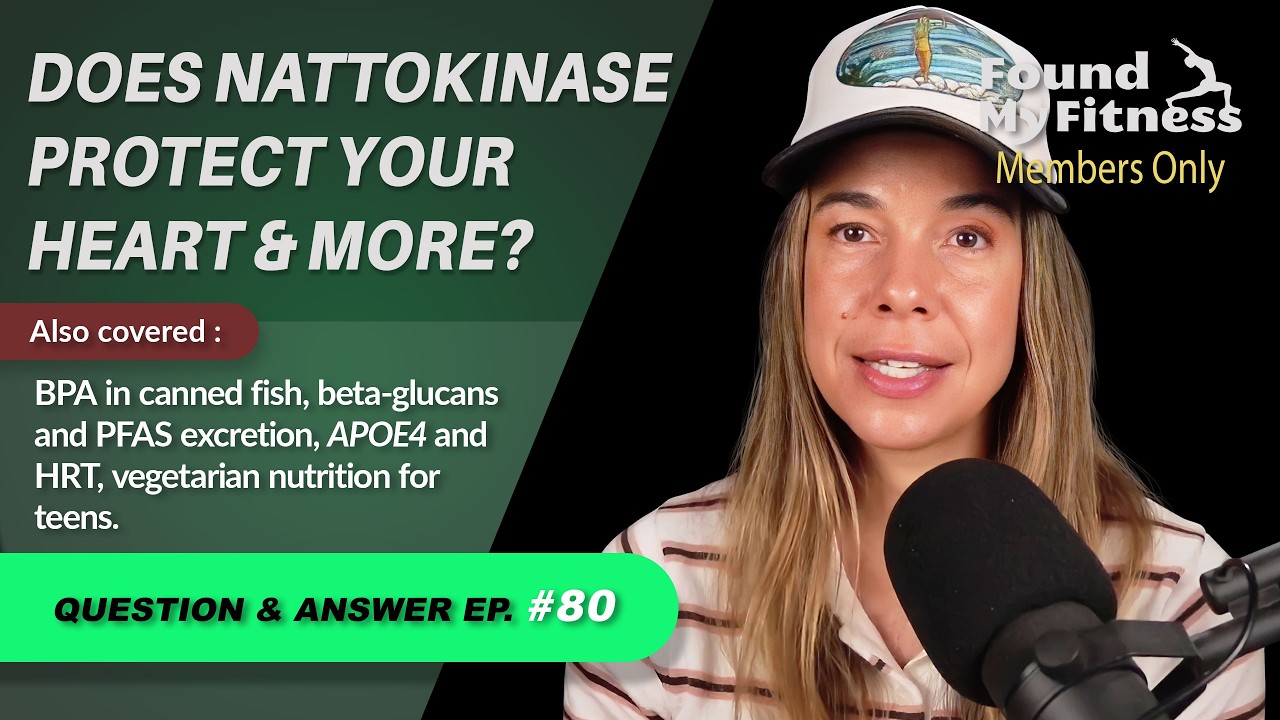
In this Q&A, Dr. Rhonda Patrick discusses whether nicotinamide riboside is overhyped, nattokinase for heart health, nutrition for vegetarians and vegans, and APOE4-related responses to hormone replacement therapy.
Timestamps include:
-
Q: Does Avmacol help reduce mercury exposure from fish?
-
Q: Is nicotinamide riboside overhyped?
-
Q: How do you choose the right probiotic?
-
Q: Can you meet your potassium needs from food alone?
-
Q: Is nattokinase worthwhile for heart health?
-
Q: Does balancing zinc and copper intake reduce macular degeneration risk?
-
Q: How can a vegetarian teen get adequate nutrition?
-
Q: How do women carrying APOE4 respond to hormone replacement therapy?
Can nattokinase help prevent heart attacks and strokes?
Nattokinase often comes up in conversations about heart health, especially because of its potential effects on blood clotting and atherosclerosis. At first glance, the mechanism sounds compelling. But when you look closely at the human evidence, the picture becomes much more complex and nuanced. So what does the research actually say, and how much confidence should we place in it?
What is nattokinase and why is it considered promising?
Nattokinase is an enzyme produced by the bacterium Bacillus subtilis var. natto during fermentation. It is naturally present in natto, a traditional Japanese food made from fermented soybeans, and can also be produced via industrial fermentation for use in supplements. What makes this enzyme particularly interesting is its fibrinolytic activity, meaning it helps break down fibrin, a key protein involved in blood clot formation. This activity is quantified in fibrinolytic units (FU), which are also used to standardize dosing in supplements.
-
Beginning of Q&A
-
-
Q: Which sardine brand do you prefer?
-
-
Q: How do steel-cut oats, oat bran, and oat milk compare for beta-glucan content? 1
-
Q: Are you still taking PQQ?
-
Q: Have you noticed any benefits from urolithin A?
-
-
Q: Is nutritional yeast a meaningful source of beta-glucans?
-
Q: How much vitamin K do you take, and would that change with age?
-
Q: Is decaf coffee safe during pregnancy?
-
-
Q: Should vitamin K1 and K2 intake be adjusted with age?
-
Q: Can you meet your potassium needs from food alone? 1
-
Q: Is there evidence for limiting vitamin D intake to 2000 IU per day?
-
-
-
-
Q: Which creatine brand do you use?
-
-
-
Q: What is your opinion on methylene blue?
-
Q: Are refrigerator water filters adequate?
-
Q: How much omega-3 should APOE4 carriers take?
-
Q: What omega-3 intake is needed to reach an 8% Omega-3 Index? 1
-
Q: Do you add minerals back to your reverse osmosis water?
-
Q: Why did you switch omega-3 supplement brands?
-
Q: Is the Waterdrop countertop reverse osmosis filter effective?
Every month, Rhonda hosts a live chat with FoundMyFitness Premium Members.
Don't miss the next one.
Watch previously recorded Q&As with Dr. Rhonda Patrick
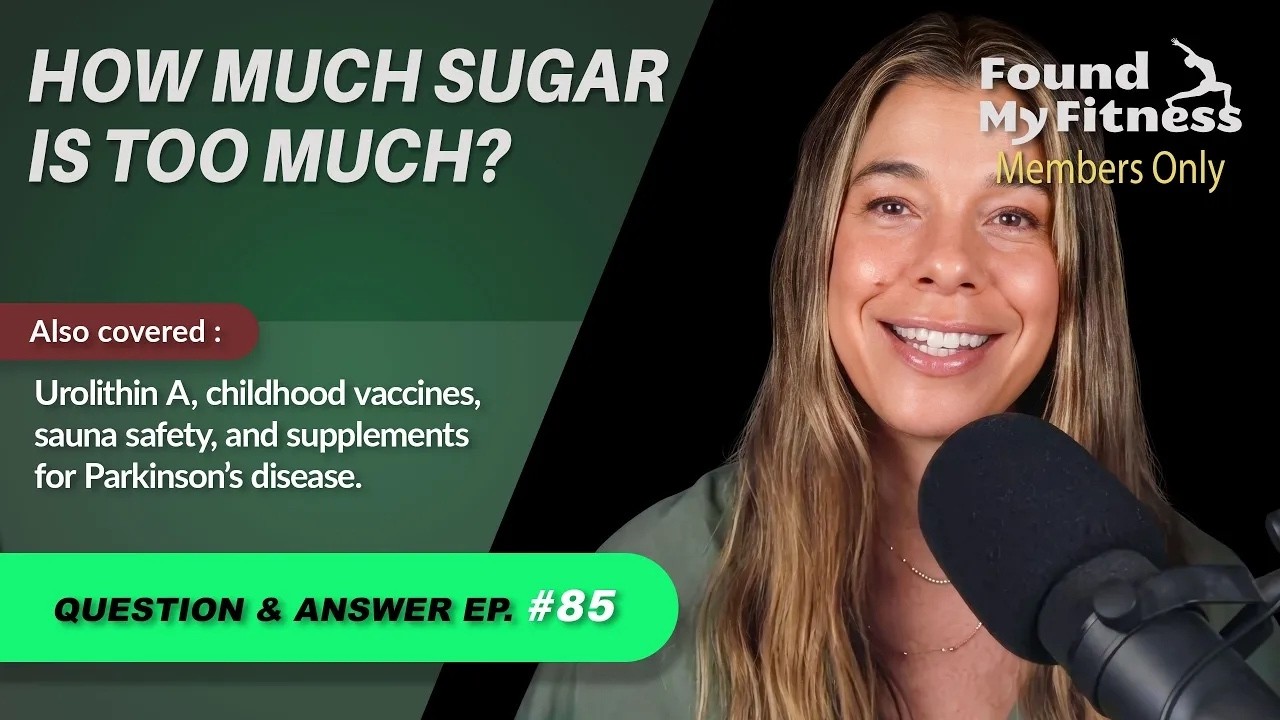
Q&A #85: How Much Sugar Is Too Much—and Can Supplements Help Parkinson's?
Dr. Rhonda Patrick discusses urolithin A, postmenopausal protein, microplastics, high-temperature saunas, sugar intake, and supplements for Parkinson's disease.
Q&A #84: Chemical Sunscreen Safety—Plus What Rhonda Eats
Dr. Rhonda Patrick discusses sunscreen safety, HIIT & brain health, diet, omega-3s, urolithin A, sulforaphane, homocysteine, peptides, and CoQ10.
Q&A #83: Does Glucosamine Worsen Alzheimer’s Disease?
Dr. Rhonda Patrick discusses glucosamine and Alzheimer's, blood flow restriction, beta-glucan fiber, creatine, collagen, red light therapy, and curcumin.
Q&A #82: Organic Food, Pesticides & Glyphosate—What Actually Lowers Exposure?
Dr. Rhonda Patrick discusses organic produce, fasting-mimicking diets, sleep, sauna, sunscreens, red light therapy, reverse osmosis water, and fiber.
Q&A #81: Beta-Glucan vs. Psyllium—LDL Reduction, PFAS, & Gluten
Beta-glucan versus psyllium for lowering LDL, PFAS reduction, creatine and caffeine, urolithin A, exogenous ketones, IVF, Botox, and sauna.