How Dr. Rhonda Patrick Builds Her Supplement Routine
The Omega-3 Supplementation Guide
A blueprint for choosing the right fish oil supplement — filled with specific recommendations, guidelines for interpreting testing data, and dosage protocols.
You'll also receive updates from Rhonda & FoundMyFitness
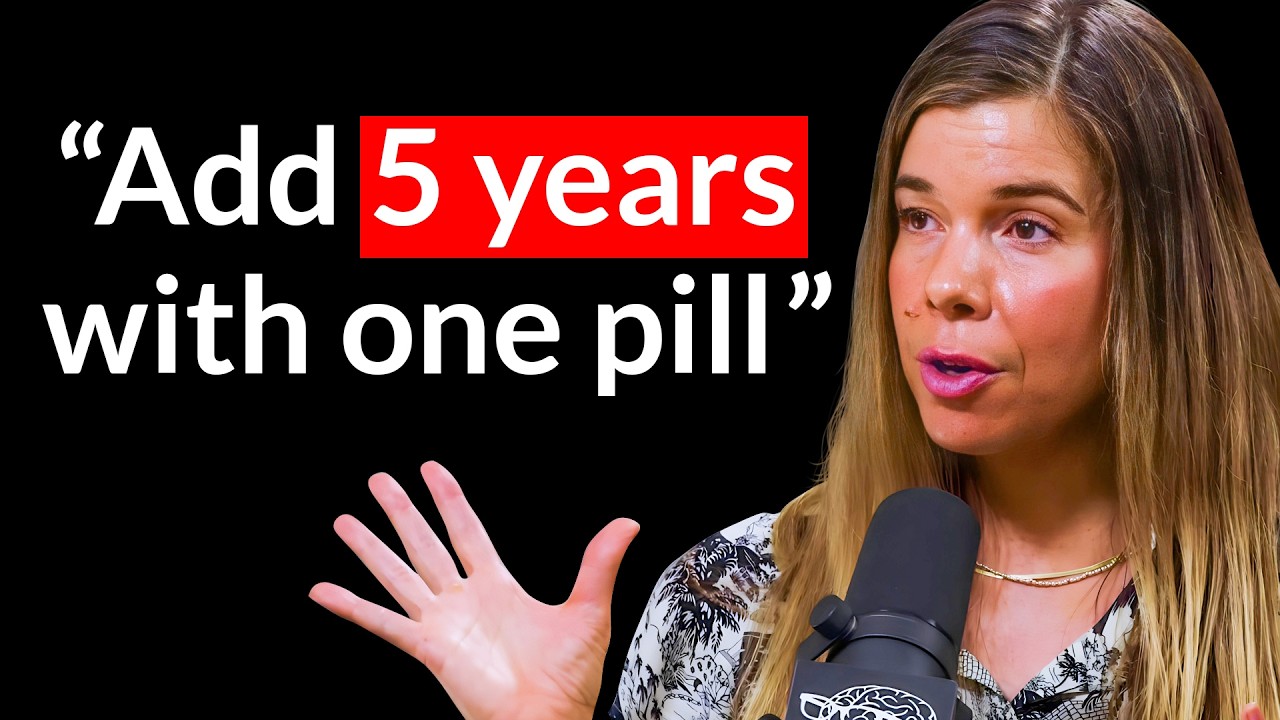
In this clip from Q&A #71, Dr. Rhonda Patrick walks through her current supplement routine and explains how it has changed with her diet, training, sleep, and laboratory results. Her list includes omega-3s, vitamin D, magnesium, a multivitamin, creatine, melatonin, sulforaphane, and selected performance supplements. She presents this as a personal routine rather than a universal prescription.
Dr. Patrick explains why dose and timing depend on the intended outcome. She lowered her omega-3 intake after dietary changes, uses creatine for muscle and brain support, and takes melatonin near bedtime. In a small randomized crossover trial, a single high dose of creatine improved selected cognitive outcomes during acute sleep deprivation, adding context for her interest in higher doses during travel or sleep loss. [1]
The broader decision process is to identify a specific need, choose products with transparent formulation and independent testing, and reassess as circumstances change. Dr. Patrick also states that she has no financial affiliation with the brands she names. Individual health conditions, medications, nutrient status, and treatment goals can change whether a supplement is appropriate.
- ^ Gordji-Nejad, Ali; Matusch, Andreas; Kleedörfer, Sophie; Jayeshkumar Patel, Harshal; Drzezga, Alexander; Elmenhorst, David, et al. (2024). Single Dose Creatine Improves Cognitive Performance And Induces Changes In Cerebral High Energy Phosphates During Sleep Deprivation Scientific Reports 14, 1.
So the first question that was submitted was submitted by Gloria, and Gloria asks, can you please update us on your supplement routine? When you take your supplements, the timing of it, if you take them with certain foods, you know, all that sort of stuff, like whether or not basically you're taking your supplements throughout the day and which supplements that you're taking in the morning versus evening. So I'm going to go ahead and break that down for you. In the morning, I take 2 5-gram doses of creatine. Usually, I'll take them separately, like in my coffee. And then I take 1 5-gram dose of glutamine. And then on days where I'm doing endurance, or maybe days when I'm doing a podcast or a Q&A like today, I'll take a tablespoon of beetroot extract. And that's from NOW brand.
I like their beetroot because It's NSF certified, so it's basically really clean. It doesn't have a lot of contaminants in it. Same with creatine and glutamine. They're both NSF certified, and those are from Thorne. And I don't have any affiliation with these brands, by the way. And then with breakfast, I take about 1 gram of fish oil, alpha-lipoic acid, and then I take my Avmacol, which is the sulforaphane. In the afternoon, I take my PQQ and my CocoaVia and my multivitamin, and that's usually with my lunch. And in the evening, I take— this is after dinner— I take my vitamin D, I take my magnesium, my K2, I take another gram of fish oil, I take 3 milligrams of melatonin, I take my vitamin C at that time, and then I also take my ubiquinol.
And my ubiquinol, I've shifted to the pure encapsulations VesiSorb ubiquinol because the VesiSorb dramatically increases the bioavailability. And by the way, the doses of the other things are pretty standard as well. So, with my vitamin D, I'm taking about 2,000 IUs of vitamin D because I get 2,000 IUs in my multivitamin, which is one by Pure Encapsulations. And then, with my magnesium, I'm taking magnesium glycinate, the Pure Encapsulations one. I think it's like 125 milligrams. If I remember correctly. So, that's kind of my vitamin breakdown. And then, oh, I also forgot to mention that I take myo-inositol in the evening as well, a scoop of it, and that's Pure Encapsulations. So, some people are asking about creatine being broken down in coffee.
So, I talked about this with Dr. Darren Candow, and he really didn't think that the temperature of coffee was a problem and that it was fine to put it in the coffee. He thinks that like it's really if you're just like having it for a really long time and just boiling, boiling, boiling hot water, that might break down the creatine. But but he didn't think it was a problem in the coffee, and it's just the easiest for me to do. So that's why I do it. There's another question about melatonin. So I take three milligrams. I take it for a couple of reasons. One, it helps with my night terrors. So that's why I take a higher dose of like three milligrams. You can take a 1.5 milligram dose or even a microgram dose and be fine. But for me, I need a higher dose.
I was even doing higher than that, but I was able to basically wean it down and see what the lowest minimum effective dose was for me. And it was 3 milligrams. I also like it because it's an antioxidant. It protects things like, if you're a woman, it protects Eggs, like so egg, egg. It seems as though it seems to help with basically preventing damage to eggs, you know, in your ovaries, and it's also been shown to be an antioxidant in the brain. So I do think there's benefits to taking melatonin, and I don't feel it's addicting at all for me. I can, in fact, I do take period go through periods without taking it. It's just when I'm really stressed and I have the night terrors that kind of comes back.
Heather's asking if she'd like my opinion on whether or not the new sort of news that has come out about taurine perhaps even help playing a role in promoting cancer, what my thoughts are on that. I'm not really worried about it, to be honest. I think it was a— I mean, it was just like a very in vitro kind of study. Doses were completely irrelevant, and I just right now I have no concern about about taurine causing cancer. Okay, so the next question was it's another rapid-fire question. It was submitted by John. John wants to know why I lowered my omega three dose. I think I was taking four grams, and now I'm doing two. So the real reason is my I eat a lot of salmon, and my omega three index was just so high, and I just didn't feel any need for it to be like close to sixteen.
So, you know, getting down anywhere to the 10%, 12% range, I think, is plenty. So I just— that was the main reason. Sorry, Mitchell asks whether— wants to know what creatine supplement I use and how many grams per day, and do I mix it with protein powder or just by itself? And I already mentioned that. So I will take— usually I take 5 to 10 grams of creatine per day. On days when I'm just doing a run, I really only take 5 grams. So I run— I only do runs twice a week. So most of the time I'm taking 10 grams, and some days I take 15 to 20, and those are days that I'm traveling, I don't get enough sleep, I need to sort of have more cognitive function going on while I'm having a lack of sleep.
And I do find that taking a higher dose, doubling my dose up, to about 20 grams seems to, seems to really help me in those specific scenarios. I don't take the 20 grams at once. I do 10 and 10. For people that have GI issues, taking it with food, particularly like carbohydrates, seems to help. I don't have any GI issues, so I don't take my creatine with food. I just put it in my coffee. And again, I use the Thorne brand because Thorne is NSF certified. It's really the only brand that I found that doesn't have a, you know, Prop P65 warning when you're having it shipped. If you have anything shipped to California that has lead over a certain amount, it'll give you that warning. And that's because it's NSF certified. And so it's really clean. So I really highly recommend getting an NSF certified creatine supplement. And again, Thorne is my go-to. Thorne also has travel packets that I like as well that I use when I'm traveling.
Supporting our work
If you enjoy the fruits of
 , you can participate in helping us to keep improving it. Creating a premium subscription does just that! Plus, we throw in occasional member perks and, more importantly, churn out the best possible content without concerning ourselves with the wishes of any dark overlords.
Supplements News
- Omega-3 fatty acid supplementation benefits people with depression.
- Alpha-lipoic acid supplements promote weight loss in obese people who are otherwise healthy.
- Study reveals a sixfold decrease in C-reactive protein levels among obese women who took omega-3s during pregnancy.
- Curcumin reduces pain associated with osteoarthritis of the knee.