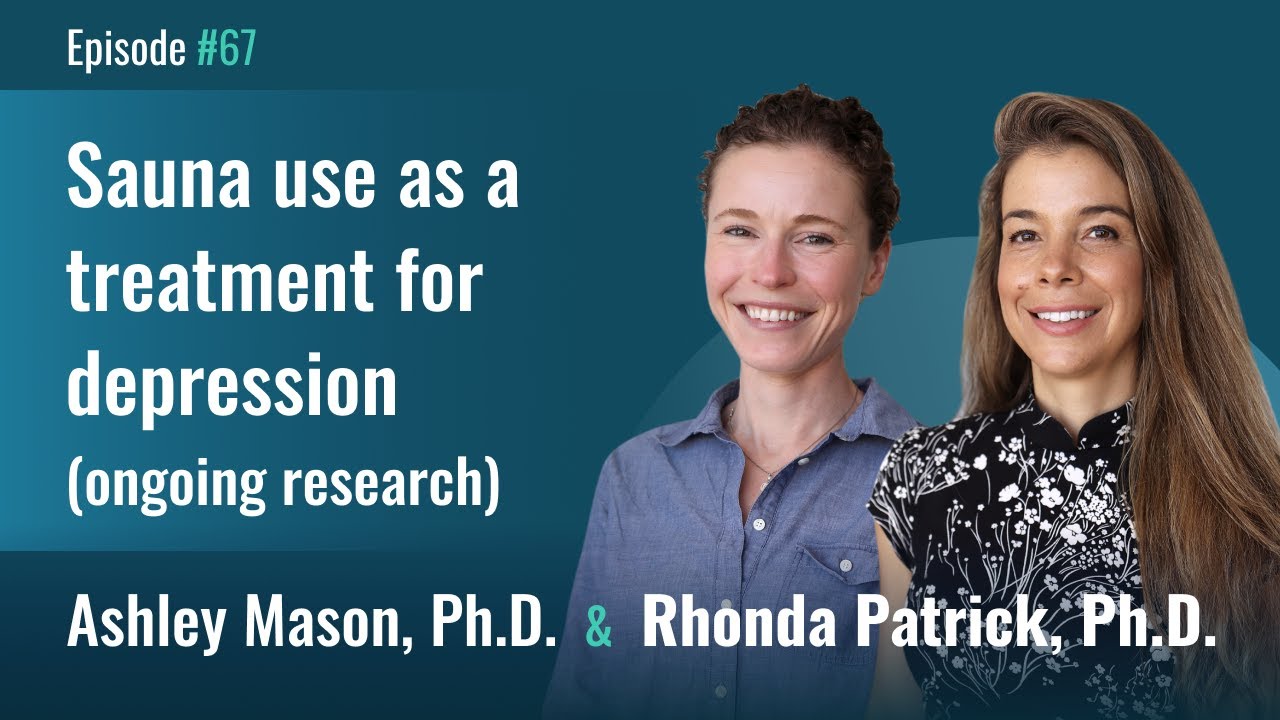
#48 Sauna Use as an Exercise Mimetic for Heart and Healthspan
This episode is available in a convenient podcast format.
These episodes make great companion listening for a long drive.

The Omega-3 Supplementation Guide
A blueprint for choosing the right fish oil supplement — filled with specific recommendations, guidelines for interpreting testing data, and dosage protocols.
You'll also receive updates from Rhonda & FoundMyFitness
Several studies have shown that frequent sauna bathing (4-7 times per week, 174°F for 20 min.) is associated with a 50% lower risk for fatal heart disease, 60% lower risk for sudden cardiac death, 51% lower risk for stroke, and 46% lower risk for hypertension. Just a single sauna session has been shown to lower blood pressure, improve heart rate variability, and improve arterial compliance.
Some of the positive benefits of the sauna on heart health may have to do with similar physiological changes that also occur during physical exercise. For example, there is a 50-70% redistribution of blood flow away from the core to the skin to facilitate sweating. You start to sweat. Heart rate increases up to 150 beats per minute which correspond to moderate-intensity physical exercise. Cardiac output (which is a measure of the amount of work the heart performs in response to the body’s need for oxygen) increases by 60-70%. Immediately after sauna use, blood pressure and resting heart rate are lower than baseline similar to physical activity.
Sauna as a potential tool for longevity and healthspan
In addition to lowering cardiovascular-related mortality, sauna use may have benefits for overall longevity. For example, using the sauna 2-3 times per week is associated with 24% lower all-cause mortality and using the sauna 4-7 times per week is associated with 40% lower all-cause mortality. Sauna use is also associated with a lower risk of age-related diseases like Alzheimer’s disease.
People that used the sauna 2-3 times per week had a 20% lower risk of Alzheimer’s disease, and those that used the sauna 4-7 times per week had a 60% lower risk of Alzheimer's disease, compared to men that used the sauna 1 time per week.
Some of the longevity benefits of sauna use may have to do with an increase in heat shock proteins, which is one of the protective adaptive responses to heat stress. Heat shock proteins have been shown to prevent and slow the progression of neurodegenerative diseases like Alzheimer’s disease and Parkinson’s disease, slow human muscle atrophy, and are associated with human longevity.
The effects of heat stress on longevity have also been shown in lower organisms including flies and worms, increasing their lifespans by as much as 15 percent. The mechanism of lifespan extension was also teased out in these organisms and shown to be specifically dependent on heat shock proteins. The productions of heat shock proteins in response to heat exposure is an evolutionarily conserved mechanism from lower organisms like flies and worms, to animals to humans.
Learn more about sauna on our in-depth overview page
Studies
- Sauna use associated with reduced risk of cardiac, all-cause mortality (PubMed)
- Frequent sauna bathing may protect men against dementia, Finnish study suggests (PubMed)
- Frequent sauna bathing reduces risk of stroke (PubMed)
- Frequent sauna bathing keeps blood pressure in check (PubMed)
- Scientists uncover why sauna bathing is good for your health
- Sauna bathing and systemic inflammation (scholarly).
- Heat stress increases lifespan in flies

Our next speaker is a very well known, if not famous individual who has been devoted her PhD life mainly to that of working on the aging process, on areas in which disease prevention could occur, and in looking for different and new modalities that may affect the aging process. And today, Dr. Rhonda Patrick is going to talk to us about a new modality that may have applications for a lot of us and for which, who knows, you may be wanting to write a prescription for at some point. So without that, Rhonda, if you would come forward, we're looking forward to your talk. Thank you so much, Dr. Bruce Murphy, for the invitation, for that very flattering introduction.
As Bruce mentioned, my name is Rhonda Patrick, and I have a PhD So I'm not a medical doctor, so all your very technical questions about aortic or left ventricular function and all that stuff, I may not be able to answer. So you may notice that the title of my talk— actually, that's not the title, I skipped it— doesn't actually match what's on your syllabus. And that's because when I was told that I was going to give a talk at the Healthy Heart conference, I got really, really excited because I saw this amazing opportunity to talk about something that I am very passionate about and convinced will be part of standard of care in the next 10 years for the prevention and treatment for a variety of different cardiovascular-related conditions.
And so I decided instead of talking about 20 different things that may help you stave off the aging process and live healthier, I thought I would kind of do a deep dive into one thing that I think will stave off the aging process and help you live longer, but also particularly has a very robust effect on cardiovascular health. So over the next 30 minutes or so, I'm going to try to convince everyone here today that you should be sitting in a hot box for about 20 minutes a day, at least a couple times a week. And not only should you be sitting in a hot box, but people you care about and perhaps your patients as well. So that's kind of the agenda today. All right.
So over the past few decades, there's been emerging research, very compelling research, observational studies, prospective studies, interventional trials, as well as mechanistic studies that suggest that sauna bathing improves overall health. And we're going to talk about, at least sample a few of all those types of studies today. So probably some of the largest prospective studies have come out of Eastern Finland. And they're using a cohort of people that is part of a study called the Kuopio Ischemic Heart Disease Risk Factor Study. And that study is a very long, ongoing prospective study that started back in the '80s. It includes a few thousand individuals, men and women. And people are followed for 20 years or so and looked at— a variety of different diseases are looked at.
So a study was published a few years ago in the Journal of American Medicine, JAMA, Internal Medicine, sorry. And what that study looked at was, In this specific case, it was men, about 2,300 men that had, you know, at least one risk factor for cardiovascular disease, and it looked at sauna bathing and its overall effect on longevity as well as a variety of different cardiovascular-related diseases. And what it found is that sudden cardiac death, so looking at sudden cardiac death, men that used the sauna 2 to 3 times a week had 22% lower sudden cardiac death compared to men that used the sauna 1 time a week. Men that used the sauna 4 to 7 times a week had a 63% lower sudden cardiac death compared to men that used the sauna 1 time a week.
So there was a dose-dependent effect in terms of frequency. And also there was a dose-dependent effect on duration, time spent in the sauna. So spending at least 11 minutes in the sauna, there was about a 7% lower risk of sudden cardiac death. And spending at least greater than 19 minutes, so 20 minutes in the sauna, there was about a 50% reduction in sudden cardiac death. So the duration was also very important. And of course, the data was adjusted for a variety of potential confounding factors: cholesterol, triglycerides, hypertension, socioeconomic status, physical activity, things like that. In addition to sudden cardiac death, coronary artery— coronary heart-related death, and also Cardiovascular, so fatal cardiovascular mortality was also looked at. And again, dose-dependent effect.
So men that used the sauna 2 to 3 times a week had like a 23% lower coronary heart disease-related death, and if they used the sauna 4 to 7 times a week, jumped up to like 43% lower mortality risk compared to men that used the sauna 1 time a week. And we see a very similar trend for cardiovascular-related mortality. 27% lower for men that use the sauna 2 to 3 times a week, and 50% lower for men that use the sauna 4 to 7 times a week. So again, nice dose-dependent effect. Sauna bathing also affects stroke risk. This also is using the Kuopio— I'll refer to it as the Kuopio study for short.
This study was published in the Journal of Neurology, and it also found that the sauna positively affected stroke risk, and this was a variety of different types of So using the sauna 2 to 3 times a week, there was about a 14% lower stroke risk. Using the sauna 4 to 7 times a week, there was about a 60% lower stroke risk in both men and women compared to men and women that only used the sauna 1 time a week. Hypertension is also affected. So hypertension is probably one of those things that has really repeatedly and consistently been shown to be affected by sauna use. And again, there was a dose-dependent effect where using the sauna 4 to 7 times a week had the most robust effect. We're talking about about a 50% reduction in risk of hypertension.
And in fact, just a single exposure to a 30-minute Finnish sauna is able to lower blood pressure in about— there was about 100 people or so in this study that had at least one cardiovascular risk factor. And after doing the 30-minute sauna session, blood pressure was lowered, and also arterial compliance was improved, so the ability of the blood vessels to expand and contract in response to changing pressure. So that's also been shown. In fact, more than one study has shown this. So most of the studies that I've mentioned up until this point have been using what's called a Finnish sauna, which is basically a dry sauna, but Not dry. It uses hot water that's thrown on rocks and increases humidity. So these saunas are typically around 174 degrees Fahrenheit.
You throw some hot water, or water, on rocks, which becomes hot, and it creates steam. And so you have up to about a 20% humidity in the sauna, which makes it feel even hotter. Most of the— as I mentioned earlier, the time spent, the duration spent in the sauna was greater than 19 minutes. So spending at least 20 minutes in that hot sauna was key for the robust effects that I just discussed. In terms of frequency, again, the more frequent, the more robust the effect. So 2 to 3 times a week had a significant effect on a variety of different cardiovascular-related diseases and conditions. And 4 to 7 times a week was an even stronger effect.
But Finnish sauna is not the only type of sauna that is shown to improve heart health, and it's also not the only type that's been shown to be used to manage heart disease. So another type of sauna called Waon therapy uses far-infrared ray— rays, and those saunas are typically not quite as hot, so they're around 140 degrees Fahrenheit. Because they're not quite as hot, In most studies, what you'll see is that the duration is longer. So the duration is about 45 minutes as opposed to 20 minutes. And the frequency is higher. It's daily, every day. And most studies do between 2 to 3 weeks of this treatment daily.
The major difference between a dry sauna, a wet sauna, which is a Finnish sauna, and far-infrared ray saunas is that the dry saunas and the wet saunas, they heat the ambient air, and the heat is transferred from the ambient air to your body, whereas the far infrared rays use thermal radiation to heat the body directly. And that's the major difference. So I'm just briefly going to mention 2 studies that are randomized trials that have been published for the management of— one was for people with chronic heart failure, and the other one is for people that had, I think it was, coronary artery-related ischemia, and they're both treated with Waon therapy.
And so using the, the far-infrared Wraith sauna for about 2 to 3 weeks, patients that had chronic heart failure had improved endurance, they had improved heart size, and improved disease status compared to the control group, which received standard of care treatment, and there was no improvement in disease status. For the ischemic heart disease study, Waon therapy was also used for 3 weeks, and those patients— it was also a randomized controlled trial— and those patients had improved vascular endothelial function, whereas the patients that received standard of care did not. And there are actually many other published studies using this Waon therapy, what's called Waon therapy, again far infrared rays, that, that, that's used for the management of heart disease.
So what you may be asking yourself, and if you're not, you should be asking yourself, is why does sauna, or why does heat stress, have all these beneficial effects on the cardiovascular system? And what should be kind of intuitive is that basically anyone that's under, you know, that has been physically active, you know that you elevate your core body temperature. You're getting hot. And so there's a lot of overlap between the physiological responses that occur when you sit in a sauna and when you're physically active. So typically what happens is, first of all, your skin temperature increases, and your body then shifts blood flow. So blood flow goes from the organs to the skin. About 50 to 70% of blood gets redistributed to your skin, and that's to help facilitate sweating.
And so you sweat. And your heart rate increases. Your heart rate increases up to 150 beats per minute, which is equivalent to moderate physical activity. Stroke volume remains the same, but cardiac output increases to between 60% and 70%. So a lot of these things, in fact, all of these things happen when you're physically active. And that's exactly what's been shown. A study published in the Complementary Therapies in Medicine last June compared a 25-minute sauna session to a 25-minute session on a stationary bike doing about 100 watts. And what the study showed is that, in terms of the effects on heart rate and blood pressure, they were identical. So during the physical activity, during the sauna session, heart rate increased, blood pressure increased.
Immediately after the sauna or the physical activity, heart rate was lower, in fact, lower than baseline. And blood pressure was lower than baseline levels. So there was— the complete same effect happened from 25 minutes of the sauna versus 25 minutes of moderate physical activity. The sauna also has very similar effects on the autonomic nervous system as physical activity has. So the sauna has been shown to improve heart rate variability. So a 30-minute Finnish sauna session, just one 30-minute sauna session, it lowered heart rate after the sauna. It increased heart rate variability. It increased parasympathetic activity. So increased heart rate variability, it's basically indicative of a better capacity of the heart to respond favorably under stressful conditions.
So it's a good thing to have an increased heart rate variability. And other studies using Waon therapy have shown something similar. And I should mention that the people that were involved in this study had at least one cardiovascular risk factor. And same with the studies using Waon therapy. So it's been repeated using different types of heat stress, but heat stress nonetheless. It's no surprise— it should be no surprise that long-term sauna use has actually been shown to improve blood pressure. It's been shown to improve Left ventricular function. It's been shown to improve vascular compliance and also endothelial function. All these things have been shown to be improved by physical activity as well.
So cardiovascular disease is the number one killer in the United States, and in fact in many other countries. But there's also other diseases that people are dying of, and there's particularly diseases that people become more susceptible susceptible to as they age, the so-called age-related diseases, like Alzheimer's disease, for example, even cancer, for the most part. So back to the Kuopio study that I first sort of talked about, which was the one that looked at sudden cardiac death and other cardiovascular-related mortalities. Well, that study also looked at all-cause mortality, so people that were dying of cancer, they were dying of respiratory tract infections, and other things.
And they also— that study also found that men that used the sauna 2 to 3 times a week had a 27% lower risk of all-cause mortality and a 40% lower risk of all-cause mortality if they used the sauna 4 to 7 times a week compared to men that used the sauna just once a week. And we know also Alzheimer's disease has been shown to be associated with— a lower risk of Alzheimer's disease associated with sauna use. Which, you know, obviously vascular health is very important for your heart, and that's important for your brain as well. There's also potentially other mechanisms, which I'll talk about in a minute.
But men that use the sauna 2 to 3 times a week had a 20% lower risk of Alzheimer's disease and something similar for dementia, and a 60% lower risk of Alzheimer's disease if they use the sauna 4 to 7 times a week compared to men that use the sauna 1 time a week. Wow. once a week. Alzheimer's disease is an age-related disease, and I do want to circle back to that in a minute because it involves protein aggregation. And one of the mechanisms I think that the sauna, you know, that heat stress in general increases may be involved in preventing aggregation of proteins. But I just also want to mention, since we're talking about longevity, that in lower organisms, actually in C. elegans, which are a type of nematode worm, and in Drosophila, which are a fruit fly.
Just a single brief heat exposure in these organisms increases their lifespan by up to 15%, just one sort of heat exposure like a little sort of worm and fly sauna where they're put in a little chamber and, you know, the temperature is increased. And the mechanisms have all been worked out in terms of what's responsible for the lifespan extension, and it happens to be dependent on a family of proteins that are actually chaperone proteins called heat shock proteins. And heat shock proteins are evolutionarily conserved. They're found in worms, in flies, in mice, in monkeys, and in humans. So heat shock proteins, they respond to stressful conditions. And heat is one of the probably most robust ways to increase their expression and their activity.
Heat shock proteins do a lot of things, but one of the things that they're— what they're most important for is for maintaining the proper 3-dimensional structure of proteins inside of your cells. And that's really important for the function of proteins, whether that is, you know, to make a red blood cell or a synapse or to have, you know, your white blood cells functioning properly. Function of proteins is very important. Well, the other thing that it does is it The 3-dimensional structure is important for the life cycle of the protein, the half-life. So new proteins are made, they perform their function, and then they get degraded, and then they're replaced by a new protein.
Well, sometimes just the normal aging process, so byproducts of our normal metabolism, what we had for lunch, reactive oxygen species are created, and this can damage 3-dimensional structure of proteins, and it happens all the time. Normal immune function. And of course, this gets worse as we age, and so those problems get even, you know, worse. But the chaperone proteins basically, they help prevent that from happening. When the 3-dimensional structure gets messed up, proteins then aren't degraded when they're supposed to. They sit around a lot longer than they are supposed to. And what ends up happening is they can then start to aggregate with other proteins and form protein aggregates. Sometimes they're soluble, sometimes they're insoluble. They can form plaques.
For example, protein aggregates have been shown to play a causal role in many different neurodegenerative diseases. For example, amyloid beta protein in Alzheimer's disease, or alpha-synuclein protein in Parkinson's disease, Huntington protein in Huntington's disease. Protein aggregates have also been implicated in some cardiovascular-related related diseases, atherosclerosis, cardiomyopathy, as well as heart failure. So protein aggregation is definitely not a good thing, and it does happen as the aging process occurs, it happens more and more. And heat shock proteins play a pivotal role in preventing that from happening, and also they've been shown to actually even help negate some of the process that— if it's already occurred.
In addition, heat shock proteins have been shown to slow muscular atrophy. So a very recent study published earlier this year showed that people that had one of their legs immobilized for a couple of weeks that were exposed to heat and had increased levels of heat shock proteins in their muscle biopsies, they were 37% less likely to have muscle atrophy compared to the sham-controlled group. So it has been shown to prevent muscle atrophy. In tons and tons of animal studies, this has been worked out in mechanisms. It's been shown to be dependent on heat shock proteins. Well, heat shock proteins have also been shown to play a role in longevity, human longevity. And again, heat shock proteins, they don't just increase in response to heat.
Exercise increases them, fasting, polyphenols, things that are part of the good stress, the good types of stress on your body, but also even bad stress, inflammation, chronic inflammation, or food acute inflammation can also increase heat shock proteins. So speaking to the human longevity part, it's known that humans that have a single nucleotide polymorphism in the heat shock protein 70 gene that has functional significance, so this makes the chaperone protein better at maintaining the proteins, other proteins in the cell's 3-dimensional structure. Humans that have 2 copies of that, so they're homozygous, have a 2— or basically, on average, live 2 years longer than people that don't have that SNP.
And people that have 1 copy, so if they're heterozygous for that SNP, live about 1 year longer. So there's a gene dosage-dependent effect with the heat shock protein 70 SNP. So if you're one of those unlucky individuals that does not have those 1 or 2 alleles of the SNP I just mentioned, what do you do to increase your heat shock protein? You get in the sauna. You can also be physically active. But it's been shown that healthy individuals that sit in a dry sauna that's around 163 degrees Fahrenheit for 30 minutes increase their heat shock proteins by 50%. And once those levels are increased, they stay elevated for about 48 hours.
It's also been shown in separate studies that people that are already acclimated to heat, as in they're frequently using the sauna, or they are frequently physically active, which also raises your core body temperature, they can increase their heat shock proteins sooner upon heat stress exposure and more robustly. So people that are heat acclimated actually get a better heat shock protein response. So with that said, I will mention one more thing that— one more possible mechanism by which the sauna can improve overall longevity, and that is by lowering inflammation. Multiple studies have implicated that inflammation plays a major role in the aging process, and also in age-related diseases like Alzheimer's disease, cancer, heart disease.
So, you know, having something that can lower your inflammatory biomarkers is something that is good for increasing healthspan. And the sauna has been consistently shown to lower, for example, C-reactive protein in a dose-dependent manner. So the more frequent the sauna bathing, the more longer the duration, the more robust in terms of lowering C-reactive protein. It's also been shown to increase anti-inflammatory biomarkers like IL-10. So that's also a very good thing that, you know, something that's also very consistent with physical activity as well. Physical activity has also been shown to do the same thing. That's pretty much all I'm going to talk about today. There's lots of other things the sauna improves. It's also been shown to have a major effect on brain function.
It increases endorphins, much like physical activity, so there's a mood-enhancing effect. In fact, there was a friend of mine published a randomized controlled trial where he elevated people that had major depression, elevated their core body temperature, about 1 or 2 degrees, and just one exposure to that had an antidepressant effect that lasted weeks compared to people that got the sham control, which by the way, the people that got the sham control thought they were actually getting the treatment, so it was a nice placebo control. It's also been shown to— there's positive things on just sweating in general. There's certain heavy metals that are excreted better through sweat than through urine, for example cadmium and arsenic. Sorry, not arsenic, mercury.
Cadmium and mercury are better excreted through sweat than through urine. So there's lots of other things in terms of the sauna that I'm not going to talk about, but overall it's very, it's very safe for healthy people as well as people with stable cardiac disease. And it's— I would say that one of the biggest things that I've seen in terms of talking about the sauna and in people, in the general population basically, is that people are much more likely to be compliant in terms of if you have a person that has a lifetime of being sedentary and they have risk factors for cardiovascular disease or they may even have it, it's really hard to get them to go out and be physically active. It's very, very difficult.
But when you tell them about the amazing things that the sauna, the studies that have shown that the sauna has positive effects on a variety of different cardiovascular-related diseases and is good for prevention, people think the sauna is like a spa treatment. So they want to go sit in the sauna. And little do they know that it's really— sitting in the sauna is mimicking, in many ways, moderate aerobic activity. So that's one of the reasons I really think I was very excited to come here and speak to all you guys, physicians, physician assistants, nurses, health practitioners in general, because I really think that this is something that's important to get in, you know, to have physicians talking about to, you know, other physicians and to their patients.
Read the medical literature yourself. Look it up. See for yourself the evidence. It's important that you rehydrate after the sauna. Typically, a person loses about 0.5 kilograms of sweat. So you have to rehydrate. I use the sauna about 4 times a week, and I drink a ton of water before I get in there and also when I get out. There are some contraindications. So probably one of the biggest ones is alcohol. Never, ever, ever use alcohol before you're getting in the sauna, during the sauna. There's been several case reports where it can cause death. So alcohol is a big, big no-no for sauna use. Okay. Also elderly people that are prone to low blood pressure because it does have a significant effect on lowering blood pressure. That's something that could potentially be a contraindication.
Also people with recent myocardial infarction, all this other stuff that I don't know too much about like angina pectoris and severe aortic stenosis. Those are also considered to be contraindications. Oops. So with that said, I will say there's my red, sweaty sauna face, one of many. And you guys, I hope you'll go out and hit the sauna at your gym after this talk, get your heat shock proteins on. And with that, I will answer any questions you have about this or anything else, like time-restricted eating or the gut microbiome. I'm just kidding. Thank you. So thank you very much. So thank you for that information. And I have thoroughly enjoyed your podcast, by the way. And I've already implemented sauna a lot in my patients and in myself.
So my question is, do you— is there an additive effect to exercise, fasting, and sauna? And do you worry about The refeeding, as far as protein loss with weightlifting and that kind of thing? So the— I guess everyone did hear the question because he had a microphone. So it's an interesting question if there's an additive effect in terms of doing the sauna, being physically active, eating a healthy diet, potentially doing time-restricted eating and intermittent fasting. I will say, first of all, there is an additive effect in terms of physical activity and sauna.
Like, that's been published, so that's been shown, for example, people that are physically active that use the sauna, there's improvements in mitochondrial function in the muscle tissue, and the improvements happen better in people that are physically active versus people that are sedentary. They still occur in people that are sedentary, but they occur better in physically active people. I don't know. I mean, it's my belief. I think that, you know, I think all these things are affecting— there's crosstalk on the pathways that they're affecting. So fasting, You know, fasting and time-restricted eating, for example, you know, fasting itself activates heat shock proteins.
But there's this whole component to, you know, eating all your food, you know, in a certain time window when your metabolism is most optimal that has nothing to do with heat shock proteins, it has nothing to do with anything that the sauna would be affecting, that is also very relevant for healthy aging. So I think that there's different molecular mechanisms at play for these different things, like time-restricted eating, and fasting, and so on, and exercise. So I don't know that there's an additive effect, because there's been no data on that actually specifically proving that. But I think that it's quite possible that there is. But, you know, again, I don't know for sure. Yeah. So thank you very much. That's a wonderful, wonderful presentation.
Are there limits on how long you can be in the sauna? And how many— is it an everyday thing for some people? Great question. So I would say that, you know, obviously heat stress can be dangerous. And so you shouldn't stay into— you shouldn't stay in the sauna— like, you don't want to give yourself a heat stroke, right? Most people in Finland, I've gone to Finland and I've used the public saunas with people there doing them. Most of the time, people are going in there for 20 minutes or so. They get out, they actually jump in the cold Baltic, and then they get back in the sauna again. So they're sort of breaking it up. And there's been published studies looking at cold shower in between, or even just rest at room temperature and then going back in the sauna.
So, 20 minutes seems to be key if you're at about 174 degrees Fahrenheit in terms of the studies that I mentioned with the effects on cardiovascular health. Personally, I stay in about 30 minutes, and I stay in the sauna that I'm using is about 170, 175 degrees Fahrenheit. So, you know, you become acclimated to it. So, like, you know, I was in there the other day, and there were some elderly women, and I was talking all about the heart health. And of course, they had no idea, and they were so excited. But they were like, I can't even stay in here for 7 minutes. And I said, well, look, you stay in 5 minutes the first time, and the next time you come, you stay in 7. And that's what happens. You acclimate. I mean, it gets easier and easier, and eventually you're in there for 20 minutes.
So that would be— you had a question, sir? I did. If you were going to build one in your home, would you build it with unfinished pipe or with a— Infrared. So the question is, if I was going to build a sauna in my home, would I build a Finnish sauna or the infrared? Hands down, without even having to think about it, I would build a Finnish sauna, for sure. Personally, I'm not— like, I've used infrared saunas before, and I have to stay in there like an hour to get my heart rate what it gets in about 30 minutes of a sauna. In fact, Finnish saunas are even hot because they're hotter because the steam makes it feel hotter, the humidity, right? As people that are in Little Rock in the summer know, humidity feels— it makes it feel a lot hotter. But infrared saunas are convenient.
They're cheaper. They're less of a fire hazard risk. So I mean, I certainly see the potential. why people like infrared saunas. But it's my, my personal— I think that the, uh, dry saunas or a Finnish sauna would be ideal. So is there any— first, 2 questions. Number one, do you know why there's no Blue Zones in Finland? Um, so I have no idea why there's no Blue Zones in Finland. I know that, I mean, they have a completely different diet. Also, it's dark there, like a lot of the year. And I really, actually, I think the sauna helps them adapt to that because of the effects on mood. Because it's like, I don't think I could handle living in a region where it's like— I went and visited there in, I think it was October, November. It was like fall.
And I mean, the sun was like, it was just like when the sun came out, I was like, oh, it's here. We gotta go outside. So no, I don't know. The other question I have is, is there— do you know of any supporting evidence out of the Japanese onsen? I don't. That's something that I probably should read up on. Because they're— I mean, they don't get quite that hot, but there's a lot of long time in a very hot water environment. Right. And so I think this is a good opportunity to mention that there's other modalities for, you increasing your core body temperature, not just a Finnish sauna or a dry sauna or infrared sauna. There's steam showers, there's hot baths. And there's been studies comparing hot bath to a dry sauna in terms of some of the endocrine effects.
The sauna has profound effects on the endocrine system. And those effects are very similar in terms of a hot bath versus a sauna. So, I mean, for me, I'll take hot baths at home, but it's so easy for me to stick my legs out or my arms out. And so I'm not getting— It's better if you can stay submerged under the water. Like, you want the benefit of that heat stress. When you start to, like, cool yourself— cool certain parts of your body off, it's not working quite as well. So I find for me, like, getting myself in the box where I can't, like, you know, escape anything works best. But I absolutely think that the hot baths have similar effects. Any other questions? Oh. I have a question. Yes, Corey. So, um, is there an age limit on the saunas, like, for children? One question.
And then the other question is, do you have, like, a quick rundown of some of the other tools for increasing your healthspan that you were possibly going to speak about earlier? So the question about age limit in the sauna, there, of course, in Finland, The sauna is ubiquitous, and many age groups are using it, children, adults. For the children, there seems to be a limit in terms of time, so it's like much shorter duration. I mean, maybe like 5 minutes versus an adult that will sit in there for 20 minutes. I do have some scientific resources on my website, foundmyfitness.com. There's a topic page on the sauna, and it talks all about special populations, elderly, children.
It talks about people with various heart-related conditions as well as pregnancy, because there is— it's something to consider when you're talking about using something like the saunas is, you know, elderly people and children. So that was a great question. And so your second question is some of the other topics that— some of the other tools that I think can help improve healthspan. So typically, I would say that there's a few things that I think have the biggest bang for your buck kind of thing. And I think that one of those is time-restricted eating. I think that time— so time-restricted eating refers to eating all your food within a certain time window and not eating outside of that time window. And that time window typically is between— 8 to 10?
anywhere between 6 to, I would say, 11 hours. You wanna eat all your food within that time window and fast for the remaining time. And the reason I say that is because, one, it's a lot easier for people to do that. Like, it's very, very difficult, as I'm sure everyone here knows, to get people to change their diet. It's very, very difficult, particularly when people are, you know, have a bad diet and don't really wanna change their diet, even though they need to change their diet to improve their health. So when you tell them, okay, you don't have to eat what you're eating, but eat all your food in— try to eat all your food within 9 hours. People go, okay, well yeah, I think I can do that.
They don't have this adverse effect where I have to cut out my treats, my candy, whatever it is they're addicted to. And so people, the compliance for that is, I think, much better than trying to get them to cut out all the refined sugars and all this other stuff. And I think that you're going to get benefits. You're going to get some of the intermittent fasting benefits. So there are lots of things throughout human history. There are periods of time when we didn't have access to food. And so we have all these amazing genetic pathways that are meant to be switched on. And they're not gonna be switched on unless you stop eating for a certain period of time. And so you miss out. And these genetic pathways are pathways that are often stress response pathways.
So they're pathways that are turned on that help you deal with the stresses of aging better. So these are pathways that are clearing out things that are accumulating within the cell on a daily basis. dead cellular debris. They're cleaning out organelles inside of your cells that are dysfunctional, like mitochondria, replacing them with new mitochondria. It's kind of like this rejuvenation period. So I think that's also a really important benefit you're getting with time-restricted eating. Also, you're getting the benefit of eating your food when you're the most insulin sensitive. So there's been studies comparing, for example, men that ate the same identical meal in terms of their macronutrient composition, their caloric composition.
They ate them for breakfast, or for lunch, or for dinner. And insulin sensitivity, blood glucose levels, all those things were measured. And they were the most insulin sensitive in the morning, and the least insulin sensitive in the evening, even though they were identical meals. And that's because insulin sensitivity, blood glucose, all these things, all these genes that are regulating a variety of processes, They're on a circadian rhythm, meaning they're active during certain times in the day. And the thing that starts that clock is the intake of food. So the first calorie you take in is gonna start that clock from ticking. And so at that early point is gonna be when you can be the most insulin sensitive. And as the day goes on, that sort of— the sensitivity goes down.
So you're getting all those benefits, and I think that is one of the easiest and most robust things that I think is important for improving healthspan. The other would be sort of an extension of that, and it happens to be a little bit, I would say, a little bit more challenging and even a little bit scarier, and that is a little bit more of a prolonged fast. There's a lot of work by Dr. Valter Longo, who is a friend of mine, and as this gentleman over here mentioned, I do have a podcast where I interview a variety of scientists physicians, and we talk about a lot of topics that are related to aging.
And so I've spoke with him multiple times, and he has a variety of clinical studies where he has looked at the effects of basically not eating food for a prolonged period of time, which is around 48— at least 48 hours. And he's looked at the effects of that on, for example, autoimmune-related diseases. So people that had multiple sclerosis, they were doing— in that case, it wasn't actually a fast, they were doing a fasting-mimicking diet. So it was a diet that was sort of— had a very specific caloric content and macronutrient composition that activated a lot of the same molecular pathways that fasting does. And it improved a variety— it improved disease status in the multiple sclerosis patients.
He's also been a co-author on studies where he's shown that there may be a benefit to fasting along with standard of care treatment when you're undergoing cancer treatment like chemotherapy or radiation. So he's published a couple of pilot studies showing that a 48-hour water fast is safe, and not only is it safe, there seems to be a beneficial effect on sensitizing cancer cells to death. Protecting normal cells from the toxicity of chemotherapy and/or radiation. And that largely has to do with the fact that fasting activates those stress response pathways I just mentioned that are meant to be switched on, that humans, because of our 24-hour access to food these days, never switch on.
Well, normal cells switch them on, and so when you switch on those stress response pathways, they actually become more resilient to stress, like chemotherapy, radiation. Those are very toxic types of stress. Normal cells become more resilient to them because they have increased activation of genes that are involved in dealing with oxidative stress, in dealing with inflammatory stress, in dealing with the kind of stuff that's causing them to die from this chemotherapy or radiation. Cancer cells are unable to do that. They're completely screwed up, mutations, all sorts of mutations. When they experience stressful, when something is stressing them out, they don't respond by increasing stress response pathways, they just die. So that's another area that I think is really interesting.
In terms of healthy people doing it to prolong their lifespan, it's an open question. Valter thinks that in people that are lean and don't have any cardiovascular risk factors or any other type 2 diabetes risk factors, That they can maybe do this once or twice a year, and they may help improve longevity. That's speculation at this point. It hasn't been shown in humans, but there have been animal studies showing that it does increase lifespan and increases healthspan. Valter's shown that doing a prolonged fast can basically cause organs to shrink inside of animals during the fasting phase, and that is Due to a variety of factors. One, cell size is shrinking. Two, cells are dying. And what Valter has shown is that preferentially damaged old cells die.
And this then can basically, during the refeeding phase, which I think now that was a question I missed, when you're breaking your fast, the refeeding phase causes stem cells to proliferate and to replace all those cells that were lost. And so So the organs that shrunk regrow, and they're regrowing with healthy, new, young cells. So it's really this amazing rejuvenation process that seems to be hard encoded in our genes and activated just by not eating. So a lot of work to still be done there, huge implications for autoimmune disease. I mean, what Valter has shown in a lot of animal studies is that immune cells that are dysfunctional, those are preferentially killed off and replaced by healthy new non-autoimmune cells, which is amazing.
So I think there's a lot of promise for prolonged fasting and not only the treatment for maybe cancer and autoimmune diseases and other diseases, but also even possibly to improve healthspan in healthy people. And so I really look forward to that research. progressing. I think it's a really hot new area that I'm very excited about. And I think my red dot is totally like going berserk here, so I'm supposed to stop. I wanted to mention one other thing, and that is broccoli sprouts and sulforaphane. Like, just listen to a podcast I did with Dr. Jed Fahey if you want to know more about it, but I really think that's another important way to improve healthspan. So, thank you. It's a pleasure to be here. Again, I was really, really excited. Thank you. Thank you so much.
Important for the endocrine enhancing properties of exercise. Exerkines are exercise-induced hormonal-like factors which mediate the systemic benefits of exercise through autocrine, paracrine, and/or endocrine properties.[1]
- ^ Helge, Jørn Wulff; Moritz, Thomas; Morville, Thomas; Clemmensen, Christoffer; Dela, Flemming (2020). Plasma Metabolome Profiling Of Resistance Exercise And Endurance Exercise In Humans Cell Reports 33, 13.
Supporting our work
If you enjoy the fruits of
 , you can participate in helping us to keep improving it. Creating a premium subscription does just that! Plus, we throw in occasional member perks and, more importantly, churn out the best possible content without concerning ourselves with the wishes of any dark overlords.
Sauna News
- Platelet-derived 'exerkines' produced during exercise promote neurogenesis, boosting brain health and cognition.
- Infrared sauna use reduces frailty in older adults.
- Hsp70 shown to preserve locomotor function and reduce cell death through a stable binding to toxic amyloid-beta42, blocking ability to attack neurons