Q&A
Q&A #28: Lowering Heart Disease Risk—Functional Foods, Statins, & Cholesterol
Dr. Rhonda Patrick answers audience questions on various health, nutrition, and science topics in this Q&A session.
Search could not finish. Try again.
Found 723 matches across the FoundMyFitness library.
Q&A
Dr. Rhonda Patrick answers audience questions on various health, nutrition, and science topics in this Q&A session.
Clip
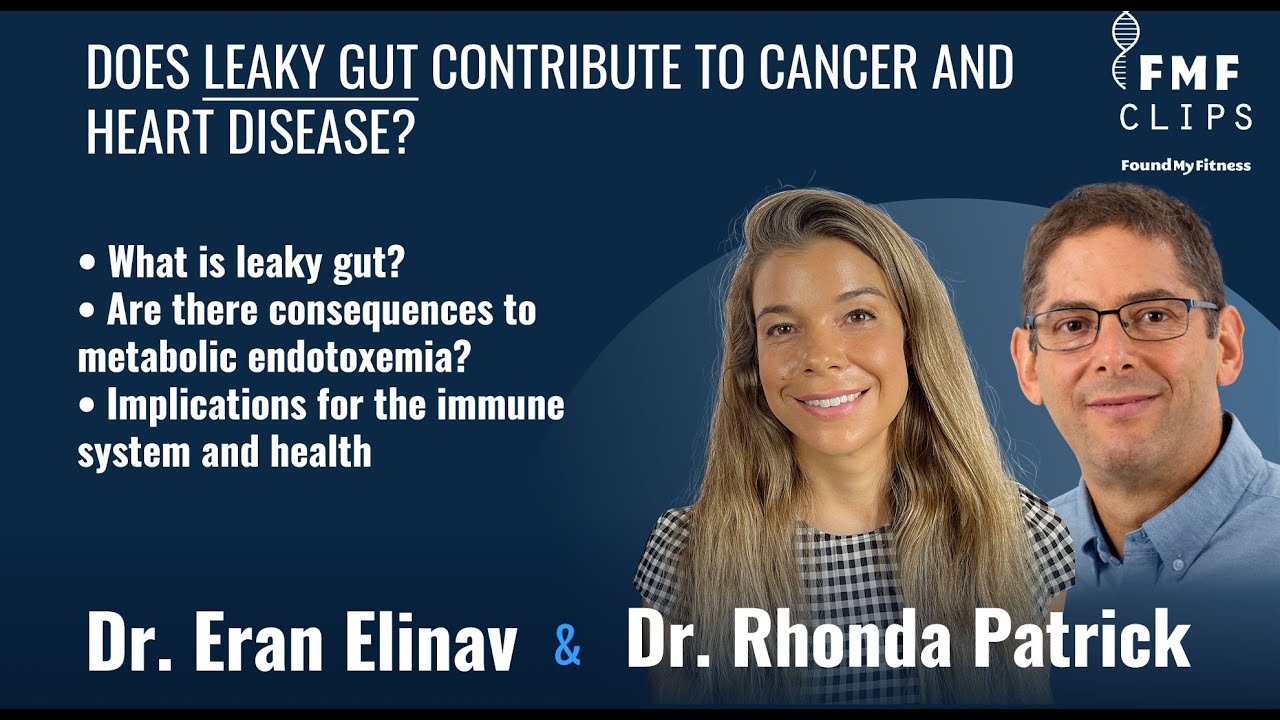
“When this barrier breaks down, as in, intestinal permeability, also known as "leaky gut," microbes and their metabolites translocate out of the intestinal lumen and influence the health and function of distant tissues, such as the brain, connective tissues, sometimes promoting a state known as "metabolic endotoxemia."”
Episode
“There is so much to say when we talk about the NRF2 pathway and isothiocyanates like sulforaphane that we had to pack it into 47 minutes and break it into a few key sections. Key sections: For a more in-depth breakdown click the timeline link at the top of this page!”
Clip
“Sauna use is associated with reduced risk of many diseases, including cardiovascular and neurodegenerative diseases. One mechanism that drives this reduced risk is likely heat shock proteins, a class of proteins produced by cells in response to stressful conditions such as heat exposure.”
Clip
“Statins can reduce the risk of heart disease by 30 to 40 percent due to their ability to increase LDL receptor activity and reduce blood cholesterol levels. Whether the drugs are overprescribed (or perhaps under-prescribed) is a matter of great debate.”
Clip
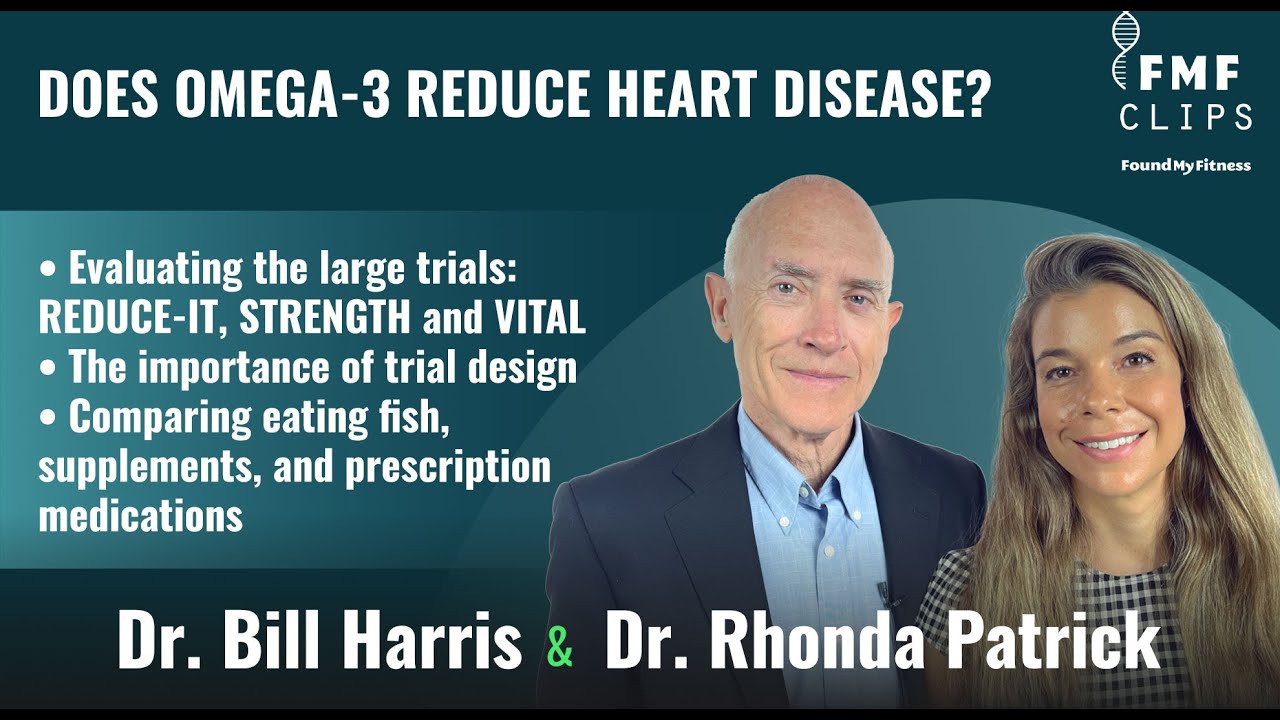
“Some researchers suggest that the addition of DHA may negate the effects of EPA or that the high dose and pure formulation of EPA is the determining factor in the success of REDUCE-IT and the failure of STRENGTH. In this clip, Dr. Bill Harris describes the recent large clinical trials evaluating whether omega-3 decrease heart disease risk.”
“Fish oil supplementation associated with a lower risk of heart attack, heart disease, coronary heart disease and death from all those diseases. This was particularly evident at higher doses (updated meta‐analysis including 13 randomized controlled trials).”
“The overall mortality rate for the study of 187 patients was 23% The mortality rate for those without heart disease and without viral heart infection was 8%. The mortality rate for those with heart disease and without viral heart infection was 13%.”
“Their analysis revealed that EPA and DHA supplementation decreased a person's risk of having a heart attack by 13 percent and decreased their risk of death from heart attack by 35 percent. Similarly, a person's risk of having a coronary heart disease event decreased by 10 percent, and their risk of death from coronary heart disease decreased by 9 percent.”
Results 11–20 of 723
Premium Members received this study with Rhonda’s practical commentary and 8+ other hand-picked papers. Get the Science Digest delivered every other week.
Every other week our Premium Members receive deep dives like this alongside Rhonda's commentary and 8+ other hand-picked papers.