1
Collection
What FoundMyFitness Has Covered
PremiumGlucoraphanin is the cruciferous-plant precursor to sulforaphane, which forms when the enzyme myrosinase catalyzes its conversion. Broccoli sprouts are a concentrated source, but the amount ultimately converted can vary substantially among people, with “high” and “low”…
Your Premium Brief connects insights across FoundMyFitness to help you see the bigger picture.
Based on available source text from 9 of the first 10 results.
2
Topic
Topic
Sulforaphane
“Urinary excretion of benzene and acrolein, known carcinogens present in air pollution, increased 61 percent and 23 percent, respectively, among the participants who took the glucoraphanin/sulforaphane beverage.”
3
 Clip
Clip
Clip
How do you maximize glucoraphanin in broccoli sprouts? | Jed Fahey
“If that isn't possible or practical, freezing them for future use and then blending the frozen sprouts into a preferred food can help ensure the highest quantities of sulforaphane production. In this clip, Dr. Jed Fahey discusses the best protocol for maximizing glucoraphanin levels in broccoli sprouts to obtain the highest concentration of sulforaphane.”
4
 Clip
Clip
Clip
Importance of myrosinase in supplements for the conversion of glucoraphanin to sulforaphane | Jed Fahey
Dr. Jed Fahey discusses the importance of having active myrosinase in dietary supplements for optimizing the conversion of glucoraphanin to sulforaphane.
5
 Clip
Clip
Clip
Considerations for choosing sulforaphane / glucoraphanin supplements | Jed Fahey
“Dietary supplements containing sulforaphane's precursor molecules, glucoraphanin and myrosinase, are widely available to consumers. Myrosinase is an enzyme, however, and may not be shelf-stable without refrigeration, compromising its ability to hydrolyze glucoraphanin to sulforaphane.”
6
 Clip
Clip
Clip
Introduction to sulforaphane and its precursor glucoraphanin | Jed Fahey
“Sulforaphane, an isothiocyanate compound derived from cruciferous plants such as broccoli, cauliflower, and mustard, was discovered in 1992 by the late Dr. Paul Talalay and his then student, Dr. Yuesheng Zhang.”
7
 Clip
Clip
Clip
Stability and heat sensitivity of myrosinase enzyme in cruciferous vegetables | Jed Fahey
“As such, conversion is distinguished by “high converters,” – people with high elimination profiles, and “low converters,”– those with low elimination profiles. In this clip, Dr. Jed Fahey describes some of the factors that influence the conversion of myrosinase-driven conversion of glucoraphanin to sulforaphane.”
8
 Episode
Episode
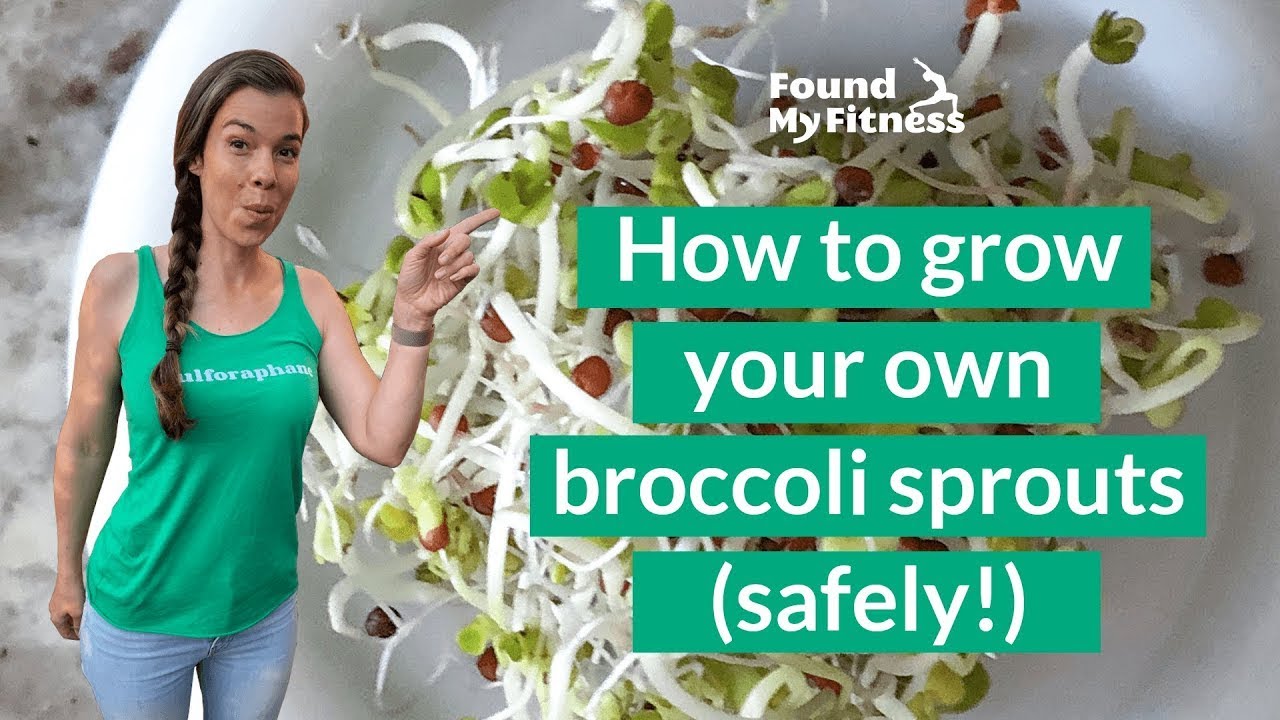
How to Grow Broccoli Sprouts
“They soon learned that sulforaphane is an artifact of isolation – the byproduct of a chemical reaction between an enzyme called myrosinase and a precursor molecule called glucoraphanin.”
9
 Clip
Clip
Clip
Does microwaving broccoli preserve the myrosinase enzyme? | Jed W. Fahey
“Food preparation techniques that employ shorter cooking times and less water – such as microwaving – favor myrosinase stability and retention – potentially enhancing sulforaphane production. In this clip, Dr. Jed Fahey discusses whether or not microwaving broccoli preserves the heat-sensitive myrosinase enzyme enough to convert glucoraphanin into sulforaphane.”
10

Aliquot
Premium
Aliquot #12: Food prep techniques that alter sulforaphane production in broccoli sprouts
“The conversion of glucoraphanin to sulforaphane in broccoli sprouts requires myrosinase, an enzyme co-located within the leaves, stems, and other components of the plants. Food preparation techniques like freezing or cooking can either enhance or hinder maximal sulforaphane production from the sprouts.”
Results 1–10 of 82