Q&A #6: Fasting, Omega-3s, & Continuous Glucose Monitoring
Get these episodes in a convenient podcast format.
These live recorded Q&A episodes make great companion listening for a long drive. You can find these Q&A episodes alongside great interview aliquots and other special members-only episodes on The Aliquot, our official premium FoundMyFitness podcast.
In this Q&A, Dr. Rhonda Patrick explores her thoughts on metformin for healthy individuals, APOE4, and continuous glucose monitors. Timestamps include:
-
Why aerobic exercise is like a brain drug
-
Why Rhonda takes fish oil instead of krill oil
-
Rhonda's thoughts on sulforaphane supplements and alternatives to broccoli sprouts
-
Why Rhonda doesn't currently take NR or NMN
-
Whether or not eating after a workout will affect muscle mass
-
Lifestyle suggestions for people with ADHD
What lifestyle factors and supplements are most promising for memory and thought processes?
Physical activity & exercise
The benefits of physical activity on mental and cognitive health are well established.[1] Physical activity exerts profound effects on brain health and cognition through multiple interconnected mechanisms. These effects likely enhance synaptic plasticity, which is the brain's ability to adapt and reorganize itself in response to environmental stimuli, neurogenesis, which is the creation of neurons, and overall brain cell function and health.
-
What my exercise, sleep, food, and supplement routine look like
-
Is 2000 IU of vitamin D supplementation enough?
-
What type of exercise I do to improve brain function
-
My experience with the Chilipad and how I use it
-
Why I take fish oil instead of krill oil
-
My most paper hypothesizing unique benefits of phospholipid omega-3 in the context of APOE4. 1
-
What my thoughts are on metformin for healthy individuals. 1
-
My thoughts on sulforaphane supplements and alternatives to broccoli sprouts.
-
My thoughts on resveratrol in combination with exercise
-
Potential side effects of statins
-
Antioxidants blunting the effects of exercise
-
Why I currently do not take NR or NMN
-
Whether or not eating after a workout will affect muscle mass
-
Differences between fasting and a ketogenic diet
-
What some reliable markers for autophagy are
-
What sort of practical impact a continuous glucose monitor has had on my lifestyle
-
What research has to say on alpha-GPC, CDP-choline, and phosphatidylcholine supplements
-
Life changes my husband and I made before and during pregnancy
-
Lifestyle suggestions for people with ADHD
-
Thoughts on what to eat during refeeding after a fast
-
My thoughts on reducing premenstrual syndrome symptoms
Hello everyone. Thank you so much for joining me for this round 6 of my question and answer series. I'm super excited that everyone's here. I'm going to jump right in to start answering some of these questions that have been submitted, and occasionally I'll also take some questions from the live chat as well. So, I'm going to just go ahead and jump in. The first question was sort of a personal question. And forgive me, I don't have the name of the person that asked this question. But the question was, what are all the things that you currently do and eat to boost health and longevity? How's your exercise, sleep, food, and supplement intake look like, including sauna, running, smoothie? Maybe a weekly schedule for us to copy.
So, I'm typically doing— I typically try to get around a 20, between a 20 to 40-minute run in per 3 times a week. And, my runs, I aim for around 65 to 85% of my max heart rate. I try to do the sauna Ideally 4 times a week, but that doesn't always happen. So I sort of take what I can get, you know, anywhere between 2 to 4 times a week. On days that my runs are shorter, like 20 minutes, I follow my run with the sauna. I've actually been sort of slacking on my resistance training, but I usually try to get at least, and I know this is sort of, you can tell I'm slacking. I try to do at least 30 minutes a week of resistance training. And of course I should do more, but it's, Yeah. It's hard to sort of balance everything. The other thing I really try to optimize is my sleep.
I get between 8 and 9 hours of sleep per night. And, my red lights come on around 4:30, so I don't have any blue lights in my house after 4:30. In terms of my meals, I mostly eat 2 meals a day. And, I usually fast before my workouts. Lately, my meals have been— one meal will consist of possibly a smoothie. So, the smoothie will be kale, blueberries, avocado. Sometimes, my meal will be mixed nuts, or sometimes it'll be eggs and sautéed kale. Sometimes, it'll be salmon roe and an avocado and some lemon. Dinner is usually vegetables and some protein. So, I typically eat wild Alaskan salmon or some free-range chicken or maybe once in a while I'll have a grass-fed roast with bone broth and veggies. And, my veggies along with my protein are typically either raw, so a big salad, or cooked.
I'll have broccoli or Brussels sprouts, sautéed kale or spinach, or baked squash, carrots, Yeah. In terms of my supplementation, currently right now, I take 1 multivitamin a day. The multivitamin I take is One by Pure Encapsulations. That multivitamin has 2,000 IUs of vitamin D in it. So, in addition to that, I will take around 1,000 IUs of vitamin D by Thorne for a total of around 3,000 IUs a day. I take vitamin K2 about 3 times a week, and it's 45 micrograms, and that's by Life Extension. I take 1 tablet of Prostafane a day. We'll talk about that in a little bit. That's got around 10 milligrams of sulforaphane. I'm currently doing a little experimentation with my omega-3 supplementation. So, I take 6 DHA 6 high DHA pills a day, which comes out to 3 grams of DHA.
And, I also take— this is my experiment, I'm trying to take 3 grams of high EPA a day. And, this is by nPure 3. I take 300 micrograms of melatonin at night. And, I take 2 capsules of CoQ10 per day, 2 capsules of PQQ. By Life Extension and 1 tablet of magnesium citrate, which is about 135 milligrams by Thorne. I have no affiliation with any of these supplement brands I just mentioned. I have no affiliation with any supplement brand. So, those are just the brands that I happen to choose because I've either had a scientist friend validate that brand before or know other scientists that have been involved or something like that. So, So, that's typically what I'm taking in terms of my supplementation.
And, I see a lot of questions in the chat, which I'll get to you about broccoli sprouts and things like that. Okay. So, there's another question sort of along the same lines. Sebastian asks, in one podcast, you mentioned that you take the One multivitamin daily. I bought it as well. Not sure if I should take vitamin D3 separately or if it's enough. So, I just mentioned that the One multivitamin by Pure Encapsulations has 2,000 IUs of vitamin D. For some people, that could be enough. Really, the best way to determine whether or not that's enough vitamin D is to get a blood test and have your what's called 25-hydroxy vitamin D levels measured. It's the precursor to the active vitamin D steroid hormone. It's the most stable form circulating in plasma, and that's typically what's measured.
I like my blood levels to be somewhere between 40 and 60 nanograms per milliliter. So, depending on the time of year, I change my supplementation up. Sometimes 2,000 IUs of vitamin D is enough for me in the summertime because I'm outside more, more active outside, and so I actually get more sun. But it really all depends. It's on a very personal— there's a very personal, you know, component to how much vitamin D, you know, you may need to supplement with to get a range between 40 to 60 nanograms per milliliter in your blood. So that really just depends on a lot of factors including genetics and something that you just, you So, John's asking in the chat, isn't that a lot of DHA and EPA to take? Yes, it is, John. So, as I mentioned, I'm sort of doing an experiment.
We can kind of check back in maybe next Q&A if someone wants to ask a question. But typically, I take 3 grams of DHA a day and I've now added in the 3 grams of EPA. So, it is a bit of an experiment that I'm doing right now. So, the next question, which is also on this personal level, has to do with exercise. So, Brandon asks, I think it was in Tim Ferriss's book, Tools of Titans where you said people should exercise to improve their brains, not their bodies. Is there a routine you'd recommend to someone exercising solely for the brain benefits? So, typically, I try to exercise to increase my plasma levels of brain-derived neurotrophic factor, which can cross the blood-brain barrier. And, in the brain, it's been shown to play a role in the growth of new neurons, so neurogenesis.
It plays a role in promoting the survival of already existing neurons. And it plays a role in something called neuroplasticity, which is the ability of your brain to rewire itself and reorganize itself based on experiences, based on, you know, a variety of things that happen in your life. And it's a very important process for being resilient to stressful conditions. And it plays an important role in mood disorders and anxiety and depression. So there have been many studies that have looked at the best type of exercise to increase BDNF. And that type of exercise happens to be aerobic, particularly of a high-intensity type of aerobic. Doing aerobic exercise for between 20 to 40 minutes increases BDNF levels by over 30% in plasma.
And, the intensity of the aerobic exercise does make a difference. So, the more intense, the longer the BDNF is elevated. And so, that's why I aim for somewhere between 65 to 85% max heart rate. That was sort of the best in terms of elevating BDNF. I also do the aerobic exercise because that's the type of exercise that's been shown to most robustly prevent a metabolite of tryptophan called kynurenine from forming something called quinolinic acid, which is the brain becomes a neurotoxin associated with anxiety, depression, and other neurological disorders. It's also the more kynurenine you're forming, the less tryptophan is available to be transported into the brain and form serotonin.
So, there's been some studies comparing high-intensity exercise with high-intensity high-intensity interval exercise with more of a long-duration aerobic exercise. And while the high-intensity interval exercise is able to start to activate genes involved in converting kynurenine into something that's not toxic for the brain, it's the aerobic exercise that's actually been shown to do that in plasma. So, I do think there obviously are benefits for high-intensity interval exercise, and I actually still do that as well. But I think that the aerobic exercise right now is sort of my brain pill, so to speak. So Steve in the chat is asking whether or not kynurenine increases tryptophan— I'm sorry, whether or not tryptophan supplementation increases kynurenine.
I don't know that that's ever been looked at. It has been shown that tryptophan supplementation, it depends on a variety of factors. So, tryptophan supplementation can help allow tryptophan to be transported into the brain to potentially be converted into serotonin, but also it could form kynurenine or it could form the precursor for serotonin in the gut. It all depends on a variety of factors. Things that allow tryptophan to form kynurenine are stress hormones like cortisol and inflammatory factors like high levels of inflammatory cytokines. That shifts the tryptophan metabolism away from serotonin and into kynurenine. And, the reason for that is Kynurenine can also play a role in the immune response.
So those are, those are some of the things that can shift tryptophan metabolism away from forming serotonin and, and into forming kynurenine. I do still use the chili pad. Chuck asked if I use the chili pad and what temperature works best for me. It really depends on the ambient temperature. So in the summertime, I don't have air conditioning, so it can be quite warm. I like my ChiliPad on 68. Sometimes I go even lower depending on the temperature. I also like to have a big blanket, so, you know, which is much warmer. So that also plays a fact— plays a role in what temperature I like. Right now in the winter, I'm at around 73 degrees Fahrenheit. So it really just depends on the ambient temperature.
So I'm gonna go ahead and answer a question from Kevin, which has to do with phospholipid DHA. And Kevin is asking about— he wants to increase his phospholipid DHA intake, and he says he's a double ApoE4 carrier. And he says, my understanding is that phospholipid DHA is more readily absorbed and thus the required dose is lower. Can you speak to how much of a dose of krill oil you would recommend and whether or not it is safe for my wife to take krill oil while breastfeeding? My child definitely has at least one ApoE4 allele. He says he lives in Taiwan and access to fish roe is difficult. So first things first, people may be wondering why he wants to increase the phospholipid DHA intake. So for one, he's got an ApoE4 allele, which does increase the risk of Alzheimer's disease.
Having one allele increases it by twofold. 2 alleles can increase it up to 10 to 15-fold depending on other lifestyle factors. I published a paper last October where I basically provided evidence in the literature and proposed a theory that DHA in phospholipid form may get into the brain better in people with ApoE4 and actually better in general in people that are aging. The reason for that is there are 2 forms of DHA which can cross the blood-brain barrier, DHA in a free fatty acid form and DHA in a specific phospholipid form called lysophosphatidylcholine DHA, and these 2 different forms of DHA cross the blood-brain barrier in different ways.
The free form of DHA sort of uses passive diffusion to get into the brain, and whereas the lysophosphatidylcholine DHA form uses an active transporter which kind of flips it across the blood-brain barrier. The passive diffusion actually depends on the integrity of the blood-brain barrier, meaning You, you know, any sort of disruption in the blood-brain barrier could disrupt the process of that free fatty acid DHA getting into the brain. Unfortunately, ApoE4 disrupts the integrity of the blood-brain barrier. It disrupts the tight junctions that connect the endothelial cells on the outer membrane. Aging also does this as well. As people age, the blood— the tight junctions that connect the endothelial cells on the blood-brain barrier become less tight, and so they become leaky.
So the phospholipids, so the question is, well, how do you get this DHA, you know, lysophosphatidylcholine form, right? How do you get that? What's the dietary source for that? And there's, so there's a variety of dietary sources of DHA, including fish, fish roe, fish oil supplements and krill oil supplements. And of course, these DHA dietary forms are in different— they're in different forms. So the DHA in, for example, fish is in predominantly triglyceride form with about 1% of it in phospholipid form. The DHA in fish oil supplements, if it's a high-quality supplement, it's in triglyceride form. Most supplements are, unfortunately, they're in something called ethyl ester form. So the bottom line is that you can actually form the lysophosphatidylcholine DHA from any type of DHA.
It doesn't have to be in phospholipid form. You form more of it from a smaller amount of phospholipid form, but you can still form it from, for example, taking a fish oil supplement. You just have to take Uh-huh. A little bit of a higher dose. The reason I personally don't take krill oil is because most krill oil supplements contain— if you look— if you look at the, um, concentration of DHA, they contain between 60 to 80 milligrams in 2 capsules or 2 softgels. And like the DHA I'm taking contains— contains in 2 capsules Wow. An entire gram, orders of magnitude higher. So you're actually much better off taking the high-dose fish oil to get phospholipid form of DHA than the really, really low-dose krill oil.
In addition to that though, fish roe contains anywhere between 38% to 75% of its DHA in phospholipid form, which is why I also like to eat roe. It doesn't have to be salmon roe. There's other types of roe, flying fish, for example. There's lots of different types of roe and they have, you know, varying types of DHA in phospholipid form. So we will, we will address some of these questions that are in the chat about choline supplementation and alpha-GPC a little bit later. I do wanna move on to the metformin question from Nick. So Nick asks, there's no evidence to date. However, do you suppose that individuals could mitigate or eliminate the drawbacks of metformin, namely the inhibition of the benefits precipitated by exercise, by dosing exclusively on rest days when you're not exercising?
So my short answer is I don't think so. I think exercise is a better longevity drug than metformin. There's been large randomized controlled trials done by the US US Diabetes Prevention Program that have compared 150 minutes of moderate-intensity exercise per week with metformin in people that have prediabetes. The exercise was shown to basically prevent the progression of prediabetes to diabetes by 58%, whereas metformin did it by about 31%. So exercise was almost twice as good. as metformin. Now, if exercise in it— if metformin taken, you know, with exercise had synergistic benefits, meaning they were additive, that would be another story. That would be super exciting. But so far, we've had multiple randomized controlled trials.
There's been at least 2 that I know of in healthy individuals, elder but still healthy. There's also been a few in people that have type 2 diabetes or have prediabetes. And consistently what has been shown that both aerobic exercise as well as resistance training, the benefits from that including things like improvements in cardiorespiratory fitness, gains in lean muscle mass, these things are blunted by metformin supplementation. And you may— so to get back to Nick's question, Nick's asking, well, what if we supplement with metformin on a day that we're not exercising? Uh-huh.
The reality is that you can't just think about the half-life of the drug in your system because oftentimes, and this is the case with metformin, they affect a variety of genetic pathways that have a long effect, lasting effect. So for example, metformin can activate AMP kinase and inhibit downstream mTOR for up to 36 hours after the last metformin dose. Some of the blunting of lean muscle mass by metformin after resistance training could be due to the fact that mTOR is being inhibited in muscle, right? So I think that, you know, I don't think metformin is a good good thing for healthy people to take without type 2 diabetes.
My team and I put together a topic page on metformin which covers the potential benefits for people with diabetes, which still I think type 2 diabetes, metformin obviously is doing good things for them. But the question is whether or not healthy people that don't have type 2 diabetes should be taking metformin or should they be exercising? And I would say they should be exercising. I recorded a podcast. I was a guest on Kevin Rose's podcast. We recorded it earlier last month. That should be airing soon. So I talked about this in a lot of detail. Steve is asking whether this applies to resveratrol and berberine as well. So we're gonna get to resveratrol in this Q&A series. Berberine, we are actually— my team and I are writing up an article on that.
And so we're doing— currently doing some literature review to see what, you know, what data is available on berberine. Okay. So there were quite a few, a couple of questions on sulforaphane. Tony asks, what do you think of products like Avocall, which claim to support sulforaphane production by providing glucoraphanin? an active myrosinase enzyme? Is this really having the promised effect, or would you still go for the natural homegrown broccoli sprouts? So, um, I would say that Avocall has been shown in clinical studies to increase sulforaphane metabolites in, in urine from people that have, that have taken it. It's also been shown in clinical studies to have effects on the brain in people, both children and adolescents with autism.
So it has, it has been validated in the scientific literature. I would say, and I'll get to this, actually, I'll jump into this a little bit, in a little bit more detail in one of the next questions. But I think there's trade-offs for sprouts versus supplements. Sprouts are cheaper and they have a lot of sulforaphane. You know, 100 grams of fresh sprouts have something like 40 milligrams of sulforaphane, whereas the Avocall has something like 3.5 milligrams per tablet and can get quite expensive supplementing. Also, another trade-off though also is that of course sprouts take time to sprout and you have to be very fastidious with your sprouting protocol. You have to have a sterile environment because sprouts are very prone to E. coli contamination.
So that's obviously something that, you know, to be aware of. So, you know, honestly, I think it's nice to have the option to sprout because not everyone can, you know, can afford buying supplements that are expensive. So it really— I personally am Right now I'm taking Prostafane. I'm gonna talk about that right now, but I would like to get back to sprouting. It's just been really crazy ever since I became a mother, just juggling everything, and that's kind of why I took the easier route, which was supplementing. So Thomas asks that he wants me to elaborate on some strategies to use for moringa powder because he thinks it takes too much time to do broccoli sprouts.
Unfortunately, it's unclear to me whether or not moringa powder has the exact same benefits and which moringa powder is, you know, has, is, you know, going to increase sulforaphane metabolites in people. At some point, I would like to do another interview with Dr. Jed Fahey to talk about this in more detail because he actually knows a lot more about this than I do. So I hope to be able to do that sometime in the near future. But another way to get sulforaphane is to supplement. There are the supplements I mentioned were Avocall and Prostaphane. Avocall has about 3.5 milligrams per tablet of sulforaphane and each Prostaphane tablet has around 10 milligrams. These things need to be kept in the refrigerator.
And prostaglandin is something that is not typically available in the US unless you— there are pharmacies online you can buy it, which is— that's kind of what I do. So I take 1 prostaglandin a day personally. Okay. So I'm going to move on to the last sulforaphane question, which is from Nick. He says, since sulforaphane causes you to sweat out toxins, would it be super potent in combination with exercise or sauna? What would be your guess on how to time the eating of broccoli sprouts and then hitting the sauna? So, very interesting question. First of all, I would say that the studies showing that sulforaphane causes the excretion of carcinogens like benzene and other ones like acrolein, Those were all measured in urine.
So there's multiple methods for excreting compounds that are dangerous through sweat, through urine, and those are some of the major routes of excretion. In theory, you can also excrete some of these compounds through sweat, although I don't think that's the major mode in which they are excreted. Theoretically, I think it's possible. The question with the timing of it kind of goes back to the point I made earlier with metformin, and that is these pathways are activated for a— not just when the compound's in the system, but sometimes they remain activated for quite a long time after the last dose. In the case of sulforaphane, at least in animal studies, it's been shown to activate a pathway called NRF2.
which is responsible for activating the phase 2 detoxification enzymes, which detoxify a lot of these pro-carcinogens so that they do not become carcinogens. It also inactivates phase 1 biotransformation enzymes, which are enzymes that actually can convert a pro-carcinogen into a carcinogen. Things like heterocyclic amines into nitrosamine, for example. Those get inactivated, and that's done by NRF2. Animals can have Nrf2 activated for up to 48 hours after the last dose. How that translates to humans, it's unclear, but presumably it's being activated for, you know, at least 24 hours after the last dose, maybe even up to 24 hours. It really hasn't— that hasn't been shown, but my guess is that you don't have to really worry about the timing as much.
So Joel's asking about a— does anyone have a scientifically knowledgeable fasting guide in the Baltimore area? Joel is asking this on the chat. I'm not sure about the Baltimore area, but I do know there is a clinic in Santa Rosa, California where they do medically— they do facilitate medical supervision on long prolonged fasts. So let's continue on with our, our compounds and supplements topic with resveratrol. I know a lot— there were a lot of questions on resveratrol. Dwight asks, based on your interview with Dr. Sinclair, which mentioned that resveratrol should be kept cool and away from light, and that NMN and NR needs to be kept cool, will this be changing your brand for these supplements? And if so, what brands are you looking at?
I'm not aware of anyone who ships these supplements in cold packing. So, as you guys listened to in my first answer to the question of what I'm supplementing with, I am currently not supplementing with resveratrol, nicotinamide mononucleotide, NMN, or nicotinamide riboside, also known as NR. I'm going to get to some of my concerns in just a moment. But maybe I should just move on to my concerns because I think that's a— it's a little bit more productive that way. So with resveratrol specifically, I'm considering supplementing with resveratrol mostly because of some of the preliminary clinical studies done with— on people with dementia and how it improved biomarkers in cerebrospinal fluid associated with Alzheimer's disease. It also improved cognitive function as well.
But this was at a high dose. This was at about a gram of resveratrol per day. Some of the studies that I am concerned about have to do with Resveratrol. There was one study showing that resveratrol could blunt some of the positive effects in of exercise on lipid levels in in people. There was another study that showed the opposite. It showed that resveratrol actually enhanced some of the exercise-induced benefits in people. And after looking in in a lot of detail at these studies, I think that There are possible explanations for this. I'm going to be doing a resveratrol podcast, audiocast, where I basically talk about the current state of literature and go into great detail on this.
But what I think one of the main possibilities for these differences, it has to do with dose because at a very low dose, resveratrol can be a mild antioxidant. And the dose that was taken in the study where resveratrol blunted the positive effects of exercise, it was at 250 milligrams. Uh-huh. Whereas the study where it enhanced the benefits of exercise, it was at twice that. It was 500 milligrams. So, um, antioxidants have also been shown if they— to high-dose antioxidant supplemental antioxidants like vitamin E have been shown to blunt the positive effects of exercise as well. So I think that's one possibility. Um, there are, there are other possibilities as well. There's also some effects of resveratrol on the on xenobiotic metabolism in the liver.
So, for example, it affects one of the enzymes. This has been shown in clinical studies. It affects one of the enzymes that metabolize statins and makes it metabolize it very slow. So people, a lot of people are taking statins, and it's possible if that they're combining. Resveratrol with statins, they could potentially be increasing the toxic side effects of statins. Of course, that's all theoretical, but just the fact that it is inhibiting the enzyme that metabolizes statins is a point of concern, and it also does similar things for other xenobiotic compounds like chemotherapeutics, for example. Just something for people to be aware of.
I think that if Joanna asked this, and of course, and this was also asked by Dwight, you know, if I were going to take resveratrol, what brand or source would be the most effective? I currently don't take it. If I were going to take it, I would probably go— I would get the powder form, like microionized. Powder form so that you could take a higher, higher dose. I know Rev Genetics makes that. I have no connection to them at all in any way, but that would potentially be something that I may consider doing in the future. And I will, I will get into the NMN, NMR stuff. For some reason I didn't. Here we are. I'm gonna, I'm gonna skip to that and then go back to some questions on fasting. Jay is asking in the chat, what are the toxic side effects of statins?
There have been multiple studies showing that statins can cause muscle atrophy, and this may be linked to causing mitochondrial dysfunction at the level of CoQ10 ubiquinol disruption. There are also some other studies that have linked statin use to Parkinson's disease. So that's, that's another whole big topic to get into. Ramis asks in the chat, can you elaborate on antioxidants blunting exercise benefits? The— the antioxidant supplementation, it was like a high— very high dose. I mean, orders of magnitude of what you would find in, for example, a multi. So, you know, we're talking like 400 IUs of vitamin E, alpha-tocopherol vitamin E, versus what you would find in a multi, which is, you know, anywhere between 20 to 40 IUs. Uh-huh.
Um, and 400 IUs of— of supplemental I— uh, vitamin E, what it does is it sequesters reactive oxygen species that are generated during exercise, that generation of this oxidative burst, you know, this sort of oxidative burst that happens is very important for activating a variety of pathways in the body that regulate a lot of things, you know, that are involved in inflammation, that are involved in antioxidant status, that are involved in regulating, you know, blood lipids, that are regulated in activating things involved in hypertrophy. So, so you want that oxidative burst to happen and the vitamin E binds and sequesters that. And so, at a very high dose like at 400 IUs, that, that, that occurs.
So, along the lines of the NMN, the nicotinamide mononucleotide and nicotinamide riboside, NAD topic. Dwight had asked about that supplement and whether or not, you know, it should be cold. And another person who I forgot— Ryan asks whether with the rising interest in supplementation for increased NAD generation, what would be and are the best bioavailable natural sources and combinations to achieve this? So I think that this question coupled with Dwight's question is a good one because personally, I don't think that I'm ready to jump into the NAD booster supplements yet. And really, that has to do with the fact that there have been now isotope tracer studies done in animals that have measured the ability of both nicotinamide mononucleotide and nicotinamide riboside at reasonable doses.
So this was like 200 milligrams per kilogram of body weight in animals. And it was shown that the NR and the NMN could not directly be transported to other tissues, meaning it had to be converted into nicotinamide first and the nicotinamide was then transported to other tissues where it could then eventually form some NAD. It didn't form very much and nicotinamide itself, that's because there's a feedback loop. When there's enough NAD around, nicotinamide no longer is converted into NAD which is one of the reasons why probably really, really high doses of Both nicotinamide riboside and nicotinamide mononucleotide are used in animal studies twice that, so around 400 milligrams per kilogram of body weight are typically used to get— show a bunch of beneficial effects in animal studies.
That would translate to like 2.6 grams of, for example, nicotinamide riboside in a person that weighs 180 pounds. It's quite a bit. There have been some clinical studies obviously showing that you can increase NAD levels in white blood cells after you know taking a dose anywhere between you know 200 milligrams up to 1,000 milligrams of of nicotinamide riboside. I'm just sort of on the fence about whether or not what what what's going on with with the NAD boosters. I'd like to see more data. There's a point of concern, of course, because of the This, the animal study that was a cancer study done, which animals that had a specific type of cancer, a specific type of pancreatic cancer that is, becomes malignant when there's more pro-inflammatory cytokines that are generated, specifically ones that are generated from what are called senescent cells.
And the senescent cells actually like these NAD boosters just like normal cells do because they want NAD. The NAD helps them generate more pro-inflammatory cytokines, which then exacerbated and fueled cancer growth. This is, of course, an animal study. No idea whether or not this is something that can be translatable to humans. Obviously, it also depends on already having existing cancer. It's not— these NAD boosters have not been shown to cause cancer. In fact, they've been shown to delay aging in tissues. So, Personally, I just take a point of caution and I think that I'm just kind of sitting back and waiting right now with NAD boosters. Personally, that's my take. So we're going to jump into some fasting questions. I see people are asking about fasting in the chat.
So let's, let's jump into some of those questions. So, Jay— or sorry, Ron asks, I'm doing an intermittent fast. I've been doing intermittent fasting for almost 5 years. I want to move into the time-restricted eating realm, but sometimes I have a late workout and end up eating late. Is eating all of my food earlier while not consuming food after a late workout Will that affect muscle mass or any other stuff? So I would say, first of all, Ron, there's been meta-analyses done that have shown that in terms of muscle hypertrophy, that consuming protein and food within a 24-hour period of exercise is enough. And that that's that's basically that was an old myth that you had to consume it right after eating. or right after a resistance training workout.
Also, exercise itself is, you know, changing metabolism. And, you know, so it's not quite as bad to eat after exercise if it's a little bit later versus, you know, if you didn't exercise. But again, the meta-analysis showing that food consumed within 24 hours is enough for muscle hypertrophy to occur is sort of an important thing to keep in mind. Okay. So, Ray asks— let me just get this. Ray asks about How many, how many of the benefits of time-restricted eating or short-term and long-term fasting do you think are simply from the fact they induce ketosis versus what percent are truly from the fasting aspect? If fasting offers something different or additional to the benefits of keto, Meaning, I presume a ketogenic diet.
How do we know which ones that can just be gained from a ketogenic diet versus from doing fasting? And this is really a good question. I think that a lot of people have. There are huge differences in all of these things. For example, time-restricted eating has a circadian component to it, and that is something that people in the Not not people that are in the you know calories in calories out or even in the fasting community don't quite understand you know the the effects that food intake have on circadian rhythm and genes that regulate circadian rhythm and how these genes that regulate circadian rhythm in contrast regulate metabolism regulate antioxidant function regulate brain function regulate hormone secretion I mean they're regulating a variety of different process, physiological processes in the body.
So the time-restricted eating is completely different from ketogenic diet, which, you know, isn't, isn't at all, you know, having that, that time, that, that circadian component to it. Now, during the fasting part of time-restricted eating, you can, you know, start to eventually potentially get into some ketosis depending on what you've eaten and how quickly you can deplete your liver glycogen, how much exercise you've done, all these other factors, of course. The short and long-term fasting also very different from a ketogenic diet. Now, the the fasting does induce ketosis, which then you know switches your metabolism from burning carbohydrates to now burning fats, and you are also making ketone bodies like beta hydroxybutyrate. So the the benefits of that would be you are.
Well, if you're doing ketosis from fasting, you're actually going to be immobilizing fatty acids that are stored in your adipose tissue, and you're going to be burning fat that is stored and generating ketone bodies. That's not necessarily going to happen on a ketogenic diet because you are providing fats to burn. You are not immobilizing them from your fatty acid stores because there's no other source of food or fat. So there's a difference there. But in any case, if it's a— if it's, you know, fasting-induced ketosis, or if it's ketogenic diet, you are generating ketone bodies. And ketone bodies itself, there is a benefit. Ketone bodies have been shown to, to have anti-inflammatory and antioxidant properties. They've been shown to regulate genes.
So they're signaling molecules that can actually change the expression of genes in a positive way. The ketone bodies have been shown to be a nice source of energy, of course, for mitochondria that are energetically favorable to things like glucose because they're— it takes less energy to use than it does to use glucose. So those benefits you are getting from a ketogenic diet. Fasting and prolonged fasting and autophagy and some of the other rejuvenation benefits which we're going to talk about, those are, those are very, very different. And those are not things that are necessarily happening during, during a ketogenic diet. So, you know, autophagy, there's, there are 3 main signals that it takes to activate autophagy. And one of those signals is a decrease in ATP.
which is not necessarily happening when you're obviously eating a bunch of fat. You are, you are still providing energy and making energy, and so those, those levels aren't dropping, and that has to occur, um, for, for autophagy to get activated. In addition to that, you also have to, um, to decrease protein acetylation, which is not necessarily happening either, uh, you know, because that also depends on energy intake. And you also have to blunt a variety of other signaling pathways. So I'm going to go into the next question from Jay because it's sort of an additive to this question on the fasting. So Jay was asking if there are reliable biomarkers for autophagy that have been shown in humans.
So for example, if you want to know if you're doing fasting for X amount of days, like how much autophagy is happening, it'd be nice to see a curve of that. So far, I have not seen any of that data. I mentioned the signals that need to happen. The best human data I've seen is Preliminary work from Dr. Guido Kroemer, who I interviewed on the podcast a couple of years ago. He showed that in humans, after 24 hours of fasting, one of the sensitive biomarkers for autophagy started to show up, which is a decrease in protein lysine acetylation. It started to show up in white blood cells. That doesn't mean that no autophagy was occurring before 24 hours of a fast. It just means that biomarkers used weren't sensitive enough to detect it. A very big difference.
And so I want to, I want to go into the, the effect, the question that had to do with, again, the difference between these different types of fasting and a ketogenic diet, and particularly a prolonged fast, because that I would say is the biggest difference between a prolonged fast and time-restricted eating and ketogenic diet and everything. I mean, there's a very big difference, and that difference is the potential rejuvenation effect that Dr. Valter Longo has, has shown in animal studies. For example, I would say one of the coolest effects that's been shown is that if you put a mouse on a 2-day water fast It causes a 28% decrease in white blood cell count. And because these white blood cells are actually dying, and that causes stem cells in the blood to be activated.
Hematopoietic stem cells go up by 6-fold. And they then get activated and proliferate and replenish the immune system with healthy new white blood cells. Now, this has been shown in animals. Valter has also shown that, you know, other organs also, when these animals are put on a fasting-mimicking diet, their organs can shrink and then regrow during the refeeding phase. And again, the shrinking of it has to do with the dying of cells. He's shown that the dying of these cells is happening preferentially to cells that are damaged, cells that are older and damaged, and often sometimes even cells that can be dysfunctional. And then those organs regrow and are rebuilt with healthy new young cells. This, as I mentioned, was a 2-day fast in mice.
This was shown to be dependent on IGF-1 levels going down, and that was that was necessary for the death of these cells to occur. And then during the refeeding phase, IGF-1 went back up, and that then allowed the stem cells to proliferate and and basically repopulate the tissue. If you compare animals to humans in terms of their IGF-1 levels, a mouse that is fasted for two days or forty-eight hours like I just mentioned. Their IGF-1 levels decreased by 50% and their glucose levels by about 30%. That takes 5 days. So humans that fast for 5 days experience the same type of decrease in IGF-1 and glucose that mice experience after 2 days. So substantially longer period of time for a human to lower their IGF-1 levels by 50%. Yeah. Yeah.
And, you know, so personally, the rejuvenation effect is also even independent of autophagy. We're talking autophagy is clearing out of stuff inside of cells. It's clearing out of, you know, damaged things, protein aggregates that have accumulated, pieces of like DNA, other cellular debris, can even be clearing out of different types of organelles like mitochondria. To like make you know room for new healthy young mitochondria and other things as well. So that's also important. But once you get to a threshold where the fasting reaches a certain level where your IGF one dips down really starts to dip down really low, you start to get cell death, which is the entire cell dying.
So you know this is the kind of benefit that this is the kind of thing that not is not going to happen from a ketogenic diet and it's not going to happen from just timer strict. Eating. And as Dan and Kevin are mentioning in the chat, there are a variety of great clips on the FoundMyFitness clip channel that talk about— I talk about fasting and in a variety of different ways, and, and one of them is, is the benefits of a prolonged fast. Okay, so Rick asks, he says everyone talks about how blank will or will not break your fast. My question is, does it matter if you break your fast? If on day 2 or 3 you eat a few hundred calories, maybe even just supplements like fish oil, etc., do you start at day 0 again or just postpone autophagy for a few hours?
I would say, first of all, it depends on the endpoint you're looking at. So, you know, this rejuvenation effect that I was talking about is a very specific thing that's happening when your IGF-1 levels drop to about 50%, your glucose levels drop to about 30%, And that, at least in animal studies, have been shown to cause a shrinking of organs and then eventually a rebuilding during the refeeding phase. Valter Longo has shown that humans that have done a fasting-mimicking diet, which is a few hundred calories a day, there are a variety of benefits. Their IGF-1 levels do not go down like that, that low at all. So, so perhaps if that is the effect you're looking at, maybe it would be best to not eat a few hundred calories.
And but if that's not the effect you're going for, then it may, it may be okay. So I just, I think that, you know, if you're looking to, to improve your blood lipids and blood glucose levels, things like that that Valter has shown with the fasting-mimicking diet that's happened in humans, then a few hundred calories is within that fasting-mimicking diet. Of course, he has a very specific macronutrient composition. Protein has to be really low, like 9% of your, of your total calories. So, so that's also something to consider. But I wouldn't sweat it too much if you're taking a couple of supplements and fish oil pills.
And by the way, a variety of people have mentioned that during a more prolonged fast, that taking some salt supplements and electrolyte supplements really helps prevent headaches and other things like that— migraines. I know Alex is asking about that. So another fasting-related question is from Katie, and she says, can you exercise during a fast? I have done so for years. I feel fine, great on a fasted plan, but I'm a foodie and also enjoy a glass of wine. How many times a year should I do a 5-day fast? And can I supplement with MCT oil on day 3 during a fast, which seems to be the hardest for me? Lots of components to this question. I also have been doing my exercising fasted.
I've noticed that really helps me with my regulation of my blood glucose levels, both fasting and also postprandial. I wear a continuous glucose monitor, and so I'm very tightly monitoring my blood glucose levels. And I noticed that the fasting— doing my exercise fasted seems to have a lasting effect. On, on my blood glucose regulation. There have been meta-analyses that have shown that eating specifically— most of these meta-analyses have been eating carbohydrate-rich foods— and that's shown that that can blunt some of the adaptations to mitochondria that happen during exercise. But it's not like blunting everything. It's just your, you know, some of your mitochondrial adaptations in terms of being able to burn fatty acids better are not— those adaptations are not happening quite as good.
There hasn't been any studies showing that doing an exercise, a short-duration exercise, aerobic exercise fasted has any blunting effects on performance. Long-duration exercise greater than an hour, it has been shown to have an effect on performance, which makes sense. Also, like high— like the high-intensity burst sprints where you're basically, you're going at like max heart rate and you're, you're basically no longer utilizing mitochondria, but you're utilizing glucose for energy. That has also been shown to— doing that fasted has been shown to blunt performance, which also makes sense because you're not— you're, you're having to depend on, on glucose for, for that energy rather than and fatty acids.
So, you know, that's, that's kind of my take on the exercise and fasting and what the— doing exercise fasted. Exercise itself also has been shown to induce autophagy. I'm going to put out a short video on this, at least in animal studies. Again, because autophagy— in order to induce autophagy, one of the signals that's required is a decrease in cellular energy. You're wanting to decrease your ATP. And that happens with a fast. It happens during exercise as well. So the supplementation with the MCT oil during the fast, you know, I'm not— during day 3 of the fast, I'm not sure. I mean, there's no protein in that, so presumably it's not having an effect on IGF-1.
There have been studies showing people that have taken, for example, exogenous ketones that can blunt some of the lipolysis effects, meaning that taking exogenous ketones stops your body from burning, immobilizing fatty acids from adipose tissue and using those for energy, which makes sense. You're giving your body the source of energy, which would be the case with MCT oil as well. I have no idea how that would affect or even if it would affect, you know, how much of it would affect the autophagy or the rejuvenation effect.
Again, I think the rejuvenation effect, you are providing energy, you know, so your ATP isn't gonna be dropping quite as much, so it in theory would potentially have a little bit of a blunting effect on autophagy and also the rejuvenation effect, but maybe if it's a very, very small dose of MCT oil, it would be sort of negligible. So Lisa is asking on the chat what changes I have made on my lifestyle, food, supplements based on my continuous glucose Cyclos monitor data. I would say that one of the biggest changes I've I started doing my exercise fasted.
So I've also done run my my I run my genetic data through the Found My Fitness genetic report every time there's an update, and you know I start to to get more insights into potential reasons why my blood glucose regulation is is is the way it is. And for example, I have one allele of the hunter-gatherer type allele, which affects the way glucose is transported after a meal and taken up into muscle tissue. Exercise really helps with that, and doing the exercise fasted seems to help even more. So I would say that. Also, my sleep, optimizing sleep has been key. For, for main— for having a good regulation of my blood glucose levels. So that was something I really, really dialed in on. And then I really— the fruits that I'm eating mostly are berries.
Like, I don't— I'm not, I'm not really eating— I certainly don't eat things like grapes. I accidentally ate a few grapes when I had my CGM and I was in the airport. And it was insane how it affected My blood glucose levels, I mean, they just went up super high as if I was eating a piece of pie or something. But also, I've seen things like, like, if I were to have some Indian food and eating rice, like rice seems to raise my levels up. So I avoid rice. I also avoid it for the arsenic as well. But I think one of the main things really, the two of the main things are my sleep and doing the exercise fasted. Those have been two of the main really insights.
Oh, also another one is I'm able to— so eating protein before I— like 5 to 10 minutes before I take in carbohydrates regulates my postprandial blood glucose response. That's also another really interesting one. And there is actually literature on that. And I'm going to be doing a video on that because I think that's really super interesting that like I can eat my protein before, you know, 10 minutes before I eat, for example, a piece of fruit, and it changes the way my blood glucose levels are regulated after that fruit. I use the Dexcom 6, but really, you know, any blood glucose monitor, you know, should work. And just make sure you calibrate it. I calibrate mine because it's, it's, it's not Always accurate.
Okay, so Ron was Ron asks, and this is kind of the last thing on the caloric restriction fasting front. He says, as I understood from many lectures, there's a correlation between calorie restriction and lifespan. Is it because we eat less calories or because we are fasting? And is fasting the same hours with less calories the same impact? I think I've answered that question. The calorie restriction, um, studies have been like lifelong studies, and typically you're eating, you know, 30%— anywhere between 30 to 40% less calories than you normally would take in. We have a topic page on caloric restriction that goes into great detail on those studies, and particularly goes into the nuances of some of the conflicting results on lifespan.
I really highly recommend you guys check that out if you're interested in calorie restriction. I do think that fasting, time-restricted eating is another potential modality to potentially to improve lifespan as well. There have been animal, at least rodent studies showing that time-restricted eating does increase. Increased lifespan, and it does even more so if people are consuming fewer calories within that time period that they're they're eating their food. So there even even even not doing calorie restriction but eating within a time time restricted eating window improved improved lifespan. But eating fewer calories and eating within that window increased lifespan even more. I don't, I don't think caloric restriction is very— it's not, it's not very feasible in the long term for people.
And I do think that there, you're not— you are getting some of the benefits that you get with fasting, but with fasting, you're getting other additional benefits as well. As I mentioned, the, the rejuvenation effect, which, which is something that happens probably in humans more on a 5-day type of fast. Again, that's yet to be shown. But if we look at animals that have been fasted for 2 days and what's required mechanistically for the rejuvenation effect to occur, for example, the lowering of IGF-1 by 50%, that, that is something that happens after 5 days. Personally, I haven't done a 5-day fast yet. It's been about— I I started getting into the fasting really. I've always been interested in it, but I got started getting interested in doing it on myself right before I got pregnant.
And then I did extended breastfeeding time. And so it's just been a long time that I was unable to do a prolonged fast, but I've actually planned on doing, trying to do one 5-day fast a year, at least starting with that. Um, I do, I do practice time-restricted eating though. Um, I typically try to eat my food within like 9 hours, maybe even 8. Depends on— it depends on things, things are going on in my life. Is asking if you can do a multiple-day fast safely if your BMI is 19. That is also something that I'm concerned about, that having a low BMI and like, you know, how safe is it to mention? I mean, how safe is it to do a really prolonged fast? You know, that's something that if you are concerned about, perhaps doing it under a physician's care.
There's a— there's the, the fasting place in Santa Rosa. That would be— that would be one option. Okay, another question. Had to do with choline supplementation and what, what are the best, you know, is there an issue with taking different types of choline daily? For example, alpha-GPC, CDB choline, phosphatidylcholine. You know, some people have multiple SNPs that are associated with low choline levels. Uh-huh. So, choline's important for a variety of factors. You know, it's— it serves as a precursor for methylation, so it's globally affecting epigenetics. It's a precursor to make acetylcholine, which is a neurotransmitter. It's important.
And it also can be converted into phosphatidylcholine, which is a critical component of all cell membranes, which regulates how things are transported in and out of the cell. Choline supplements have been shown to increase choline blood plasma levels within an hour after ingesting it, and it peaks around 2 hours after— 2 to 3 hours after taking it. There have been some studies showing that phosphatidylcholine is about 12 times more bioavailable than just straight choline or like a choline citrate. There have been studies looking at alpha-GPC and CDP-choline, phosphatidylcholine in humans.
And there's been, you know, a variety of clinical studies even combining all of these things, sort of, sort of like everything in the kitchen sink where they're giving them phosphatidylcholine and CDP-choline and alpha-GPC and There was positive effects on cognitive function, and there's been studies shown in, for example, randomized controlled trials shown in young males. There's also been studies shown in elderly that it improved cognitive function. And this has been shown with alpha-GPC alone or CDP-choline alone or even in the combination of Phosphatidylcholine, CDP-choline, and alpha-GPC. So, in terms of an upper limit, you know, I've seen doses up to 1,000 milligrams a day of either alpha-GPC or CDP-choline, and that's pretty much the upper limit that I've seen.
So, um, there's been higher doses of, um, choline supplements that are not in, um, a phospholipid or a lipid form. So like choline, um, bitartrate's another one that's been shown, and there's been up to like 2 grams a day of that. But, um, that's not quite as bioavailable as the, the alpha-GPC choline. Okay. So, people are asking about TMAO and choline in ingestion and whether or not that has any, I guess, a negative effect. That's something we can get into more detail next time around. I would say that TMAO has only been shown to form in the presence of certain types of gut bacteria, and it's unclear whether or not taking a choline supplement is going to form TMAO.
So that's something that if someone wants to please— I will actually make a note of that and cover that in more detail next time when I had some— when I had some time to look at the literature, whether or not there's even studies showing whether Choline supplementation does affect TMAO levels. So Mitch is asking about— he's in his mid-30s and he smoked cigarettes over a decade. And he's not smoked for over 6 months. He exercises regularly, eats healthy, and he fasts and wants to know, is there anything or any research that could help him heal after abusing his body for so long? I think that, you know, doing, doing time-restricted eating, exercise, and even the prolonged fasting.
Again, the prolonged fasting is so powerful because you're talking about something that's been shown to preferentially kill damaged cells and help rebuild and rejuvenate them with healthy new young cells. Again, doing a 5-day fast is, is a bit daunting, and maybe starting with a fasting-mimicking diet It is a lot safer. There's a question from— it's a question from, let's see, Anelia. And she's asking about things I did to help with the development of the baby while I was pregnant. And before I got pregnant? And what are my thoughts on being pregnant while on a shift schedule, at least in the first trimester? So getting up multiple times during the night. So things I did during my— before pregnancy was definitely making sure I was getting a ton of folate.
This was like up to a year beforehand, just eating healthy, exercising. And I would say that— so I was taking a prenatal quite probably about a year before I got pregnant. I started taking a prenatal. Also, I was— Let's see. Yeah, a year, a year before. The other thing, the other thing is that that is really important is also for the male and males to exercise and obviously not you know like the the diet like like men are also important not being obese trying to to be a good body weight. So for people that are not in a good body weight, I would I would recommend trying to get you know. lose some body fat and get into a good weight before— if you're planning a pregnancy. Um, and, and that goes both ways for the males as well.
During my pregnancy, um, really some of the main things that I did were, um, that were important was I did a hot— I was having a high dose of omega-3 intake. And, um, that was both through my wild Alaska— Alaskan salmon consumption as well as through fish oil supplementation. And I believe during my pregnancy I was doing between 2 to 3 grams. Towards, towards the end of my pregnancy, it was 3 grams a day of high DHA. I was eating wild Alaskan salmon. I was eating about 4 ounces 3 times a week. And I know people are concerned, I mean, with, with potential mercury. So salmon, wild Alaskan salmon, is like the lowest in in mercury.
And there have been more than one study now showing that even at the highest doses of fish, like for example, 3 times a week consuming around 4 ounces a day, that children had an IQ like up to, you know, it was insane, like 8 points higher from mothers that had the highest intake, meaning 3 times a week. Um, which is actually what I did, and that the omega-3 fatty acids blunted any potential negative effects of mercury. Another study showed that as well, um, and that the omega-3 fatty acid intake, uh, far outweighed any type of, uh, potential negative effect, and again, even blunted any potential negative effect. I stuck to— to salmon because it's high in omega-3 and very low in mercury. I did not consume anything Um, once in a while I had cod.
Cod isn't very high in omega-3 though, so really I just stuck to salmon. Also, um, avoided like tuna, of course, swordfish, all this. If you're not— you know, those are really high in mercury, so I did not eat anything like that. I also, um, did take salmon roe, but that's obviously, I would say, something to do— ask your doctor about and do at your own risk because it is a raw fish. And, and so, um, another, another way around that would be the supplemental omega-3, which I think is really important. I took prenatal by Thorne, and I took an additional 1,000 IUs. So I was getting 2,000 IUs a day of vitamin D, um, total. I cut out everything. I cut out everything else, like no Uh-huh. You know, no other supplements that were not a prenatal vitamin D and omega-3.
So I stuck to the things that are known to improve developing— you know, basically to improve outcomes with a developing fetus. I also did a lot of exercise. I walked about 3 miles daily. So that was also something that was, I think, really important. I did optimize my sleep. You know, if you're in it, if you do shift work and there's nothing you can do about it, you know, there's nothing you can do about it. But I do, I also did time-restricted eating at least within a 12-hour period. I didn't do my strict 9-hour window, but I did, I did try to do at least within 12. And I try to eat a very diverse diet, getting enough protein. I— in addition to fish, I had pasture-raised chicken and I ate— I ate some liver, calf liver. I ate that a couple times a week. And I ate red meat.
I was eating like grass-fed, you know, steaks and roast. Lots of leafy greens. Lots of vegetables. I also ate oats and lots of nuts and eggs. Tons and tons of eggs. Choline has been shown to be really important for the developing brain. So I, forever, for breakfast every day, my breakfast was sautéed kale, eggs, and like some grapefruit or some berries. And then my snacks would be, you know, nuts and berries or oats, smoothie, the avocado salmon roe, and, and, and my, and my dinner, I would just make sure I had a very balanced diet. So I have time for— I'm gonna go into one more question before I leave. And this question was from Donald Donald asks, "What do you suggest are the best natural approaches to treat adult ADHD?"
I would say the literature mostly focuses on adolescents with ADHD and children and adolescents with ADHD, but I don't see why the. Those results couldn't be translated to adults. What has been shown to be beneficial in randomized controlled trials for children and adolescents has been high-dose omega-3. Particularly, I've seen studies with both either 3 grams of DHA or 3 grams of EPA a day. I've seen that exercise has been shown to help both high-intensity interval training and aerobic exercise. Okay. And potentially, I think the sauna and cold showers also may help. And that is because norepinephrine is increased with both of those things, cold and also sauna.
And also sauna mimics cardiovascular exercise, which also can then potentially sort of mimic some of the effects that cardiovascular exercise has been shown to have on improving ADHD. Uh, so I think that doing, you know, doing things like, uh, you know, high-intensity interval training, whether that's on like doing a spin cycle where you're, you're pushing max, you know, max heart rate for, for, you know, 30 seconds, you know, to a minute, or, you know, you're doing a sprint, whatever your favorite type of HIIT training is. Also aerobic exercise. I personally like to go for a run. But you can also do that. You can also cycle, do cycling. You can, you know, swim, jumping rope. There's lots of ways to get aerobic exercise. Typically, I would say a little more than walking.
You want to you want to have a flush face and you want to be sweating. And the cold showers is an interesting one that because because norepinephrine reuptake inhibitors are actually pharmacologically used to treat ADHD. And cold has been shown to dramatically increase norepinephrine, at least in the plasma. Presumably, there have been animal studies showing that the plasma does correlate with the amount of norepinephrine that's increased in the brain region called the locus coeruleus region. So presumably, that's also the case with humans. But that would be my approach for treating adult ADHD. So Someone was asking about in the chat what to eat during the refeeding phase of a prolonged fast, and I think that's a question I have answered previously in the past.
There's also—I also—and there's a clip on our FMF clip channel where I answer that question in more detail. But just as a sort of summary, what Dr. Valter Longo has shown and told me has been really what's really important component of. The refeeding phase is activation of an increase of IGF-1, quite the opposite of what's happening during the fast. During the prolonged fast, you're actually trying to dip IGF-1 really, really low down to like 50%. And that's because that's what's required to allow cells to start to die. In contrast, once those cells die and that signal activates stem cells in order for the stem cells to start to regenerate and repopulate specific tissues, they need IGF-1.
And so IGF-1 is activated predominantly through a dietary intake of amino acids, essential amino acids specifically. So amino acids like leucine, found in higher quantities in animal products. Also, what increases the bioavailability of IGF-1, believe it or not, is glucose. So perhaps, you know, a smoothie with some berries and fruit, which would increase the glucose, and in combination with, you know, maybe a piece of lean meat or fatty salmon. It depends on, you know, whether or not you're the kind of person that can't break a fast with solid food. Some people have stomach issues and like to sort of ease into it with some bone broth, which also is high in protein, and a smoothie. And then perhaps, you know, maybe the, the second or third meal could be a piece of meat.
But ideally, things that are going to increase your IGF-1 levels and bioavailability would be things that are high in protein. You could also add protein powder to your smoothie. That would be, you know, another option as well if you don't really like to break a fast with solid food. And, and, and Rick is saying that Valter Longo says to avoid meat and fish 24 hours after a fasting-mimicking diet. And I think that's just because some people's digestive systems are very sensitive and handle liquid food better and sort of easing into that, you know, first and second meal. But I think that's very much on a personal level. I mean, I've had people that have told me they can eat meat after, you know, they can break their fast with a piece of meat.
And other people that are the opposite that like to break it with soups, bone broth, and smoothies. Anita is asking any advice on Yeah. Reducing elevated PMS symptoms. Personally, I think a couple of things have helped me with that and they're all things that have optimized the serotonin system. What happens when you're in the luteal phase right before you're starting your menstruation is that your estrogen levels drop. Quite significantly. And estrogen can actually activate the gene that's one of the genes that's responsible for producing serotonin. And so, I think that women's serotonin levels fall very significantly and this can obviously have an effect on mood.
Well, Exercise, for one, has been shown to increase tryptophan bioavailability or transport into the brain, which then you know increases tryptophan in the brain, which then can get converted into serotonin. That's one thing, and the other couple of things for me have been vitamin D and omega three. Both of those affect the serotonin system. Vitamin D does similarly. What estrogen does, it activates the tryptophan hydroxylase gene present in the brain, which is responsible for converting tryptophan into serotonin. So making sure your vitamin D levels are optimal and omega-3, both DHA and EPA, both have been— both affect serotonin in different ways. DHA Uh-huh. Affects the receptor, the serotonin receptor, because it's an important component of cell membranes in neurons.
And it's been shown that, for example, if you make a rodent deficient in DHA, it changes the serotonin transporter structure and function so that it's not able— even if serotonin is being produced and released into a synapse, Yeah. It's not able to bind to the serotonin receptor, and therefore the function is not— serotonin's function is not happening. It's almost like there was no serotonin there. EPA has been shown to inhibit the production of various inflammatory molecules in the brain that prevent the release of serotonin into the synapse. Yeah. Inflammation itself can actually— inflammatory factors can cross over the blood-brain barrier, get into the brain, and can have a negative effect on serotonin being released from the presynaptic neuron.
So, there are multiple levels to optimizing serotonin from increasing tryptophan transport into the brain, which is the precursor to make serotonin. Serotonin itself does not cross the blood-brain barrier. So, that's one. 2, and that was through exercise. 2 is through optimizing the gene activity that is required to convert tryptophan into serotonin. And 3 would be optimizing both the serotonin receptor and optimizing the actual release of serotonin. And I think that that also applies to to the postnatal phase when people, women can get depressed after having a baby. One possibility is during pregnancy, estrogen levels are elevated. I mean, they are just so high. And then that's sort of taken away after the baby is born.
It's almost kind of like this this potential withdrawal in serotonin because you were so used to having all that serotonin around with all that estrogen. And so I was definitely doing exercise and a lot of spin. I was staying away from running, so low-impact exercise, and also making sure I was taking 3 grams a day of DHA, particularly because I wanted DHA to be elevated in my breast milk as well. But also, I think that protected me from from that as well as the vitamin D. That was also something I optimized after having having my son. So that's it for this this crowdcast, and I really want to thank everyone for joining and for all your wonderful questions. And thank you so much for all your support. I really hope you guys enjoy these Q and A's.
I'm gonna make a note of the TMAO question right now, and someone can also submit it next, next month, because I'm doing these monthly. And I really look forward to your questions next month, and I hope everyone has a fantastic weekend. Thank you so much. Thank you.
Every month, Rhonda hosts a live chat with FoundMyFitness Premium Members.
Don't miss the next one.
Watch previously recorded Q&As with Dr. Rhonda Patrick
Q&A #84: Chemical Sunscreen Safety—Plus What Rhonda Eats
Dr. Rhonda Patrick discusses sunscreen safety, HIIT & brain health, diet, omega-3s, urolithin A, sulforaphane, homocysteine, peptides, and CoQ10.
Q&A #83: Does Glucosamine Worsen Alzheimer’s Disease?
Dr. Rhonda Patrick discusses glucosamine and Alzheimer's, blood flow restriction, beta-glucan fiber, creatine, collagen, red light therapy, and curcumin.
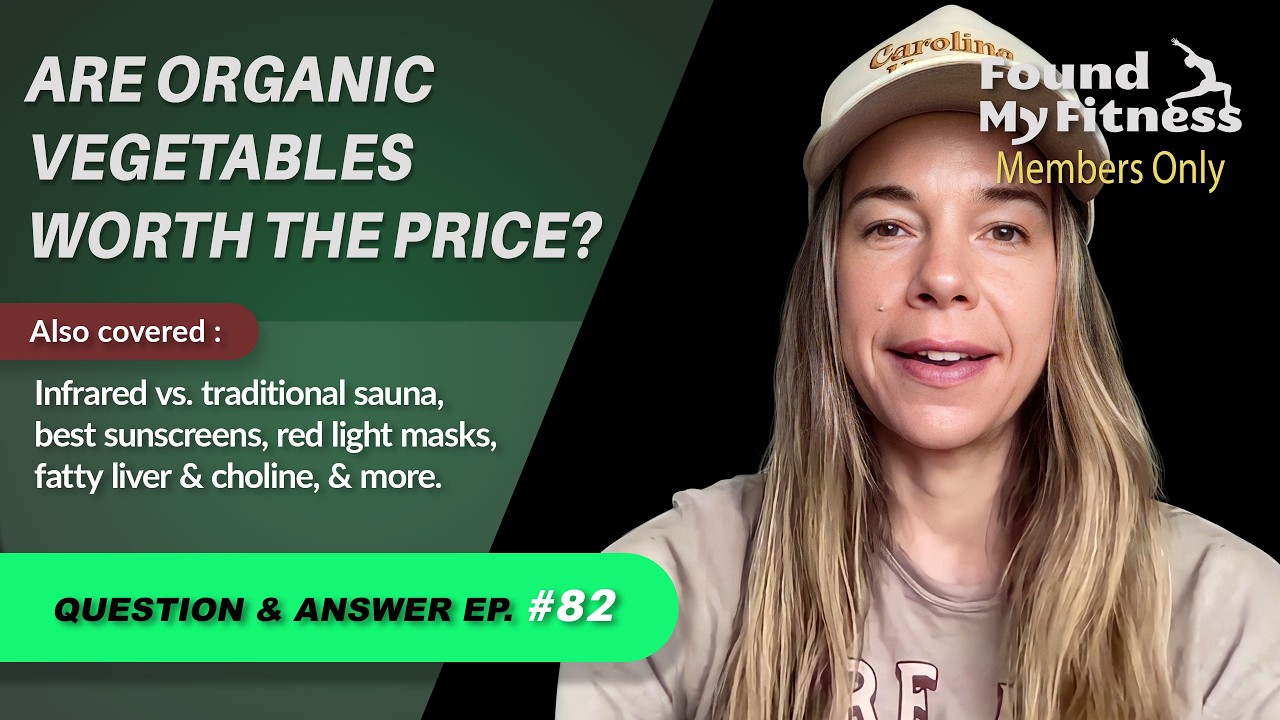
Q&A #82: Organic Food, Pesticides & Glyphosate—What Actually Lowers Exposure?
Dr. Rhonda Patrick discusses organic produce, fasting-mimicking diets, sleep, sauna, sunscreens, red light therapy, reverse osmosis water, and fiber.
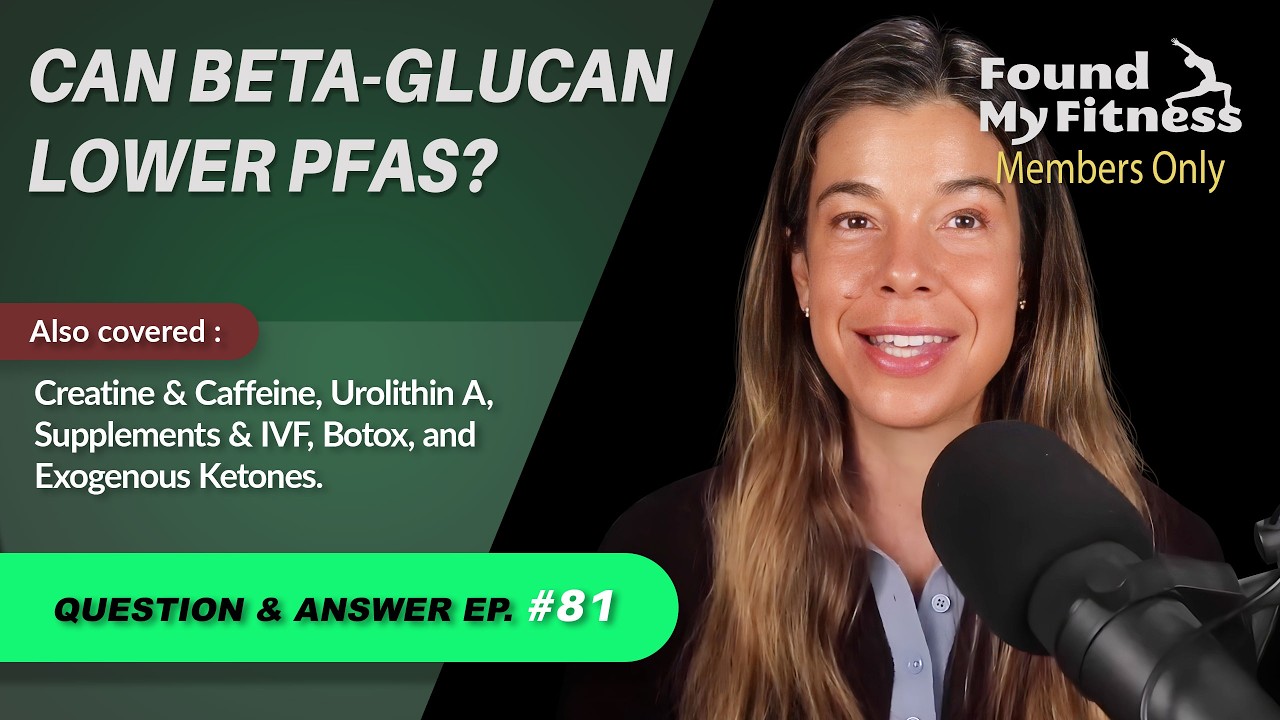
Q&A #81: Beta-Glucan vs. Psyllium—LDL Reduction, PFAS, & Gluten
Beta-glucan versus psyllium for lowering LDL, PFAS reduction, creatine and caffeine, urolithin A, exogenous ketones, IVF, Botox, and sauna.
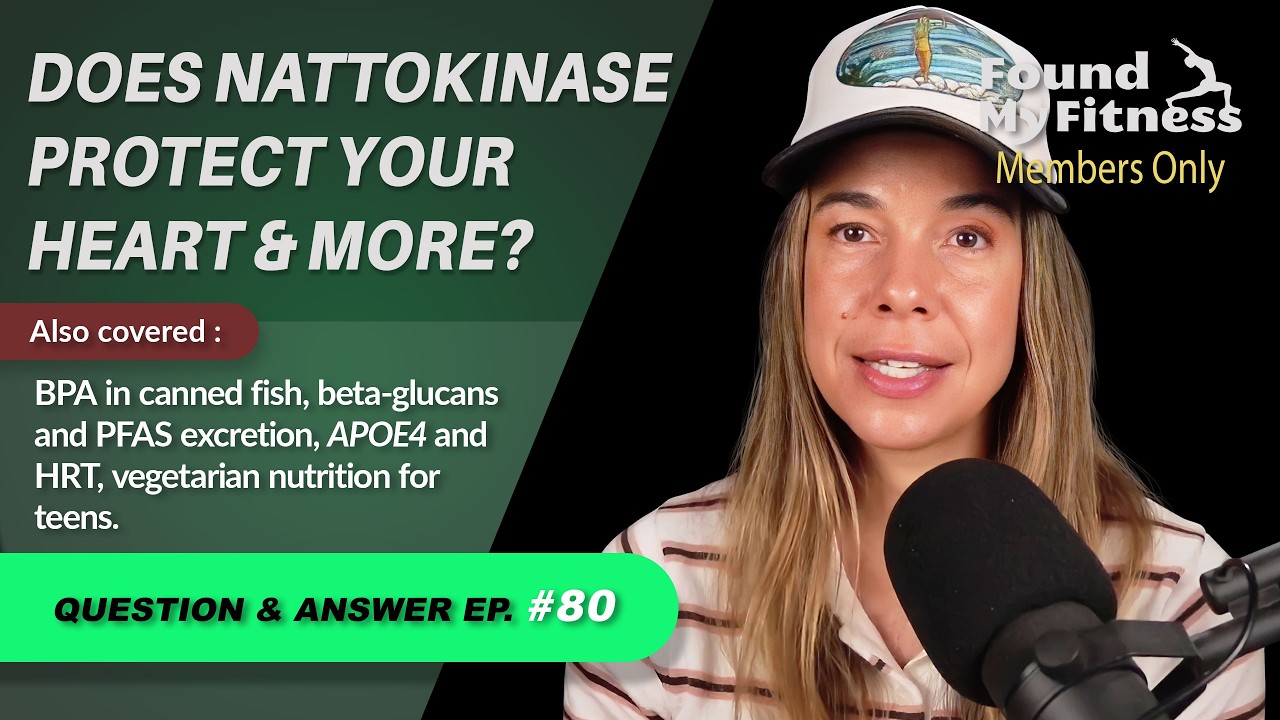
Q&A #80: Does Nattokinase Protect Your Heart?—What the Evidence Shows
Dr. Rhonda Patrick reviews the evidence for nattokinase, how oat beta-glucans may aid with PFAS excretion, and HRT for APOE4 carriers.