1
Collection
What FoundMyFitness Has Covered
PremiumVitamin K is a fat-soluble vitamin best understood as a nutrient central to normal blood clotting, with additional roles in proteins involved in bone and vascular biology. Its naturally occurring forms include phylloquinone (K1) and menaquinones…
Your Premium Brief connects insights across FoundMyFitness to help you see the bigger picture.
Based on available source text from 9 of the first 10 results.
2
 Clip
Clip
Clip
How Vitamin D, Magnesium, and Vitamin K Work Together
“Magnesium supports the enzymes involved in vitamin D metabolism, while vitamin K-dependent proteins help direct calcium handling. In a randomized trial, magnesium supplementation changed vitamin D metabolites in a manner that depended on baseline vitamin D status.”
3

Aliquot
Premium
Aliquot #62: How vitamin K influences cardiovascular and bone health
“Vitamin K is a type of fat-soluble vitamin that participates in blood clotting, cardiovascular health, and bone metabolism. Naturally occurring forms of vitamin K include phylloquinone, known as vitamin K1, and a family of molecules called menaquinones, known as vitamin K2.”
4
 Clip
Clip
Clip
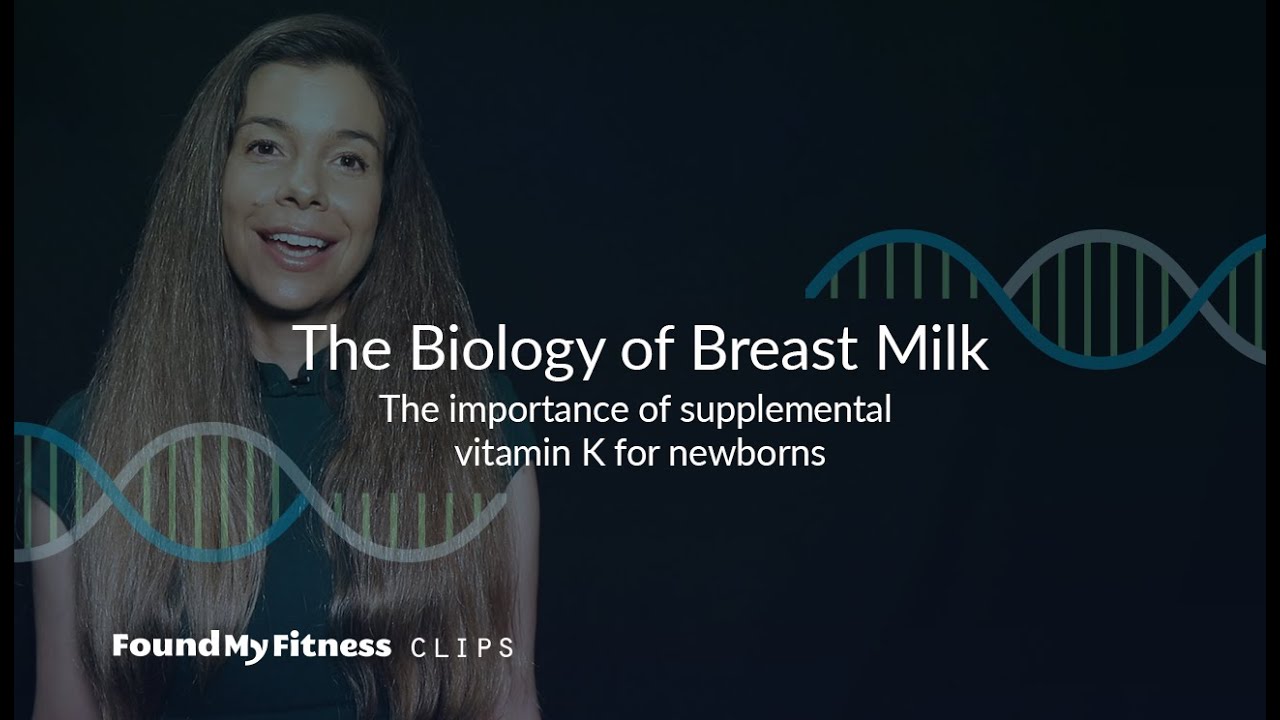
Why newborns are given vitamin K | The Biology of Breast Milk
“The vitamin and mineral content of breastmilk varies according to a mother's diet and tissue stores, but some nutrients are low in breastmilk regardless of maternal status. Vitamin K, in particular, is crucial for blood clotting and must be provided to newborns to prevent hemorrhaging. In this clip, Dr. Rhonda Patrick describes the importance of vitamin K for newborn infants.”
5
Topic
Topic
Vitamin D
“The body has limited vitamin K storage capacity, so the body recycles it in a vitamin K redox cycle and reuses it multiple times. Naturally occurring forms of vitamin K include phylloquinone (vitamin K1) and a family of molecules called menaquinones (vitamin K2).”
6
Topic
Topic
Breast milk and breastfeeding
“For example, vitamin K, which is essential for normal blood clotting, is very low in breast milk. Consequently, the American Academy of Pediatrics recommends that all newborn infants receive an injection of vitamin K to prevent hemorrhage.”
7
Topic
Topic
Multivitamins
“The formula and the person both matter. Vitamin K can interact with warfarin, and iron, preformed vitamin A, vitamin B6, iodine, selenium, zinc, and other nutrients can become excessive when products are stacked.”
8
 Clip
Clip
Clip
How the Body Prioritizes Micronutrients During Shortfalls
“These findings support attention to diet quality without implying that nearly everyone has overt disease. Vitamin K supports normal coagulation and proteins involved in bone and vascular biology. Survey data found that 43% of men and 62.5% of women met the adequate-intake target, leaving many below it.”
9
Topic
Topic
Alcohol
“Adults with alcohol use disorder have a 20%–50% greater prevalence of calcium deficiency, a 25%–50% greater prevalence of magnesium deficiency, a 6%–80% greater prevalence of deficiencies in many B vitamins, and a 14%–58% greater prevalence of deficiencies in vitamins C, D, E, and K.”
10
Topic
Topic
Lactobacillus reuteri
“Bile acids are produced by the liver and secreted into the digestive tract, where they emulsify dietary fats. The small intestine reabsorbs bile acids along with dietary cholesterol, fats, and fat-soluble vitamins such as A, D, E, and K.”
Results 1–10 of 359