Agriculture
Episodes

Dr. Rhonda Patrick discusses organic produce, fasting-mimicking diets, sleep, sauna, sunscreens, red light therapy, reverse osmosis water, and fiber.
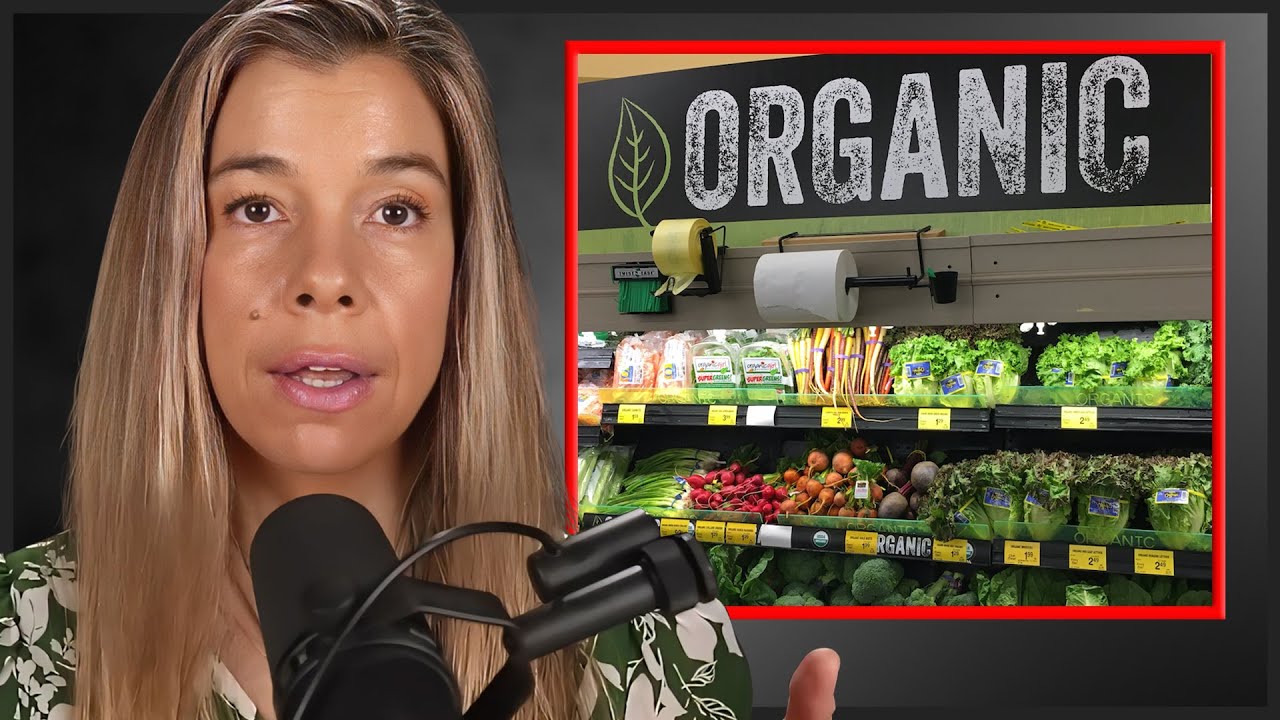
In this clip, Dr. Rhonda Patrick covers pesticide risks, organic buying tips, produce washing, folate's role, and prioritizing micronutrients over pesticides.

In this clip, Dr. George Church discusses how gene editing could uniquely improve human life in the future.
-
Rhonda Agriculture Aging Magnesium Fasting Fiber Sulforaphane Fatty Liver Skin Environment Time-Restricted Eating Sauna Supplements Cardiovascular Red Light Therapy Choline MicroplasticsDr. Rhonda Patrick discusses organic produce, fasting-mimicking diets, sleep, sauna, sunscreens, red light therapy, reverse osmosis water, and fiber.
-
In this clip, Dr. Rhonda Patrick covers pesticide risks, organic buying tips, produce washing, folate's role, and prioritizing micronutrients over pesticides.
-
In this clip, Dr. George Church discusses how gene editing could uniquely improve human life in the future.
-
In this clip, Dr. George Church describes Genome Project-Write, its goals, and the technology fueling it.
-
In this clip, sulforaphane expert Dr. Jed Fahey describes some of the problems associated with choosing a good source of seeds for sprouting.
Topic Pages
News & Publications
-
Great comment from HackerNews user yannibuk:
What’s interesting is that a big driver for this is social media. I was at a conference once & the CEO of Perdue listed this as a top driver behind this movement. He justified it this way: imagine that it costs an extra $0.01 per pound to create chicken meat that is antibiotic free. If the profit margin was $0.05 per pound that would cut profits by 20%. Today, negative PR on Facebook or Twitter can quickly spread to erode the value of a brand far more than $0.01 per pound of cost savings. He said that the reason for the switch is driven by consumers, who are now empowered by social media. From a nutrition tech standpoint there are a number of products including probiotics, beta glucans & others that help to protect the birds by boosting immune system activity rather than by killing bacteria. When used in combination with vaccines they can be very effective, albeit slightly more expensive. However, these ingredients add cost & come at a metabolic cost to the animal (i.e. it takes more food to produce 1 pound of meat if more of that energy is directed towards a functioning immune system & away from weight gain).
Animal nutrition science is in many ways more advanced than human nutrition due to the ability to conduct controlled studies and access to large amounts of data. However, the goals are very different.
Animals account for ~80% of antibiotic usage in the U.S. and MRSA now kills more people in the U.S. than HIV. It’s an interesting topic.
Makes you sort of think twice about “ag gag” laws coming into play in some states.
-
FTA:
Vinclozolin is a fungicide commonly used by farmers to treat fruits and vegetables.
To test the effects of stress on rats, the researchers confined some of them to soft, warm cylinders for six hours a day for three weeks. This was done during adolescence, a developmentally sensitive time of life for rats, just as for humans. Months later, the researchers tested the brain chemistry, brain function, gene expression and behavior of the rats as adults.
They discovered that for female rats, ancestral exposure to vinclozolin alone or stress during the animal’s adolescence alone had negligible effects on the rats' hormonal balance and behavior. However, the combination of ancestral exposure and stress caused the female rats to have dramatically higher levels of corticosterone (a stress hormone similar to cortisol in humans), higher expression of genes associated with anxiety and more anxious behaviors.