Q&A
Q&A #9: Viral Defense—Sulforaphane, NAC, Glutathione, & Vitamin D
Dr. Rhonda Patrick answers audience questions on various health, nutrition, and science topics in this Q&A session.
FoundMyFitness library
Ranked by shared topics, with one result from each original episode.
Q&A
Dr. Rhonda Patrick answers audience questions on various health, nutrition, and science topics in this Q&A session.
Episode
“In this episode, Rhonda gives a summary of the science of resveratrol including its effects in animals and humans, the mechanisms behind how it works, and the bottom line on resveratrol supplementation and safety. A few key moments... For a more in-depth timeline, as well as references for this episode, click the timeline tab. Learn more about resveratrol on our overview page”
Episode
“People that used the sauna 2-3 times per week had a 20% lower risk of Alzheimer’s disease, and those that used the sauna 4-7 times per week had a 60% lower risk of Alzheimer's disease, compared to men that used the sauna 1 time per week.”
Clip
“A wide array of toxicants, including heavy metals, such as cadmium and mercury; bisphenol A; polychlorinated biphenyls; and phthalate compounds, bioaccumulate in the human body. An individual's toxic burden may contribute to their poor metabolic function, inflammation, and cognitive dysfunction.”
Episode
“In this video, Dr. Rhonda Patrick summarizes a recent study that found that frequency of sauna use was associated with increased decreased risk of death. Using the sauna 2-3 times per week was associated with 24% lower all-cause mortality and 4-7 times per week decreased all-cause mortality by 40%.”
Clip
“In this Knowledge Project excerpt, Dr. Rhonda Patrick distinguishes Finnish sauna protocols near 174–175°F from lower-temperature infrared sauna, which may require longer exposure. Dose depends on temperature, humidity, duration, acclimation, hydration, and health.”
Episode
“A staggering 60% of all calories Americans consume come from ultra-processed foods that fail to induce proper satiety, remain cheaper than whole foods, and hijack our dopamine reward pathways, pushing us to overeat, incentivizing unhealthy food choices, and reinforcing addictive eating behaviors.”
Episode
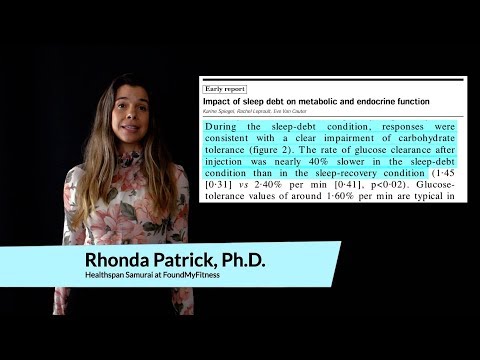
“When most people think about certain lifestyle factors that affect insulin sensitivity and blood glucose levels, they think about macronutrient composition, or calories, or fasting, or exercise (and lack of), but they don’t often think about sleep.”
Clip
“Uric acid adds another long-range signal. In the Swedish AMORIS cohort, 1,224 people who reached age 100 tended to have lower midlife glucose, creatinine, and uric acid than peers who did not become centenarians.”
Clip
“During the peak phase, participants sometimes completed two interval sessions per week, while the longer maintenance phase generally used one interval session alongside continuous endurance work and strength training.”