Q&A
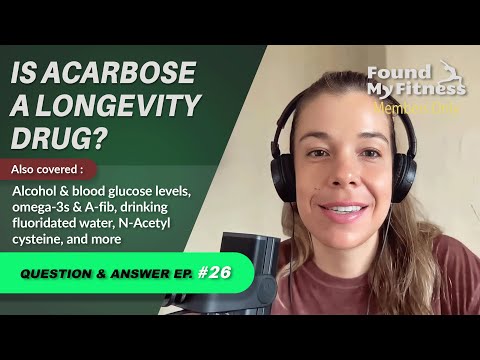
Q&A #26: Do Omega-3s Raise Atrial Fibrillation Risk—and Is Acarbose a Longevity Drug?
Dr. Rhonda Patrick answers audience questions on various health, nutrition, and science topics in this Q&A session.
FoundMyFitness library
Ranked by shared topics, with one result from each original episode.
Q&A
Dr. Rhonda Patrick answers audience questions on various health, nutrition, and science topics in this Q&A session.
Q&A
Dr. Rhonda Patrick answers audience questions on various health, nutrition, and science topics in this Q&A session.

Q&A
Dr. Rhonda Patrick answers audience questions on various health, nutrition, and science topics in this Q&A session.
Q&A
Dr. Rhonda Patrick answers audience questions on various health, nutrition, and science topics in this Q&A session.
Q&A
Dr. Rhonda Patrick discusses fragmented sleep, lipid biomarkers including ApoB and LP(a), coffee makers and bean quality, and choline supplementation.
Clip
“Together, these examples make food-contact materials a practical place to examine everyday exposure, while the amount absorbed and the health effects of specific drinking habits remain active research questions.”
Clip
“In a small crossover trial involving people with insulin resistance, six one-minute intense intervals performed before the three main meals improved daily glucose control compared with one continuous 30-minute session.”
Clip
“In this clip from Dr. Rhonda Patrick's appearance on The Tim Ferriss Show, she describes the supplements her parents use and separates a simple nutritional baseline from choices tied to individual health needs.”
Clip
“In more than 2,000 adults ages 51 to 80, higher Sitting-Rising Test scores were associated with longer survival, making floor-transfer ability a useful marker of functional capacity. Floor time can include cross-legged sitting, kneeling, side-sitting, or sitting with the legs extended.”
Clip
“A growing body of scientific evidence suggests that there's a correlation between nutrition, exercise, sleep, and stress management and having longer telomeres. Identifying the mechanisms that drive these correlations has proven challenging, but a few candidates stand out, including improvements in immune function and metabolic health.”