Q&A
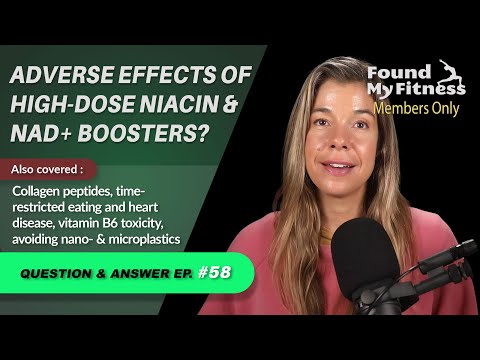
Q&A #58: High-Dose Niacin, NAD+ Boosters, & Cardiovascular Risk
Dr. Rhonda Patrick explores collagen peptides, high-dose niacin and vitamin B6, avoiding nano- and microplastics in her latest Q&A.
FoundMyFitness library
Ranked by shared topics, with one result from each original episode.
Q&A
Dr. Rhonda Patrick explores collagen peptides, high-dose niacin and vitamin B6, avoiding nano- and microplastics in her latest Q&A.

Q&A
Dr. Rhonda Patrick discusses iron imbalances, urolithin A, NAD+ boosters, vitamin K2 and hormone replacement therapy in women.
Q&A
Dr. Rhonda Patrick answers audience questions on various health, nutrition, and science topics in this Q&A session.
Clip
“In contrast, a five-week trial in 181 people with diabetic polyneuropathy found that oral alpha-lipoic acid improved symptom scores, with more nausea, vomiting, and vertigo at higher doses. PQQ has a much smaller human evidence base.”
Clip
“In this clip from Q&A #70, Dr. Rhonda Patrick organizes cancer prevention around the largest modifiable foundations: avoid tobacco, maintain a healthy body composition, and stay physically active.”
Clip
“In a small crossover trial involving people with insulin resistance, six one-minute intense intervals performed before the three main meals improved daily glucose control compared with one continuous 30-minute session.”
Clip
“In this clip from Dr. Rhonda Patrick's appearance on The Tim Ferriss Show, she describes the supplements her parents use and separates a simple nutritional baseline from choices tied to individual health needs.”
Clip
“She highlights its roles in brain health and homocysteine metabolism. Product quality matters for omega-3 supplements because these fats oxidize readily; she favors products with third-party testing for oxidation and labeled EPA and DHA content, with algal oil as a vegan option.”
Clip
“Practicing healthy light exposure habits — seeking bright light in the morning and avoiding it in the evening — is crucial. When we eat also plays a role, and eating too close to bedtime disrupts sleep and shifts circadian timing over the next few days.”
Clip
“Dr. Brooks's exact practice of waking 96 minutes before dawn comes from the Vedic concept of Brahma Muhurta rather than a tested clinical protocol. Creatine may provide modest cognitive benefits in some settings, although results in healthy adults are mixed.”