Q&A
Q&A #43: Rhonda’s Diet and Supplements—Plus Menopausal Hormone Therapy
Dr. Rhonda Patrick answers audience questions on various health, nutrition, and science topics in this Q&A session.
FoundMyFitness library
Ranked by shared topics, with one result from each original episode.
Q&A
Dr. Rhonda Patrick answers audience questions on various health, nutrition, and science topics in this Q&A session.
Q&A
Dr. Rhonda Patrick explores collagen peptides, high-dose niacin and vitamin B6, avoiding nano- and microplastics in her latest Q&A.
Q&A
Dr. Rhonda Patrick discusses nicotinamide riboside, biomarkers, belly fat loss, sex-specific health, curcumin & ashwagandha safety.
Episode
“In this episode, Rhonda gives a summary of the science of resveratrol including its effects in animals and humans, the mechanisms behind how it works, and the bottom line on resveratrol supplementation and safety. A few key moments... For a more in-depth timeline, as well as references for this episode, click the timeline tab. Learn more about resveratrol on our overview page”
Episode
“Although the findings of a large meta-analysis published in the journal Annals of Internal Medicine indicated that there was no evidence to support the notion that consumption of saturated fat increased the risk of heart disease, the studies on which their conclusions were based were primarily observational.”
Episode
“This is a video on how to plausibly increase the sulforaphane created from the glucoraphanin in your broccoli sprouts by up to 3.5-fold, based on the results of a 2004 Phytochemistry paper entitled "Heating decreases epithiospecifier protein activity and increases sulforaphane formation in broccoli."”
Episode
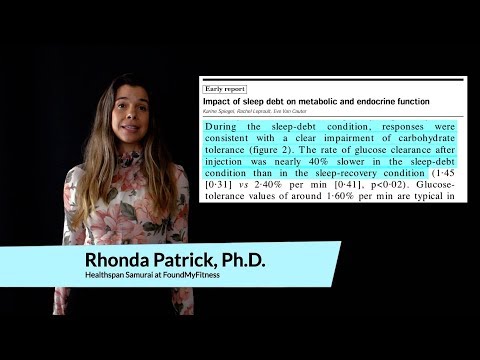
“When most people think about certain lifestyle factors that affect insulin sensitivity and blood glucose levels, they think about macronutrient composition, or calories, or fasting, or exercise (and lack of), but they don’t often think about sleep.”
Episode
“Based on findings from more recent studies using stable isotopes, which more accurately assess muscle protein anabolism and catabolism, Dr. Phillips believes that eating 1.2 to 1.6 grams of protein per kilogram of bodyweight (about 0.5 to 0.7 grams per pound) is likely optimal for muscle protein synthesis, especially as one ages.”
Episode
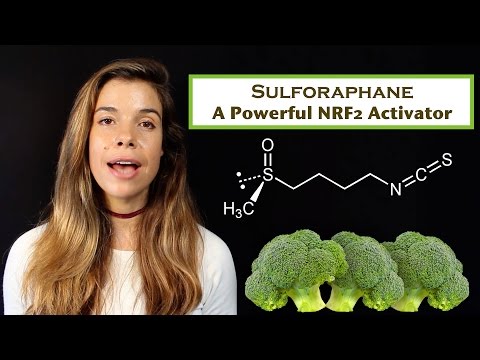
“There is so much to say when we talk about the NRF2 pathway and isothiocyanates like sulforaphane that we had to pack it into 47 minutes and break it into a few key sections. Key sections: For a more in-depth breakdown click the timeline link at the top of this page!”
Clip
“Human trials suggest that alpha-lipoic acid can modestly improve selected lipid measures. A dose-response meta-analysis of 12 studies found reductions in total cholesterol, LDL cholesterol, and triglycerides across doses from 300 to 1,200 milligrams per day.”