• Episodes
  • Topics
  • AMA
  • Science Digest
  • The Aliquot
  • Genetics
Sign in Become a member
Search
Back to episode

FoundMyFitness library

Related Episodes for Sulforaphane’s positive effects on brain health and autism | Jed Fahey

Ranked by shared topics, with one result from each original episode.

161
Clip
Clip

How Omega-3 Status Relates to Longevity

Apr 25, 2025

“Because red blood cells turn over slowly, the test provides a longer-term view of marine omega-3 status than a recent meal and gives people a measurable way to evaluate diet or supplementation.”

omega-3 mortality nutrition inflammation
Watch clip
162
Clip
Clip

Low Omega-3 Status and the Risk of Early Death

Jan 9, 2026

“A later Framingham analysis followed 2,240 adults for 11 years and found that a red-cell fatty acid model including the Omega-3 Index predicted all-cause mortality about as well as a model using several standard cardiovascular risk factors.”

nutrition diet aging biomarkers
Watch clip
163
Episode
Episode

Maximizing Your Mitochondria with Magnesium

May 16, 2014

“If your magnesium levels are inadequate, then your ability to boost mitochondrial number during HIT will be dampened, thus, compromising performance and the mitochondrial mass you would have otherwise gained as a consequence of your hard work and effort.”

magnesium nutrition exercise performance
Play episode Duration: 3m 6s
164
Episode
Episode

Buffering the Negative Effects of Chronic Stress with Meditation

Sep 25, 2015

“The mast cells release pro­inflammatory cytokines and proteases that damage the gut, leading to intestinal permeability, a condition otherwise known as “leaky gut.” This leakiness allows bacteria and bacterial antigens to cross the gut’s inner layer, the epithelium, and activate even more immune cells, leading to more inflammation – a key driver in the aging process.”

meditation brain aging telomeres
Play episode
165
Episode
Episode

Late-night eating and melatonin may impair insulin response

Apr 2, 2019

“In this brief episode, we learn how restoring our dietary and sleep pattern to one that more closely syncs with those imposed by nature, especially by avoiding eating within 2-3 hours before bed and onset of melatonin production, may improve our health and potentially prolong our healthspan.”

melatonin brain diet sleep
Play episode
166
Clip
Clip

How Aerobic Exercise Timing Can Support Memory

Dec 16, 2024

“Another randomized study found better long-term picture-location memory when exercise occurred four hours after learning, showing that timing can shape the result. Dr. Patrick also discusses serotonin and hippocampal neurogenesis as a possible biological link.”

memory exercise brain aerobic
Watch clip
167
Clip
Clip

Managing and detecting the exposome and exposure to air pollution | Dr. Michael Snyder

Jul 23, 2021

“Assessing and quantifying the exposome — all of the non-genetic tangible exposures we experience during a lifetime, including those from the air, physical surroundings, microbes, and chemicals — is challenging.”

pollution brain alzheimer's
Watch clip
168
Episode
Episode

Smoothie #2: Prebiotics, Phytochemicals, "Anti-Nutrients" & Hydrolyzed Collagen

May 31, 2016

“While Dr. Rhonda Patrick’s first video focused primarily on the micronutrients found in the various fruits and vegetables she put in her smoothie, this one, in addition to offering some modest changes on the recipe, instead focuses on the beneficial “hormetic” compounds that are NOT micronutrients.”

diet brain gut aging
Play episode
169
Clip
Clip

Multivitamins and Vitamin D After 65: What the Evidence Shows

Feb 27, 2026

“A pooled analysis estimated effects of about 0.07 standard deviation for global cognition and 0.06 for episodic memory, providing evidence that a standard multivitamin can support selected cognitive outcomes in some older adults.”

vitamin d nutrition aging omega-3
Watch clip
170
Clip
Clip

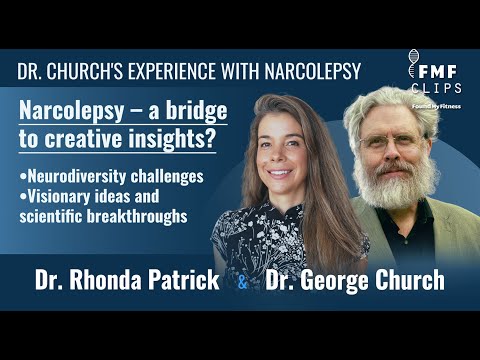
Dr. Church's experience with narcolepsy │ Dr. George Church

Sep 2, 2022

“People who have narcolepsy, a chronic neurological disorder, experience very irregular sleep-wake cycles and may fall asleep during routine daily activities such as driving or troubleshooting a difficult problem.”

genetic engineering brain sleep behavior
Watch clip
Load more related episodes

Explore More

  • Home
  • Episodes
  • Membership
  • The Aliquot
  • About
  • Healthspan Gear
  • Genetics

Our Mission

Promoting strategies to increase healthspan, well-being, cognitive and physical performance through deeper understandings of biology. Learn more about Dr. Rhonda Patrick.

Questions?

Send us a message here

Search

Follow us here

  • Instagram
  • Twitter
  • Facebook

Watch and listen

  • YouTube
  • Apple Podcasts
  • Spotify
This site is protected by reCAPTCHA and is subject to the Google Privacy Policy and Terms of Service, as well as our own Privacy Policy and Terms of Service.