Q&A
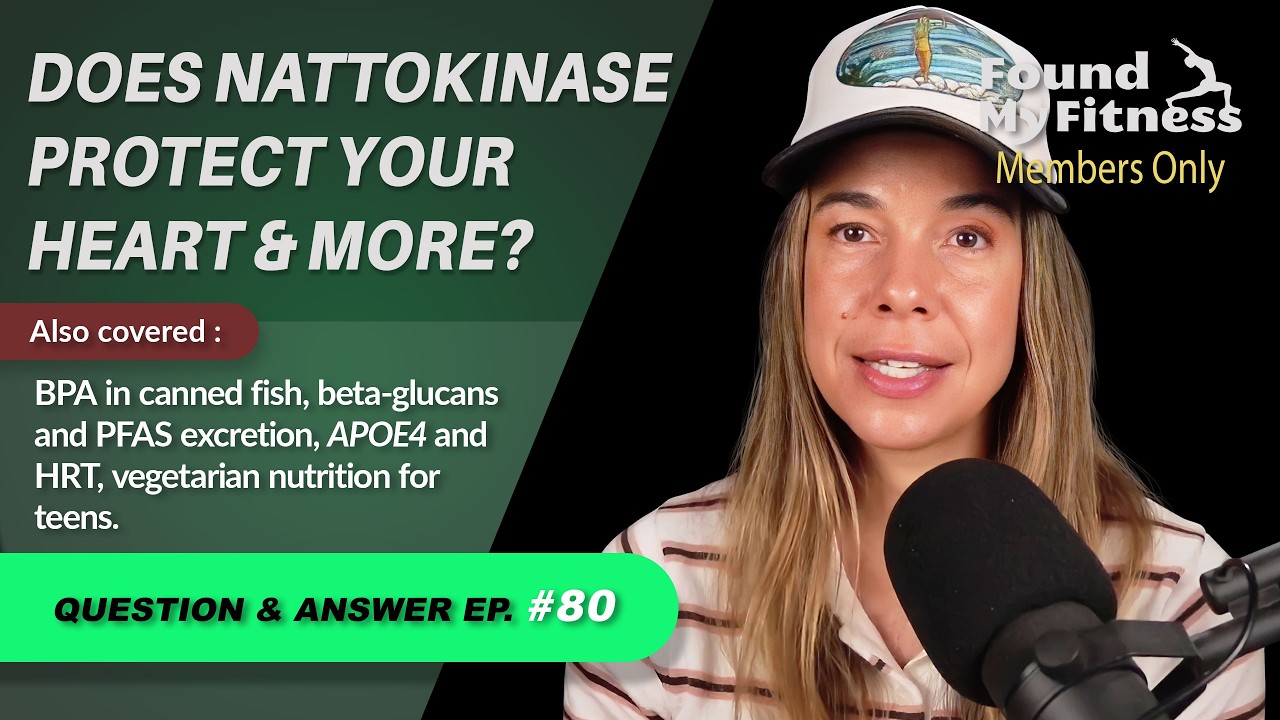
Q&A #80: Does Nattokinase Protect Your Heart?—What the Evidence Shows
Dr. Rhonda Patrick reviews the evidence for nattokinase, how oat beta-glucans may aid with PFAS excretion, and HRT for APOE4 carriers.
Search could not finish. Try again.
Found 672 matches across the FoundMyFitness library.
Q&A
Dr. Rhonda Patrick reviews the evidence for nattokinase, how oat beta-glucans may aid with PFAS excretion, and HRT for APOE4 carriers.

Clip
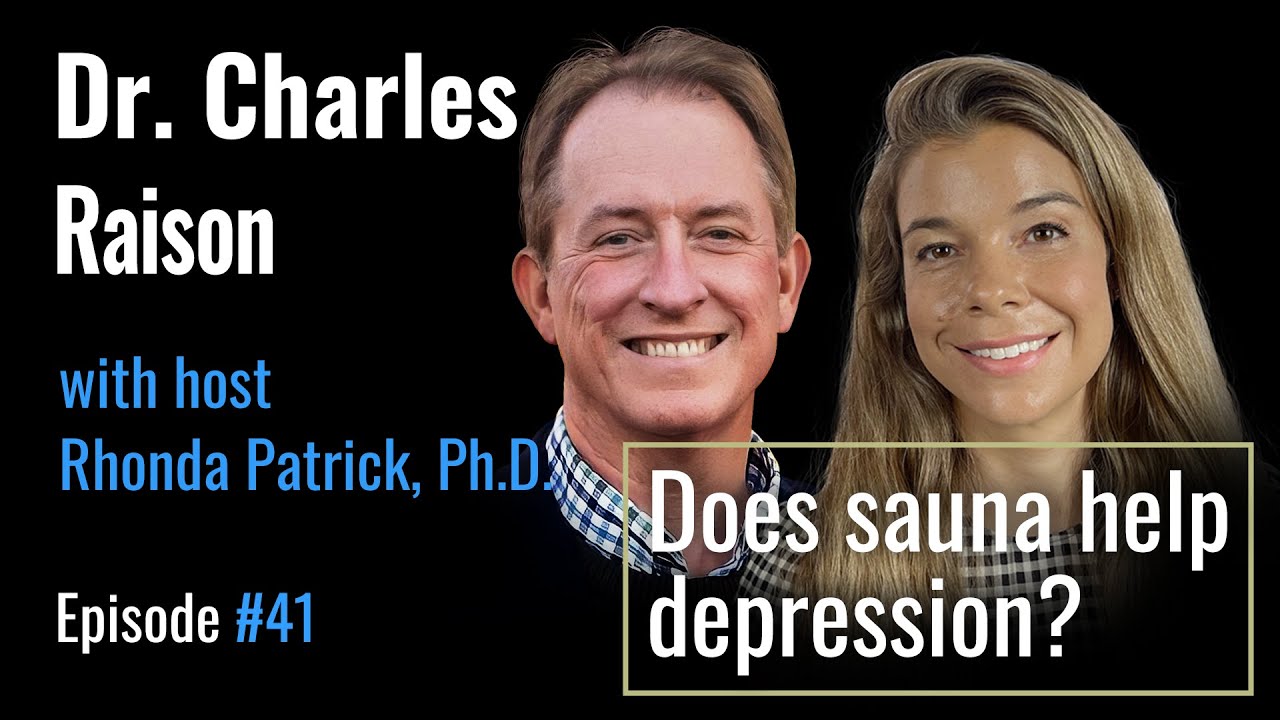
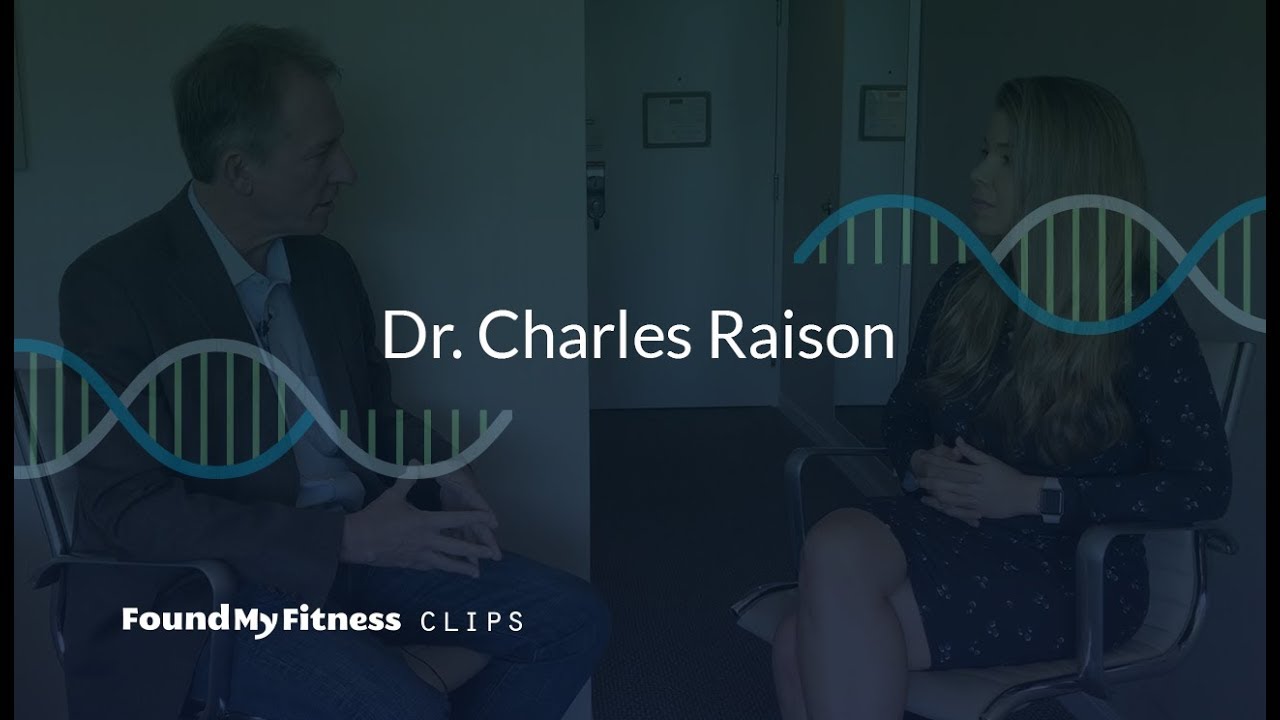
“Exercise produces similar results by releasing anti-inflammatory cytokines that may contribute to an anti-depressant outcome. In this clip, Dr. Charles Raison describes how whole-body hyperthermia has the potential for real-world clinical efficacy as a tool in the fight against major depression.”
“Because some long-chain PFAS travel through a similar pathway, researchers are now asking whether beta-glucans might also help the body eliminate these persistent "forever chemicals."”
Clip
“In a small trial involving adults with obesity, a ketone monoester improved one processing-speed task and selected brain blood-flow measures, providing an early signal for further research. Temperature can also shape alertness and sleep preparation.”
Episode
“For example, while vitamin C acts primarily as an antioxidant at physiological concentrations of approximately 50 micromoles per liter, pharmacologic doses of intravenous vitamin C greater than 1 gram generate hydrogen peroxide, a type of reactive oxygen species produced by neutrophils to destroy pathogens such as viruses.”
Clip
“A large observational study associated five healthy lifestyle factors, including a healthy dietary pattern, with an estimated 14 additional years of life expectancy for women and 12 years for men at age 50 compared with following none of the factors.”
Clip
“Researchers have determined that beta-hydroxybutyrate is an endogenous regulator of HDACs and is able to regulate age-related genes such as FOXO3. In this clip, Dr. Eric Verdin discusses the role of beta-hydroxybutyrate in protecting against oxidative stress, both as a nutrient, but also as a transcription regulator.”
Episode
“In Dr. Raison’s randomized, double-blind study published in JAMA in 2016, it was shown that a single session of whole-body hyperthermia (core body temperature was elevated to 38.5 C) produced a significant antidepressant effect in people with major depressive disorder compared to those who received a sham control.”
Episode
“Circulating LPS can also bind to lipoproteins, facilitating their absorption in the liver during LDL recycling, effectively removing LPS from circulation and lowering systemic inflammation – a phenomenon demonstrated mechanistically with statins that increase lipoprotein recycling by increasing LDL receptors.”
Episode
“BFR training protocols include a frequency of 2-3 times per week, occlusion pressure of 40-80% depending on the limb, using 2 exercises per muscle group, repetition schemes, wear times of 10-20 minutes, loads of 20-50% of 1 rep max, and a tempo of 1-2 seconds for both concentric and eccentric.”
Results 271–280 of 672
Premium Members received this study with Rhonda’s practical commentary and 8+ other hand-picked papers. Get the Science Digest delivered every other week.
Every other week our Premium Members receive deep dives like this alongside Rhonda's commentary and 8+ other hand-picked papers.