Q&A
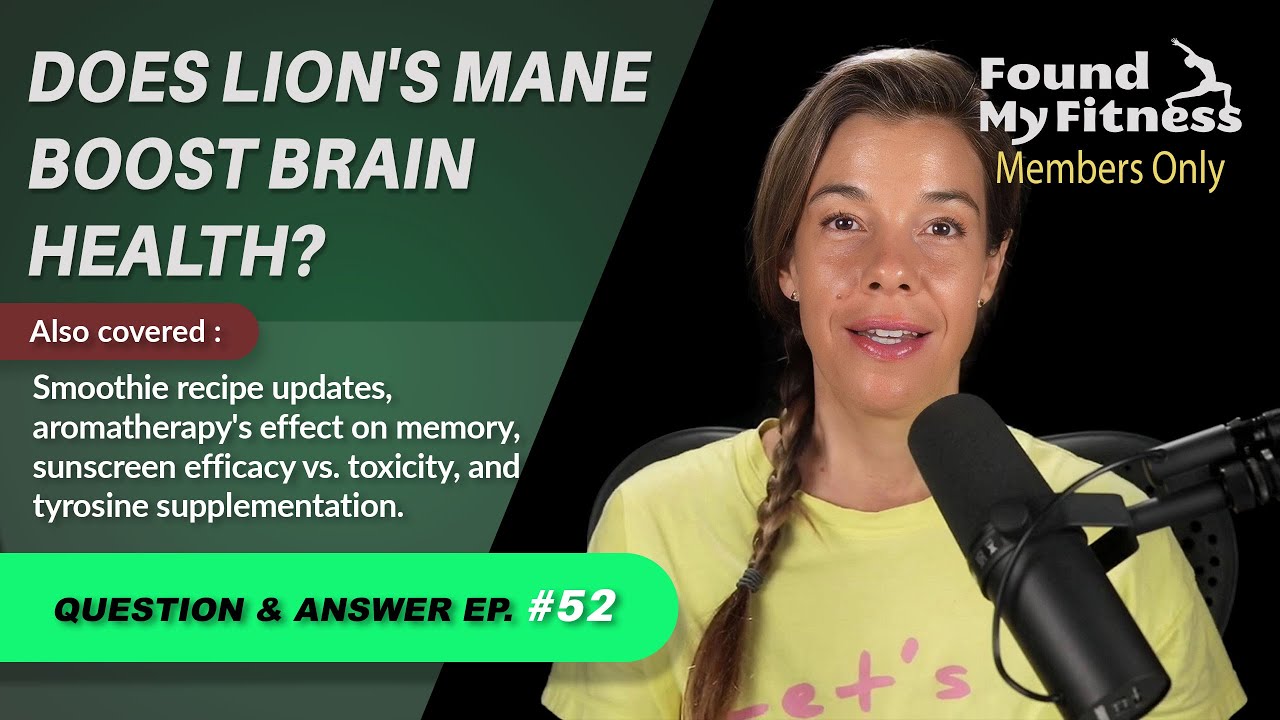
Q&A #52: Does Lion’s Mane Boost Brain Health—and Are Mineral Sunscreens Safe?
Dr. Rhonda Patrick explores supplemental tyrosine, lion's mane, cordyceps, aging tests, and sunscreen's efficacy and safety in a Q&A.

Search could not finish. Try again.
Found 433 matches across the FoundMyFitness library.
Q&A
Dr. Rhonda Patrick explores supplemental tyrosine, lion's mane, cordyceps, aging tests, and sunscreen's efficacy and safety in a Q&A.
Clip
“A critical element in healthiness is the timing and content of our meals. Time-restricted eating, a form of daily fasting wherein the time of the day during which a person eats is limited, capitalizes on the body's natural circadian metabolic rhythms to promote health.”
Clip
“A liberalized version of the diet containing more protein and (proportionately) less fat may offer much of the therapeutic potency while being easier to tolerate. This may allow more people to receive the optimal performance and health benefits.”
Clip
“Dr. Huberman’s practical range is deliberately cautious: not drinking avoids the exposure, and lower weekly intake creates less burden than a drink every night or heavier episodes.”
Clip
“Together, these examples make food-contact materials a practical place to examine everyday exposure, while the amount absorbed and the health effects of specific drinking habits remain active research questions.”
Clip
“Insulin-like growth factor 1 (IGF-1) plays a role during childhood for growth and continues later in life to have anabolic and neurotrophic effects. IGF-1 is also implicated in contributing to aging and enhancing the growth of cancer after it has been initiated.”
Clip
“In this clip from Q&A #68, Dr. Rhonda Patrick compares stearic, palmitic, myristic, and lauric acids and explains why chocolate, cheese, butter, and coconut oil can produce different lipid responses.”
Clip
“Dr. Patrick also distinguishes general-population evidence from people with diabetes or insulin resistance, where some observational studies report different risk patterns and residual confounding remains substantial.”
“For example, exposure to ultraviolet B light is the primary source of vitamin D, but behaviors or characteristics that block or reduce sun exposure, such as using sunscreen, having high levels of melanin (a dark pigment found in skin that acts like natural sunscreen), exclusive breastfeeding, older age, or being obese can impair the skin's ability to produce vitamin D3.”
Clip
In this clip, Dr. Darya Rose talks about quick overview of which foods correspond to different seasons in the year.
Results 351–360 of 433
Premium Members received this study with Rhonda’s practical commentary and 8+ other hand-picked papers. Get the Science Digest delivered every other week.
Every other week our Premium Members receive deep dives like this alongside Rhonda's commentary and 8+ other hand-picked papers.