Q&A
Q&A #5: How to Improve Sleep—and What Nutrition Matters During Pregnancy?
Dr. Rhonda Patrick answers audience questions on various health, nutrition, and science topics in this Q&A session.

FoundMyFitness library
Ranked by shared topics, with one result from each original episode.
Q&A
Dr. Rhonda Patrick answers audience questions on various health, nutrition, and science topics in this Q&A session.

Q&A
Dr. Rhonda Patrick explores blood tests to track health, statin alternatives, mitochondrial supplements, and vitamin B12 and autism risk in her latest Q&A.
Q&A
Dr. Rhonda Patrick explores collagen peptides, high-dose niacin and vitamin B6, avoiding nano- and microplastics in her latest Q&A.
Q&A
Dr. Rhonda Patrick discusses GLP-1 agonists, alpha-lipoic acid, ubiquinone vs. ubiquinol, calcium needs, and liquid biopsy cancer screening.
Q&A
Dr. Rhonda Patrick discusses iron imbalances, urolithin A, NAD+ boosters, vitamin K2 and hormone replacement therapy in women.
Episode
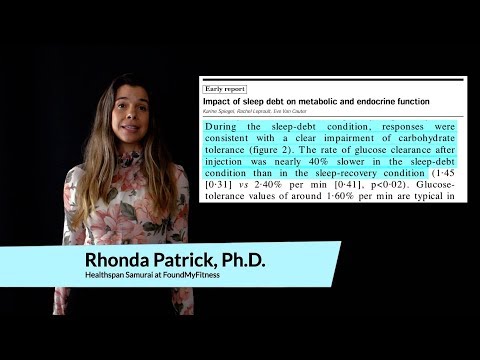
“When most people think about certain lifestyle factors that affect insulin sensitivity and blood glucose levels, they think about macronutrient composition, or calories, or fasting, or exercise (and lack of), but they don’t often think about sleep.”
Episode
“In this video, Dr. Rhonda Patrick interviews Dr. Terry Wahls about how she reversed her secondary-progressive multiple sclerosis with a micronutrient-dense diet and Paleo principles.”
Episode
“Since then, countless studies have tested Pauling's theories about vitamin C, colds, and cancer (and many others), and a substantial body of evidence has emerged, identifying critical roles for vitamin C in immune function, cardiovascular and respiratory health, cognitive development and preservation, and many other aspects of human health.”
Clip
“A 2025 meta-analysis found improved quality of life, no clear overall change in ejection fraction, and a borderline improvement in New York Heart Association functional class across a small set of trials.”
Clip
“In a controlled five-week crossover trial involving men with prediabetes, an early six-hour eating window with dinner before 3 p.m. improved insulin sensitivity, pancreatic beta-cell responsiveness, blood pressure, oxidative stress, and appetite without causing weight loss.”