Q&A
Q&A #32: Protein, mTOR & IGF-1—Plus Rhonda’s Skincare Routine
Dr. Rhonda Patrick answers audience questions on various health, nutrition, and science topics in this Q&A session.

FoundMyFitness library
Ranked by shared topics, with one result from each original episode.
Q&A
Dr. Rhonda Patrick answers audience questions on various health, nutrition, and science topics in this Q&A session.

Q&A
Dr. Rhonda Patrick discusses her supplement stack, avoiding microplastics, creatine for brain health, and mRNA vaccine autoimmunity risks.
Q&A
Dr. Rhonda Patrick discusses saturated fats and LDL, luteolin's benefits, glyphosate risks, natural vs. artificial flavors, and black cumin seed effects.
Clip
“One hypothesis is that DNA repair enzymes, known as PARP (poly ADP-ribose polymerase), might be using up more NAD+ to fix the accumulated DNA damage that occurs with age. Alternately, the cellular pathway that recycles NAD+ may decline in performance with age.”
Clip
“Chiefly, sleep deprivation triggers the onset of a "loneliness phenotype" by inducing critical changes within the brain that alter behavior and emotions, disturb metabolic processes, and influence the expression of immune-related genes.”
Episode
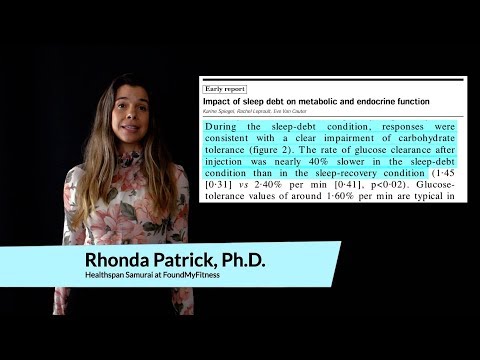
“When most people think about certain lifestyle factors that affect insulin sensitivity and blood glucose levels, they think about macronutrient composition, or calories, or fasting, or exercise (and lack of), but they don’t often think about sleep.”
Clip
“The hydrolytic conversion of glucoraphanin to sulforaphane requires myrosinase, an enzyme co-located within the leaves, stems, and other components of the plants in which it is found. In humans, myrosinase-producing gut bacteria can convert unhydrolyzed glucosinolates to their cognate isothiocyanates, as well.”
Clip
“Human trials suggest that alpha-lipoic acid can modestly improve selected lipid measures. A dose-response meta-analysis of 12 studies found reductions in total cholesterol, LDL cholesterol, and triglycerides across doses from 300 to 1,200 milligrams per day.”
Clip
“In contrast, a five-week trial in 181 people with diabetic polyneuropathy found that oral alpha-lipoic acid improved symptom scores, with more nausea, vomiting, and vertigo at higher doses. PQQ has a much smaller human evidence base.”
Clip
“In a controlled five-week crossover trial involving men with prediabetes, an early six-hour eating window with dinner before 3 p.m. improved insulin sensitivity, pancreatic beta-cell responsiveness, blood pressure, oxidative stress, and appetite without causing weight loss.”