Q&A
Q&A #42: How to Lower ApoB—and Can Hyperbaric Oxygen Improve Health?
Dr. Rhonda Patrick answers audience questions on various health, nutrition, and science topics in this Q&A session.
FoundMyFitness library
Ranked by shared topics, with one result from each original episode.
Q&A
Dr. Rhonda Patrick answers audience questions on various health, nutrition, and science topics in this Q&A session.

Q&A
Dr. Rhonda Patrick answers audience questions on various health, nutrition, and science topics in this Q&A session.
Q&A
Dr. Rhonda Patrick answers audience questions on various health, nutrition, and science topics in this Q&A session.
Q&A
Dr. Rhonda Patrick explores collagen peptides, high-dose niacin and vitamin B6, avoiding nano- and microplastics in her latest Q&A.
Q&A
Dr. Rhonda Patrick discusses iron imbalances, urolithin A, NAD+ boosters, vitamin K2 and hormone replacement therapy in women.
Clip
“In a randomized trial of 80 adults with overweight who usually slept fewer than 6.5 hours, counseling increased sleep by about 1.2 hours per night and reduced objectively measured energy intake by approximately 270 calories per day over two weeks.”
Clip
“In contrast, a five-week trial in 181 people with diabetic polyneuropathy found that oral alpha-lipoic acid improved symptom scores, with more nausea, vomiting, and vertigo at higher doses. PQQ has a much smaller human evidence base.”
Clip
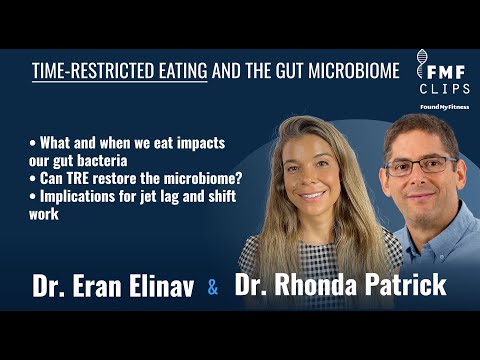
“Normalizing the timing of food intake via time-restricted eating may help restore microbiome composition, potentially offsetting the increased disease risk. In this clip, Dr. Eran Elinav describes how the circadian rhythmicity of the microbiome is regulated and how this affects human health.”
Clip
“A 2025 meta-analysis found improved quality of life, no clear overall change in ejection fraction, and a borderline improvement in New York Heart Association functional class across a small set of trials.”
Clip
“In a controlled five-week crossover trial involving men with prediabetes, an early six-hour eating window with dinner before 3 p.m. improved insulin sensitivity, pancreatic beta-cell responsiveness, blood pressure, oxidative stress, and appetite without causing weight loss.”