1
Collection
What FoundMyFitness Has Covered
PremiumNootropic strategies span several distinct targets rather than one settled intervention: brain energy, circadian timing, dietary state, and compounds such as caffeine, creatine, sulforaphane, choline, and melatonin. Creatine is among the more directly measurable options; a…
Your Premium Brief connects insights across FoundMyFitness to help you see the bigger picture.
Based on available source text from 9 of the first 10 results.
2
 Episode
Episode
Tim Ferriss on Biomarkers, Ketosis, Microbiome, and Lyme Disease
Tim Ferriss discusses ketosis, the gut microbiome, and monitoring biomarkers to promote performance.
3
 Clip
Clip
Clip
How Coffee Supports Healthy Aging
“In the 521,330-person EPIC cohort, participants in the highest country-specific quartile of coffee intake had lower all-cause mortality over an average 16.4 years than nonconsumers. The association was observational, with hazard ratios of 0.88 in men and 0.93 in women.”
4
 Clip
Clip
Clip
What time of day do we have peak cognitive performance? | Dr. Satchin Panda
“Circadian rhythms are the body’s 24-hour cycles of biological, hormonal, and behavioral patterns. Every organ and cell has its own daily timed circadian rhythm, which influences physiological processes, including the body’s production of hormones that regulate sleep, hunger, and metabolism.”
5
 Clip
Clip
Clip
How Creatine Dose Relates to Muscle and Brain Energy
“A small magnetic-resonance spectroscopy study also found that 20 grams per day for four weeks increased brain creatine by an average of about 8.7 percent, showing that brain uptake is possible but variable.”
6
 Clip
Clip
Clip
How Sulforaphane Supports Glutathione and Detoxification
“In a randomized trial of 57 children with autism spectrum disorder, a caregiver-rated secondary behavior scale improved and biomarker changes involved glutathione, mitochondrial, inflammatory, and heat-shock pathways, while the primary clinical outcome was similar between groups.”
7
 Clip
Clip
Clip
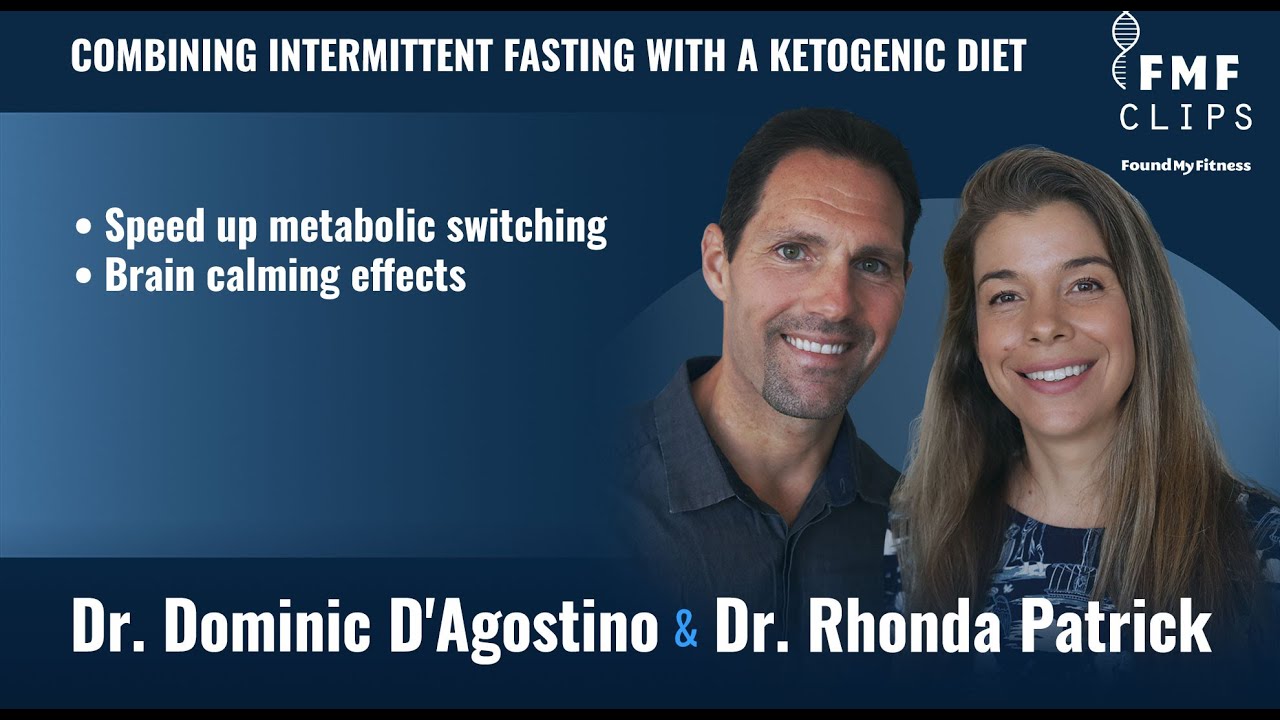
Combining intermittent fasting with a ketogenic diet | Dominic D'Agostino
“Dr. D'Agostino asserts that a low carbohydrate diet incorporating intermittent fasting probably has more benefits than chronic ketosis for most healthy adults. Drs. D'Agostino and Patrick describe their experiences with fasting or time-restricted eating and its calming effects on the brain.”
8

Aliquot
Premium
Aliquot #146: When Is the Best Time to Exercise?
“In this Aliquot, Drs. Satchin Panda, Andrew Huberman, Layne Norton, Brad Schoenfeld, Martin Gibala, and I examine how circadian biology, training intensity, and life schedule shape exercise timing. We also explore what that means for deciding when to train.”
9
 Q&A
Q&A
Q&A
Premium
Q&A #72: What Causes Fragmented Sleep—and Which Lipid Markers Best Predict Heart Risk?
Dr. Rhonda Patrick discusses fragmented sleep, lipid biomarkers including ApoB and LP(a), coffee makers and bean quality, and choline supplementation.
10
 Q&A
Q&A
Q&A
Premium
Q&A #76: How Much Protein Do You Need—and Is Nightly Melatonin Safe?
Dr. Rhonda Patrick discusses protein needs, choline in pregnancy, urolithin A, melatonin's benefits and risks, and creatine's effects on liver health.
Results 1–10 of 29