1
Collection
What FoundMyFitness Has Covered
PremiumVisceral fat is metabolically active fat stored deep in the abdomen around organs such as the liver and pancreas. Compared with subcutaneous fat, it releases more free fatty acids and inflammatory molecules, contributing to insulin resistance…
Your Premium Brief connects insights across FoundMyFitness to help you see the bigger picture.
Based on available source text from 9 of the first 10 results.
2

Aliquot
Premium
Aliquot #147: How to Break the Visceral Fat Cycle
“Visceral fat is a highly metabolically active form of fat that accumulates deep within the abdomen around organs such as the liver and pancreas. Compared with subcutaneous fat, it releases greater amounts of free fatty acids and secretes inflammatory molecules that contribute to insulin resistance and metabolic disease.”
3
 Clip
Clip
Clip
How Exercise and Sleep Affect Visceral Fat
“Studies using CT imaging associate higher visceral fat with insulin resistance and increased risks of cardiovascular disease, cancer, and mortality. Visceral fat can respond to changes in energy balance and physical activity.”
4
 Clip
Clip
Clip
Which Types of Exercise Reduce Visceral Fat?
“High-intensity interval training offers a time-efficient option, while continuous aerobic exercise can produce similar visceral-fat reductions when workload is comparable. Protocols vary, so the best format depends on fitness, safety, preferences, and adherence.”
5
 Clip
Clip
Clip
How Exercise and Energy Balance Reduce Visceral Fat
“Visceral fat also tends to rise during the menopause transition as hormonal changes interact with age, activity, sleep, diet, and total fat gain. Regular exercise and sustainable energy balance provide the strongest foundation for reducing visceral fat.”
6
 Clip
Clip
Clip
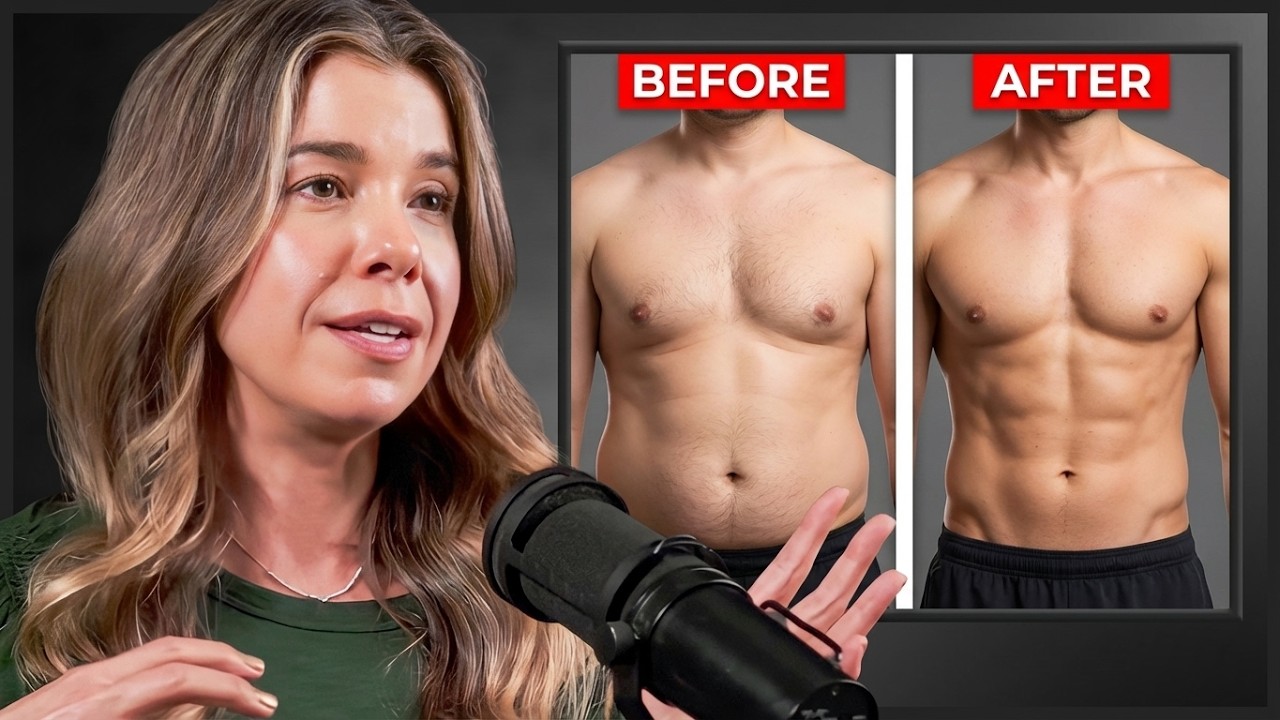
Why Looking Lean Does Not Rule Out Visceral Fat
“In this clip from a conversation between Dr. Rhonda Patrick and Thomas DeLauer, she explains why body weight and appearance alone cannot reveal visceral-fat risk. Visceral fat is stored inside the abdomen around internal organs, while the fat that can be pinched beneath the skin is subcutaneous.”
7
 Clip
Clip
Clip
The Most Effective Ways to Reduce Visceral Fat
“Sleep restriction increased calorie intake, body weight, and visceral fat, showing how sleep and energy balance can interact. Menopause can also shift fat toward the abdomen as hormonal changes combine with age, activity, diet, sleep, and total fat gain.”
8
 Clip
Clip
Clip
How Regular Alcohol Intake Can Contribute to Visceral Fat
“Regular alcohol intake can contribute to visceral-fat accumulation through its energy content and effects on metabolism. In this clip from Dr. Rhonda Patrick's appearance on Thomas DeLauer's podcast, she explains that ethanol receives metabolic priority in the liver, suppresses fat oxidation, and can promote triglyceride synthesis.”
9
 Clip
Clip
Clip
Prolonged fasting and fasting-mimicking preferentially deplete visceral fat rather than lean mass
“However, upon refeeding only lean muscle mass is regenerated. The overall result, a loss of visceral fat without depleting lean muscle mass, is a desirable feature of a prolonged fast, particularly for athletic performance.”
10
 Clip
Clip
Clip
Preferential decreases of visceral fat & prioritization of muscle maintenance when prolonged fasting | Valter Longo
“The fasting-mimicking diet decreases visceral fat and researchers suspect that the fat-burning mode continues for some time after fasting has stopped. Upon refeeding, muscle mass is rebuilt and contributes to an overall increase in percentage of lean body mass.”
Results 1–10 of 96