Q&A
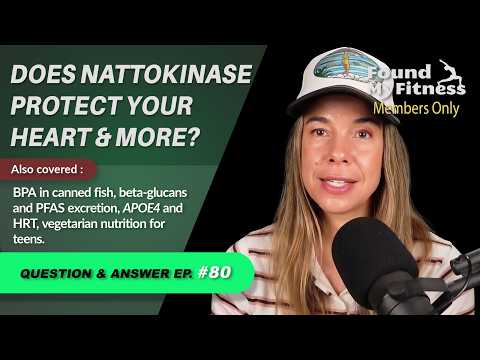
Q&A #80: Does Nattokinase Protect Your Heart?—What the Evidence Shows
Dr. Rhonda Patrick reviews the evidence for nattokinase, how oat beta-glucans may aid with PFAS excretion, and HRT for APOE4 carriers.
FoundMyFitness library
Ranked by shared topics, with one result from each original episode.
Q&A
Dr. Rhonda Patrick reviews the evidence for nattokinase, how oat beta-glucans may aid with PFAS excretion, and HRT for APOE4 carriers.
Q&A
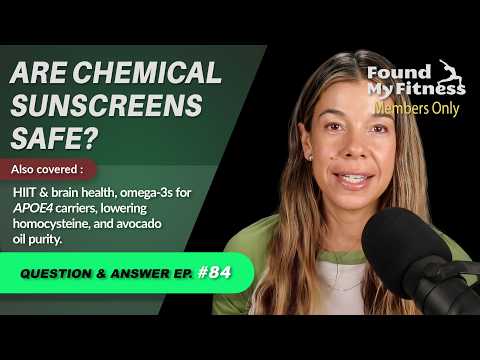
Dr. Rhonda Patrick discusses sunscreen safety, HIIT & brain health, diet, omega-3s, urolithin A, sulforaphane, homocysteine, peptides, and CoQ10.
Q&A
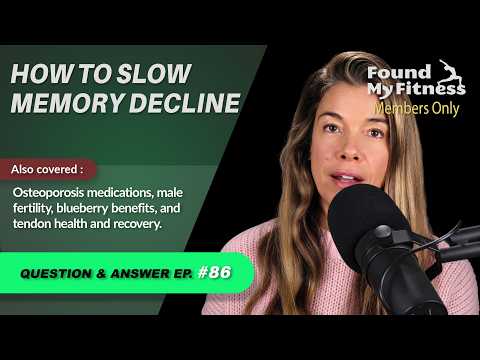
Dr. Rhonda Patrick discusses memory, tendon and bone health, male fertility, and the benefits of blueberries.
Episode
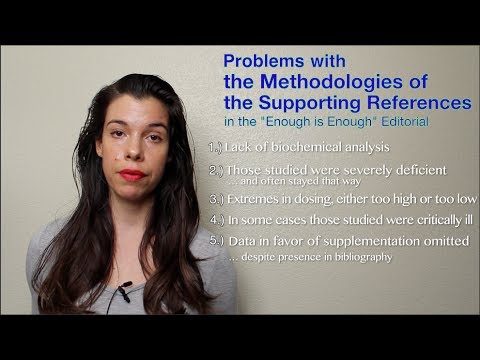
“In this podcast, we discuss and critically analyze a recent headline-grabbing editorial that was published in the Annals of Internal Medicine that reviewed three studies on the topic of multivitamins and chronic disease prevention. We analyze the important shortcomings of the studies and talk about the mechanism.”
Episode
“In this episode, Rhonda gives a summary of the science of resveratrol including its effects in animals and humans, the mechanisms behind how it works, and the bottom line on resveratrol supplementation and safety. A few key moments... For a more in-depth timeline, as well as references for this episode, click the timeline tab. Learn more about resveratrol on our overview page”
Episode
“The fascinating way Dr. Panda is using human anecdote from his trial to ask new scientific questions he wouldn't think to ask and then going back to animal data to figure it out and how this unique approach forms a sort of closed loop pattern: animal → human feedback → back to animal for mechanism.”
Clip
“Although whole-body hyperthermia and sauna use share some similarities, whole-body hyperthermia sessions are typically longer (an hour or more) and the participant's head is spared (often kept cool with ice or cool cloths), prolonging the participant's tolerance to the intense heat.”
Episode
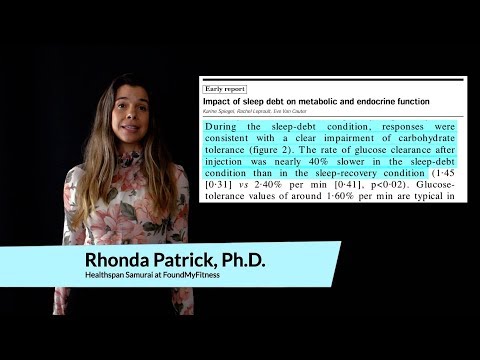
“When most people think about certain lifestyle factors that affect insulin sensitivity and blood glucose levels, they think about macronutrient composition, or calories, or fasting, or exercise (and lack of), but they don’t often think about sleep.”
Clip
“Prolonged endurance exercise, heavy sweating, sauna use, and a minimally processed diet can also increase the practical need to replace electrolytes, which is different from routinely adding large doses for a sedentary person eating processed foods.”
Episode
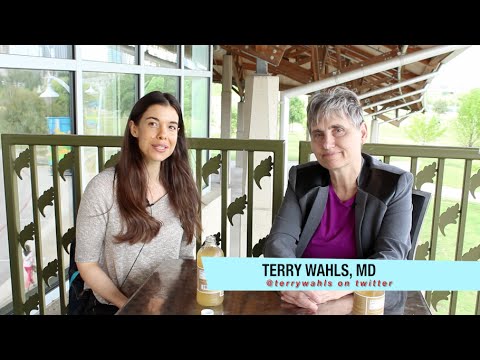
“In this video, Dr. Rhonda Patrick interviews Dr. Terry Wahls about how she reversed her secondary-progressive multiple sclerosis with a micronutrient-dense diet and Paleo principles.”